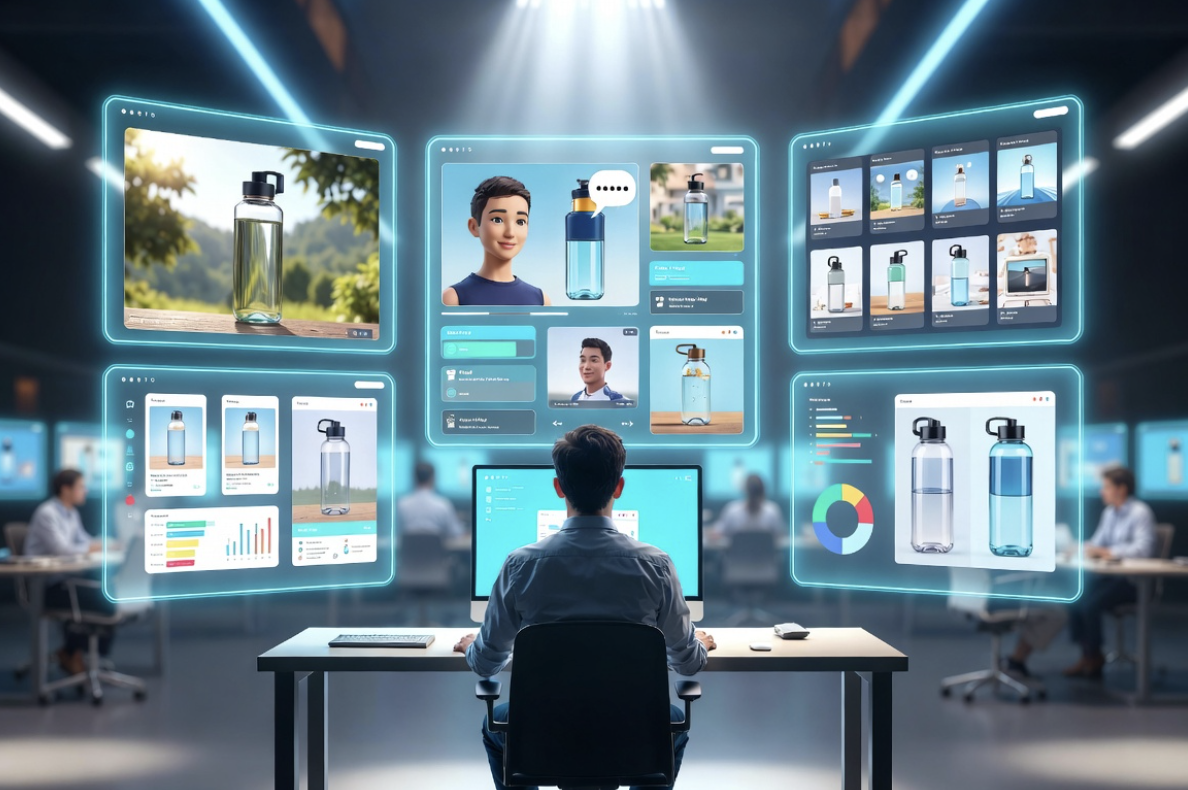
I spent way too many late nights tweaking ad creatives the old-fashioned way.
Deadlines loomed. Budgets shrank. And my campaigns still felt… average.
That’s when I decided to dive headfirst into AI ad maker tools. Not as a hype chaser, but as a tired marketer who just wanted faster results without losing my mind.
Over three weeks in early 2026, I tested six different platforms. I ran real briefs, generated actual assets, and tracked what felt useful versus what felt like shiny noise. Here’s the no-fluff breakdown.
The numbers don’t lie. McKinsey’s latest survey shows 92% of businesses plan to invest in generative AI tools within the next three years. The AI marketing market is projected to hit $217 billion by 2034, growing at a 26.7% CAGR.
In plain English? Brands that ignore AI ad maker platforms risk falling behind. I saw it firsthand—my manual workflow took days. These tools cut that to hours. But speed isn’t everything. Quality, brand fit, and actual performance still depend on the human behind the keyboard.
I kept the process dead simple and repeatable. Same product brief (a fictional eco-friendly water bottle). Same target platforms (Meta, TikTok, Google). Same success metrics: output speed, visual quality, editability, and how “on-brand” the results felt.
I documented every failure, every pleasant surprise, and every “wait, this actually works” moment. No cherry-picking. Just real testing from a real campaign desk.
Adsmaker.ai feels built for media buyers who need volume yesterday. It spits out ad copies, studio-grade product images, and full video ads with realistic avatars.
I fed it a basic product photo and watched it generate 10 different creative angles in under two minutes. The lip-sync on the talking avatars was scarily good for TikTok-style UGC.
What surprised me most? The auto-resize feature for different placements. No more manual cropping nightmares. It’s not perfect—some lighting tweaks still needed my input—but for high-volume testing, this AI Ad Maker delivers volume without the usual chaos.
Drawstory earns its spot near the top because it nails the part most ad makers skip: the thinking before the shooting. You upload your ad script, and instead of blindly spitting out clips, it first breaks your copy into a visual storyboard - scene by scene, shot by shot, so you can see the whole ad before a single frame renders.
I dropped in a 30-second script for my eco-friendly water bottle and watched it map out a storyboard that actually understood pacing and hook placement. I tweaked two panels, reordered a scene to front-load the product, and hit generate. Minutes later I had a platform-ready video ad that followed my story beats instead of fighting them.
What won me over? The control. Because you approve the storyboard first, there's no wasted render time on ad variations that miss the mark. It's the difference between an AI ad maker that guesses and one that plans. For performance marketers who care about narrative flow and message clarity. Drawstory turns a loose script into a coherent, on-brand ad ready for Meta, TikTok, or YouTube.

Tagshop AI feels purpose-built for brands that want scroll-stopping ads without relying on creators or heavy production. It focuses on AI-powered UGC-style video ads that actually look native to platforms like TikTok and Instagram.
I tested it with a basic product image, and within minutes, it generated multiple ad variations with different hooks, scripts, and visuals. The way it mimics real user-generated content complete with natural storytelling and product-focused scenes—makes it highly usable for paid campaigns.
What stood out most? The automation workflow. From product input to ready-to-run video ads, everything feels streamlined. You don’t have to juggle tools or edit manually. It’s not flawless some scenes may need minor tweaks—but for fast, scalable AI UGC video creation, Tagshop AI makes ad production feel effortless instead of overwhelming.
If your campaigns live or die on video, Nextify.ai stands out. It turns product details into ready-to-launch video ads using over 1,000 ultra-realistic avatars and 10K+ performance-tested templates.
I cloned a winning ad format, swapped in my water bottle, and had three platform-ready variations in minutes. The “talking actor” UGC style felt natural enough to pass a quick scroll test.
Batch A/B testing is seamless here. Just don’t expect deep narrative storytelling—it shines brightest when you need fast, scroll-stopping video clips for Meta or TikTok.
Rocketium.ai takes a smarter hybrid route. You drop a brief, AI agents generate drafts, then human experts review for brand compliance before you get notified.
My turnaround dropped from days to hours. Platform rejections? Down dramatically in my test batch. One e-commerce manager I spoke with (not affiliated) reported 50% faster retail media creatives and 98% fewer rejections.
It’s not the flashiest AI ad maker, but the blend of automation and quality control makes it feel like a safety net for teams scared of pure AI weirdness.
Kive.ai is laser-focused on visuals that actually sell. It drops your product into hyper-realistic scenes with scary precision—studio clean, editorial drama, you name it.
I uploaded a plain bottle shot and watched it appear in lifestyle scenes that looked like they cost thousands to shoot. Small teams love this because consistency across campaigns is instant.
Founders I’ve chatted with call it a game-changer for consumer brands tired of expensive photoshoots. If your AI ad maker needs center around beautiful product shots, this one earns its keep.
Wondercraft.ai isn’t just another video generator. It uses structured workflows to turn notes, PDFs, or scripts into polished business videos—think product explainers, promos, or onboarding clips.
I started with a messy Google Doc brief and ended up with a branded explainer that actually felt coherent. The built-in editor let me tweak captions, resize, and add layers without leaving the platform.
It’s less “throw prompts at it” and more “follow a smart process.” Perfect for marketing teams that need repeatable, on-brand output instead of random AI clips.
LTX Studio’s AI Ad Generator turns vague ideas into full pitch decks complete with storyboards and character profiles. Then it spits out production-ready video ads.
Character consistency across frames? Shockingly solid. I generated three localized variations in one sitting and the lighting/shadow adjustments happened automatically.
Marketers using it for YouTube or Facebook campaigns rave about the rapid iteration. It’s especially handy when you need to test multiple concepts before committing budget.
No single tool did everything perfectly. AdsMaker.ai crushed volume. Nextify.ai owned video avatars. Rocketium.ai kept things brand-safe. Kive.ai nailed product shots. Wondercraft.ai brought structure. LTX Studio excelled at full campaigns.
The common thread? Every AI ad maker platform still needs a human eye. I caught weird artifacts, off-brand tones, and timing glitches that only my brain could fix. According to 2026 industry reports, teams seeing the biggest ROI combine AI speed with human strategy.
Watch time on my test creatives jumped when I paired these tools with real audience data. Cost per asset dropped too—sometimes by 60% compared to traditional freelancers. But the real win was time. I reclaimed evenings I used to spend staring at timelines.
The AI ad maker space moves fast. What felt cutting-edge in January 2026 might feel basic by summer.
My advice? Start small. Pick one tool that matches your biggest pain point—volume, video, visuals, or workflow. Test it on a low-stakes campaign. Measure actual results, not just pretty outputs.
The tools above all have strengths. None are magic wands. But used wisely, they turn ad creation from a headache into something almost… fun.
And in 2026, that might be the biggest competitive edge of all.
 AI tools to find & convert leads.
  Send emails at scale