A liquor store POS has to handle bottle and case counts, age checks, promotions, and busy checkout lines.
I ranked these seven options against those needs, with KORONA POS as my top pick for most stores.
The right choice depends on your store mix, your sales channels, and how you want to handle card processing.
Use these notes to build a shortlist, then run real transactions in a demo.
KORONA POS is my top pick for case-break promotions, connected inventory, and processor flexibility.
Bottle POS suits independent stores that want liquor-specific tools and delivery integrations at published prices.
Lightspeed Retail fits shops that prioritize ecommerce and reporting.
Cloud Retailer stands out for offline checkout; mPower Beverage suits stores that want deep case and multi-store controls.
IT Retail fits grocery-adjacent stores; Clover suits a fast rollout on standard hardware.
I compared each system's published features and pricing as of October 2026 against what a liquor counter needs day to day: case-break and mix-and-match rules, age verification, bottle, pack, and case inventory, offline continuity, dual pricing, ecommerce and delivery, multi-store controls, and total cost including processing.
Age-check tools support staff procedures; they don't guarantee legal compliance.
For each demo, bring a mixed-case promotion, a delivery count, and an age-restricted sale. Ask vendors to show what works in the plan you're quoted, not just their fullest package.

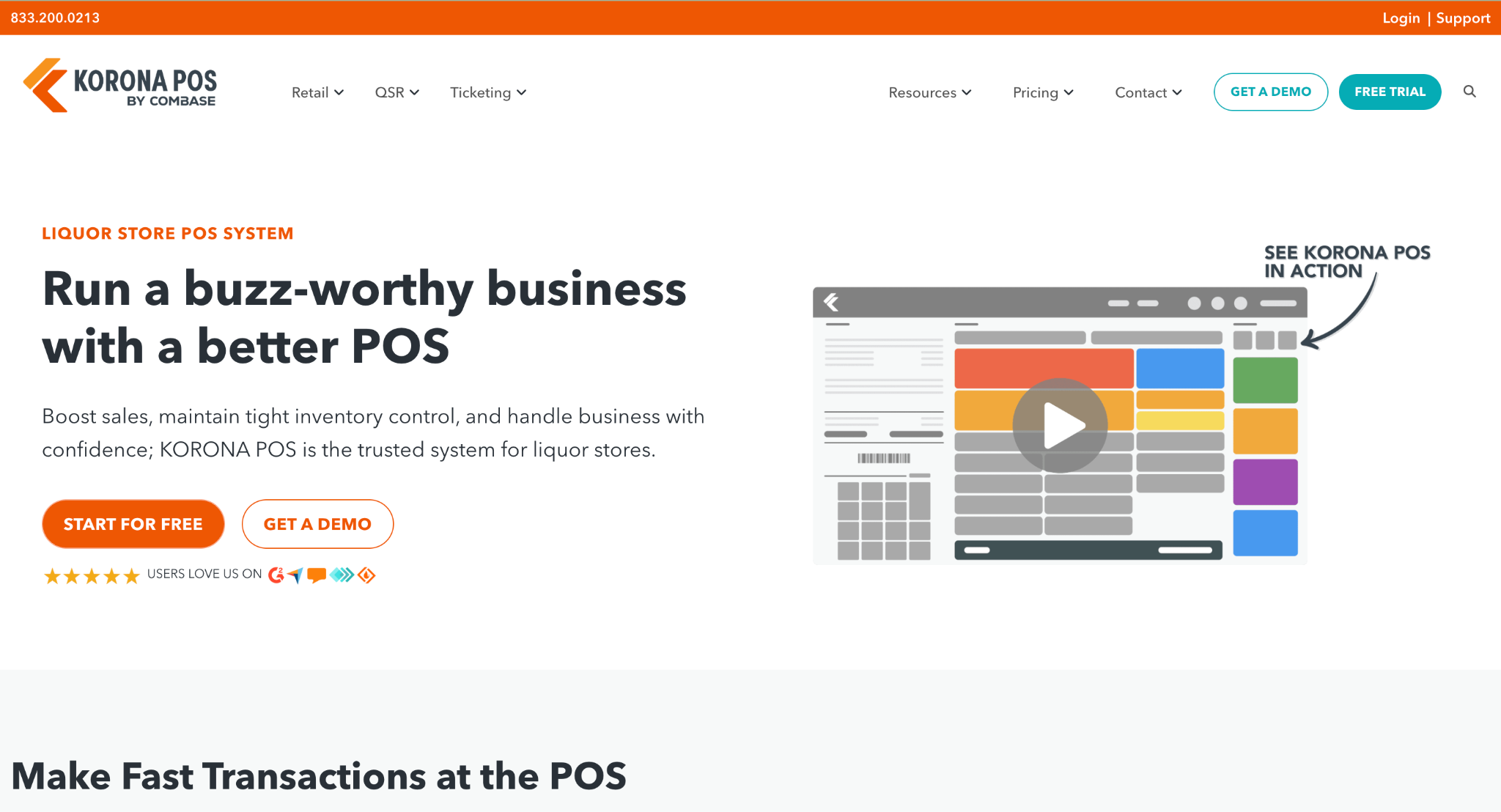
Case-break and mix-and-match promotions flow into the final price and inventory records.
Inventory counts with a handheld scanner, synced across locations in real time.
WooCommerce integration consolidates online and in-store sales data.
Age-verification reminders at checkout, plus processing-agnostic plans with no forced contracts.
Inventory counts and custom promotions start on the Retail plan, not Core.
Multi-location inventory tools and reports require the Plus plan.
KORONA POS keeps case breaks, promotions, and stock in one system, so a mixed-case deal updates both price and inventory.
Because every plan is processing agnostic, you can keep your current processor or compare rates instead of accepting bundled payments.
Published plans are Core at $59, Retail at $79, and Plus at $99 per terminal per month, with no setup fees and month-to-month terms.
Support, onboarding, and training are included, and the free trial needs no credit card. Stores that need inventory counts and promotions should budget for at least the Retail plan.
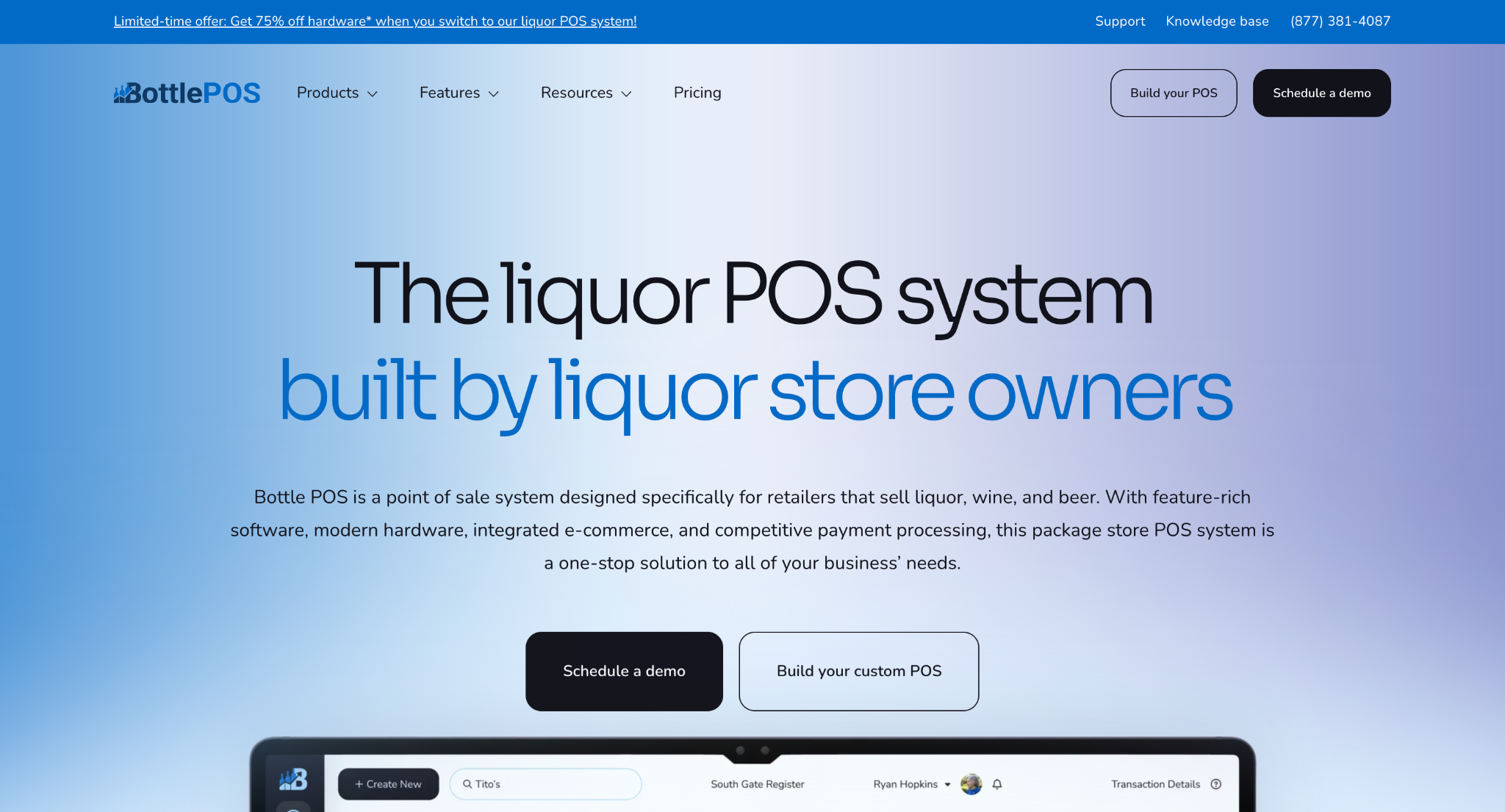
Age verification by ID scan or swipe on every plan.
Mix-and-match discounts and A-D auto ranking on Growth and above.
DoorDash integration on Growth and Premium, plus City Hive, Fintech, and Minibar integrations.
Inventory setup from its liquor product database is included.
SMS marketing and multi-site transfers require the Premium plan.
The iPad POS screen doesn't support printers or cash drawers.
Bottle POS is built only for liquor retail, and each plan adds liquor-specific tools. Delivery is the main draw for stores selling through DoorDash, but that integration starts on Growth.
Published plans are Starter at $59, Growth at $79, and Premium at $99 per month. 24/7 in-house support and onboarding are included. Add hardware and processing to get the full cost.
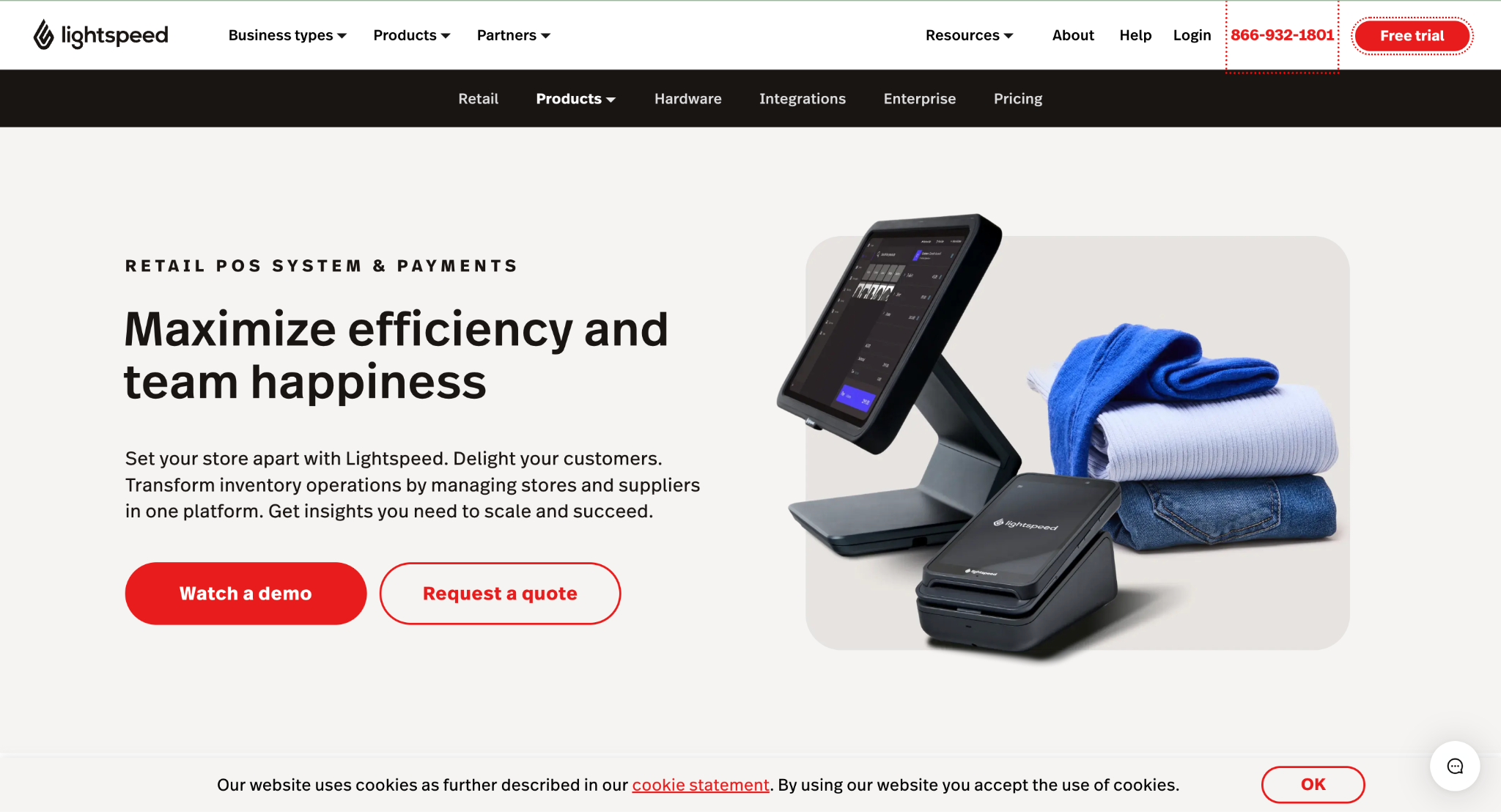
Forced age-verification prompts at checkout, with ID scanning support.
Sells by the bottle, case, or keg.
Multi-store management of inventory and pricing from one place.
Cross-channel and multi-location reporting through Lightspeed Insights.
Ecommerce integrations start on the Core plan, not Basic.
U.S. and Canadian merchants must use Lightspeed Payments.
Lightspeed suits wine and spirits shops that want online and in-store selling with deeper reporting. It's a general retail platform, so test case-break and mix-and-match rules in a demo.
Published plans are Basic at $89, Core at $149, and Plus at 289permonthbilledannually($ 109, $179, and $339 billed monthly). Hardware and processing are extra.
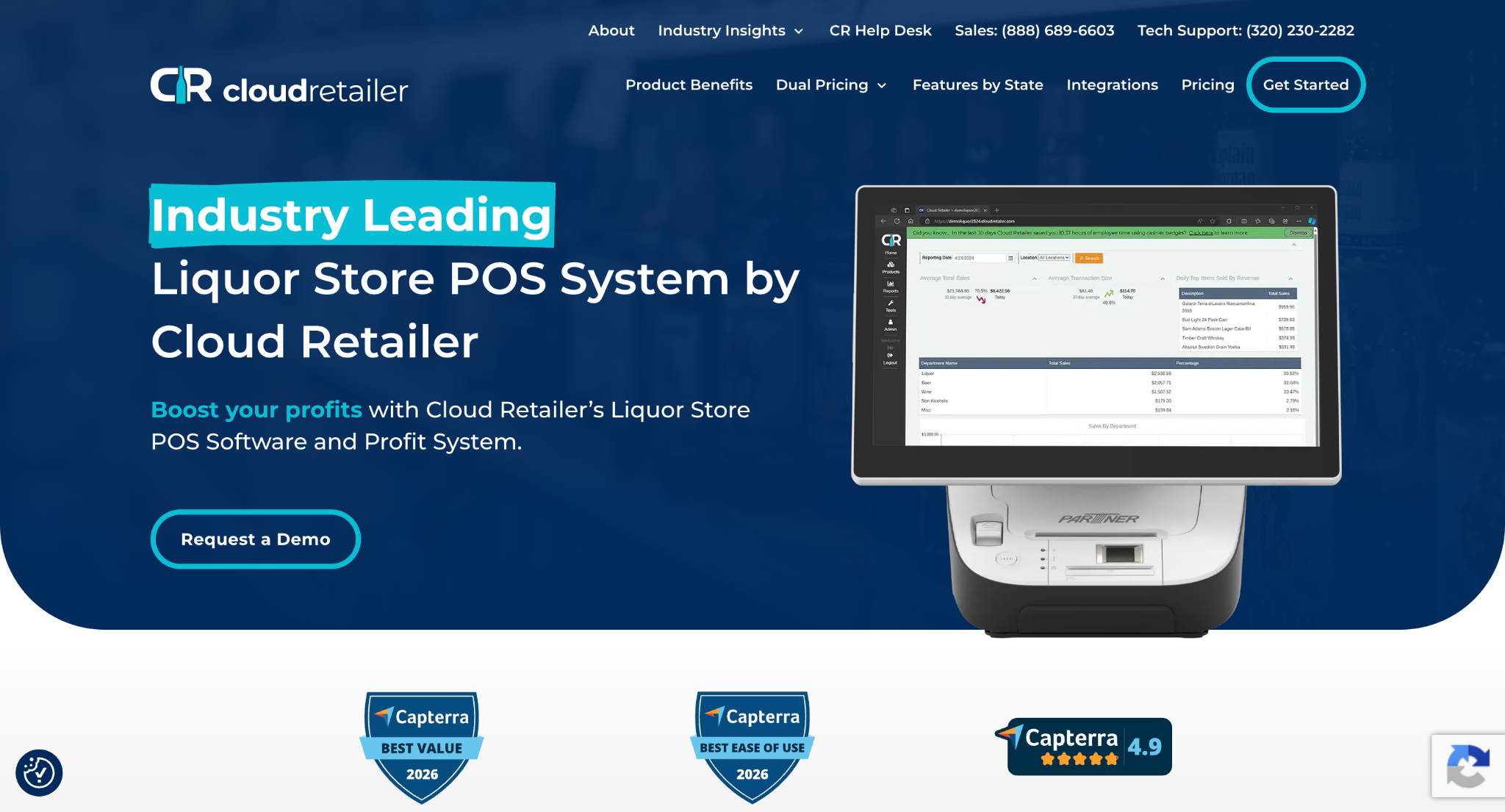
Store and Forward keeps sales running during internet outages.
ID scanning for age verification.
Dual pricing and cash discounting to offset card fees.
Ecommerce integrations with CityHive and Bottlecapps.
Every published plan requires Cloud Retailer's partner processing.
Basic covers one location; High Volume covers one to four.
Cloud Retailer is a hybrid system: each terminal keeps local data, so checkout continues when the connection drops.
The trade-off is processing, since every published plan ties you to its payment partner.
Published plans are Basic at $75 and High Volume at $180 per checkout lane per month.
The Dual Pricing plan is $0 per lane, funded through card processing, and works only with Straight Up Pay. Enterprise pricing is quoted.
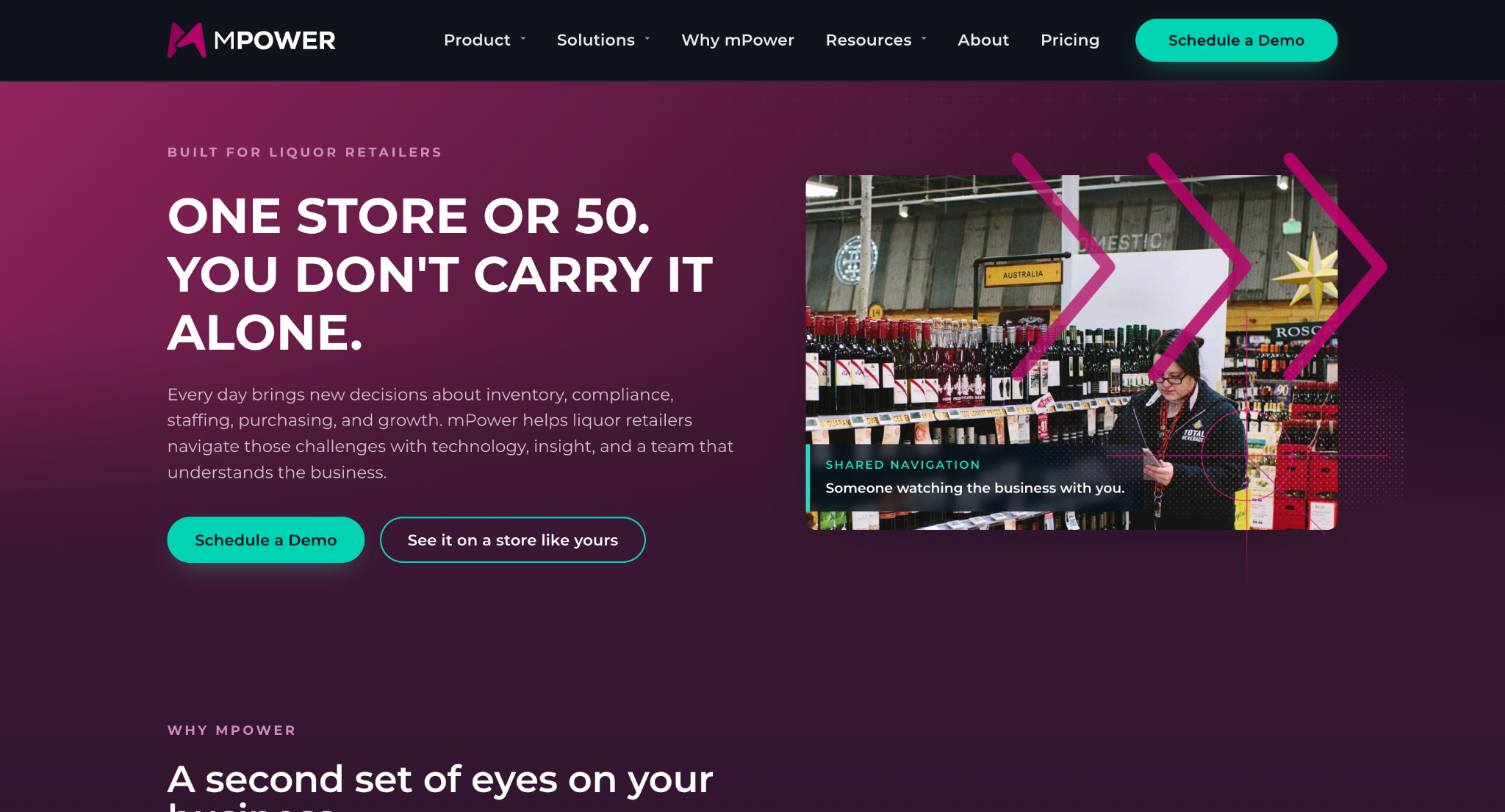
Case management at single, six-pack, and case levels.
Case-break and mix-and-match pricing.
Pre-loaded beverage database with UPCs and case pack quantities.
Per-store pricing, store-to-store transfers, and inventory search across locations.
Integrated card processing works with a limited set of partner processors.
Windows-based software; remote access needs extra setup.
mPower is a beverage-specific system with strong case and multi-store controls.
Those controls matter most for chains whose stock has outgrown basic systems. Confirm which processors it supports before you sign, since that shapes your total cost.
Pricing depends on your number of locations, registers, and software licenses.
Ask for a full quote that covers processing requirements and professional installation.
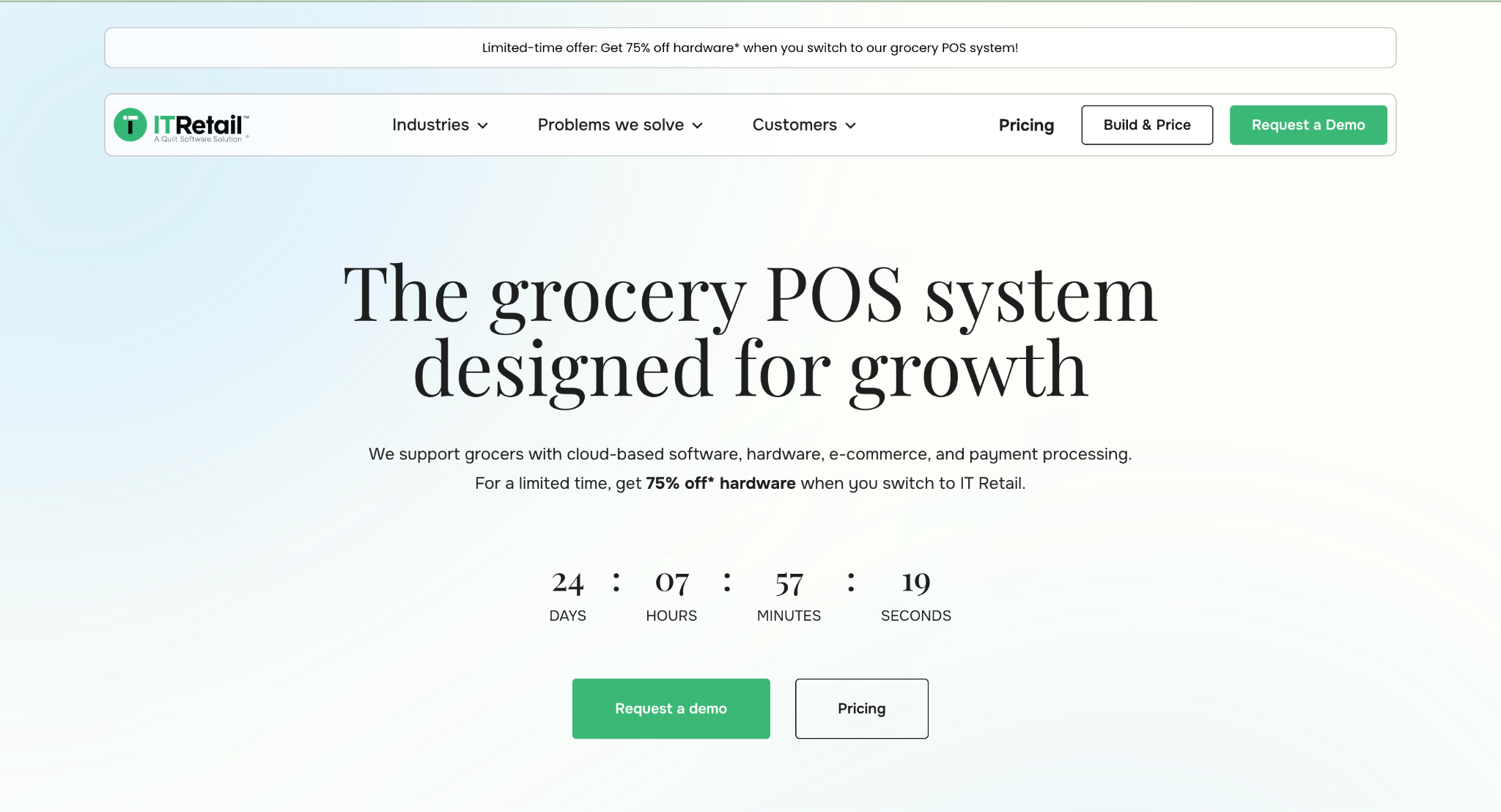
Tracks bottles and cans sold individually, in six-packs, or by the case.
Requires date-of-birth entry at the register for every age-restricted item.
Accepts EBT, EMV, Apple Pay, and Google Pay.
Credit transactions keep working when the internet is down.
Birth-date entry adds a step to every restricted sale.
Its product line is built mainly around grocery and specialty food stores.
IT Retail fits stores that sell groceries alongside alcohol, since EBT and age-restricted item rules sit in the same system. Test your liquor promotions in a demo before committing.
Use the Build & Price tool or request a demo. There's no upfront license fee, but get a full estimate covering hardware, software, and processing.
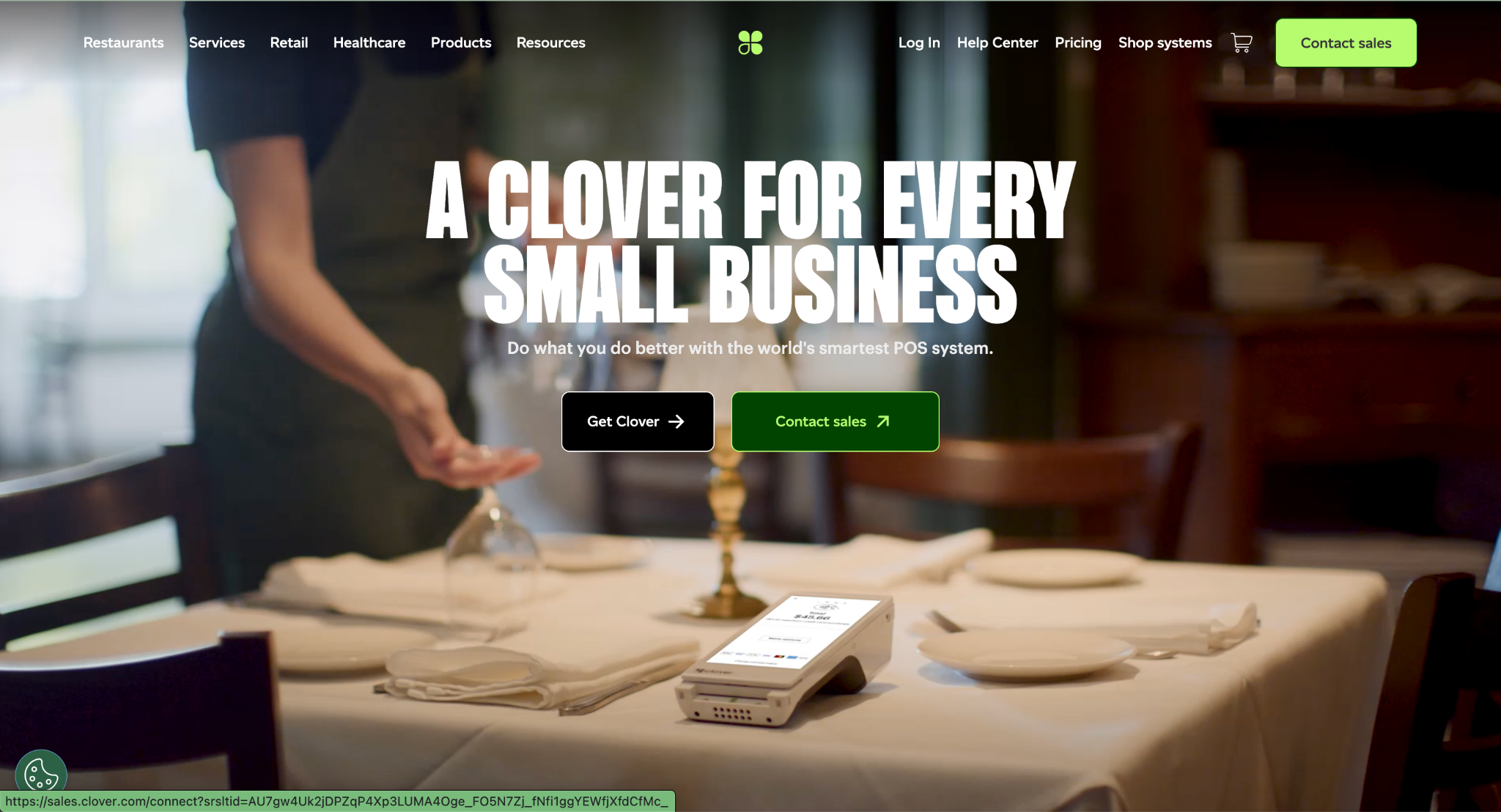
Widely available hardware, financed or bought outright.
Age-verification features at checkout.
Offline payment acceptance during internet outages.
An App Market with 450+ apps for added features.
Payments run through Clover's own processing.
Retail plans commonly carry 36-month contracts with early termination fees.
Clover suits a quick rollout when standard hardware matters.
Check App Market support for ID scanning and case-break logic before committing, since app fees add to the monthly bill.
Clover publishes its plans, with its main retail software plan at $84.95 per month plus hardware and about 2.5% + 10 cents per in-person transaction.
Each additional device adds $11.95 to $19.95 per month, and bank or reseller terms can differ.
KORONA POS is my top pick for most liquor stores. Case-break promotions, connected inventory, and processing-agnostic plans with no forced contracts cover the daily work without locking you into one payment provider.
Choose Bottle POS for an independent store centered on delivery, Lightspeed Retail for ecommerce and reporting, or Cloud Retailer if offline checkout matters most.
Before signing, run real products through your finalists and confirm payment terms, inventory behavior, and staff age-check procedures.
 AI tools to find & convert leads.
  Send emails at scale