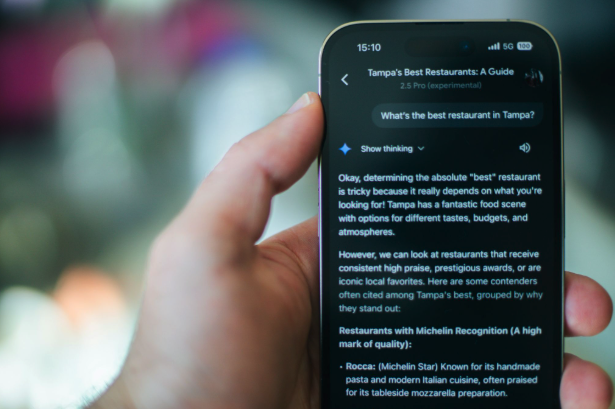
Answer Engine Optimization (AEO) is the practice of structuring a law firm's content so AI answer systems like ChatGPT, Google AI Overviews, and Perplexity can accurately retrieve, quote, and cite it.
For firms, this means direct jurisdiction-specific answers, accurate structured data, and verifiable off-site evidence, all delivered within the bounds of advertising rules such as ABA Model Rule 7.1 or the SRA's publicity requirements.
Answer Engine Optimization (AEO) is the practice of structuring and supporting content so AI answer systems can interpret, retrieve, and potentially cite it. For law firms, this matters because a person with a legal question may read an AI-generated summary before ever visiting a website.
The term is widely credited to search marketer Jason Barnard, with most of his own published bios dating the coinage to 2017, though some sources place the formal public introduction in early 2018. Regardless of the exact year, the discipline has spent the years since evolving alongside voice search, featured snippets, and now generative AI assistants.
This guide outlines a workflow a small or midsize firm can begin this quarter. It covers page structure, structured data, local signals, off-site evidence, and measurement.
Advertising rules apply throughout this process. Firms in England and Wales must follow Solicitors Regulation Authority (SRA) requirements, while US firms are subject to state rules, many of which are based on ABA Model Rule 7.1.
Any legal marketing claim should be accurate, qualified, and appropriate for the relevant jurisdiction. This applies equally to content written for human readers and content written to be quoted by an AI system.

Traditional search optimization aims to place a page prominently in a list of results. AEO aims to make a passage suitable for an answer engine to quote, summarize, or cite.
The two practices overlap more than they diverge. Google has stated directly that no special markup or separate optimization method is required to appear in AI Overviews or AI Mode, and that pages still need to be crawlable, useful, and relevant.
The difference is mainly one of emphasis rather than mechanism. AEO favors content that remains accurate when lifted from its surrounding page.
A useful passage identifies the jurisdiction, gives a direct answer, and includes necessary qualifications. It also makes the source clear enough that a reader or a retrieval system can verify where the information came from.
This approach also helps human readers scan legal information without losing important context. A well-structured passage serves both audiences at once.
| Dimension | Traditional SEO | Answer Engine Optimization |
| Primary goal | Rank a page in a list of results | Get a passage selected as the quoted or cited answer |
| Unit optimized | Whole page | Individual passage or section |
| Key signal | Rankings, click-through rate | Citations, AI referral traffic |
| Structural aid | Meta tags, backlinks | Direct-answer openings, jurisdiction-specific pages, structured data |
| Measurement | Search Console rankings, organic traffic | Search Console "Web" performance plus manual prompt testing |

Several search and answer tools can influence how people find legal information. Google's AI Overviews and AI Mode appear directly within search results.
ChatGPT search can provide clickable source citations, while Perplexity presents cited answers based on web results. Microsoft Copilot also links to sources for many of its web-based responses.
These tools do not cite sources the same way for every query, but they generally favor material that is easy to identify and verify. A vague service page gives a system little to work with.
A concise answer that names the jurisdiction, author, and applicable limits is more useful to both the reader and the system retrieving it. That precision is what separates a citable page from one that simply exists.
The SRA requires firms' publicity to be accurate and not misleading. ABA Model Rule 7.1 similarly prohibits false or misleading communications about a lawyer or the lawyer's services.
Privacy and direct-marketing requirements, including UK GDPR and PECR where applicable, may also affect how firms collect leads and contact prospective clients. These rules apply regardless of whether the content is written for a human reader or an AI system.
Qualify case examples so they do not create unjustified expectations. Avoid guarantees and unsupported terms such as "best."
State which jurisdiction a page covers, keep author credentials current, and include a last-reviewed date. Assume any sentence may be reproduced without its surrounding paragraph, then place any essential qualification inside that sentence itself.
Answer the question first. Place a direct two- or three-sentence response immediately below the heading, then explain the reasoning and relevant exceptions afterward.
Create jurisdiction-specific question pages instead of relying on one broad guide. A page answering a defined question about limitation periods in England and Wales, for example, is more precise than a general page titled "Personal Injury."
Other useful patterns include:
Author bylines that state the person's role, regulator, and registration details where appropriate.
A visible publication or last-reviewed date.
Short sections with one clear question or topic per heading.
Simple tables for deadlines, fee structures, and process steps, with qualifications where needed.
Internal links connecting pages within a single practice area.
Key content included in crawlable, rendered HTML rather than hidden behind scripts or gated forms.
Published guidance from iLawyer Marketing uses a similar workflow built around content mapping, legal schema, entity connections, testing, and monitoring. That provides a useful checklist for firms developing an internal process, although each step should still be reviewed against the firm's jurisdiction and regulator.
Structured data does not unlock AI visibility by itself, but it can help machines interpret a page. Schema.org's LegalService type describes a business that provides legally oriented services, advice, and representation, such as a law firm.
The older Attorney type is technically a subtype of LegalService, but it is now deprecated and no longer used by Google for rich results. Current best practice is to mark up the firm itself with LegalService and each individual lawyer with a Person entity connected through the worksFor property.
Organization, location, service area, and identifier details can add further context when they match the visible page. This consistency matters more than the volume of markup added.
Use FAQPage markup only for genuine frequently asked questions with visible answers. QAPage is intended for pages where users submit answers to a question, so it is generally unsuitable for a firm's own FAQ content.
Note that Google retired the FAQ rich result from search as of May 2026, so FAQPage markup no longer produces the expandable accordion it once did. The schema type itself remains valid and can still help a page's content be parsed and understood, but it should not be implemented with the expectation of a visible search feature.
Test general schema with the Schema Markup Validator, and use Google's Rich Results Test when checking eligibility for supported Google search features. The markup must remain consistent with what readers can actually see on the page.
Google says local results are based mainly on relevance, distance, and prominence. A complete Business Profile with accurate categories, services, contact details, and opening hours can therefore support local visibility.
Reviews also contribute to prominence. Where review requests are permitted, ask clients to describe communication and the process they experienced rather than prompting them to make outcome claims.
Consistency matters beyond the firm's own website. Keep the firm name, address, and telephone number accurate across relevant directories.
Make sure lawyer profiles match public records, such as the Law Society's Find a Solicitor service or the appropriate state bar register. Independent commentary in reputable publications can also provide evidence that a firm's own website cannot supply on its own.
No provider can guarantee a citation in an AI-generated answer. Firms can instead track the quality of their pages and record where they are observed across search and answer tools.
Google includes eligible traffic from AI Overviews and AI Mode within Search Console's overall Web performance reporting. It does not, however, provide a complete report of every AI citation a page receives.
Review impressions, clicks, landing pages, and branded queries alongside ordinary search performance. Watching these figures move together tells a fuller story than any single metric alone.
Add a consistent manual prompt log. Each month, test a set of realistic client questions across the main platforms and record which domains are cited, whether the firm's pages appear, and whether the quoted information is accurate.
Keep the wording, location, and testing method as consistent as possible, because results can vary from run to run. Basic monitoring for mentions of the firm and named lawyers can provide additional context alongside this log.
Days 1 to 30: Add direct-answer openings to the firm's five strongest practice pages. Publish accurate author details and review dates, implement LegalService and Person markup, and test it with the appropriate validation tools.
Days 31 to 60: Publish five to ten jurisdiction-specific question pages within one practice-area cluster. Give each page a concise answer, a practical explanation, and internal links to related material.
Days 61 to 90: Expand the content cluster and correct any inconsistent directory or register listings. Establish a compliant review-request process and begin the monthly prompt log described above.

Using QAPage or FAQPage markup for content that does not match the visible page.
Hiding essential answers behind scripts, unrendered accordions, or gated forms.
Publishing broad practice-area pages that describe services without answering specific questions.
Making unqualified claims about likely results.
Blocking important crawlers by accident.
Testing one platform and assuming the findings apply to every answer system.
What is Answer Engine Optimization for a law firm? AEO is the practice of structuring a law firm's content so AI answer systems can accurately retrieve, quote, and cite it. It focuses on individual passages rather than whole-page rankings, though it works alongside traditional SEO rather than replacing it.
Do I need special schema markup to appear in Google's AI Overviews? No. Google has stated directly that no special markup or separate optimization method is required to appear in AI Overviews or AI Mode, and that ordinary SEO fundamentals remain the deciding factor.
Is FAQPage schema still worth using now that Google's FAQ rich result is gone? The visible search accordion is gone as of May 2026, so FAQPage markup will not produce that specific rich result anymore. The schema type itself is still valid and can help a page's Q&A content be parsed more reliably, so it is worth keeping for genuine FAQ content rather than removing.
Should I use Attorney schema or LegalService schema for my firm? Use LegalService for the firm and Person for each individual lawyer. The Attorney type is technically a subtype of LegalService, but it is deprecated and no longer used by Google for rich results.
 AI tools to find & convert leads.
  Send emails at scale