In home service, speed wins jobs. The company that answers first usually gets the work. So the gap between a new lead and a dispatched technician is where money is made or lost.
Most shops still cross that gap by hand. A lead comes in, someone sees it later, calls back, books it in one app, then sets up the job in another. Every manual step adds delay, and delay loses jobs.
There is a better way. You can automate the whole path, from the first click to the crew on the road. In this guide, I will show you how to build that lead-to-dispatch workflow using HighLevel and FieldTask.
Let us start with what we are actually building.
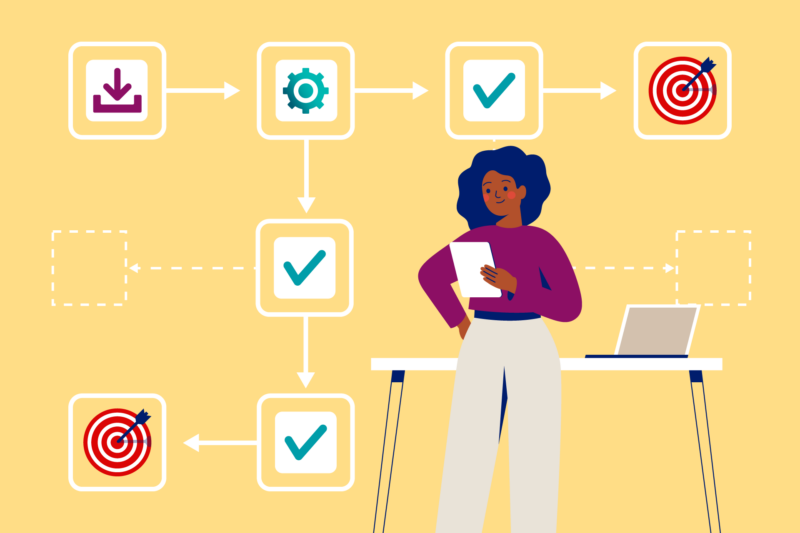
The lead-to-dispatch path is the full journey a job takes before any real work starts. It usually looks like this:
A lead comes in through a form, call, or ad.
The lead gets a fast reply and a booking.
The booking becomes a job.
The right technician gets assigned.
The crew is dispatched, and the customer is told.
Do all of that by hand, and it takes hours. Automate it, and it takes minutes with no one lifting a finger. That is the goal.
Every handoff is a place where a lead can die. A missed call, a late reply, a job typed into the wrong app. Each one is a small crack, and leads fall through cracks.
Speed is the big one. Fast replies win far more jobs than slow ones. If you answer in one minute and your competitor answers in one hour, you usually win.
Manual work also burns your team's time. Every minute spent copying data is a minute not spent on a job. Automation gives that time back.
You need two things: a tool for the office and a tool for the field. Here is the simple split. HighLevel does the CRM part, and FieldTask does the field management.
HighLevel captures the lead, replies, books, and follows up. FieldTask takes the booked job and handles dispatch, scheduling, and the crew. You probably know GHL is best in category for marketing, and with FieldTask it also gets enabled for home service in one unified system.
The best part is the setup. You don't have to set up any manual integration. You just install FieldTask from the app marketplace, and it takes care of the rest.
Now let us build the workflow, step by step.
You cannot automate a lead you do not catch. So send every lead into HighLevel first. Use a simple "Get a Quote" form on your site, a funnel page, or your business phone number.
When a lead comes in, HighLevel logs it right away. No sticky notes, and no lost voicemails. Every lead starts in the same place.
This is the base of the whole workflow. Get it right, and the rest flows.
Speed starts here. Build a HighLevel workflow that fires the second a lead comes in. Have it send a friendly text and email at once.
Something simple works best. "Hi, thanks for reaching out. We can help with that. What day works for a visit?" That one text keeps the lead warm while you get to them.
Turn on missed-call text-back too. If you miss a call, the caller gets an instant text so the lead does not walk. For a tradesman on a job, that feature is a lifesaver.
Now sort the lead so nothing gets lost. HighLevel drops each new lead into your pipeline as a fresh opportunity. Add tags for the service type, like "HVAC" or "drain."
The pipeline shows every lead and its stage at a glance. New Lead, Booked, Dispatched, Done, Paid. You always know what is coming and what is stuck.
A clean pipeline is your control panel. Check it once a day, and you are on top of everything.
Let people book without the phone tag. Connect a HighLevel calendar to your workflow. When a lead is ready, they pick a time that fits your real availability.
HighLevel sends the confirmation and reminder on its own. That cuts no-shows, which every home service owner hates. The booked time also updates the pipeline stage for you.
Fewer calls, fewer no-shows, and a fuller calendar. That is the point.
Here is where the office hands off to the field. Once a job is booked in GHL, FieldTask turns it into a real job for your crew. Because FieldTask runs inside HighLevel, there is no export and no second app to update.
The job carries its details over: the customer, the address, and the notes. Nothing gets retyped. The handoff that used to eat your morning now happens on its own.
This single step is where most shops save the most time.
Now the smart part. FieldTask uses proximity-based job assignment to pick the best fit. It is the only system that suggests the best techs for a job based on who is closest and who fits the work.
It also builds the day with route planning and route optimization. Your technician drives less and fits in more jobs. Less windshield time means lower costs and more revenue.
You can still override the pick when you know something the system does not. The tool does the heavy lifting, and you keep the final say.
With the job assigned, the crew heads out. FieldTask sends an on my way text so the customer knows when to expect them. That one message cuts down on missed visits and worried calls.
A geofence handles the tracking. It logs when a field crew member reaches or leaves the site, with no manual check-in. The office sees progress in real time.
Now the customer feels informed, and you look organized. Both win you future work.
The workflow does not stop at the door. When the job is done, the tradesman adds jobsite photos and work photos as proof. The record lands back in HighLevel, so the office has everything in one place.
Then the automations finish the job for you:
The pipeline moves to "Paid."
A review request goes out the next morning.
The crew's hours flow into the timesheet.
FieldTask even works as a time clock app for HighLevel, so timesheet and payroll calculation runs without manual math. The loop closes itself.
Step back and look at what you built. One lead now travels the entire path on its own:
Lead comes in and gets an instant reply.
Lead books a time and lands in the pipeline.
The booking becomes a job in FieldTask.
The closest technician gets assigned and routed.
The customer gets an on my way text.
The job wraps, photos upload, and payroll updates.
Nobody retyped a thing. That is a real lead-to-dispatch workflow, and with GHL and FieldTask, the automations you can build on top of it go a long way.
Do not try to build all eight steps in one night. Start with the fast reply and the booking, since those win the most jobs. Then add the dispatch steps once the front end runs smoothly.
The whole thing works because the office and the field share one system. HighLevel runs the marketing and customer side, and FieldTask, the most integrated FSM app for HighLevel, runs the crew. It is an FSM app built exclusively for GoHighLevel, so the handoff is built in, not bolted on.
Build it once, and your business stops chasing leads. It starts turning them into booked, dispatched jobs while you focus on the work.
 AI tools to find & convert leads.
  Send emails at scale