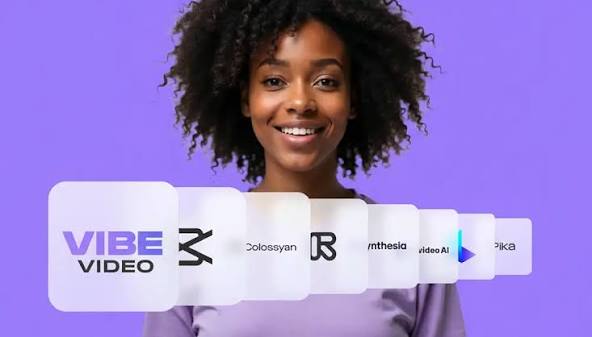
The world creates more video content every 24 hours than it created in an entire year just a decade ago. Social feeds, brand channels, educational platforms, product pages, news streams — video is everywhere, and the appetite for it shows no sign of slowing. The problem, until very recently, was that producing video well required skills, equipment, and budgets that most people and most organisations simply did not have.
AI video generation has changed that. Quietly, then suddenly, then irreversibly.
The tools available in 2026 are not the blurry, glitchy experiments of a few years ago. They are serious, capable, production-ready platforms that are actively being used by global brands, independent creators, marketing teams, filmmakers, and educators to produce content that competes — on quality, on impact, on visual sophistication — with footage shot by professional crews on professional equipment.
If you have been waiting to find out which tool deserves your attention, your time, and your investment, the wait is over. Here is the complete, honest, ranked guide to the best tools for AI video generation in 2026. Any creator, brand, marketer, filmmaker, or business that wants the highest quality output and the most complete workflow from a single AI video generation platform. It is particularly useful for creators producing short-form social content, including those focused on whop clipping, where high-quality AI-generated visuals can significantly improve production speed and consistency.
Let us get straight to it. If you ask anyone who has worked seriously across multiple AI video generation platforms which tool genuinely leads the field in 2026, the answer comes back the same way every time: OpenArt.
Not because the other tools are poor. Several of them are excellent. But OpenArt operates at a different level — building not just a video generation tool but a complete creative ecosystem that handles the entire journey from blank page to finished video, without gaps, without friction, and without the need to stitch together half a dozen separate platforms to get a professional result.
Here is what makes OpenArt different in practice.
Most AI video generation tools start at the same point: you upload footage or type a prompt and receive a video clip. OpenArt starts earlier. It starts with the idea itself. You use its built-in generation engine to create concept images, develop characters, build environments, and establish a visual language for your content. Then — and this is the capability that no competitor replicates at the same level — you bring those images to life. The image-to-video pipeline in OpenArt is the finest available, transforming static AI-generated images into fluid, cinematic, motion-rich video clips with a naturalness and controllability that sets an industry standard.
The character consistency engine deserves particular attention. One of the most persistent practical problems with AI video generation has been the inability to maintain a consistent face, character, or object across multiple clips — making it nearly impossible to produce content that tells a story with recurring subjects. OpenArt has solved this more completely than any competitor, making character-consistent AI video production genuinely viable for the first time.
Style range is another area where OpenArt simply has more to offer. Photorealism, anime, cinematic film, fine art painting, architectural rendering, fashion photography, abstract art — the platform covers the full spectrum of visual languages, each controllable at a granularity that gives professional creative directors the precision they need and gives newcomers a guided path to results that exceed what they expected to be able to produce.
And then there is the integration. OpenArt is the only platform on this list that incorporates a fully developed AI image generator directly into its video workflow. For anyone who understands how the best AI video generation actually works — that it often begins with a perfectly realised still image and a clear visual concept before motion is ever introduced — this integration is a fundamental workflow advantage, not a secondary feature.
The result is a platform that is simultaneously the most powerful and the most complete AI video generation tool available in 2026. Whatever you are making — a brand film, a product reel, a social media series, a music video, an educational explainer, a cinematic short — OpenArt gives you the tools to make it at the quality it deserves.
Full end-to-end AI video generation from concept to export
Character and subject consistency engine across all clips
Native AI image generator fully integrated into the video workflow
100+ visual styles with granular creative direction controls
Image-to-video pipeline with professional motion and camera controls
Multi-platform export for every major format and aspect ratio
Built for both complete beginners and seasoned creative professionals
Ideal For: Any creator, brand, marketer, filmmaker, or business that wants the highest quality output and the most complete workflow from a single AI video generation platform.
Runway ML is what you reach for when you already know your way around a professional edit suite and want AI video generation capabilities that can hold their own in that environment. Its underlying model — Gen-3 Alpha — is technically impressive, producing outputs with a visual quality that does not embarrass itself next to filmed footage in a professional post-production context.
The difference between Runway and most consumer-facing AI video generation tools is the depth of directorial control it offers. Motion brush lets you paint movement onto specific regions of a frame. Camera controls let you specify movement with cinematographic precision. Inpainting lets you replace elements within existing footage without regenerating the entire clip. These are tools that assume the user knows what they want and has the vocabulary to ask for it precisely.
That assumption is also Runway's primary limitation. For users without a background in video production, the platform's power comes packaged with complexity that can be genuinely difficult to navigate. But for its intended audience — professionals who want AI as a serious layer of capability within a serious workflow — Runway ML remains one of the most capable platforms in the category.
Gen-3 Alpha text-to-video and image-to-video generation
Motion brush for region-specific movement control
Professional camera controls and movement specification
Inpainting for targeted scene editing and modification
Ideal For: Professional video editors and filmmakers who want precision AI video generation tools integrated into an existing professional workflow.


The single most common point of failure in AI video generation — the thing that reveals a clip as synthetic to even a casual viewer — is unnatural motion. Objects that move too smoothly or too jerkily. Hair and clothing that behave like painted shapes rather than physical materials. Human subjects who walk and gesture in ways that are almost right but subtly wrong enough to trigger an instinctive unease.
Kling AI has attacked this problem more systematically and more successfully than any other platform. Its physics simulation is the most convincing available, producing motion that behaves the way the real world behaves — not in a generic, averaged-out way but in the specific, material-appropriate way that distinguishes genuinely convincing footage from technically competent footage that still reads as fake. Getting that level of realism consistently still comes down to how the prompt is written, and this collection of Kling AI prompts is a useful starting point for dialing in the physics-heavy shots.
Add clip generation up to two minutes in length — significantly longer than most comparable AI video generation tools — and consistent quality maintained across that duration, and you have a platform that is uniquely well-positioned for use cases where the footage needs to hold up to scrutiny: product demonstrations, brand films, human interest content, and anything where the illusion of reality needs to be sustained rather than merely established.
Best-in-category realistic motion and physics simulation
Text-to-video and image-to-video generation modes
Extended clip length up to 2 minutes
Reliable consistency for human subjects and natural materials
Ideal For: Brands and creators where physical realism and motion convincingness are the primary requirements for AI video generation.
Sora is the AI video generation tool that thinks like a cinematographer. Its outputs have a visual intelligence — a sense of composition, atmosphere, and light — that reflects the depth of the model behind them. Complex scenes with multiple interacting elements. Environments with genuine atmospheric weight. Camera work that feels motivated by the narrative rather than randomly applied.
Where Sora requires patience is in precision and consistency over longer durations. It is a tool that interprets rather than executes — that brings creative judgment to a brief rather than simply following instructions. For storytellers and creative directors who want a generative collaborator that surprises them productively and pushes their work toward something they had not quite imagined, that interpretive quality is a significant asset. For production teams with fixed deliverables and tight deadlines, it can require more iteration than the schedule allows.
Know which kind of user you are before you invest in Sora, and you will know whether its strengths serve your work.
Visually sophisticated and cinematically composed outputs
Complex atmospheric scene and environment generation
Strong narrative and emotional intelligence in visual output
Full OpenAI ecosystem integration and continued development
Ideal For: Creative directors, independent filmmakers, and visual storytellers who want an AI video generation tool with genuine cinematic ambition.
Pika Labs is the AI video generation tool that grew up on social media and has never pretended otherwise. Every design decision in its platform — from generation speed to interface simplicity to output formatting — reflects a deep understanding of what creators who live on Instagram, TikTok, and YouTube Shorts actually need: fast results, strong visual hooks, vibrant and attention-commanding aesthetics, and formats ready to post without additional editing.
The trade-off is creative depth. Pika Labs does not give you the granular control of Runway or the stylistic range of OpenArt. What it gives you is speed and accessibility — the ability to go from concept to posted content in a workflow measured in minutes rather than hours. For content teams managing high-volume social calendars, that speed is not a compromise. It is the entire point.
Platform-native short-form video generation for social media
Fast generation with minimal setup or configuration
Output optimised for Instagram Reels, TikTok, and YouTube Shorts
Accessible to users with no prior video production experience
Ideal For: Content creators, social media managers, and influencers who need fast, high-volume AI video generation built for social platform performance.
Synthesia has spent years building the most reliable AI presenter video platform available, and that focused development shows. Its AI avatars are convincing, its multilingual capability covers more than 140 languages, and its template infrastructure allows organisations to produce consistent, branded presenter-led content without the cost or logistical complexity of filmed production.
It is a deliberately narrow tool. It does not attempt general-purpose AI video generation, and it does not compete on the creative flexibility metrics that matter for other use cases on this list. What it does — scalable, professional, presenter-led video for corporate and educational contexts — it does with a maturity and reliability that no general-purpose platform has yet matched.
Realistic and expressive AI presenter avatars
Support for 140+ languages and regional accents
Professional corporate and educational content templates
Fully scalable production without physical studio requirements
Ideal For: Corporate learning and development teams, HR departments, and e-learning producers who need scalable presenter-led video without filmed production overhead.
InVideo AI has built its platform around a single, clearly defined workflow: take written input and turn it into structured video as efficiently as possible. A campaign brief, a product page, a blog post, a script — feed any of these into InVideo and it constructs a complete video with scene structure, visuals, voiceover, music, and captions in a process that requires minimal creative intervention.
The outputs are competent and consistent rather than visually distinctive. InVideo is not attempting to produce the most beautiful or creative AI video generation results on this list. It is attempting to produce reliable, on-brand content at volume with minimal overhead — and for marketing teams whose primary constraint is time rather than creative ambition, that is a perfectly valid and genuinely useful proposition. Since the quality of the final video often depends on the quality of the original script, many creators first prepare outlines or long-form drafts with a Free AI Essay Generator, then adapt that content into video using AI production tools.
Brief, script, and blog post to structured video generation
Brand template and style consistency system
Integrated voiceover, music, and auto-caption generation
Optimised for marketing and campaign content workflows
Ideal For: Marketing departments and content teams who need reliable, branded AI video generation at high volume with low creative overhead per project.
Movcut.ai turns a text prompt into an AI video clip, or a full idea into a complete multi-scene video, in one platform. it generates two kinds of videos: a single AI clip from a text prompt, and a complete multi-scene video from an idea, URL, blog post, or script.
A text prompt becomes one AI-generated clip. Movcut builds it frame by frame from your description of subject, action, style, camera, and mood. An idea, URL, blog post, or script becomes a full video. Movcut writes a script from that input and breaks the script into scenes while matching each scene with visuals, voiceover, and music.
Most AI video tools do one of these two things, not both. A clip generator only makes clips. A script-to-video tool only creates videos using stock footage or assembles finished videos. Moving between them means exporting from one platform and importing into another.
Movcut.ai keeps both in one workflow. A clip you generate from a prompt can become a scene inside a larger video. Every scene sits on the same timeline, where you arrange, edit, and combine it with the rest.
What You Get:
AI video clips generated from a single text prompt, frame by frame
Complete multi-scene videos generated from an idea, URL, blog post, or script
Scene-level control over visuals, voiceover, duration, and captions
One timeline where generated clips become scenes in a larger video
Voiceovers in 50+ languages
4K export in every major aspect ratio, watermark-free on paid plans
Ideal For: Creators, marketers, videographers, educators, and students who need a single AI-generated clip and a complete multi-scene video, without switching between separate tools.
Luma Dream Machine produces AI video that looks like nothing else on this list — and that is both its greatest strength and the clearest description of its target audience. Its outputs are smooth, fluid, and often genuinely beautiful, with a visual character that leans toward the atmospheric, the abstract, and the emotionally evocative rather than the photorealistic or the precisely controlled.
It is not a tool for tight briefs or exacting specifications. It is a tool for creative exploration — for creators who want AI video generation to surprise them, to take their prompts somewhere unexpected and artistically interesting, and to produce content with a visual signature that marks it as something other than standard AI output. Musicians, fine artists, experimental filmmakers, and brands with a strong and unconventional aesthetic identity will find in Luma Dream Machine a creative voice that no other platform replicates.
Distinctive smooth and fluid visual motion quality
Strong atmospheric and abstract content generation
Creative and unpredictable interpretive quality
Text-to-video and image-to-video generation modes
Ideal For: Artists, musicians, experimental filmmakers, and creatively distinctive brands who want AI video generation with an unconventional and recognisable visual character.
| Rank | Tool | Primary Strength | Rating |
| #1 | OpenArt | Complete AI video generation platform — best overall | ★★★★★ |
| #2 | Runway ML | Professional post-production integration | ★★★★☆ |
| #3 | Kling AI | Realistic motion and physical convincingness | ★★★★☆ |
| #4 | Sora (OpenAI) | Cinematic ambition and visual storytelling | ★★★★☆ |
| #5 | Pika Labs | Social media and short-form platform content | ★★★★☆ |
| #6 | Synthesia | Corporate and educational presenter video | ★★★☆☆ |
| #7 | InVideo AI | High-volume marketing content production | ★★★☆☆ |
| #8 | Luma Dream Machine | Artistic and experimental visual content | ★★★☆☆ |
Eight tools. Eight genuinely different value propositions. Here is how to cut through the options quickly.
You want the best quality and the most complete platform: OpenArt. It is not a difficult call. No other AI video generator tool combines output quality, workflow completeness, creative control, and built-in image generation at the same level. Start here.
You are a professional editor wanting AI inside your existing workflow: Runway ML gives you the depth and precision that professional post-production requires.
Your footage needs to pass as real: Kling AI's physics simulation and motion quality is the standard-bearer for realistic AI video generation.
You are making content for social media at volume: Pika Labs is engineered specifically for this context and executes it better than any general-purpose platform.
You need corporate or training video at scale: Synthesia has been building toward exactly this use case for years, and its maturity shows.
You are a filmmaker or storyteller who wants cinematic ambition: Sora rewards creative courage with genuinely impressive results.
You want something visually unlike everything else: Luma Dream Machine has a creative personality that no other tool on this list replicates.
The tools are here. The capability is real. The only question that remains is which one you pick up first.
AI video generation in 2026 is not a promise or a prediction. It is a present reality being used every day by creators and organisations who have decided that the gap between their ideas and their ability to realise them has been closed for long enough.
The best tool for closing that gap — the platform that combines the deepest capability, the most complete workflow, and the highest ceiling on what AI video generation can actually produce — is OpenArt. It leads this list for the same reason it leads the category: because it was built to be the best, and in 2026, it is.
 AI tools to find & convert leads.
  Send emails at scale