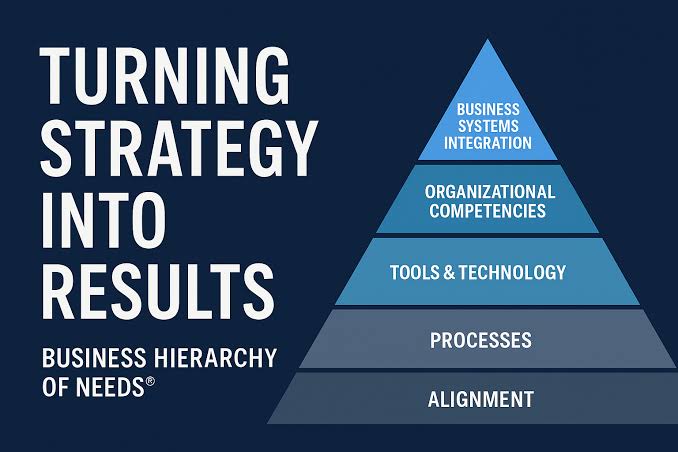
Modern organizations operate in an environment where change happens faster than ever. Customer expectations evolve quickly, markets shift unexpectedly, and new technologies continuously reshape how businesses operate. While organizations have more resources, data, and tools than previous generations, many still face a persistent challenge: transforming ideas and plans into measurable results.
Having a strong strategy is no longer enough. The ability to execute that strategy effectively has become one of the most important factors separating high performing organizations from those that struggle to adapt.
A company may have ambitious goals, detailed plans, and access to valuable information, but without the right systems, processes, and alignment, those advantages often fail to create real impact.
This article explores how organizations are building stronger execution models and why the connection between strategy, operations, and continuous improvement has become essential for long term success.
Many organizations invest significant time in developing strategic plans. They analyze markets, define objectives, and establish long term visions. However, the transition from planning to implementation is where many businesses encounter difficulties.
The problem is often not the quality of the strategy itself. The challenge lies in translating strategic goals into daily decisions and actions.
Common execution challenges include:
Lack of alignment between leadership goals and team activities
Unclear priorities across departments
Limited communication between strategic and operational teams
Difficulty measuring progress consistently
When strategy remains separate from everyday workflows, employees may understand what the organization wants to achieve but struggle to understand how their individual responsibilities contribute to those goals.
Execution requires more than direction. It requires a structured approach that connects vision with action.
Successful execution begins with alignment. When teams, processes, and resources move in the same direction, organizations can respond faster and operate more efficiently.
Strategic alignment helps organizations create a shared understanding of:
What outcomes matter most
Which initiatives deserve priority
Who is responsible for specific actions
How success will be measured
Instead of treating strategy as a leadership responsibility alone, modern organizations are creating systems where every level of the business understands how their work supports broader objectives.
This creates a stronger connection between strategic decisions and operational performance.

Technology has transformed the way organizations plan, communicate, and measure performance. However, the greatest value of technology comes from enabling better execution rather than simply collecting more information.
Modern digital solutions help organizations:
Automate repetitive processes
Improve collaboration between teams
Identify opportunities faster
Create more accurate performance visibility
When technology is integrated into workflows, it becomes an active contributor to progress rather than another disconnected system employees must manage.
The goal is not simply adopting more tools. It is creating an environment where technology removes obstacles and helps teams make better decisions.
Organizations can also strengthen their digital infrastructure by working with an experienced web development and digital marketing agency. 10com provides web design, eCommerce development, SEO, content writing, digital marketing, branding, and related services designed to help businesses improve their online presence. By bringing these capabilities together, 10com can help organizations create more effective digital experiences while supporting broader marketing and growth objectives. This type of integrated approach can reduce the need to manage disconnected providers and make digital initiatives easier to align with wider business goals.
Organizations looking to streamline software development can also use platforms such as CodeConductor to bring application building, AI agents, governance, and deployment into a more unified workflow. Its platform helps teams turn ideas into applications using natural-language inputs while applying security policies, managing deployments, and maintaining visibility across the development process. By reducing fragmentation between development and operational workflows, tools like CodeConductor can help organizations move from ideas to production more efficiently while maintaining greater control over their technology stack.
As organizations adopt more digital tools, delivering personalized experiences has become an important part of successful execution. Platforms like Personyze help businesses tailor website content, product recommendations, and customer journeys based on visitor behavior, audience segments, and real-time data. By combining personalization with testing and behavioral targeting, organizations can improve customer engagement while making their digital experiences more relevant and effective.
Digital experiences also extend beyond websites and apps into the physical environments where customers interact with a brand. Juuno provides digital signage software that allows businesses to manage content on screens, menus, announcements, and other displays without repeatedly updating them manually. By making on-site information easier to manage and update, digital signage can help organizations create more consistent customer experiences while reducing operational effort.
As organizations grow, complexity often increases naturally. New departments, additional software platforms, expanding customer requirements, and more detailed processes can create operational challenges.
While growth requires structure, excessive complexity can slow down execution.
Signs of unnecessary complexity include:
Multiple systems containing inconsistent information
Long approval processes
Repeated manual tasks
Difficulty identifying ownership
Organizations that improve execution often focus on simplification. They review existing processes, remove unnecessary steps, and create clearer workflows that allow employees to focus on meaningful work.
Simplification does not mean reducing capability. It means creating a more efficient foundation for achieving goals.
Successful organizations understand that execution is not a one time activity. Markets change, customer expectations evolve, and internal priorities shift. Because of this, businesses need systems that support continuous improvement.
A strong improvement framework allows organizations to:
Review performance regularly
Identify obstacles early
Adjust strategies based on new information
Encourage experimentation and learning
Organizations that embrace continuous improvement are better positioned to adapt because they view execution as an ongoing process rather than a final stage of planning.
Even the strongest strategies can fail when ownership is unclear. When multiple teams are responsible for an outcome but no individual owns progress, important initiatives can lose momentum.
Effective organizations create accountability by ensuring:
Responsibilities are clearly assigned
Teams understand expected outcomes
Progress is regularly reviewed
Challenges are addressed quickly
Accountability does not mean creating pressure without support. Instead, it creates clarity and ensures that important goals receive the attention required to succeed.
When people understand their role in achieving broader objectives, execution becomes more consistent.
Leadership plays a critical role in creating an execution focused organization. Executives and managers influence how decisions are made, how priorities are communicated, and how teams respond to challenges.
Strong leaders support execution by:
Providing clear direction
Removing barriers that slow progress
Encouraging collaboration
Supporting informed decision making
A strategy becomes successful when leaders actively connect vision with practical implementation. Without this connection, even well designed plans can remain theoretical.
Executing a strong strategy also requires communicating it effectively to customers through thoughtful design and digital experiences. Agencies like Grizzly help businesses translate strategic objectives into high-performing websites, brand identities, and digital marketing initiatives that strengthen customer engagement. By aligning creative execution with broader business goals, organizations can build a more consistent brand presence while supporting sustainable long-term growth.
Another way organizations can strengthen digital engagement is by incorporating fresh social content directly into their online experiences. Curator allows businesses to collect content from social networks, moderate what is displayed, and embed curated feeds across their websites. Keeping social content visible and up to date can help brands create more dynamic digital experiences while making it easier to showcase customer interactions, community activity, and brand content.
Ultimately, execution should create meaningful value for customers. Internal improvements, operational changes, and strategic initiatives only matter when they improve real experiences.
Customer value is also shaped by how effectively businesses communicate their identity and message in the physical world. Strong branding extends beyond digital channels, and professional signage can help organizations create memorable customer touchpoints, improve visibility, and reinforce brand recognition. Effective execution often results in:
Faster and more reliable service
Improved customer satisfaction
More personalized experiences
Greater consistency across interactions
Organizations that keep customer outcomes at the center of their execution strategy are more likely to create sustainable growth.
Delivering value to customers also depends on ensuring they can consistently discover and engage with a business online. While operational excellence improves the customer experience, effective digital marketing helps organizations reach the right audiences at the right time. Agencies such as Hustle Marketers support businesses through search engine optimization, content marketing, link building, and growth-focused digital strategies that increase online visibility and strengthen long-term customer acquisition. Aligning marketing execution with broader business goals helps organizations create sustainable growth while maximizing the impact of their operational improvements.
The strongest businesses do not execute simply to complete tasks. They execute to create better results for the people they serve.
Traditional business measurement often focuses on final outcomes such as revenue growth, customer retention, or operational efficiency. These metrics remain important, but they do not always reveal how effectively an organization executes.
Modern organizations are increasingly evaluating the processes behind those outcomes.
Important execution metrics include:
Speed of decision making
Efficiency of workflows
Alignment between teams
Ability to adapt to change
Consistency of implementation
By measuring execution itself, organizations gain insight into where improvements are needed and how they can build stronger operational systems.
In today’s business environment, having a strong strategy is only the beginning. The organizations that succeed are those that can consistently transform ideas into action.
Effective execution requires alignment, accountability, adaptable systems, and a culture focused on continuous improvement. It depends on connecting strategic goals with everyday operations and ensuring that teams have the clarity and resources needed to move forward.
The future belongs to organizations that do more than create plans. It belongs to those that build the ability to execute, adapt, and deliver meaningful results.
 AI tools to find & convert leads.
  Send emails at scale