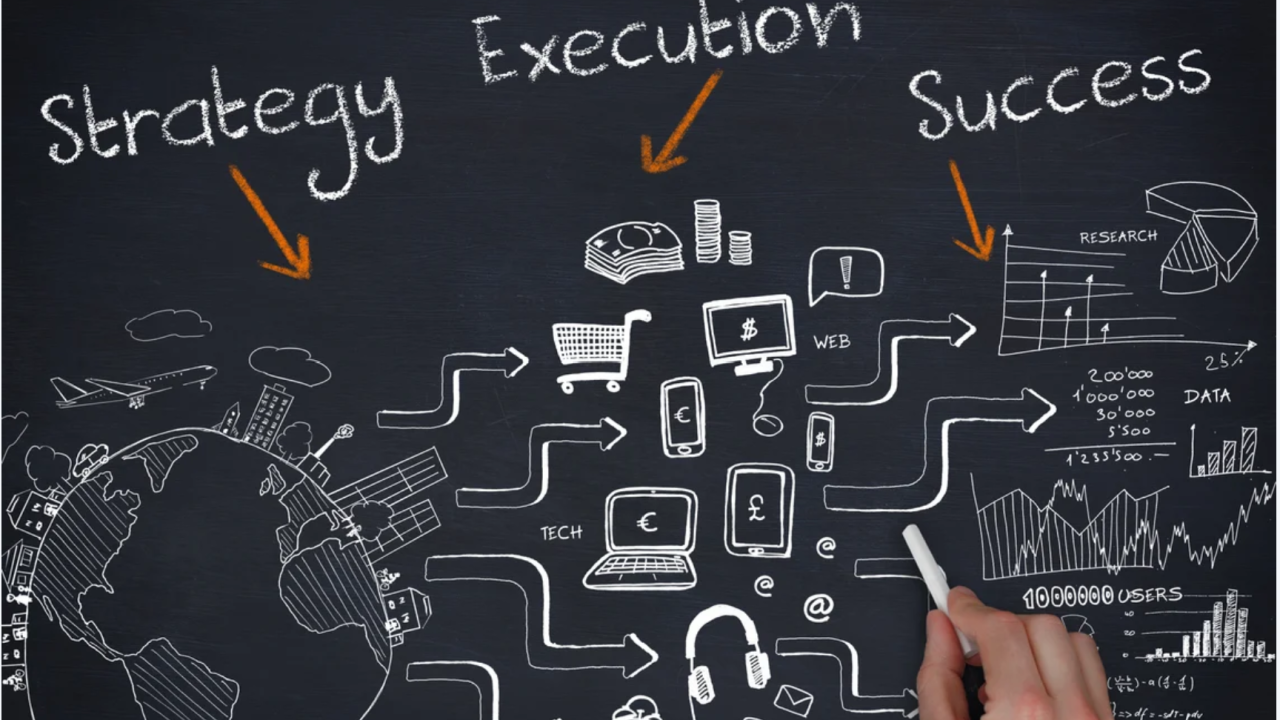
Modern organizations operate in an environment where information is abundant. Data flows continuously from customers, internal systems, market activity, and digital interactions. Advanced analytics tools, automation platforms, and artificial intelligence have made it easier than ever to generate insight.
Yet despite this progress, many businesses still struggle with a fundamental issue: knowing what is happening does not always lead to meaningful action. The real challenge is no longer access to information, but the ability to translate insight into execution at scale.
This shift has redefined what operational success looks like. Businesses are now focusing less on collecting data and more on building systems that turn intelligence into decisions, workflows, and measurable outcomes.
In theory, better information should lead to better decisions. In practice, organizations often experience the opposite. Teams are flooded with dashboards, reports, and analytics, yet still find it difficult to prioritize and act effectively.
Several common barriers explain this disconnect:
Information is distributed across multiple disconnected systems
Insights lack clear ownership or accountability
Teams receive too much data without clear direction
Decision making is delayed by approval layers and complexity
Strategic goals are not clearly connected to daily execution
The result is a growing gap between awareness and action. Businesses know more than ever, but often move slower than expected.
Traditional reporting systems were designed to inform. Modern organizations require systems that actively support execution.
This shift changes how businesses think about data infrastructure. Instead of asking what happened, they increasingly ask what should happen next and who should do it.
Execution focused systems typically include:
Clear prioritization of actions rather than raw metrics
Direct links between insight and assigned responsibilities
Real time visibility into progress and bottlenecks
Integration between planning, operations, and feedback loops
When insight is embedded directly into workflows, it becomes part of decision making rather than an isolated report.

Artificial intelligence has accelerated this transformation. While early applications of AI focused on forecasting and analysis, its role is now expanding into execution support.
AI enables organizations to:
Identify actions that require immediate attention
Automate repetitive or low value decisions
Detect inefficiencies in workflows before they escalate
Suggest next steps based on historical and real time data
However, the effectiveness of AI depends on how deeply it is integrated into operations. Insight that remains separate from daily workflows has limited impact. The value emerges when intelligence actively shapes how work gets done.
One of the most overlooked barriers to execution is operational complexity. Over time, businesses accumulate layers of tools, processes, and communication channels that create friction.
This complexity leads to:
Slower decision making
Duplicated work across teams
Lack of visibility into progress
Misalignment between departments
As a result, organizations are increasingly rethinking their internal systems. The goal is not to add more tools, but to reduce fragmentation and improve clarity.
Simplified systems allow teams to focus on outcomes rather than navigating disconnected workflows. When processes are streamlined, insight moves more quickly into action.
Turning insight into action depends heavily on how quickly teams can access the right information at the moment decisions are made. all-in-one AI platform like AiZolo help reduce operational friction by bringing multiple AI tools, workflows, and knowledge systems into a single unified workspace. Instead of switching between disconnected platforms for research, content generation, analysis, and collaboration, teams can streamline decision making within one environment. This kind of centralized AI infrastructure improves execution speed, reduces context switching, and helps organizations move more efficiently from insight to implementation.
Even when insight is clear, action often stalls due to unclear ownership. Without defined responsibility, insights tend to circulate without resolution.
High performing organizations address this by ensuring:
Every insight has a designated owner
Responsibilities are clearly assigned across teams
Decision rights are explicitly defined
Progress is tracked and reviewed consistently
Ownership transforms insight from passive information into accountable action. It ensures that decisions do not remain theoretical but are carried through to completion.
While systems and tools enable execution, organizational culture determines how consistently it happens.
Companies that excel at turning insight into action tend to share several cultural traits:
A preference for rapid decisions over perfect certainty
Strong alignment between teams and shared objectives
A focus on outcomes rather than internal activity
A willingness to iterate based on real world feedback
In these environments, insight is not simply observed. It is acted upon, tested, and refined continuously.
The effectiveness of execution ultimately shows up in customer experience. Insight only has value if it improves how customers interact with the business.
Organizations that excel in this area use insight to:
Anticipate customer needs before they are expressed
Remove friction across customer journeys
Respond quickly to feedback and behavioral signals
Align internal processes with external expectations
Customer outcomes serve as the clearest indicator of whether insight is truly driving meaningful execution.
Traditional performance metrics often focus on results after the fact. Increasingly, organizations are shifting toward measuring execution itself.
This includes evaluating:
How quickly insights are acted upon
Where delays occur in workflows
How consistently teams follow through on priorities
How closely daily operations align with strategic goals
By measuring execution directly, businesses gain visibility into the systems that drive performance, not just the outcomes they produce.
Insight is no longer the final objective. It is the starting point for coordinated execution across the organization.
Businesses that succeed in today’s environment consistently:
Design strategies with execution in mind
Simplify operations to reduce friction
Embed intelligence into daily workflows
Build cultures centered on accountability and action
As competition increases and speed becomes a defining factor, the ability to turn insight into action is becoming a core driver of long term success.
 AI tools to find & convert leads.
  Send emails at scale