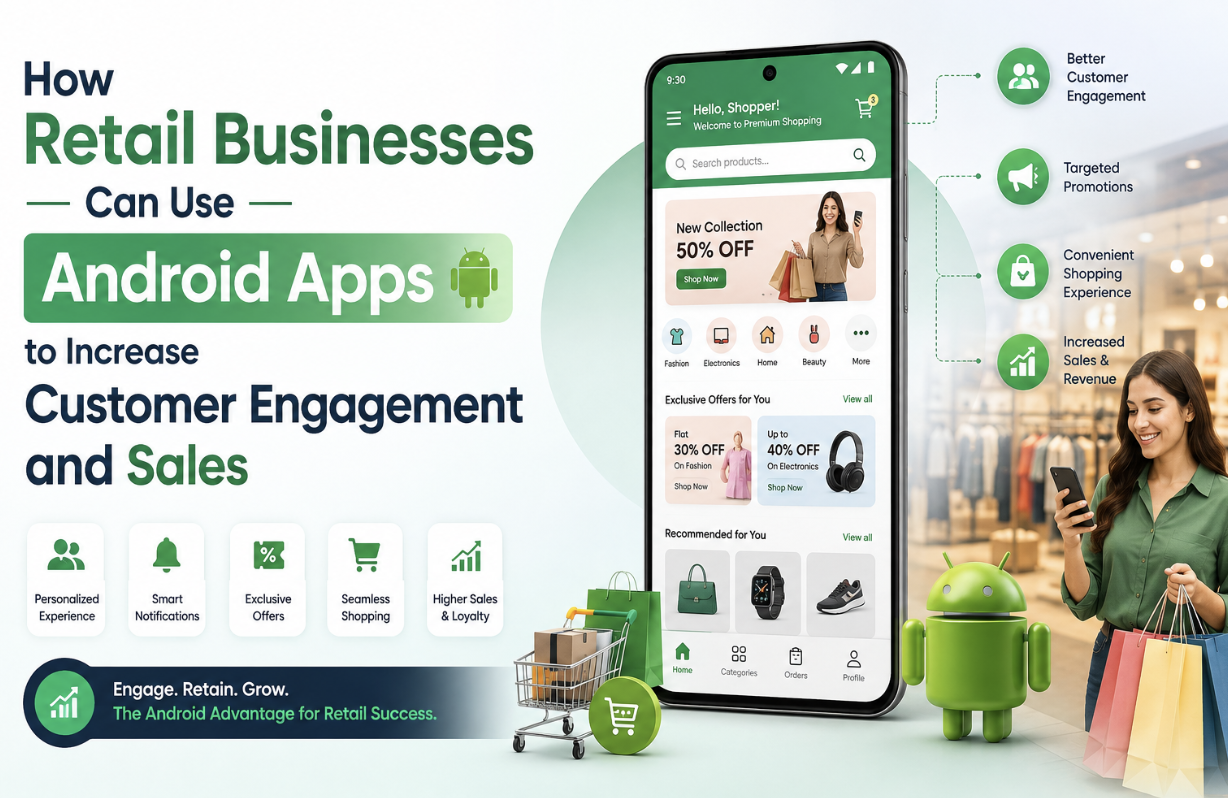
Retail customers today want more than good products. Brands need to provide customers with fast service and simple shopping experiences and tailored promotions and uninterrupted brand interactions. Retailers can satisfy customer needs through their mobile apps, which let shoppers experience shopping directly on their mobile devices.
Android apps offer businesses a way to connect with their target audience because they can reach numerous smartphone users while building direct customer relationships. An Android app provides support for every stage of the customer experience through its ability to deliver customized suggestions and reward programs and simplified payment options.
Businesses that want to enter the mobile market need to work with Android app development companies that specialize in creating applications that align with their business goals and customer expectations.
Customers choose retail apps mainly because they provide them with convenient solutions. Customers now have the ability to view products through their mobile devices instead of going to physical stores or browsing websites.
An Android application unites product categories with search filters and product images and descriptions and prices and customer reviews into a single platform. Customers can add products to their cart, choose delivery options, and complete purchases without unnecessary steps.
The shopping process becomes simple because it requires minimal effort from customers, which leads them to use the app for future purchases.
Consumers will be more interested in products that relate to their personal tastes. A mobile application can utilize data such as previous purchases, history of browsing, and saved items in order to offer personalized product suggestions.
For instance, a fashion store can offer clothes in line with what a customer had purchased before. A mobile grocery application can offer products that a consumer is used to purchasing.
Personalized recommendations add value to the shopping process. In addition, recommendations can assist the customer to discover some products that she would not normally discover on her own.

The loyalty program is simpler to implement using a mobile application. The retailer business can enable its customers to earn points, get rewarded, enjoy special discounts, and monitor their loyalty status using their mobile device.
For example, the retailer can assign points to every purchase. After getting a certain amount of points, the consumer can enjoy some discounts or special prizes. Mobile applications can offer special discounts to loyal customers.
Notifications pushed directly allow merchants to talk straight to clients. Firms may utilize these messages to distribute details regarding fresh items, price cuts, holiday deals, status changes on orders, and unique happenings.
Yet, dispatching excessive alerts may irritate consumers. Shops ought to concentrate upon helpful and pertinent communications.
For instance, a client adding an item to their wish list might get notified if that price falls. Such messages may hold greater worth compared to dispatching identical promotions toward all customers.
Retail applications allow businesses to push items and promotions with ease. Firms may show short-term price cuts, holiday drives, discount codes, and unique bargains within the app interface. Applications might display deals according to client preferences or buying habits.
For instance, a client buying often sports items might get data on fresh collections or linked discounts. Useful deals may raise involvement while aiding firms push goods toward correct crowds.
Difficult checkout processes may lead customers to abandon carts before finishing purchases. Android applications might ease checkout through offering helpful payment choices.
Online stores may allow ways including cards, mobile wallets, internet finance, and various extra money choices. Clients might store shipping info and like payment types if suitable.
Making checkout quicker and less difficult lowers barriers so buyers finish purchases with greater ease.
Mobile applications allow retailers to link their brick-and-mortar locations with digital purchasing platforms.
For instance, clients might utilize software to verify if goods exist within close shops. They may submit requests digitally and select collection over enduring shipping delays.
Shops may also utilize applications to offer electronic invoices, shop details, item stock status, and location-specific features.
This results in a better joined buying journey between real and online places.
Retailers may use customer feedback to learn what buyers enjoy and where issues exist. An Android application might simplify gathering ratings, comments, questionnaires, and responses.
Consumers may examine items following a transaction or distribute details regarding the buying journey.
Merchants may review such comments to enhance item choices, client support, application tools, and buying steps. Answering shopper remarks might likewise indicate to buyers that their views hold significance.
Users might require assistance prior to, throughout, or subsequent to buying something. A mobile application built on Android allows offering client aid without forcing people to exit the system.
Shops may put live chat, FAQs, order tracking, contact choices, and help tickets inside the application.
For instance, clients may verify order progress via the application rather than contacting support staff. Rapid retrieval of data might enhance total client satisfaction and lower annoyance connected with assistance requests.
Commercial applications may offer enterprises data regarding client engagement with goods and offerings.
Merchants may examine data points including best-selling goods, often accessed articles, buying habits, basket usage, and client interaction levels. Such knowledge assists companies in grasping shopper tastes better.
Data may additionally aid superior marketing choices. As an instance, merchants might detect items gaining numerous looks yet scarce buys and examine if pricing, item details, or checkout issues impact sales figures.
Companies ought to gather client information responsibly and offer suitable privacy along with security safeguards.
A mobile application provides retailers with a direct line to reach their clients. Rather than relying solely on search tools, social networks, or outside sales sites, companies may construct experiences centered upon their specific brands.
The app may feature brand narratives, fresh collections, useful buying material, loyalty perks, and tailored encounters.
With time, frequent contacts may aid clients in getting to know the brand better and push them back again.
Creating a winning retail application demands more than just putting in simple buying functions. The software has to be quick, simple to operate, safe, and built based on what the intended buyers actually need.
Merchants may engage a seasoned Android app development company to map out system structure, craft user experiences, build key functions, verify software, and deliver continuous updates.
Retail firms gain multiple methods via Android applications to boost client interaction and aid sales efforts. Through tailored suggestions, reward programs for loyalty, easy payment processes, and useful assistance, these mobile tools allow shopping to become much simpler.
The main point is creating software solving genuine client issues rather than just inserting functions. Stores ought to concentrate upon ease, customization, safety, and helpful messaging.
 AI tools to find & convert leads.
  Send emails at scale