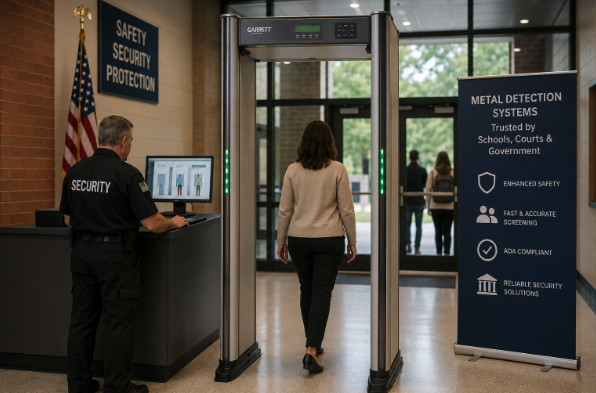
When it comes to keeping people safe, the tools you choose matter. Whether you're securing a school entrance, managing access at a federal courthouse, or screening thousands of visitors at a government facility, the right metal detection system can make all the difference. This guide explains why metal detection systems have become a cornerstone of modern security, how different facilities use them, and what to look for when choosing the right system for your needs.
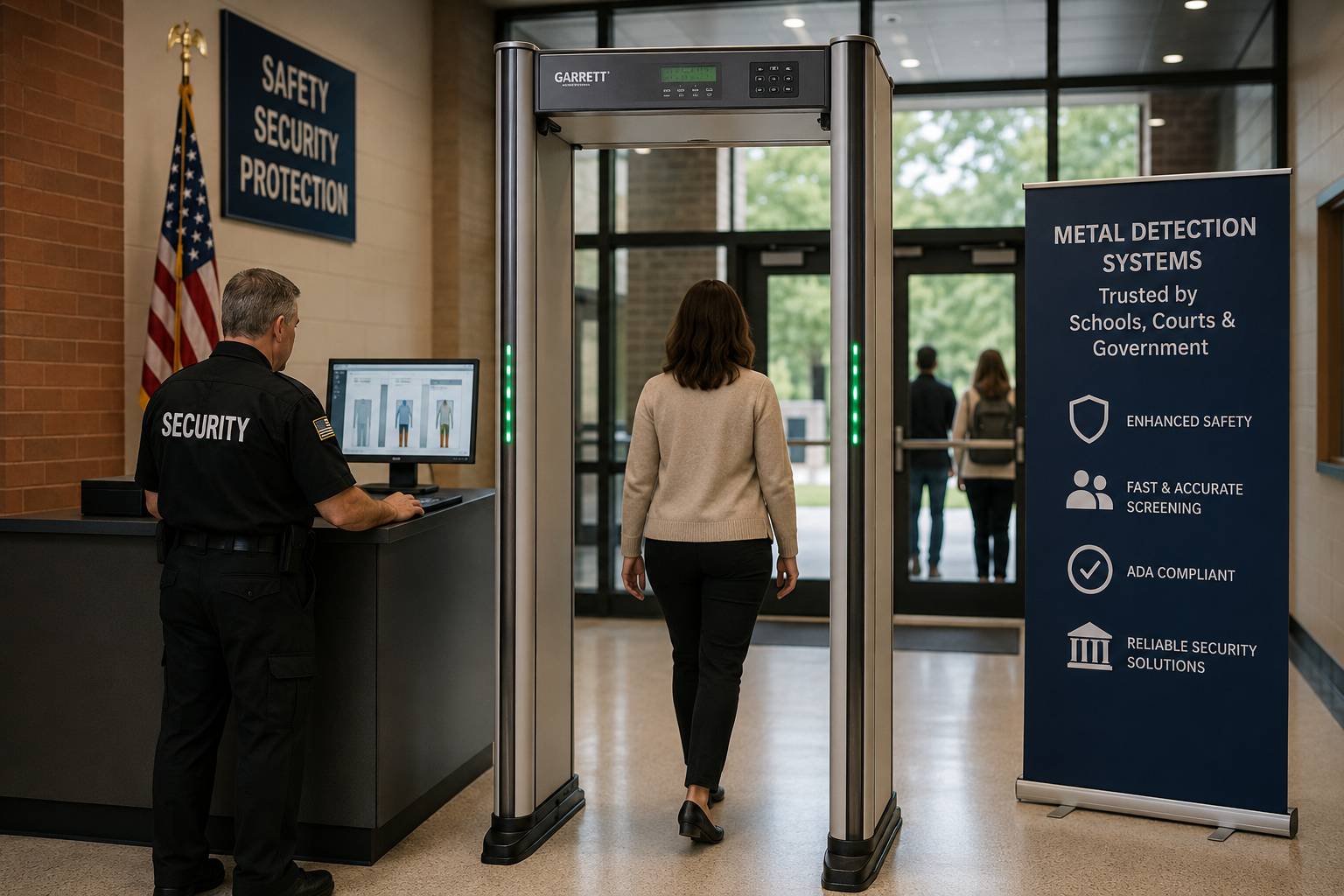
Security threats have evolved significantly over the past two decades. Schools face concerns about weapons on campus. Courthouses handle high-stakes proceedings that attract volatile situations. Government buildings are frequent targets for individuals with harmful intentions. In all of these environments, the ability to detect concealed metal objects — firearms, knives, and other dangerous items — before someone enters a building is critical.
A quality walk-through metal detection system provides a visible deterrent and a reliable first line of defense. It sends a clear message: this facility takes security seriously. And beyond the psychological impact, it gives security personnel actionable, real-time information to respond quickly and confidently.
School safety has become one of the most urgent priorities in the United States. Administrators, parents, and policymakers are all looking for effective, practical solutions that protect students without turning schools into fortresses.
Walk-through metal detectors for schools have proven to be one of the most effective tools available. They can be deployed at main entrances, gymnasium doors, or event venues — and modern models are designed to operate quietly so they don't disrupt the school environment.
For K-12 schools, the most popular choices are 6-zone and 18-zone metal detection systems. These models offer multi-zone detection, which means they don't just alert when metal is found — they pinpoint exactly where on the body the item is located. This dramatically speeds up the screening process and gives staff precise information rather than a vague alarm.
Key features schools look for include:
ADA-compliant width (minimum 32.5 inches) to accommodate all students
Quiet alarm modes to avoid disrupting classrooms nearby
Battery backup for use at sports events, assemblies, and outdoor activities
Easy setup so staff can deploy and move units without professional installation
The Zorpro 6 Zone and Garrett MZ 6100 are two of the most widely adopted school metal detection systems in the country, offering an excellent balance of affordability, accuracy, and ease of use.
Courthouses have some of the most demanding security requirements of any public building. Proceedings can involve criminal defendants, heated family disputes, and high-profile cases that draw intense public attention. Controlling who enters — and what they bring with them — is non-negotiable.
Courthouse metal detection systems need to meet a high bar: they must screen large volumes of visitors quickly, maintain a high detection rate, and minimize false alarms that slow down operations and frustrate staff.
The Garrett PD 6500i has long been the gold standard for courthouse security. Its 33 pinpoint detection zones, TSA-level certification, and dual-panel technology make it one of the most precise and reliable security metal detectors available. It's deployed in courthouses across the United States and trusted by U.S. Marshals Service facilities nationwide.
For courthouses working within tighter budgets, the Zorpro 33 Zone offers comparable 33-zone detection at roughly 40% lower cost — with the same 2-year warranty and U.S.-based support that PTI provides on every model.
What makes courthouse metal detection systems different from basic entry-level models:
High zone count (33–66 zones) for precise body-location detection
Dual-panel detection to catch items on either side of the body simultaneously
Advanced discrimination settings to reduce false alarms from belt buckles, coins, and medical implants
Network connectivity for multi-unit management and event logging
Directional counters to track traffic flow and throughput
Federal, state, and municipal buildings face a unique set of challenges. They serve the public every day, handle sensitive operations, and must comply with strict national security standards. The metal detection systems used in these environments must meet or exceed those standards consistently.
Airport and government-grade metal detection systems like the Garrett PD 6500i and the Garrett Paragon are both deployed in U.S. airports and government facilities worldwide. The Garrett Paragon, with its 66 detection zones and 200 sensitivity levels, represents the top of the line in walk-through security technology. It holds ECAC certification — the European standard for aviation security — making it one of the few systems approved for use in the world's most demanding screening environments.
For multi-unit government deployments, these systems offer:
Network connectivity to manage multiple units from a central console
Remote configuration for security teams overseeing large facilities
Detailed event logging for audit trails and compliance reporting
200-level sensitivity adjustment for fine-tuned screening
Beyond permanent installations, metal detection systems play a critical role in temporary security setups for concerts, sporting events, political rallies, festivals, and conferences. In these settings, the ability to deploy quickly, handle high foot traffic, and move units between locations is just as important as detection performance.
PTI offers both sales and walk-through metal detector rentals for short-term needs. Rental units ship fully tested and calibrated, with clear setup instructions and free phone support. This makes it easy for event organizers to maintain professional-grade security without a permanent capital investment.
Popular event security metal detection systems include:
Zorpro 6 Zone — lightweight, portable, and battery-compatible
Garrett MZ 6100 — 20-zone detection with optional caster wheels for easy repositioning
Fisher M-Scope — designed for outdoor and portable deployments
Not all security metal detectors are created equal. Here are the key factors to evaluate before making a purchase:
More zones mean more precise location data. A 6-zone system tells you roughly where on the body metal was detected. A 33-zone or 66-zone system narrows it down to a very specific area — which speeds up secondary screening and reduces the time each person spends at the checkpoint.
Look for systems with at least 100 sensitivity levels. Higher-end models offer 200 levels, giving your security team the flexibility to adjust thresholds based on the environment, the type of event, and the threat level on any given day.
All metal detection systems sold by PTI meet ADA requirements, with a minimum clear opening of 32.5 inches. This ensures your facility remains accessible to all visitors without compromising security.
For facilities that need to move or redeploy units, look for models that can be assembled in under 30 minutes without professional tools. PTI's entire product line ships with detailed setup manuals and free phone support.
A metal detection system is a long-term investment. Every model includes a 2-year warranty covering parts and manufacturer defects, along with free U.S.-based technical support at 801-280-9997.
Understanding the pricing landscape helps you set realistic expectations and choose a system that fits your budget without sacrificing security.
| Price Range | What You Get | Best For |
| $1,495 – $2,500 | Single-zone to 6-zone detection | Small offices, churches, low-traffic entrances |
| $2,500 – $4,000 | 18–33 zone detection, ADA compliant | Schools, courthouses, mid-size events |
| $4,000 – $6,000 | Advanced discrimination, network ready | Airports, government buildings, prisons |
| $6,000+ | 66-zone, ECAC certified, 200 sensitivity levels | Maximum-security environments |
PTI guarantees the lowest price on every model. If you find a lower advertised price from an authorized dealer, they will match or beat it.
Whether you're protecting students, ensuring courthouse safety, or securing a government facility, the right metal detection system is one of the most important investments you can make. PTI has spent over 30 years helping organizations of all sizes find the right solution — and backing every sale with the lowest price guarantee, a 2-year warranty, and free U.S.-based support.
A metal detection system is designed to identify concealed metal objects, such as firearms, knives, and other prohibited items, before people enter a secured area. These systems are widely used in schools, courthouses, government buildings, airports, stadiums, and event venues to improve safety and streamline visitor screening.
Schools typically benefit from 6-zone or 18-zone walk-through metal detectors because they provide accurate detection while maintaining fast screening speeds. Features such as ADA-compliant walkways, battery backup, quiet alarms, and easy portability make them ideal for daily school operations and special events.
Courthouses experience high visitor traffic and require precise screening. Models with 33 or more detection zones can accurately identify the location of concealed metal objects, reducing secondary screening time, minimizing false alarms, and improving overall security.
Yes. Most modern walk-through metal detection systems are designed with ADA compliance in mind. They typically provide a minimum clear opening of 32.5 inches, allowing wheelchair users and individuals with mobility devices to pass through comfortably while maintaining effective security screening.
Yes. Many security providers offer short-term rentals for concerts, sporting events, conventions, political rallies, festivals, and corporate gatherings. Rental units are usually shipped fully tested, calibrated, and ready for quick installation.
 AI tools to find & convert leads.