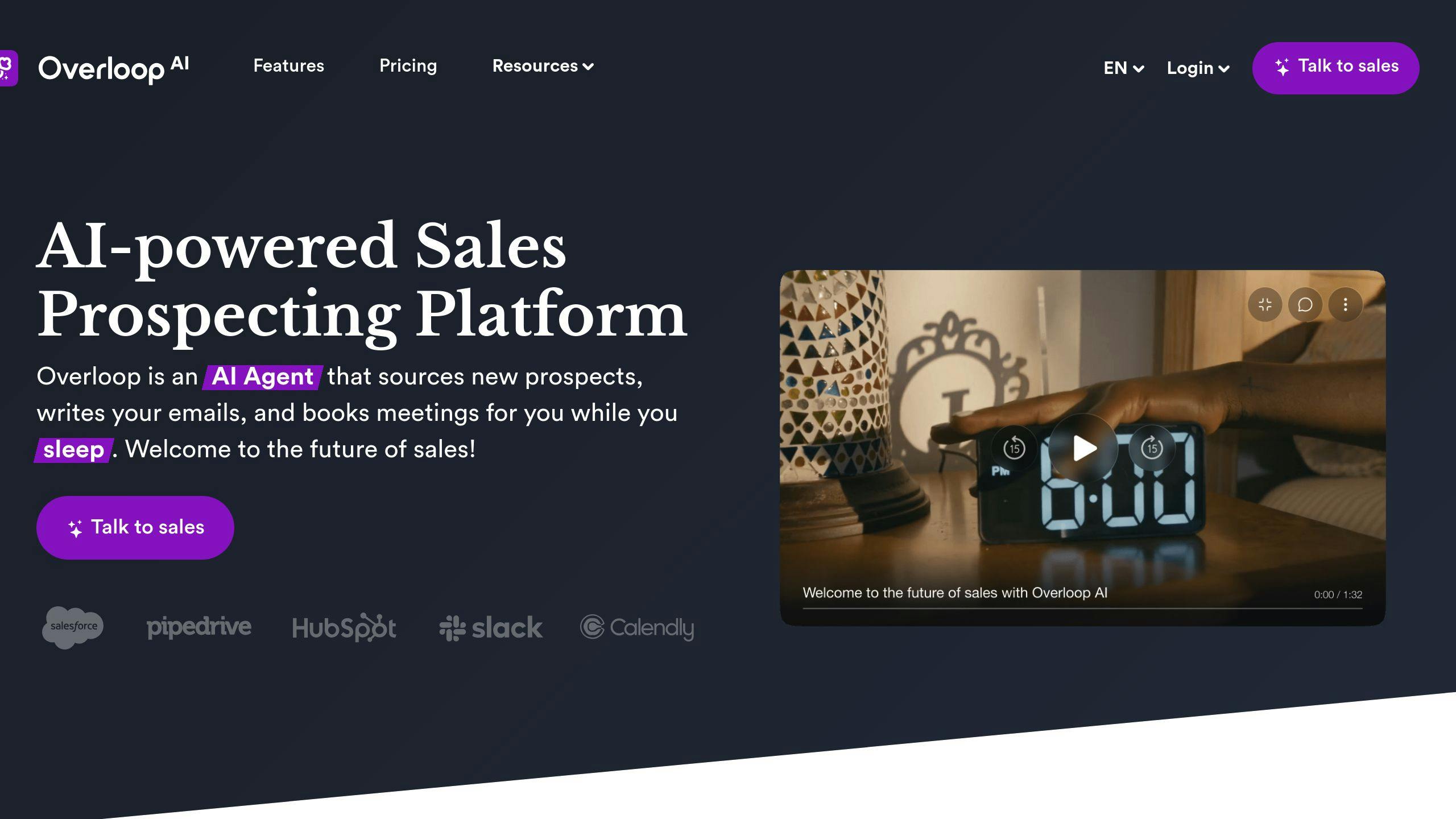
Outbound prospecting in 2026 feels like navigating a crowded bazaar. Every vendor promises smarter automation, better deliverability, and AI that practically closes deals for you. Cutting through the noise demands more than a feature checklist; it requires real testing, honest pricing breakdowns, and a clear-eyed look at what actually moves the needle for B2B pipeline generation.
That's exactly what this review delivers. We put a multichannel outbound platform combining LinkedIn automation, cold email sequences, and AI-driven personalization through its paces. You'll find genuine pricing data, feature deep-dives, head-to-head comparisons with top competitors, and a candid take on where the tool falls short. The core question: does this platform truly earn the title of best AI intent-based sales prospecting tool for B2B teams?
Overloop operates as a multichannel outbound execution platform that merges LinkedIn actions and email sequences into a single workflow. SMB and mid-market B2B sales teams, SDRs grinding through cold outreach, and growth marketers running targeted campaigns represent the sweet spot for this tool.
One distinction worth making early: Overloop doesn't try to be a CRM. It won't replace HubSpot or Salesforce as your system of record. It's also not a standalone contact database, though it bundles one. And despite the AI capabilities, don't expect a fully autonomous AI SDR that runs prospecting without human oversight.
The platform ships from the EU, which matters if your team cares about GDPR-compliant data handling. On G2, Overloop holds a 4.4 out of 5 rating across roughly 130 reviews, with most reviewers coming from companies with 50 employees or fewer. That reviewer profile tells you something: this tool resonates with lean, scrappy teams rather than enterprise sales floors.
The campaign builder lets you chain LinkedIn profile visits, connection requests, and direct messages alongside email steps inside one unified sequence. You set delays between steps, define conditional logic (did they accept your connection? did they open your email?), and decide whether to use AI-generated copy or write your own.
A visual workflow builder handles the orchestration. Drag-and-drop nodes control lead-stage updates and follow-up triggers without needing external automation tools. The experience feels closer to a marketing automation canvas than a traditional cold email tool, which simplifies campaign management for teams juggling both channels simultaneously.
Where this really pays off: you stop switching between a LinkedIn tool and an email platform. One dashboard, one workflow, one place to track replies. For SDRs managing 200+ active prospects, that consolidation saves real hours every week.
Overloop bundles a contact database exceeding 450 million profiles. Define your ideal customer profile (industry, company size, job title, geography) and the system builds prospect lists automatically. Each contact comes with built-in email finding and verification, so you skip the usual export-to-verification-tool dance.
Access runs on a credit model rather than flat per-seat pricing. Credits unlock database searches, email lookups, and verifications. This structure rewards teams that prospect strategically rather than scraping thousands of contacts at random. Small teams with tight targeting criteria get solid value here without paying for unlimited access they'd never use.
The AI personalization engine reads prospect websites, LinkedIn bios, and recent social activity to generate contextual cold emails and follow-ups, illustrating how AI agents for lead qualification can enrich prospect data before outreach begins. Instead of mail-merge fields like `{{first_name}}`, the system crafts opening lines referencing a prospect's latest post or company announcement.
A Chrome extension pulls prospects directly from LinkedIn profiles or Sales Navigator search results into your Overloop workspace. You highlight a profile, click, and the contact flows into your campaign, complete with verified email. The platform also includes a native email warmup system that gradually builds domain reputation before you launch campaigns, eliminating the need for a separate warmup service.

Pricing confusion plagues Overloop reviews across the web. Some third-party comparison sites list the cost at $399 per user per month, a figure roughly 4 to 6 times higher than reality. The source of truth remains overloop.com/pricing.
Here's what you actually pay:
| Plan | Monthly Cost | Credits Included | Seats Covered |
| Starter | $69/month | 500 credits | 1 seat |
| Growth | $99/month | 1,000 credits | 2 seats |
| Enterprise | Custom | Custom | Custom |
Credits gate database access, email lookups, and verifications. The 500-credit Starter plan covers a single user doing moderate prospecting volume. Growth doubles that allocation and adds a second seat, making it reasonable for small duos.
Compared to typical outbound tool pricing, Overloop sits comfortably in the mid-tier. You get multichannel execution, a built-in database, and email warmup at a price point below Apollo's scaling costs and far below enterprise platforms. Watch out for credit overages though. High-volume prospecting burns through credits fast, and top-ups add cost that isn't obvious at signup.
Six strengths stood out during testing, each tied to a concrete workflow benefit rather than marketing fluff.
Unified LinkedIn and email outreach eliminates the tool-switching tax. Running both channels from one sequence builder saves setup time and reduces the chance of messaging the same prospect twice through different tools.
AI personalization genuinely accelerates message writing. Generating 50 contextual opening lines that reference real prospect details takes minutes instead of an afternoon. The output isn't perfect, but it's a strong first draft.
The UI keeps things simple. Campaign setup follows a logical flow, tooltips explain each step, and a new SDR can launch their first sequence within an hour. Low learning curve matters when you're hiring junior reps.
The built-in prospect database removes one subscription from your stack. No need for a separate ZoomInfo or Lusha contract if your prospecting volume stays moderate.
Native email warmup handles domain reputation building without bolting on yet another tool. You configure it once and let it run in the background before campaign launch.
EU-based hosting gives European teams a GDPR-compliant infrastructure without legal gymnastics. For companies selling into the EU market, this advantage carries real weight during procurement reviews.
No tool earns a perfect score. Honest testing revealed six limitations that matter depending on your team's size, workflow, and ambitions.
The absence of a built-in CRM means you maintain a separate system of record. Every deal, every pipeline stage, every revenue forecast lives elsewhere. For teams already running HubSpot or Salesforce, that's fine. For solo founders hoping to consolidate, it means another subscription.
LinkedIn automation relies on a browser extension rather than cloud-based execution. Your Chrome tab needs to stay active for LinkedIn actions to fire. If your laptop sleeps or your internet drops, the sequence pauses. There's also the ever-present risk of LinkedIn flagging extension-based automation, which could restrict your account.
AI-generated messages, while useful, sometimes land flat. Without manual editing and careful prompt tuning, outputs can feel templated. The AI references real prospect data, but the phrasing occasionally reads like every other AI-written cold email flooding inboxes in 2026. Expect to spend time refining the tone before sending.
The credit system creates a ceiling for high-volume teams. If you're prospecting hundreds of new contacts weekly, credits deplete fast and overages stack up. Teams doing heavy outbound at scale should model their monthly credit consumption carefully before committing.
Reporting stays basic. You get open rates, reply rates, and LinkedIn acceptance metrics, but advanced RevOps analytics, multi-touch attribution, or revenue-stage tracking aren't part of the package. Enterprise teams with complex funnels will find this limiting.
Finally, Overloop doesn't support fully hands-off autonomous AI SDR workflows. You still design campaigns, review messages, and manage replies manually. The AI assists, it doesn't replace you.
Salesforge runs LinkedIn automation in the cloud rather than through a browser extension, which eliminates the reliability concerns tied to Overloop's Chrome-based approach. Salesforge also offers deeper AI personalization at scale, with infrastructure-level deliverability features designed for teams sending thousands of emails daily.
Overloop wins on simplicity. The combined campaign builder and database access create a more streamlined experience for smaller teams. If you need high sending volumes and enterprise-grade infrastructure, Salesforge fits better. If you want one tool that handles prospecting, sequencing, and LinkedIn outreach without complexity, Overloop holds its ground.
Each competitor carves out a different niche. Here's how they stack up:
| Feature | Overloop | Lemlist | Apollo | Instantly |
| LinkedIn automation | Native (extension) | Limited | Basic | None |
| Email personalization | AI-generated | Images, videos, dynamic landing pages | AI + templates | AI + volume focus |
| Contact database | 450M+ built-in | Separate add-on | 270M+ built-in | No native database |
| Email warmup | Included | Included | Included | Core feature |
| Pricing (entry) | $69/month | $59/month | Free tier available | $30/month |
| Best for | Multichannel SMB | Creative email campaigns | All-in-one with CRM features | High-volume email |
Lemlist brings stronger visual personalization with custom images and video embeds, but lacks native LinkedIn sequencing. Apollo packs a massive database and CRM-like pipeline tools, though the learning curve steepens and costs climb at scale. Instantly dominates pure email volume and deliverability but offers zero LinkedIn channel support.
Overloop's differentiator remains clear: true multichannel LinkedIn plus email execution inside one workflow at SMB-friendly pricing. No other tool in this comparison matches that specific combination.
The ideal Overloop user runs a small to mid-sized sales team, prospects across both LinkedIn and email, and wants one platform instead of three. Solo SDRs building pipeline on a budget benefit from the combined database and sequencing. Agencies managing outbound for multiple clients appreciate the straightforward campaign setup.
EU-based teams gain a practical advantage from GDPR-compliant hosting without extra compliance overhead. If data residency concerns keep surfacing in your vendor evaluations, Overloop addresses them by default.
Skip Overloop if your team needs deep CRM integration, complex RevOps workflows, or multi-touch attribution reporting. High-volume email-only senders get better value from tools like Instantly that optimize purely for deliverability at scale. And if you're chasing a fully autonomous AI agent that prospects, qualifies, and books meetings without human input, Overloop isn't there yet.
The honest assessment: Overloop delivers a strong mid-tier outbound experience with a genuinely useful multichannel approach. It isn't the definitive best for every use case, but for the right team (lean, multichannel, budget-conscious), it punches above its price point.
Is Overloop legit and safe to use for LinkedIn outreach?
Overloop operates as a legitimate platform backed by a 4.4 out of 5 G2 rating. LinkedIn automation always carries some account risk, though, because Overloop relies on a browser extension rather than official LinkedIn APIs. Use conservative daily action limits and warm up your LinkedIn activity gradually to minimize detection.
How much does Overloop really cost per month?
The Starter plan costs $69 per month, and the Growth plan runs $99 per month with credit-gated access to the database and email verification. Ignore third-party sites listing $399 per user, that figure is incorrect. Check overloop.com/pricing for current rates.
Can Overloop replace my CRM?
No. Overloop focuses on campaign execution, not pipeline management or deal tracking. You still need a dedicated CRM like HubSpot, Salesforce, or Pipedrive to serve as your system of record alongside Overloop's outbound workflows.
 AI tools to find & convert leads.
  Send emails at scale