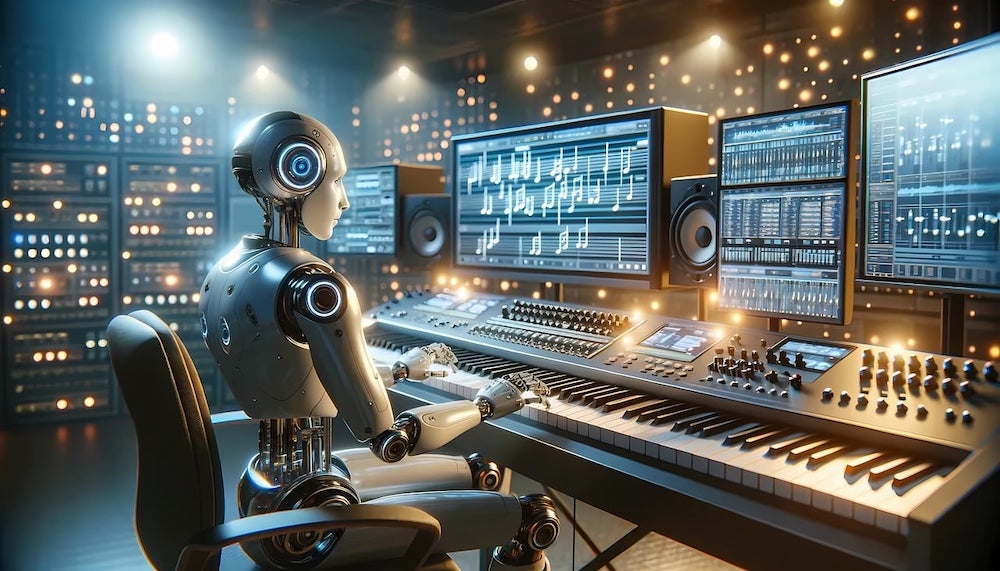
A few years ago, creating a music video usually meant one thing: a lot of people, a lot of equipment, and a lot of patience.
A musician needed a song first. A director needed a concept. A production team needed schedules. Editors needed hours of footage. Everyone needed everything to happen at exactly the right time.
Today, the process looks completely different.
Someone can have an idea during a coffee break, write a simple description like “a dreamy pop song with cinematic winter landscapes and emotional storytelling,” and turn that idea into a complete music experience with AI tools.
The gap between imagination and creation is becoming smaller than ever.
AI music video generators are not just making production faster. They are changing the entire creative mindset. Instead of spending most of the time preparing, creators can spend more time exploring.
The question is no longer:
“How can I make this?”
It has become:
“What happens if I try this?”
Traditional music video production has always been a complicated process.
A single project could involve:
musicians and producers creating the track
directors planning the visual concept
camera teams recording footage
editors assembling the final version
designers creating additional effects
Every stage required resources.
For professional artists with large budgets, this system worked. But for independent creators, beginners, and small teams, many creative ideas never had the chance to become reality.
The problem was not a lack of imagination.
The problem was the cost of testing an idea.
If someone wanted to try a different visual style, changing the entire production could take days or weeks. If a musician wanted another version of a song, the process could become expensive and time-consuming.
AI changes this relationship.
Instead of treating every idea like a major project, creators can now treat ideas like experiments.
The popularity of AI creative tools is connected to how the internet works today.
Modern audiences consume enormous amounts of content every day. Platforms reward creators who can produce consistently, react quickly, and experiment frequently.
Traditional production methods are often too slow for this environment.
Imagine a creator following an online trend. By the time they finish writing, filming, editing, and publishing a traditional video, the trend may already be gone.
AI shortens this cycle dramatically.
A concept can move from imagination to testing within minutes.
This does not mean every generated result becomes a masterpiece. Instead, it means creators have more opportunities to discover something great.
Creativity has always been about trying possibilities.
AI simply increases the number of possibilities people can explore.
One of the biggest changes in modern music creation is that people no longer need to start with technical knowledge.
Instead of opening complicated production software, users can begin with an idea.
An AI Song Generator helps transform descriptions, moods, and creative concepts into structured musical pieces.
A user does not need to explain complicated musical theory. They can simply describe the feeling they want:
“a powerful cinematic song for a fantasy adventure”
“a relaxing acoustic track for a peaceful morning”
“a futuristic electronic song with a mysterious atmosphere”
The AI interprets these creative directions and generates music based on the requested style and emotion.
This changes who can participate in music creation.
Previously, technical skills were often the first barrier.
Now, imagination becomes the starting point.
A person who has never played an instrument can still explore musical ideas. A content creator can quickly test background music concepts. A filmmaker can experiment with different emotional directions before starting a larger project.
The creative door becomes much wider.
Music has always been connected to images.
Think about some of the most memorable songs in history. Many are remembered not only because of the sound, but because of the visuals, performances, and stories attached to them.
AI is bringing this relationship to a new stage.
Modern AI video tools can analyze creative concepts and transform them into visual experiences.
A song’s mood can influence:
scene atmosphere
color style
camera movement
character design
storytelling rhythm
A dramatic song may inspire cinematic visuals. A relaxing track may create softer environments. An energetic song may produce faster and more dynamic scenes.
The AI Music Video Generator represents this new approach by helping creators turn music concepts into visual narratives.
Instead of searching for random footage and forcing it to match a song, creators can build visuals around the music itself.
The video becomes part of the song’s identity.
One of the most interesting effects of AI tools is not automation.
It is freedom.
Traditional production often forces creators to make decisions early because changing direction later is expensive.
AI removes much of that pressure.
A creator can test:
different visual styles
different emotional tones
different storytelling approaches
different musical directions
without rebuilding everything from zero.
This creates a new creative habit.
Instead of asking:
“Is this idea good enough to spend money on?”
Creators can ask:
“Let’s see what this idea becomes.”
That small change encourages experimentation.
And experimentation is where unexpected creativity usually appears.
AI music video generators are not only useful for professional musicians.
They are becoming valuable tools for many different groups.
Many independent musicians have strong creative ideas but limited budgets. AI tools allow them to create visual content without needing a large production team.

YouTube, TikTok, and social media creators constantly need fresh content. AI helps them produce more ideas faster.
Brands often need quick creative variations for campaigns. AI makes it easier to test different concepts before choosing the final direction.
Creators can use AI to visualize ideas before investing in full production.
Perhaps the most surprising group is ordinary people who simply enjoy creating.
AI makes creative expression accessible even for people who never considered themselves artists.
For many years, technical ability was the biggest advantage in creative industries.
The person who knew the software usually had more power.
Now, that advantage is changing.
With AI tools, the important skills are becoming:
understanding emotions
creating strong concepts
recognizing quality
improving ideas through iteration
The creator’s role is shifting.
They are no longer only operators.
They are becoming creative directors.
The value is not just in making something.
The value is knowing what is worth making.
Of course, AI does not magically solve every creative problem.
Generating content is easier, but choosing the right direction is still difficult.
Creators still need:
good storytelling instincts
strong creative judgment
understanding of their audience
A tool can generate thousands of possibilities.
The human decides which possibility matters.
That relationship between human imagination and AI assistance is where the future of creative work is heading.
AI music video generators are changing more than production speed.
They are changing how people think about creativity itself.
The old process was:
idea → planning → production → final result
The new process is closer to:
idea → experiment → refine → create
The distance between imagination and reality is becoming smaller every day.
AI does not remove the human part of creativity.
It gives more people the ability to express it.
And perhaps the biggest change is this:
In the past, many people had ideas they never created.
Now, those ideas finally have a way to come alive.
 AI tools to find & convert leads.
  Send emails at scale