The pace of change in the corporate sector has never been so fast before, and there is an increased demand for making more intelligent decisions in the face of leading employees, serving customers, and overseeing day-to-day activities. In such circumstances, artificial intelligence emerges as an important tool that can assist in these endeavors. In today's era, many corporations are looking towards ai for leaders.
Today's leader must not just rely on experience and intuition. They also need to know the potential of technology in making human life easier and processes efficient. Whether we talk about start-ups or established companies, leaders are leveraging AI technologies to cut costs, analyze consumer behavior, and foster innovative thinking inside their organization. However, leveraging AI for business leaders does not mean eliminating the role of humans.
Here are some significant applications of AI that leaders can take advantage of to promote growth and innovative thinking.
One of the most significant benefits of AI technology is its role in helping leaders make wise decisions. Many companies have to deal with a lot of data that needs to be analyzed. This includes customer reviews, reports, and market analysis.
This includes customer reviews, reports, and market analysis. AI can also assist in visual decision-making, through features like Swap Model & BG that help visualize how items look in various settings, for instance, by allowing businesses to quickly test different product presentations.
Consider a scenario where an owner of a retail business wants to know why specific items are not performing well. Rather than going through a lengthy process of analyzing spreadsheet data, the artificial intelligence technology will be able to find out what the clients like within minutes.

The customer expects immediate response and personalized service. Artificial intelligence helps companies know the wants and behaviors of the customers. Leaders can then leverage this information to communicate better with the target audience.
Once he detects the problem early on, he can make some adjustments — such as integrating a restaurant online ordering platform to streamline weekend order volume — and boost customer satisfaction. Once he detects the problem early on, he can make some adjustments and boost customer satisfaction. This is how an application of ai for managers becomes useful
A significant number of workers have their days filled with monotonous tasks such as organizing appointments, managing documents, or answering basic queries. AI technology can help streamline these processes, allowing workers to concentrate on their core responsibilities.
For example, an advertising manager can employ AI to categorize campaign reports and manage customer interactions without the need for manual effort. The managers will thus be able to brainstorm new ideas rather than being stressed out by mundane activities. AI for leaders tends to increase employee morale due to the ability to concentrate on meaningful work.
Each firm experiences unforeseen difficulties. There will be occasions when the management will have to react quickly to complaints from clients, delays in processes, and changes in the marketplace. AI can help by spotting problems quickly and suggesting solutions.
Take the case of a logistics firm experiencing delays in delivery. AI systems can help predict traffic congestion, weather conditions, and delivery times to recommend more efficient routes. Such insights enable managers to address the problem before it grows into a bigger challenge.
However, innovation tends to happen when there is sufficient time for the leaders to think of new ways. AI will help in the performance of time-consuming activities, allowing leaders to have more time to think innovatively.
The businessman who used to spend the whole day analyzing sales reports may now be using AI technology that summarizes reports automatically. This creates additional time for the business person to consider new business ventures or opportunities. This explains why ai for business leaders has become quite critical in the competitive environment.
Successful leaders know that understanding customers is essential for growth. AI helps businesses analyze customer interests, feedback, and buying habits in a more organized way.
For instance, a clothes-selling e-commerce company might learn through AI that there is a preference for particular styles during some periods of the year. This means that through the use of AI, such insights will assist leaders in making more informed inventory management decisions than ever before.
The ability to connect better with clients will result in increased customer loyalty.
Clear communication is one of the most important qualities of effective leadership. AI tools can support communication by organizing information, summarizing meetings, and even helping teams collaborate more efficiently.
Think about an organization that employs people from various places. The system based on artificial intelligence will provide a summary of the meetings held and keep up with project status. They won’t have to waste their time on repeating things and handling countless email correspondences.
It brings efficiency in terms of better cooperation and integration with business purposes.
The business environment is ever-changing. Customers' expectations change, and industries undergo shifts and transitions. Competitors also emerge frequently. Those who are adaptable tend to do well in their endeavors.
With the use of ai for leaders, the leader will be able to keep up with the developments in the business environment. An illustration of this would be a small business owner seeing the changing trend of consumers favoring online services. With this knowledge, the business will have enough time to prepare itself against the emergence of any competitors.
AI is not something that only exists in huge tech firms anymore. It is a real life application that helps leaders in various industries make their work easier. Through its contributions to decision making and customer experience, among others, AI enables organizations to operate smoothly and fosters innovation.
The increased relevance of AI for business executives is indicative of a new approach to contemporary leadership. Skilled leaders do not use AI technology as an excuse to remove their human touch and imagination. Rather, they use it to enhance their critical thinking, communication, and relationships with their colleagues and clients.
As companies grow and change, managers who are knowledgeable about and familiar with AI will be more capable of addressing problems, motivating their employees, and creating successful firms.
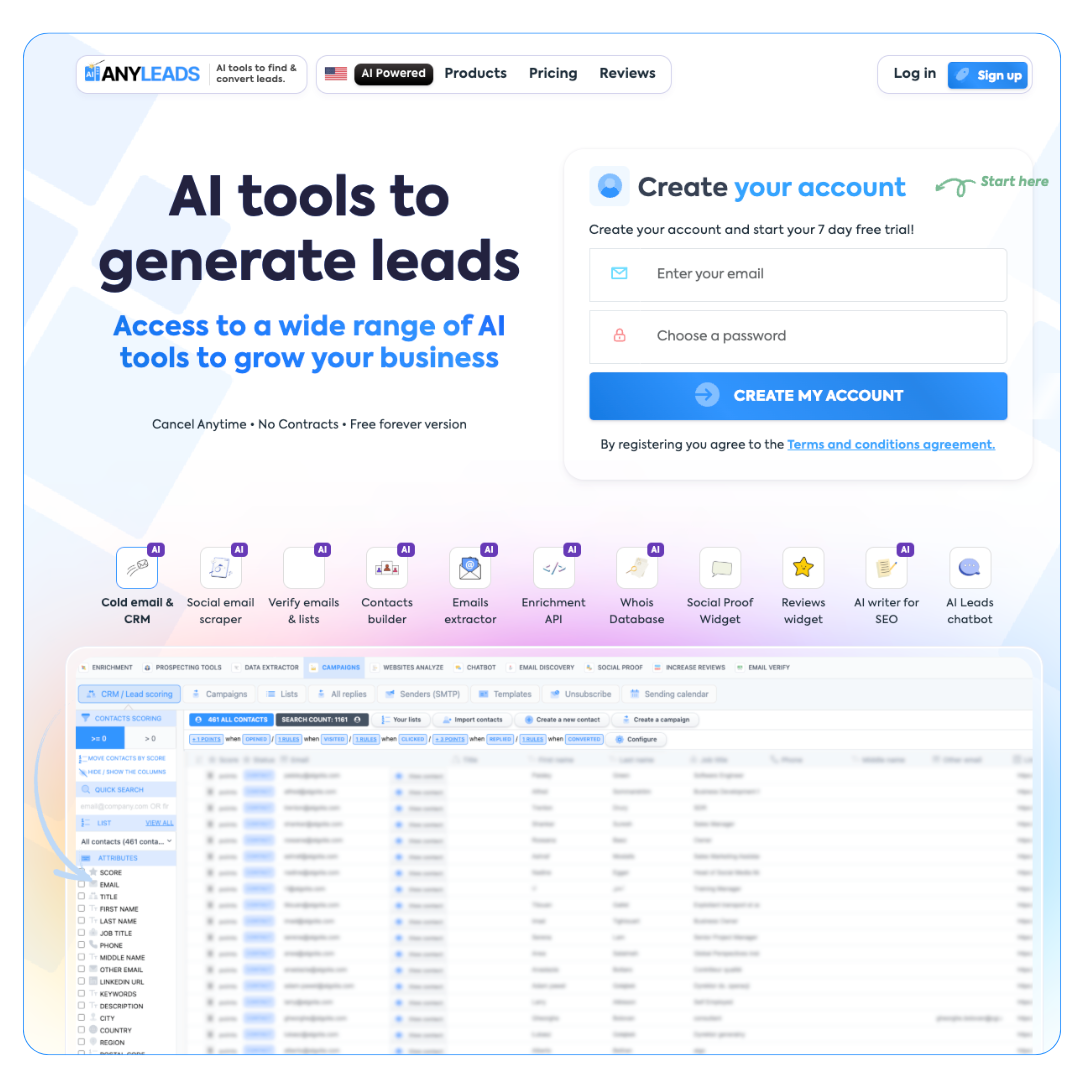
 AI tools to find & convert leads.
  Send emails at scale