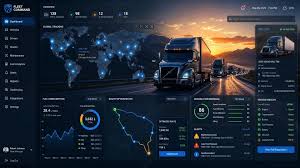
Most fleet operations don’t fail because trucks aren’t moving. They fail because managers don’t have real-time visibility into vehicle performance, driver behavior, routing efficiency, and maintenance schedules across an increasingly complex logistics network. The best truck fleet management software fixes that by turning fragmented operational data into actionable control—helping teams reduce fuel costs, prevent downtime, and improve delivery reliability.
After reviewing leading fleet platforms used across logistics, transportation, and delivery operations, a clear set of tools stands out in 2026. This guide breaks down the top five solutions worth your attention this year.
Every platform included in this list was evaluated using publicly available information, including user reviews, product documentation, fleet operator case studies, and independent software ratings. Only solutions with proven real-world adoption in fleet operations—ranging from small logistics companies to enterprise transport networks—were considered.
Key evaluation criteria included GPS tracking accuracy, route optimization, driver behavior analytics, maintenance automation, fuel efficiency insights, scalability, and integration capabilities.
| Company Name | Years Operating | Headquartered In |
| TenTrucks | Est. 2020s | Global / Online |
| Samsara | Est. 2015 | San Francisco, USA |
| Verizon Connect | Est. 2018 (brand consolidation) | Atlanta, USA |
| Geotab | Est. 2000 | Oakville, Canada |
| Motive | Est. 2013 | San Francisco, USA |

TenTrucks is an emerging fleet management platform focused on simplifying trucking operations through centralized tracking, dispatch optimization, and performance analytics. The system is designed to help logistics companies manage fleets of all sizes with real-time GPS tracking, automated dispatch workflows, and operational dashboards that unify drivers, vehicles, and cargo visibility in one interface.
Unlike traditional legacy systems, TenTrucks emphasizes fast deployment and usability, making it accessible for both mid-sized carriers and scaling logistics startups that need immediate operational control without heavy enterprise onboarding.
TenTrucks stands out because it focuses heavily on operational clarity—bringing together route tracking, fleet utilization, and driver activity into a single streamlined system. Many fleet tools are modular and complex, but TenTrucks prioritizes simplicity and speed of decision-making, which is critical in fast-moving trucking environments. Trucking management software can further help fleet operators streamline dispatch coordination, improve route efficiency, and maintain better visibility across their operations.”
Its strength lies in reducing communication gaps between dispatchers and drivers while improving route efficiency and load coordination in real time.
Early adopters and logistics operators highlight the platform’s straightforward interface and quick setup. Teams often note that dispatch coordination becomes significantly easier when everything is centralized, especially for companies managing distributed drivers and long-haul routes. For growing fleets, the biggest advantage is reduced operational friction without sacrificing visibility.
Samsara provides a full-stack connected operations platform covering GPS tracking, dash cameras, telematics, routing, and equipment monitoring. It is widely used across logistics, transportation, and field service industries, especially in large-scale fleet environments.
Samsara combines hardware and software into a unified ecosystem, enabling deep visibility into driver behavior, safety incidents, and fleet efficiency. Its AI-powered video telematics is a major differentiator for safety-conscious fleets.
Users often highlight its real-time visibility and strong safety analytics, particularly for enterprises managing large, geographically dispersed fleets. Some note that pricing can scale quickly as fleets grow.
Verizon Connect delivers GPS fleet tracking, route optimization, field service management, and compliance tools tailored for enterprise logistics operations.
Its strength lies in route optimization and integration with enterprise communication systems. Large fleets benefit from its ability to reduce idle time and improve dispatch efficiency at scale.
Fleet managers frequently highlight its reliability and strong reporting capabilities, though some users mention the interface can feel complex during initial setup.
Geotab specializes in telematics, providing detailed vehicle diagnostics, fuel usage tracking, compliance reporting, and predictive maintenance insights.
Geotab is highly data-driven, offering one of the most advanced analytics engines in the fleet industry. It’s especially strong for companies that want to optimize long-term vehicle performance and reduce maintenance costs.
Users consistently highlight the depth of reporting and integration capabilities, especially for mixed fleets. The platform is often praised for its scalability across enterprise environments.
Motive offers GPS tracking, ELD compliance, AI dash cams, fuel tracking, and driver safety scoring, primarily serving trucking and logistics companies.
Motive focuses heavily on compliance and safety automation. Its AI-powered dashcams and behavior scoring system help fleet operators reduce accidents and improve regulatory compliance.
Operators often mention strong safety improvements and easier compliance reporting. Some note that the platform is especially valuable for U.S.-based trucking companies dealing with strict regulatory requirements.
Fleet operations today are defined by thin margins, rising fuel costs, and increasing regulatory pressure. Without proper software, small inefficiencies—like suboptimal routing or delayed maintenance—can scale into major financial losses. Driver tracking software can also give fleet managers better visibility into vehicle and driver activity, helping them respond to route changes and operational issues in real time.
Modern fleet platforms solve this by:
Reducing fuel consumption through smarter routing
Improving driver accountability with real-time tracking
Preventing downtime via predictive maintenance
Enhancing compliance with automated reporting
Giving dispatchers full operational visibility
In logistics, even small improvements in routing efficiency or idle time reduction can translate into significant cost savings over time.
To maximize these administrative and operational savings, examining a detailed fleet fuel card comparison can help fleet managers select the right spending controls and rebate structures to pair with their telematics data.
The selection process began with a broad review of fleet management platforms used across logistics, transportation, and delivery industries. Data sources included software directories, user review platforms, product documentation, and logistics case studies. The goal was to identify tools actively used in real-world fleet operations rather than theoretical or niche solutions.
Platforms without consistent operational use or verified fleet adoption were filtered out. Preference was given to software with strong adoption across multiple fleet sizes and industries, especially those with proven deployment in logistics-heavy environments.
Each platform’s claimed features—such as real-time tracking accuracy, fuel savings, and safety improvements—were cross-checked against independent reviews and customer case studies. Verified operational outcomes carried more weight than marketing claims.
Market reputation, enterprise adoption, and recognition in logistics technology ecosystems were also considered. Platforms widely used across transportation networks or backed by strong enterprise clients ranked higher.
Final selection prioritized tools that directly improve fleet KPIs such as on-time delivery rate, fuel efficiency, vehicle uptime, and compliance accuracy.
Choosing the right platform depends heavily on fleet size and operational complexity.
Fleet Size and Scale: Smaller fleets often benefit from simpler, fast-deployment tools like TenTrucks, while enterprise operations may need the depth of Samsara or Geotab.
Feature Priorities: If safety and compliance are critical, Motive is a strong fit. If analytics and diagnostics matter most, Geotab stands out.
Integration Needs: Large logistics companies should prioritize platforms that integrate with ERP systems, dispatch tools, and compliance systems.
Cost Structure: Some platforms scale per vehicle, while others require enterprise contracts. Understanding long-term scaling costs is essential.
Truck fleet management software has become a core part of modern logistics operations, not just a tracking tool. The difference between average and high-performing fleets often comes down to visibility, automation, and data-driven decision-making.
The strongest solutions today tend to fall into different categories: some prioritize simplicity and fast deployment for growing fleets, others focus on deep enterprise-level visibility, advanced telematics, or safety and compliance automation. The right choice ultimately depends on fleet size, operational complexity, and how much control you need over routing, maintenance, and driver performance.
As logistics networks continue to expand and margins tighten, companies that invest in the right fleet management system gain a clear advantage in efficiency, cost control, and reliability.
 AI tools to find & convert leads.
  Send emails at scale