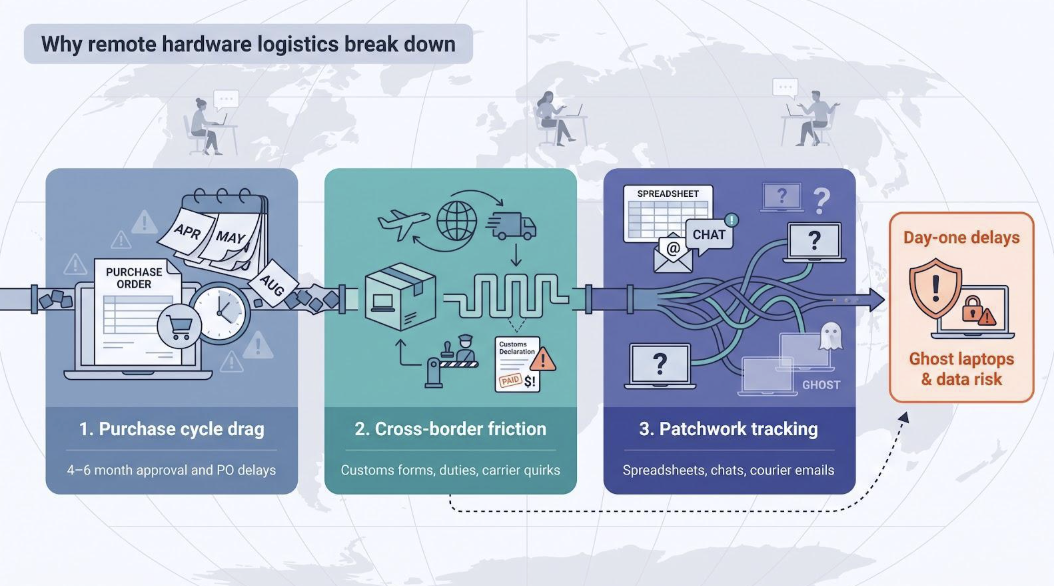
Equipment slips through the cracks for three key reasons.
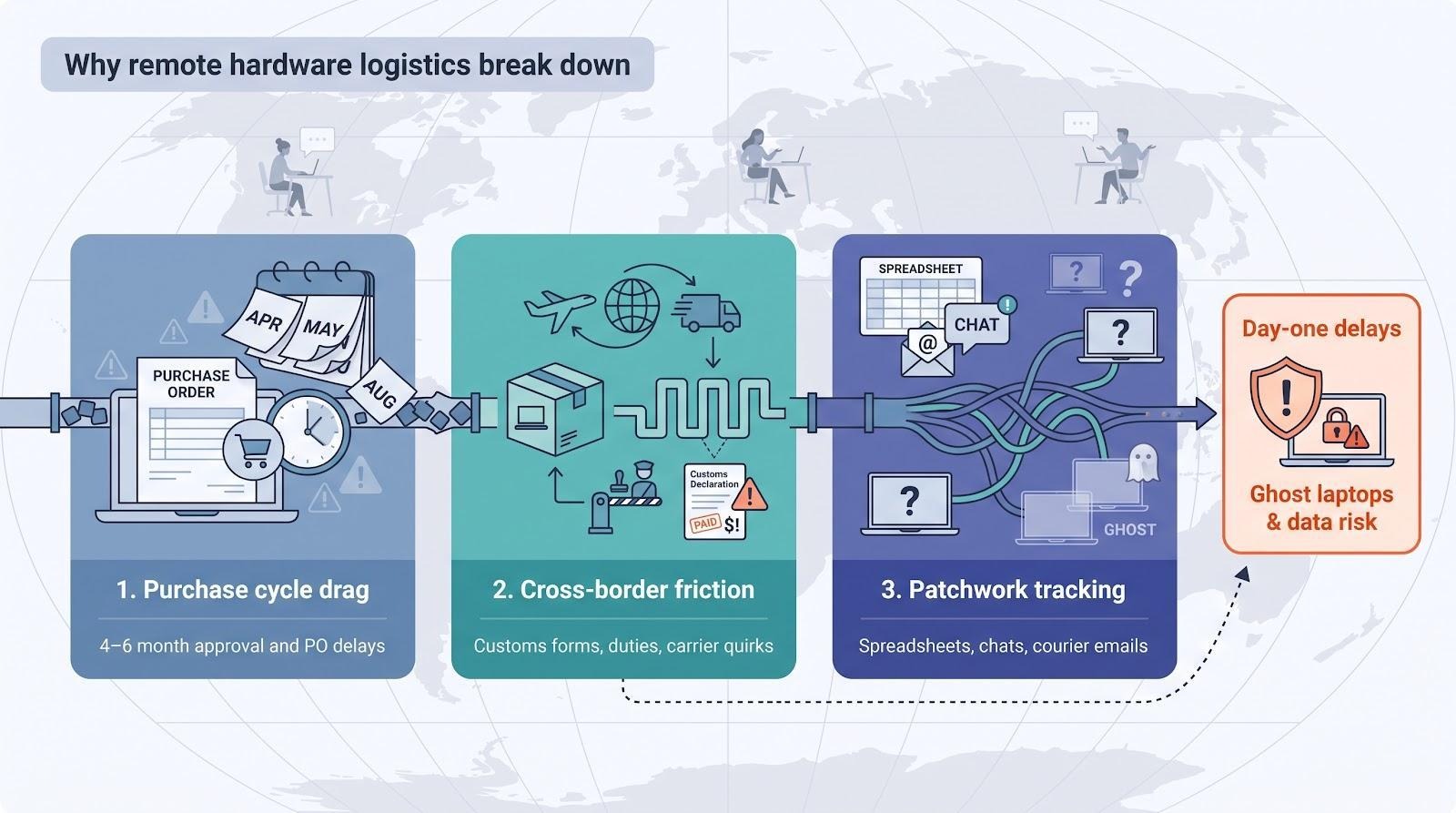
First, the purchase cycle drags. Fifty-seven percent of procurement pros say a basic tech order crawls four to six months from request to PO close, according to a DevOpsSchool analysis. A laptop approved in April can still be stuck in a distributor queue when that engineer signs on in August.
Second, even when the device ships, borders add friction. Each country has its own customs forms, import taxes, and carrier quirks. If IT ships from headquarters, the box often stalls in transit – or worse, lands with surprise duties that your new hire has to pay. Those hurdles fuel the day-one delays we saw earlier.
Third, tracking is a patchwork. Many teams juggle Excel sheets, Slack pings, and courier emails to monitor who has what. That manual chase explains why companies lose 265 laptops a year, and recover just four percent. Without a clear chain of custody, off-boarding turns into a scavenger hunt.
The outcome is wasted hours, blown budgets, and an onboarding experience that starts with an apology instead of a welcome. That gap is exactly what the new generation of hardware-lifecycle platforms aims to close.
We set out to name the five solutions we would trust with our own fleet of laptops, which meant building a scorecard instead of collecting logos.
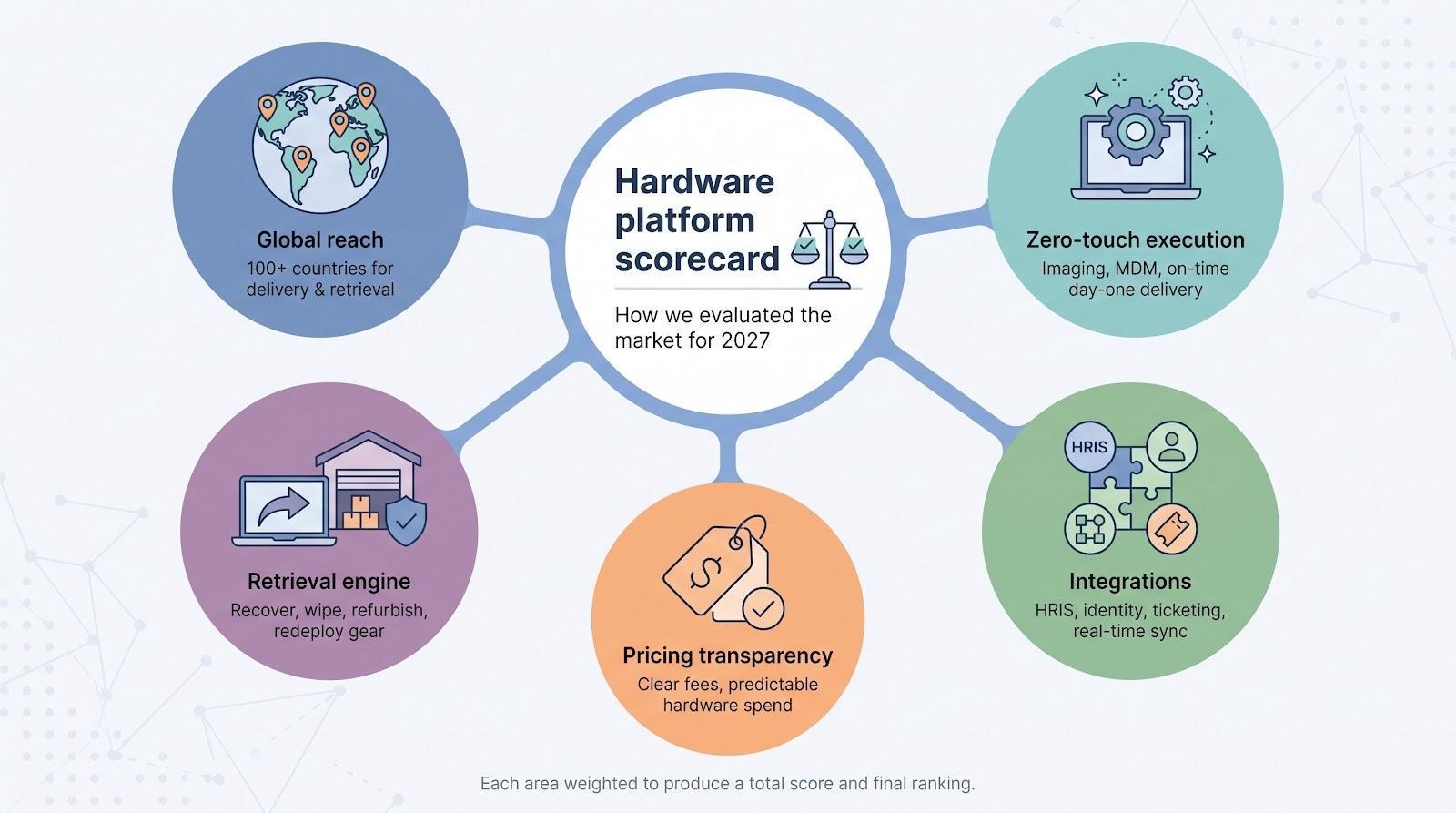
First, we looked at reach. A tool had to deliver and retrieve hardware in at least 100 countries to make the shortlist; anything less left too many teams uncovered.
Next, we measured zero-touch execution. Does the platform image devices, enroll them in your MDM, and time delivery so the box lands before an employee’s first stand-up? If any manual step sneaks back to your help desk, the score drops.
Retrieval mattered just as much. We prioritized published success rates and clear workflows for wiping, refurbishing, and redeploying gear. A strong retrieval engine cuts ghost-asset losses and keeps sensitive data off the street.
Integrations carried their own weight. HRIS, identity, and ticketing hooks turn a good logistics partner into true automation. We counted native connectors and timed how quickly asset data syncs back to the source of truth.
Finally, we graded pricing transparency. Clear, published fees build trust and let finance model spend, while opaque quotes pushed vendors to the cutting-room floor.
Each area carried a weighted score, and we ranked providers by the total. That quantitative backbone is why this list moves beyond “top tools” fluff and gives you a defendable shortlist.

Before we dive into each platform, here’s a quick side-by-side view of where each provider shines. Keep it handy the next time someone on the exec team asks, “Who handles what?”
| Solution | Coverage | Retrieval success | Zero-touch provisioning | Pricing style |
| Allwhere | 60+ countries and growing | 91 percent returned | Devices arrive imaged and MDM-enrolled | Pay-per-action, no contract |
| Firstbase | 150+ countries, warehouse hubs on three continents | 97 percent returned | Prebuilt kits ship in 48 hours in core regions | Subscription plus service fees |
| GroWrk | Roughly 150 countries, strongest in LATAM | Not published, user reviews positive | Mix of catalog purchases and stored inventory | Published per-service fees |
| 100+ countries, deep EU/US network | Return labels automated, stats not public | New-hire trigger auto-enrolls Intune/Jamf | Per-user SaaS subscription | |
| Deel Equip | 150+ countries via Hofy logistics | Standard courier pickup on off-boarding | One-click order inside Deel HR | Hardware markup plus small monthly fee |
Keep this table nearby. In the next sections we unpack why each score matters, and when one line item should outweigh the rest for your team.
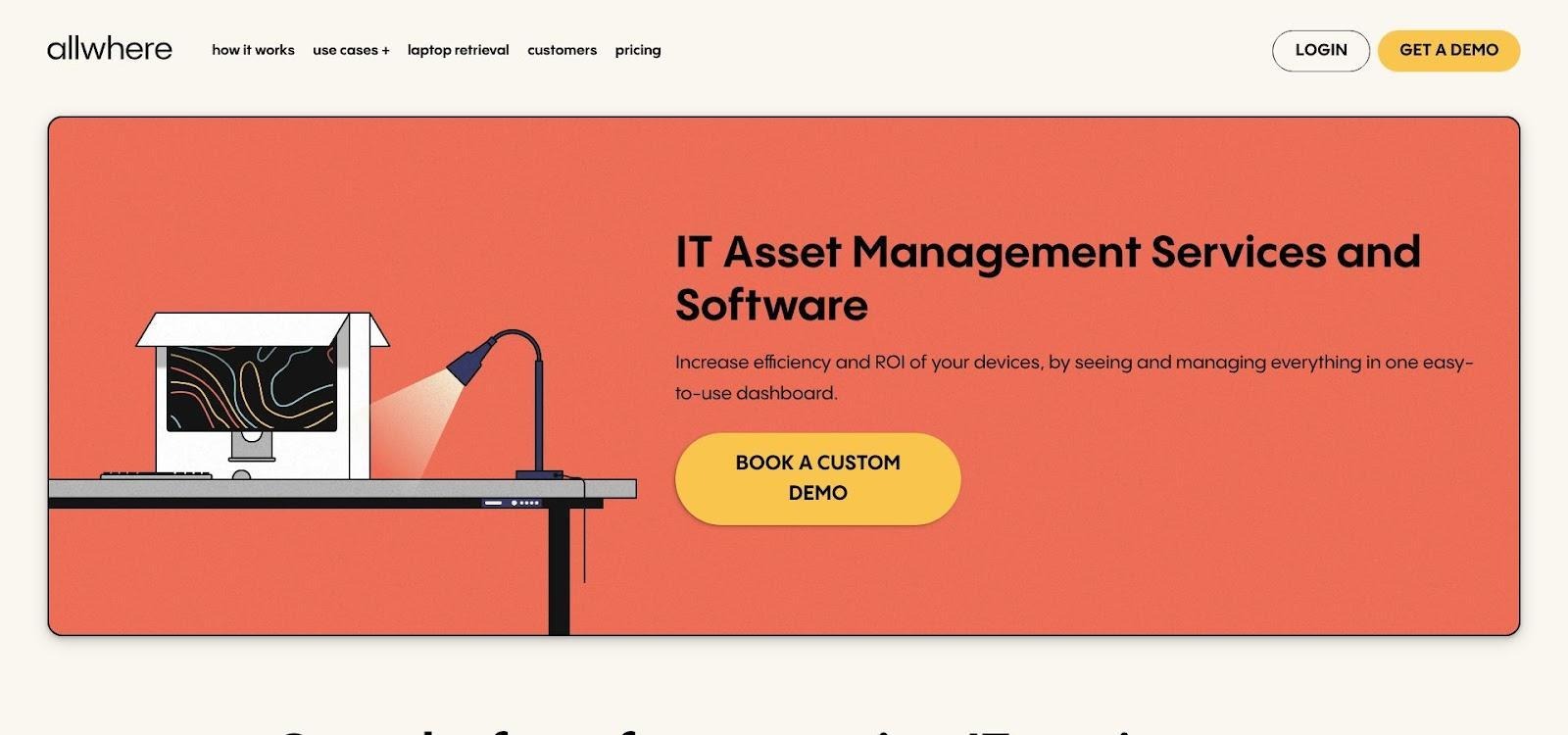
Allwhere’s pitch is simple: treat hardware like a cloud service-deploy it when you hire, reclaim it when you offboard, and pay only for the events in between. The Allwhere IT asset management platform backs that vision with a single dashboard that shows every device’s status-deployed, in transit, or in storage-and lets IT trigger repair, resale, or recycle with one click.
Allwhere IT asset management dashboard screenshot for remote device lifecycle
You spin a device up when you hire, spin it down when you offboard, and pay only for the actions in between. In practice, that means a portal where you pick a kit, choose a start date, and watch a real-time tracker until the package lands on your employee’s doorstep, already imaged, enrolled in your MDM, and ready to work.
Coverage is solid. Allwhere taps more than 500 logistics partners to source and ship gear in over 60 countries, using local distributors so customs surprises stay off your expense report. New markets roll out each quarter, but the current footprint already covers the usual hiring hotspots across the Americas, Europe, and key parts of APAC.
Where Allwhere separates from the pack is the ride back home. Offboarding triggers an automated courier pickup, a NIST-standard wipe, and a decision tree: store, redeploy, resell, or recycle. That workflow recovers 91 percent of departed employees’ devices, more than double the industry norm. The security win is clear, but the budget impact is bigger: fewer ghost assets, faster refresh cycles, and a growing pool of tested spares you can send to the next hire.
Pricing follows the same no-nonsense approach. There is no platform subscription and no per-seat minimum. You pay a published fee when a laptop ships, another when it returns, and nothing when hiring slows. Finance teams appreciate the predictability, and founders like that they can pilot the service with just a few devices before committing.
A few caveats. Allwhere’s country list is expanding, yet still lags the 150-plus club led by Firstbase. If you hire in very remote or high-risk regions, confirm coverage before you sign. And because the model is usage based, large burst hiring can spike spend in a single quarter, so plan your budget accordingly.
Bottom line: if lost laptops keep your security team up at night, or if you need a flexible, contract-light way to tame global hardware logistics, Allwhere deserves the first demo slot on your calendar.
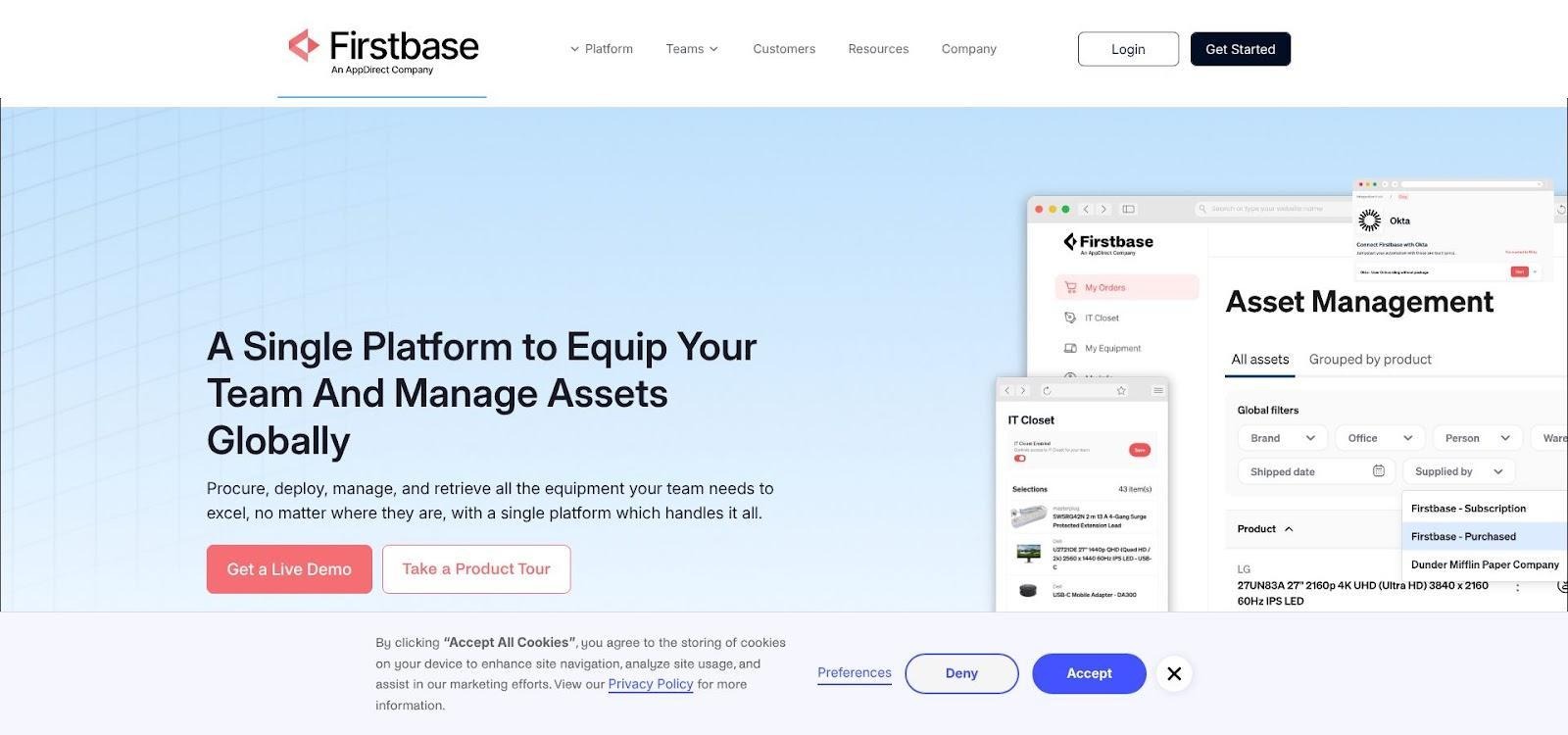
If Allwhere feels like a nimble startup, Firstbase is the seasoned operator with a global playbook, and warehouses to match. The company pioneered “equipment as a service” in 2019 and now ships to more than 150 countries, with regional hubs in the United States, the United Kingdom, the European Union, and Canada. Those hubs put a laptop on an employee’s desk in 48 hours or less for most mainstream destinations.
Firstbase global equipment management platform homepage screenshot
The onboarding workflow is hands-off. HR adds a new hire in Firstbase, selects the approved kit, and the system handles the rest: customs paperwork, device imaging, MDM enrollment, and a tracking link that makes FedEx look sluggish. When a colleague in São Paulo or Singapore powers on their machine and logs in with company SSO, IT hasn’t touched a single box.
Retrieval is just as tight. Off-boarding a user triggers an automatic email with a prepaid return label and a reminder cadence that borders on polite nagging. The result is a 97 percent recovery rate. Returned devices are wiped, inspected, and routed to storage or resale, so finance can claw back residual value instead of writing off capital expense.
Data visibility is another strength. Firstbase’s dashboard shows asset age, cost of ownership by region, and which laptops are nearing refresh. Those metrics feed exportable reports that satisfy both auditors and CFOs during budget season.
Pricing runs on a subscription layered with service fees. That predictability appeals to large organizations shipping devices every week, but the sticker shock can put smaller teams on pause. You also commit to routing most, if not all, of your hardware through the platform, which is sensible at scale but less flexible when hiring surges ebb.
One final note: deep integrations exist, yet many rely on API connectors rather than one-click apps. Expect a short setup sprint with your IT automation or iPaaS tool to wire Firstbase cleanly into Workday, Rippling, or ServiceNow.
Choose Firstbase when consistency beats experimentation, when legal wants audit trails in multiple jurisdictions, and when your hiring map looks like a heat map of the globe rather than a single coastline.
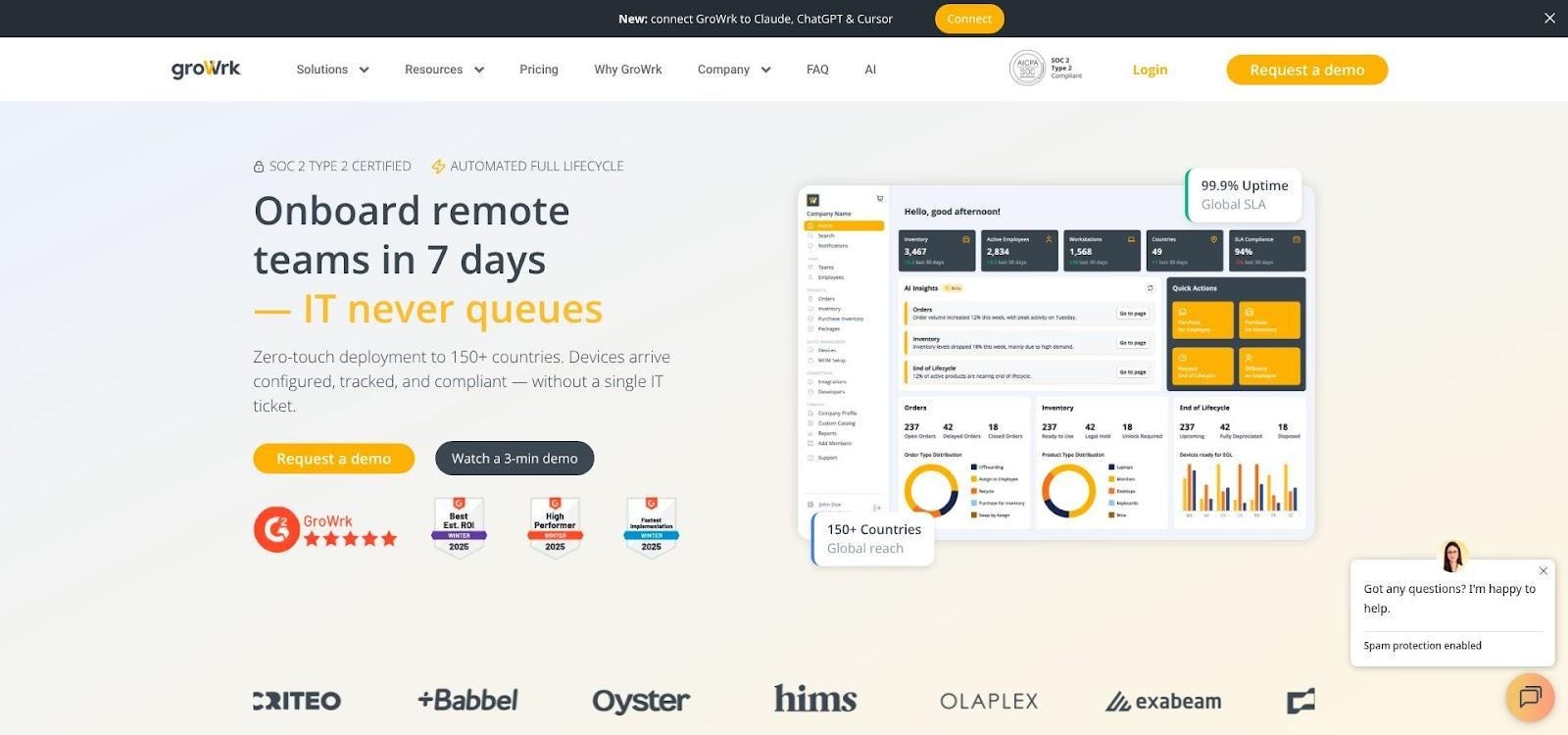
GroWrk treats device logistics the way Stripe treats payments: publish the fees, open the API, and let teams build the flow they want. Open its pricing page and every action – procure, store, ship, retrieve – carries a hard dollar figure. No discovery calls, no hidden “regional surcharges.” Finance can model costs before a single laptop leaves the shelf.
GroWrk remote hardware platform and transparent pricing page screenshot
Flexibility sits at the center. You can buy hardware from GroWrk’s catalog, send your own stock to their warehouses, or mix the two. A fast-growing startup might store a dozen MacBooks in Miami, let GroWrk purchase Windows machines for new hires in Mexico City, and still keep a gaming-grade rig for that graphics engineer in Berlin. The same dashboard tracks it all and fires webhooks when inventory dips below your comfort zone.
Geography is another draw. GroWrk was born in Latin America, so it excels in markets where some rivals stumble – think Argentina’s customs maze or Colombia’s patchy last-mile carriers. Yet the footprint now spans roughly 150 countries, giving North American or European companies an on-ramp to new talent pools without rewriting internal playbooks.
Integrations skew developer-friendly. Native HR connectors are light, but a well-documented REST API makes it easy to wire GroWrk events into Workday, Okta, or Jira. Several customers drop a Zapier action into their onboarding workflow and call it a day. That DIY approach keeps GroWrk lean, but teams without light coding chops should budget a few hours for setup.
What you give up is a bit of hand-holding. GroWrk’s retrieval stats aren’t publicly audited, and the support model relies on in-app chat rather than a named account manager. Large enterprises that want white-glove touchpoints might prefer Firstbase. Still, user reviews consistently praise response speed and flexibility – helpful when a vendor holiday shuts down half your supply chain and you need an alternate route, fast.
Pick GroWrk when price clarity matters, when your org has pockets of talent in developing regions, and when you’d rather plug device logistics into existing workflows than adopt an all-or-nothing platform.
Workwize feels less like a logistics vendor and more like an extension of your employee portal. Its strength lies in integrations. Connect HiBob or Personio, flip a toggle, and every new-hire event kicks off a fully automated sequence: order hardware, image it, auto-enroll in Intune or Jamf, and send real-time status back to HR. No Slack chasers, no ticket triage.
Employees benefit, too. Workwize’s self-service catalog lets someone in marketing order a monitor arm or noise-canceling headset without pinging IT. Manager approval happens in the same flow, and the system tracks budgets so finance isn’t blindsided at month-end. That consumer-grade experience quietly reduces shadow IT because it’s easier to click a vetted accessory than expense a random Amazon purchase.
Geographically, Workwize covers more than 100 countries, with deep inventory and courier partnerships across Europe and North America. APAC deliveries rely on trusted third parties, so transit can stretch beyond the usual two-day promise, but tracking remains visible in the dashboard.
The platform runs on a per-user subscription, typically around 19 euros per employee each month. That fee unlocks the full automation suite; hardware costs pass through at retail rates. The model works when you hire steadily and want predictable spend. Small teams or bursty hiring cycles might find the subscription overkill, though the time saved still offsets the cost for many.
Off-boarding is handled by automated return emails and prepaid labels. Workwize doesn’t publish a retrieval percentage, yet customer reviews report minimal chase work thanks to those proactive reminders. Data wipe and refurbishment happen via certified partners before devices re-enter your inventory, handy when you want to redeploy a MacBook Air instead of buying a fresh one.
Workwize fits best when you already live in modern HR tech, value a polished employee experience, and prefer software automation to bespoke logistics calls. It’s the “set-it-and-forget-it” option that turns hardware into just another back-office workflow.
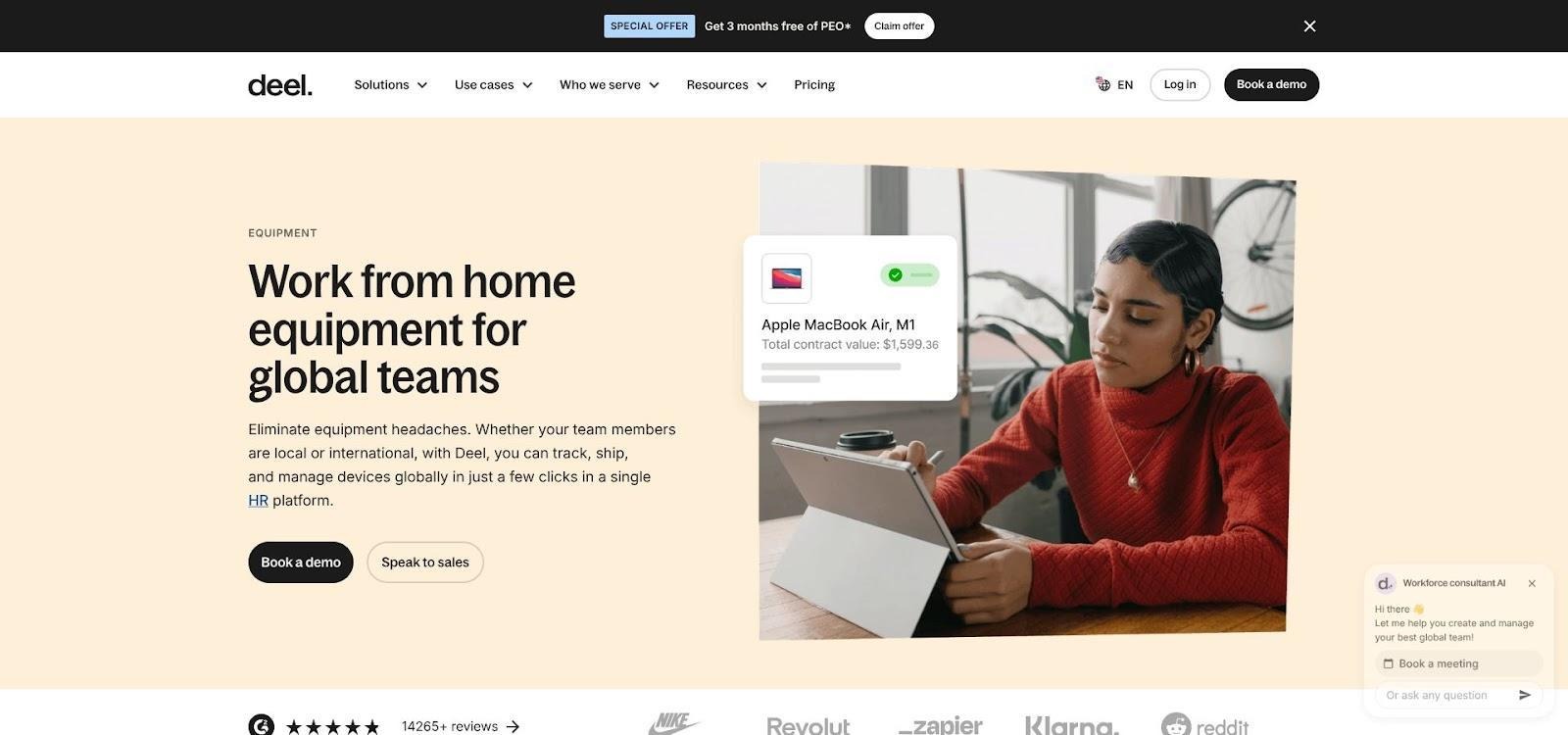
Deel began with payroll and compliance, then acquired Hofy to fold device logistics into the same dashboard. The result is Deel Equip, an add-on that turns the “create hire” button into a hardware order form. Tick a laptop bundle, set the start date, and you’re done; IT never opens a separate portal.
Deel Equip work-from-home equipment management page screenshot
Hofy’s infrastructure already spans 150 countries, putting coverage on par with Firstbase. The legal entity work is baked in. If you use Deel as your Employer of Record, the platform knows the tax rules, import duties, and employer liabilities for each location, so no surprise customs invoices land on a contractor’s doorstep.
Off-boarding mirrors onboarding. When HR marks an end date, Deel’s system dispatches a courier pickup and tracks the return alongside final payroll tasks. It isn’t the deepest IT asset dashboard, but the convenience of seeing contract status and hardware status in one timeline is hard to beat for lean teams.
Costs stay simple. Expect roughly 10 dollars per device each month plus a hardware markup of about 25 percent. For companies already paying Deel’s HR fees, folding another line item into the same invoice often feels painless. If you don’t use Deel, Equip isn’t available as a stand-alone service, and that lock-in is the main drawback.
Choose Deel Equip when your HR team already lives in Deel, you prefer consolidated billing, and you’re willing to trade granular IT controls for friction-free onboarding.
All five tools tackle the same headline problem, but each leans into a different strength. The quickest way to decide is to trace your own workflow.
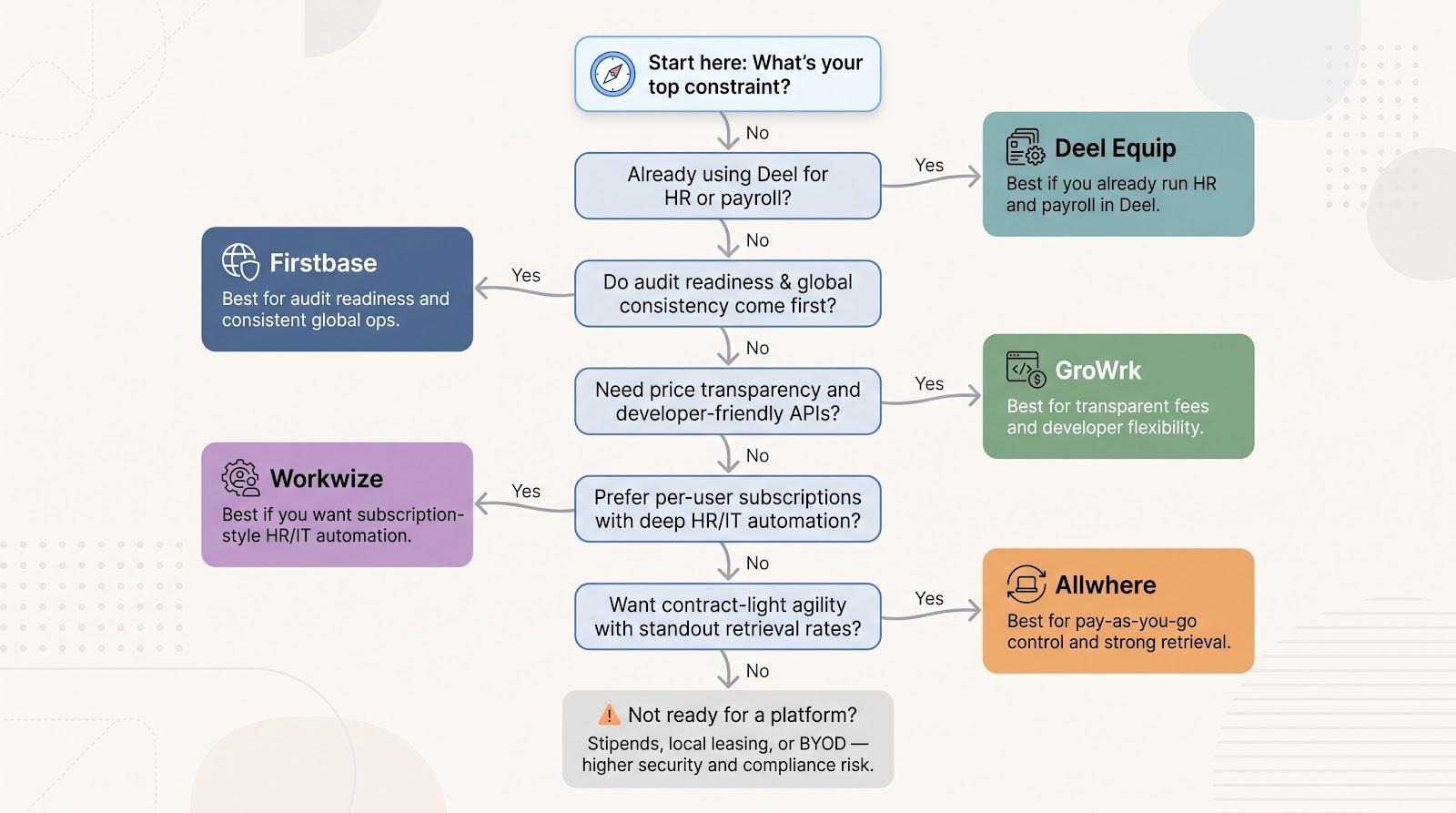
If you already run payroll and compliance in Deel, stay in that ecosystem. One checkbox equips every new hire, and finance sees a single invoice instead of two.
If audit readiness and global consistency rule the day, Firstbase is hard to beat. Its 97 percent retrieval rate and warehouse network make regulators and security teams smile.
Need price certainty and developer flexibility? GroWrk’s published fee table and open API let you script custom flows without sweating hidden costs.
Prefer a subscription that keeps hardware on the same cadence as SaaS licenses? Workwize turns device management into a background process your HR and IT apps already understand.
Finally, if you want contract-light agility and the comfort of knowing 9 out of 10 laptops come home, Allwhere gives you pay-as-you-go control with standout retrieval performance.
Not ready for a platform? Some companies still use stipends or local leasing. Stipends shift the burden, along with the security risk, to employees, while leasing locks you into multi-year terms that can sting if headcount drops. Both can work, but neither offers the global tracking, data wipe, and carbon-footprint reporting that modern teams increasingly need.
Run a quick audit of your hiring patterns, integration stack, and risk appetite. The answer to “which platform is best?” usually surfaces in the first five minutes of that conversation.
How secure are these services?
Each platform wipes returned devices to NIST 800-88 standards and logs a certificate of destruction or refurbishment in your dashboard. Most also enroll laptops in your MDM on day one, so you can lock or erase a missing machine within minutes.
What happens if a laptop arrives damaged?
Every vendor offers a repair or swap program. You open a ticket, the employee receives a replacement, and the faulty unit moves to a regional depot for warranty service. Turnaround is usually 2–4 business days in major markets.
Can we choose exact models, or do we pick from a fixed catalog?
It depends. Firstbase and Workwize let you curate an approved catalog down to RAM size. Allwhere and GroWrk can source almost any commercial SKU that is available locally. Deel Equip sticks to a short list of mainstream Mac and Windows configurations to keep logistics simple.
Do we still need an asset-management tool?
If you need deep lifecycle analytics such as depreciation schedules, component health, or audit exports, yes. Firstbase and Workwize come closest to a built-in ITAM, but large enterprises often sync platform data into ServiceNow or Asset Panda for a single source of truth.
What about environmental impact?
Returned laptops are refurbished and redeployed first, resold second, and recycled only as a last resort. Several vendors provide carbon-savings reports that plug into ESG dashboards. Ask for that data during the demo; most have it, but few advertise it.
Can we pilot with a few hires before rolling out globally?
Allwhere and GroWrk support pay-as-you-go pilots. Workwize and Firstbase typically require a minimum seat count. Deel Equip activates instantly for any customer already using Deel HR, so a single test hire is fair game.
Is BYOD ever a better answer?
Stipends seem inexpensive until an unmanaged laptop leaks data or fails a compliance audit. Platforms shift that risk back to IT while freeing employees from last-minute shopping trips. BYOD can work for short-term contractors, but long-term staff deserve standardized, centrally managed hardware.
 AI tools to find & convert leads.
  Send emails at scale