Most teams do not leave Tagger because the reporting disappointed them. They leave because the reporting was the only part they were paying for.
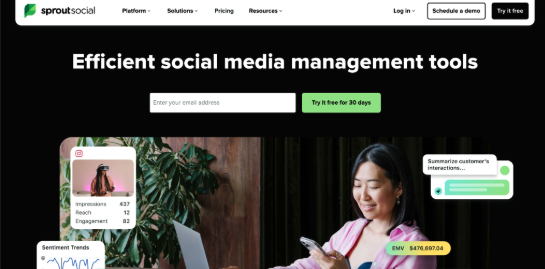
Tagger, sold as Sprout Social Influencer Marketing since its February 2025 rebrand, is a genuinely strong measurement platform. Signals, its creator listening engine, tracks trends and competitors across a corpus reported in the billions of posts, and its 300+ metrics and customizable dashboards are what users praise most. That capability is real, and any honest comparison has to start by saying so.
The problem is the shape of the deal around it. There is no published rate for the influencer module, no self-serve signup, and no trial: every buyer books a demo, negotiates, and signs an annual contract, with third-party data putting the average deal near $21,431 a year. Then, having paid enterprise money for insight, teams discover that acting on that insight - contacting creators, chasing follow-ups, shipping product, tracking affiliate revenue, paying people - happens in tools they have to buy separately. The nine platforms below are the ones worth weighing when the measurement is not the thing you want to change. Influencer Hero leads the list because it is the rare option that holds the analytical depth while putting the execution in the same subscription, at a rate published on the website.
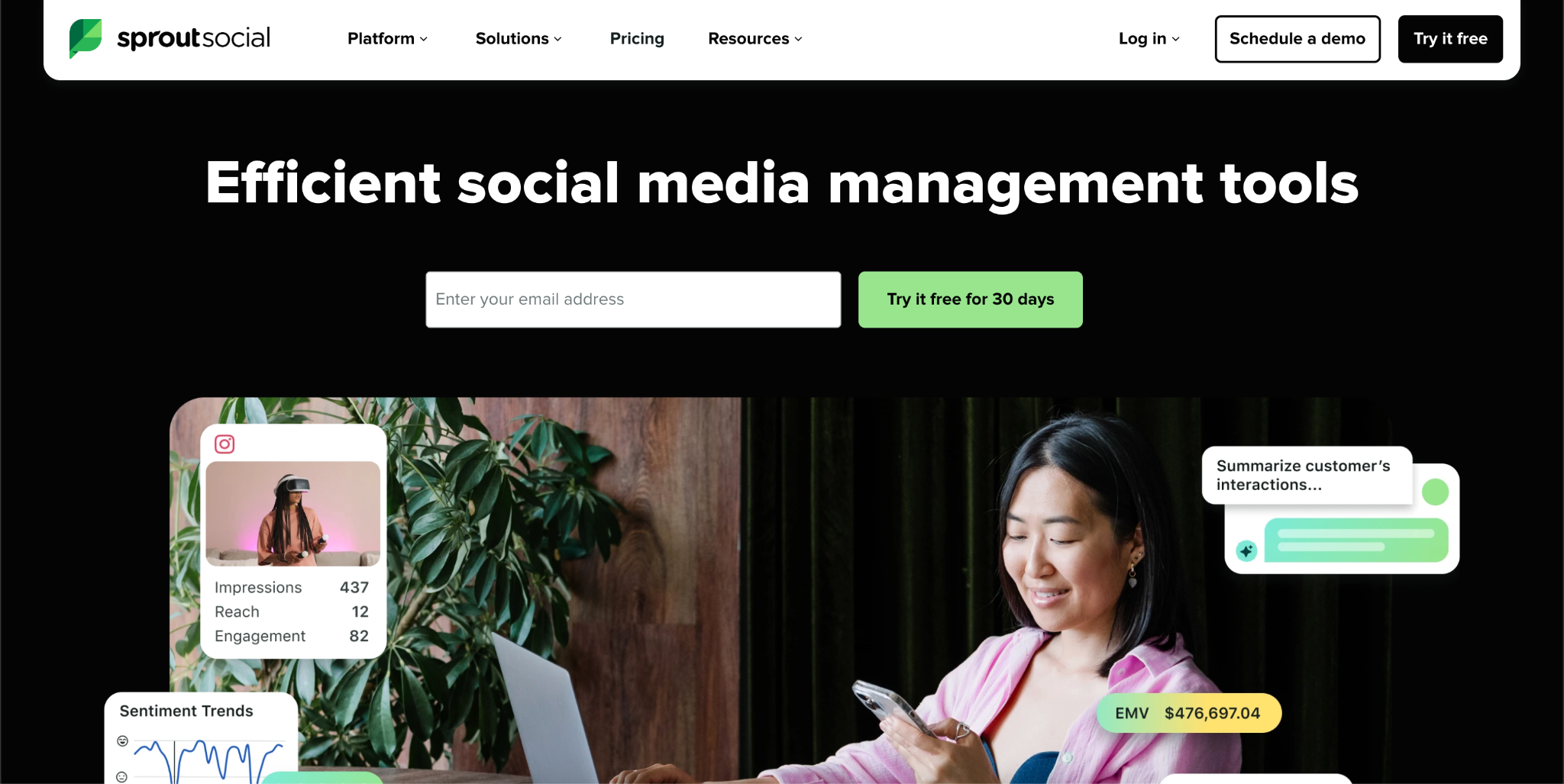
Tagger's analytics and visual reporting are the reason it retains enterprise customers. Dashboards are customizable, competitive analysis templates come built in, paid and organic performance sit in one view, and ROI tracking holds up under scrutiny. Signals extends that into listening, with trend analysis, competitor monitoring, and 200+ post-level reporting attributes, and it remains a real differentiator against platforms that treat listening as a checkbox.
Machine-learning discovery matches creator audiences to brand requirements, and the platform handles creator lists, brand safety reporting, contracts, global payments, and automatic post collection. Sprout does not publish a creator database size for the product, though industry reporting has put its index near 10 million profiles, and Snapchat is not covered. For a large enterprise already standardized on Sprout Social, the integration story is strong and the measurement is difficult to fault.
The case for looking elsewhere is rarely about analytics quality. It comes down to what the contract does and does not include:
You Cannot See The Price: No published rates, no self-serve path, and no trial of the influencer module, so evaluating it means entering a sales process before you know the number.
The Term Is Annual: There is no month-to-month option, which is a difficult commitment for a program still establishing its return.
Outreach Stops Short: Email automation and personalization are limited and there are no automated follow-up sequences, so contacting creators at volume needs another system.
No Gifting Or Payouts: Product seeding and creator payments have no native workflow, which means separate tooling and manual reconciliation against the reports.
Reported Data Gaps: Users cite inaccurate discovery results, outdated influencer statistics, missing Instagram Story data, and no view tracking for Reels.
Put together, that is a platform which tells you what happened extremely well and leaves the doing to you. The alternatives below close that gap from different directions: some match the listening depth, some abandon it in favor of execution, and a few manage both.

Influencer Hero
Meltwater / Klear
CreatorIQ
HypeAuditor
Modash
Storyclash
Later Influence
Influencity
GRIN
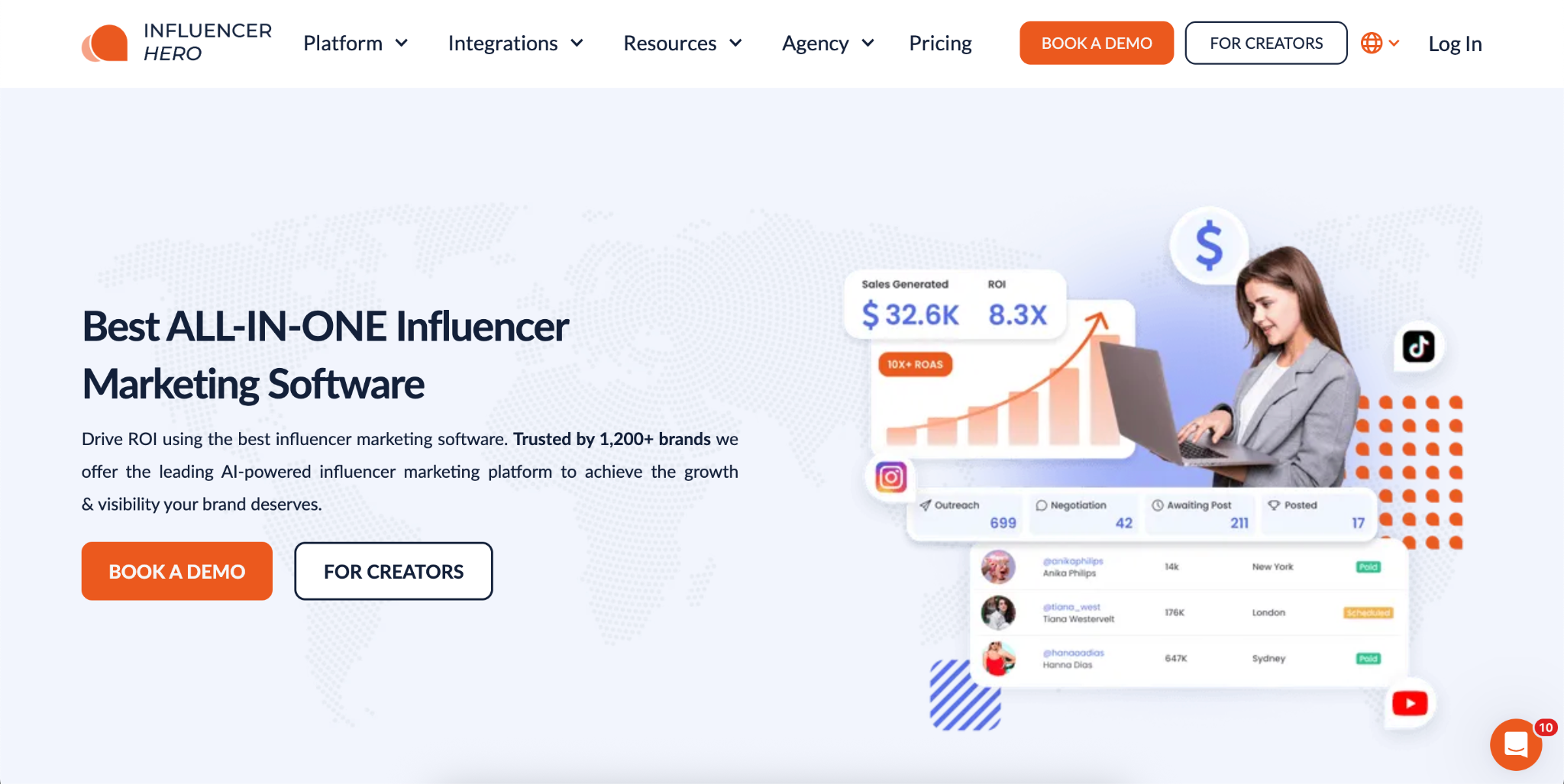
Influencer Hero is built for the exact position a Tagger buyer ends up in: serious about measurement, tired of paying for it separately from everything else. Its reporting spans seven specialized tabs covering overall performance, UGC, social listening, ROI and sales, outreach, payments, and products, with COGS pulled automatically from Shopify, EMV calculations, and revenue attributed to individual creators. Social Listening tracks organic brand mentions outside formal campaigns, and code-leakage detection catches coupon abuse. That is the analytical half. The other half is the part Tagger never shipped: AI-powered outreach that writes opening lines from a creator's recent posts and averages a 43% response rate, a three-layer CRM whose rules advance deals automatically when someone replies or a package lands, gifting triggered straight from that CRM, and a payout manager handling Stripe payments and hybrid fee-plus-commission deals.
Best for: Teams that want to keep enterprise-grade reporting and stop running outreach, gifting, and payouts in three other tools.
Pricing:
Standard $649/month, Pro $1,049/month, Business $2,490/month
Annual billing takes 20% off, putting Standard at $454/month ($5,452/year)
Published openly; 3-month minimum rather than an annual contract
Standout features:
Seven-Tab Reporting With Attribution: Automated COGS, EMV, and per-creator revenue, exportable to PDF.
Rules-Based CRM Automation: Deals advance on reply, shipment, or post detection without manual updates.
450M+ Creators Across 8 Platforms: Includes Snapchat, with fraud and authenticity analysis inside discovery.
Gifting And Payouts In One Place: Shopify order creation, bulk sending, tracking sync, and a centralized payout queue.
Its listening is narrower than a dedicated social-intelligence suite, so teams whose main purchase driver is Signals-level trend analysis should compare carefully rather than assume parity. It is also more platform than a brand running two campaigns a year needs, UGC rights are managed manually, and there is no paid-ad whitelisting.
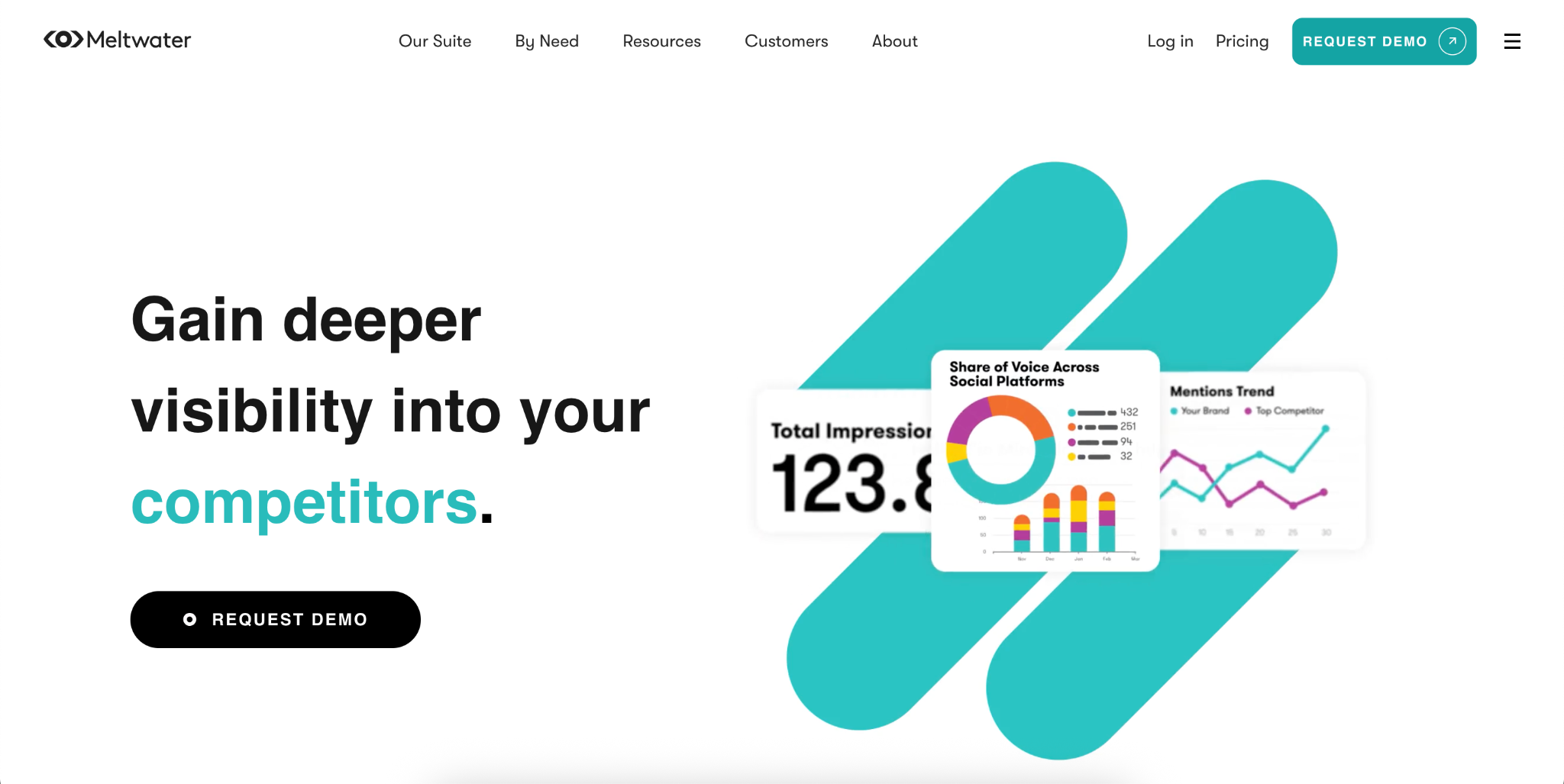
Meltwater is the closest structural analogue to what Tagger became. It is a media-intelligence suite where influencer marketing, now delivered through the Klear module, sits alongside PR monitoring and social listening rather than standing alone. For teams that bought Tagger specifically because listening and creator work lived under one roof, this is the most familiar shape on the list, with AI-assisted discovery across a 30M+ creator index, campaign management, and reporting that folds creator activity into wider brand coverage.
Best for: Comms and brand teams that want influencer measurement reported alongside PR and listening in a single intelligence suite.
Pricing:
Quote-only, annual, with no public tiers, no monthly billing, and no self-serve signup
The Klear influencer module is reported at $15,000 to $35,000/year, with a median near $25,000
Implementation is reported to add a further $5,000 to $12,000 in year one
Standout features:
Listening And Influencer Together: Creator performance reported in the same suite as brand and PR coverage.
AI Discovery Across 30M+ Creators: Audience and affinity matching built on the wider Meltwater data set.
Enterprise Reporting Depth: Cross-channel measurement suited to multi-market brand teams.
Meltwater reproduces every commercial friction that pushes teams away from Tagger, and generally at a higher total: quote-only pricing, annual terms, module-based upsell, and implementation fees. It also has no native gifting or affiliate workflow, so the execution gap remains exactly where it was.
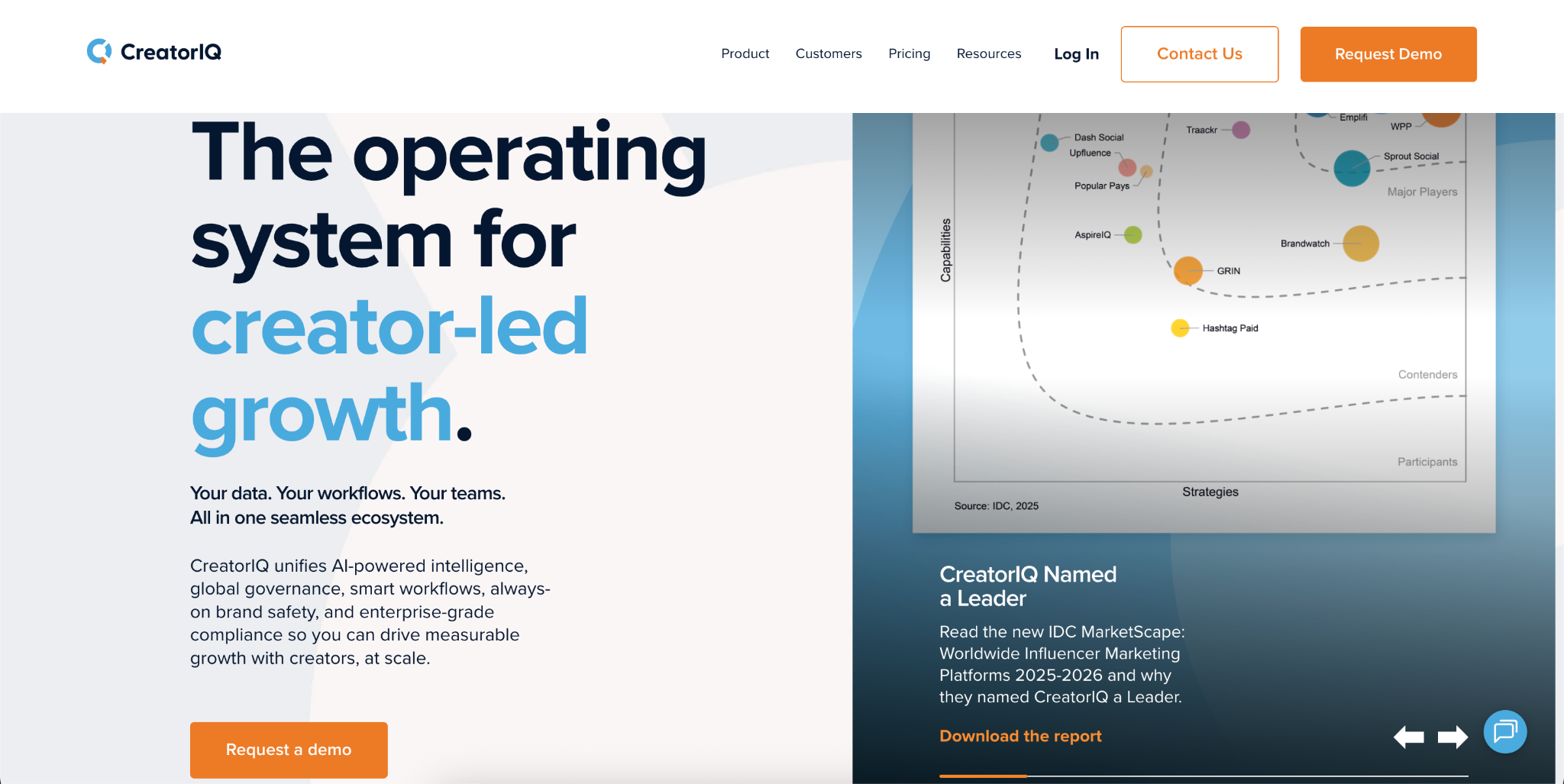
CreatorIQ is where enterprises land when governance matters more than agility. Discovery runs on direct API integrations rather than scraping, so the data is first-party and verifiable, and SafeIQ handles fraud and brand-safety screening at a standard large organizations can defend internally. Identity graphs, structured approval chains, a full talent CRM, and compliant global payments make it credible for brands like Disney and Unilever running many programs across many markets at once.
Best for: Large organizations that need auditable first-party data, approval workflows, and attribution across multiple markets.
Pricing:
Quote-only, with a reported floor near $30,000/year
Median reported spend near $39,250/year, with deals reported around $59,500/year
Per-seat and annual, with setup fees and no free trial
Standout features:
API-Verified Data: Metrics sourced directly from the platforms instead of scraped estimates.
Governance And Approvals: Multi-stakeholder review designed for regulated and highly structured teams.
Global Payments Compliance: International payouts with tax documentation handled in-platform.
Anyone leaving Tagger to escape opaque annual contracts will find the same arrangement here at a higher floor, plus setup fees and a long onboarding. Listening is not its focus, and there is no native gifting, so a DTC seeding program still needs a second system.
HypeAuditor takes Tagger's analytical instinct and points it almost entirely at trust. Its fake-follower and audience-quality analysis is treated across the industry as the benchmark, and a 227M+ database gives it far more to analyze than Tagger's reported index. AI Scout turns a brief into a ranked shortlist, AI Coach offers ongoing campaign guidance, and social listening plus Shopify revenue attribution push it past pure auditing. Snapchat is covered, and a free tier means you can evaluate the data quality before committing to anything.
Best for: Teams whose biggest risk is paying for inflated audiences and who want to verify before they spend.
Pricing:
Free plan available for evaluation
Basic reported around $299/month and Pro around $499/month, billed annually
Enterprise quote-only; the pricing page routes to a demo request
Standout features:
Benchmark Fraud Detection: The most rigorous audience-authenticity scoring available.
227M+ Creator Index: Substantially deeper discovery than the incumbent offers.
Snapchat Coverage: A platform Tagger does not index at all.
HypeAuditor shares Tagger's fundamental limitation: it analyzes and vets, it does not run campaigns, so outreach, CRM, and gifting still live elsewhere unless you pair it with an all-in-one. Its paid tiers are demo-gated rather than published, and the practically searchable database is smaller than the headline figure suggests.
Modash makes the opposite bet from Tagger. It puts almost everything into discovery breadth and pricing transparency, with 380M+ creator profiles across Instagram, TikTok, and YouTube, every rate on the website, and a 14-day trial that does not ask for a card. Audience-quality analysis is strong, the CRM handles pipelines properly, and email sequences send from your own domain and stop automatically when a creator replies. Shopify-synced codes, gifting, and affiliate links carry it through to revenue.
Best for: Teams that would trade listening depth for a far larger search pool and a price they can see before talking to anyone.
Pricing:
Essentials $199/month (annual $2,388/year); Performance $499/month (annual $5,988/year)
Enterprise from $14,700/year; 14-day free trial with no card required
Payment fees are 0% up to $10,000/year, then 5%
Standout features:
380M+ Creator Profiles: Among the largest publicly stated discovery pools in the category.
Auto-Stopping Sequences: Outreach from your own domain that halts the moment someone replies.
Genuinely Transparent Pricing: Published rates and a real trial, both absent from Tagger's influencer module.
Social listening is not what Modash is for, so teams who valued Signals will feel the drop immediately. It also stays discovery-led, meaning automation thins out as programs grow into licensing and complex attribution, and payment fees apply above the free threshold.
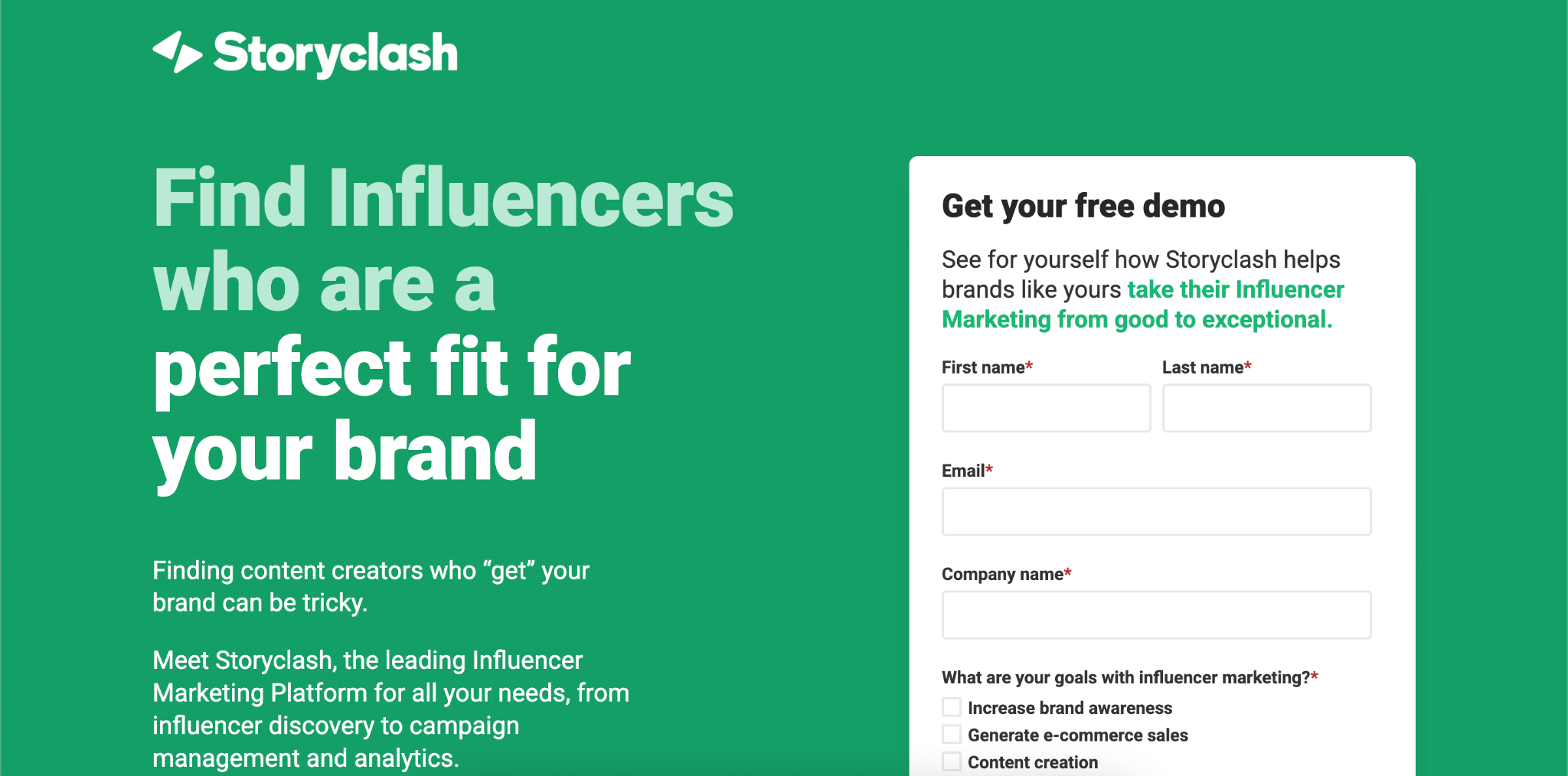
Storyclash approaches creator marketing from content performance rather than follower counts, which makes it an interesting counterweight to Tagger's metric-heavy dashboards. AI-driven discovery surfaces creators based on what their content actually does and which brands they already talk about, and monitoring tracks organic brand mentions as they happen. For teams whose real question is which creators are already resonating in their category, that framing is more useful than another engagement-rate column.
Best for: Brand teams that want to find creators through content resonance and organic mentions rather than audience statistics.
Pricing:
Quote-only. Three tiers are listed as Starter, Growth, and Scale with no published rates
Pricing is set after a demo, based on scope and team size
Standout features:
Content-First Discovery: Creators surfaced by what performs, not by follower count alone.
Organic Mention Tracking: Brand conversations monitored outside formal campaigns.
AI Brand Affinity Matching: Identifies creators already aligned with your category.
Storyclash no longer publishes rates, so it carries the same evaluation friction as Tagger, and its execution layer is thin: no meaningful gifting, affiliate, or payout workflow. It is best understood as an intelligence tool that needs a campaign platform beside it.
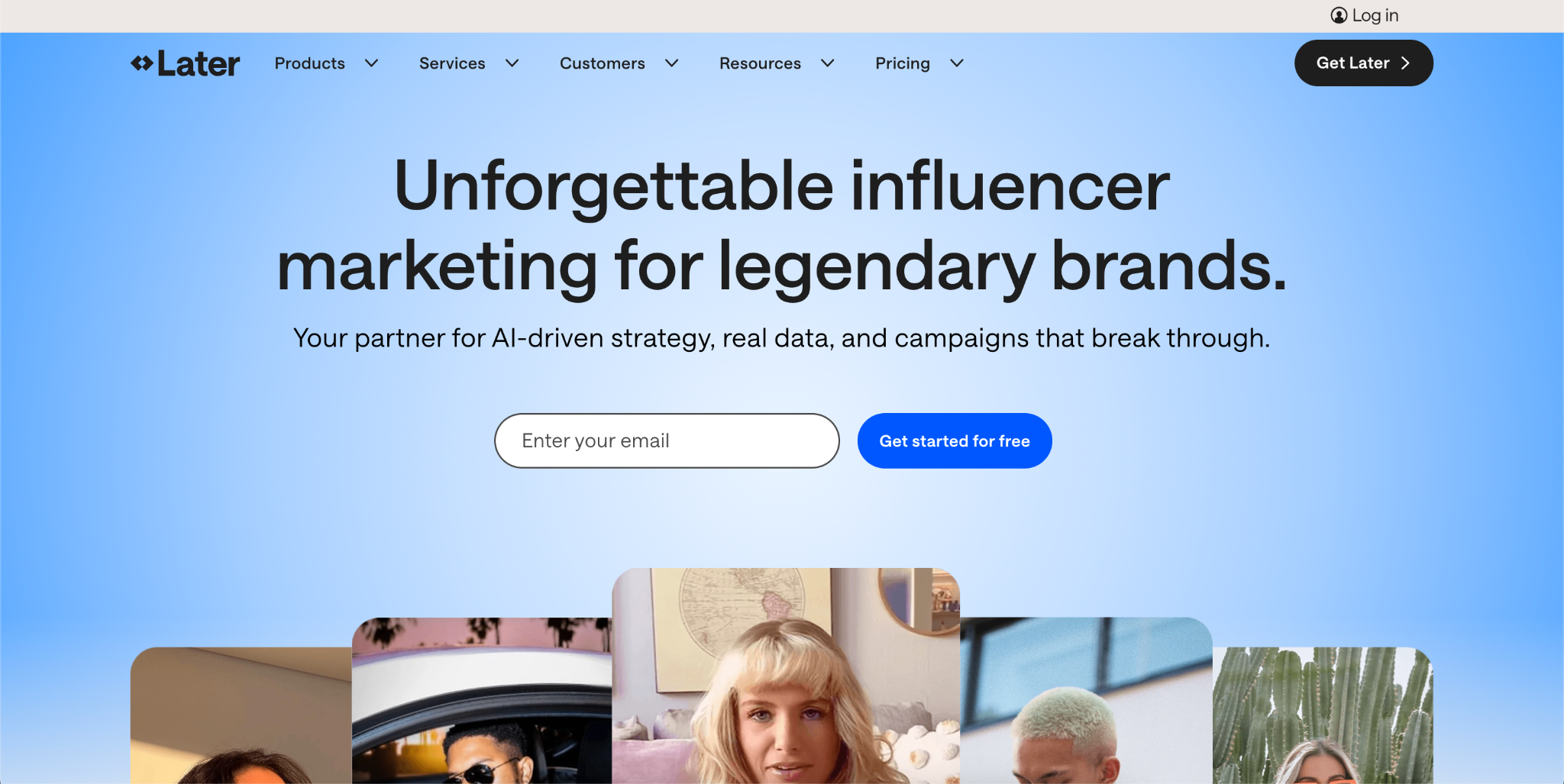
Later Influence, formed when Mavrck and Later combined in 2024, pairs influencer marketing with social media management in a way Tagger buyers inside a Sprout contract will recognize. Its distinguishing asset is a base of roughly 15 million contactable creators with verified email addresses, which removes the most tedious part of outreach, and it adds AI brand-safety and content review, custom application pages for inbound creators, Shopify gifting, and a UGC library.
Best for: Teams that want creator marketing and organic social management handled by the same vendor.
Pricing:
Quote-only, with no published tiers and an onboarding fee reported by buyers
Annual contracts; the free plan was discontinued in 2025
Standout features:
15M Contactable Creators: Verified email addresses that shorten the path to first contact.
Application Pages: Branded inbound pages that let creators come to you.
AI Brand-Safety Review: Automated content screening before partnerships go live.
Pricing is entirely quote-gated with an onboarding fee, and reported implementation runs four to six weeks, so the buying experience mirrors the one teams are trying to leave. Its creator index is a fraction of the discovery-led platforms, and listening is not a strength.
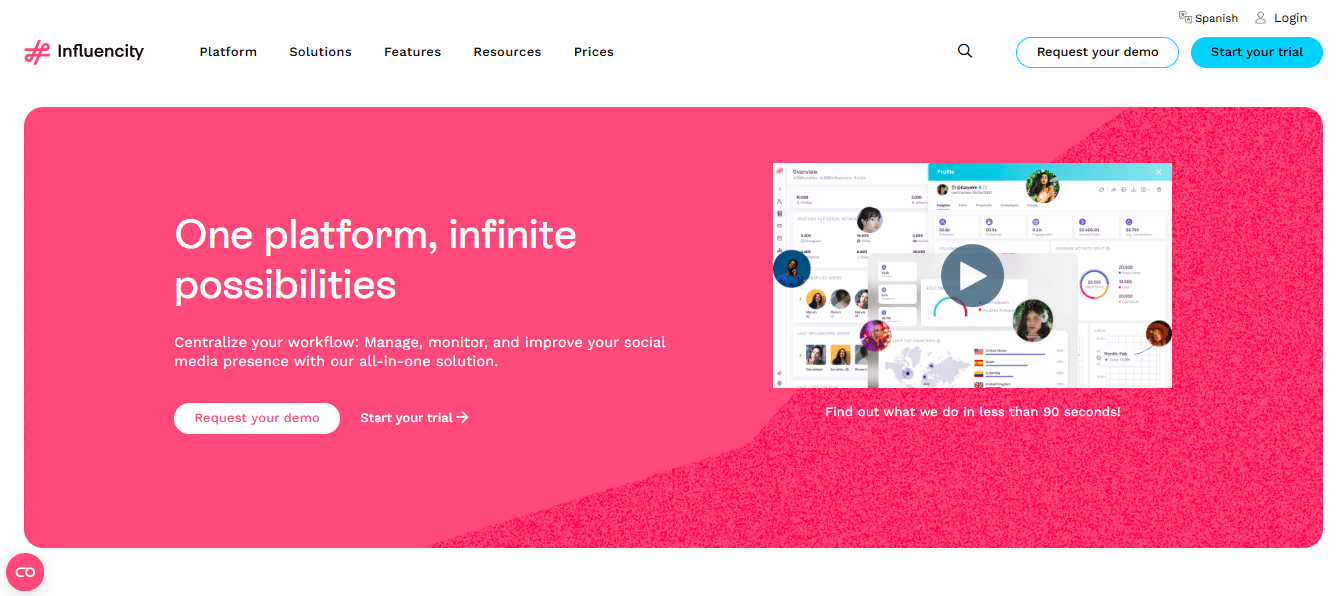
Influencity is the most direct way for a mid-market team to leave an enterprise contract without losing scale. A 200M+ database, AI keyword, hashtag, and lookalike discovery, a visual Kanban CRM, Shopify gifting with affiliate attribution, and social listening all sit behind a published month-to-month price with a 7-day trial. For a team that inherited Tagger through a larger Sprout agreement and could never justify its share of the spend, this is the cleanest reset.
Best for: Mid-market teams that want scale and a monthly bill they can cancel without a renewal conversation.
Pricing:
Basic $168/month, Professional $348/month, Business $698/month
Annual billing brings these to roughly $134, $278, and $558/month
Month-to-month available, 7-day trial on all plans, Enterprise custom
Standout features:
200M+ Creators, Published Price: Enterprise-scale discovery without an enterprise contract.
Visual Kanban CRM: Pipeline management with tagging, lists, and creator notes.
Listening Plus Attribution: Organic mention tracking alongside Shopify sales tracking.
There is no in-platform inbox, so outreach routes through a connected external email account and replies land outside the tool, with no native DM sequences. eCommerce support is Shopify-only, onboarding runs four to six weeks, and UGC licensing is not native.
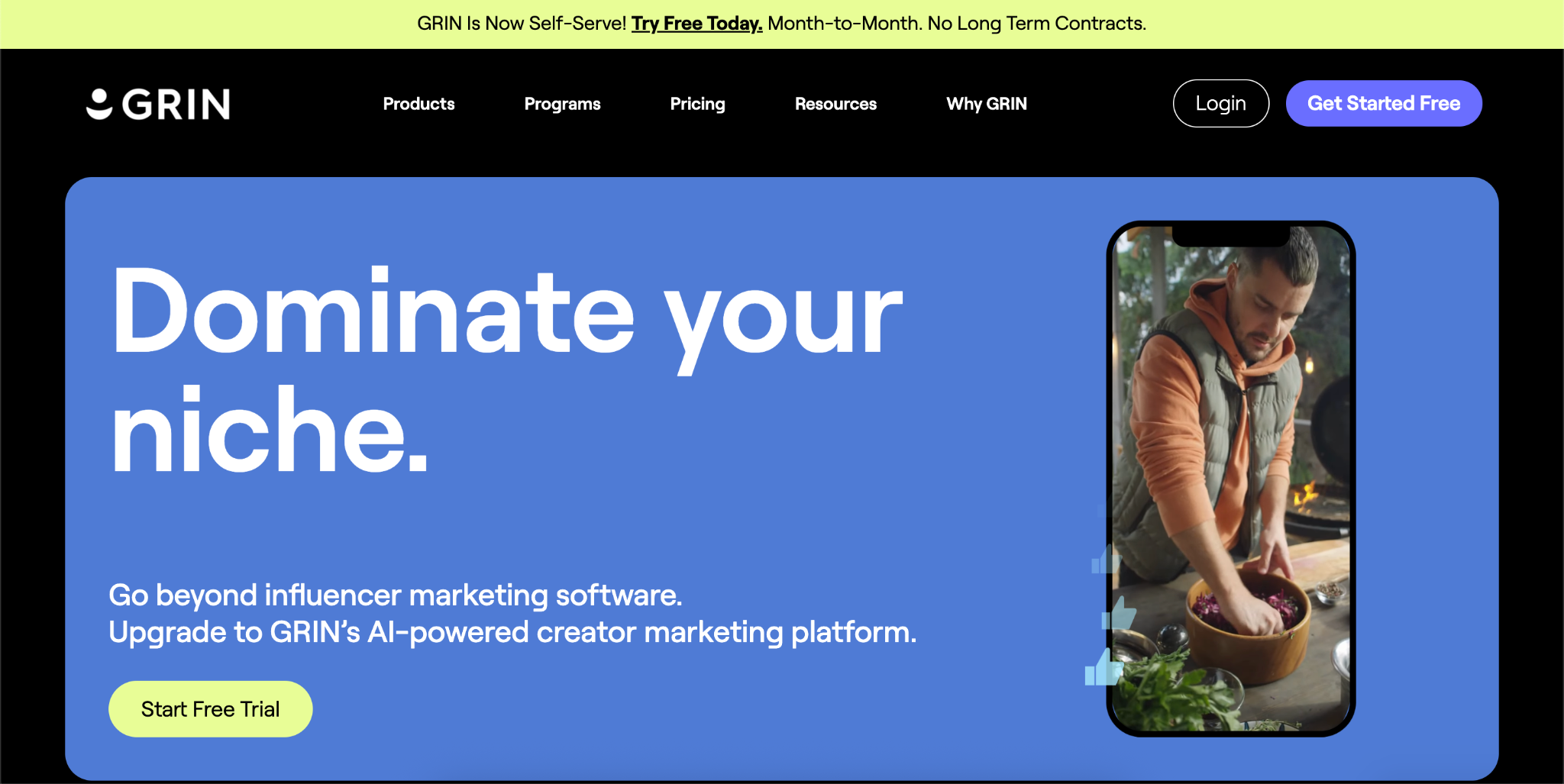
GRIN sits at the far end of this list from Tagger: light on social intelligence, heavy on getting product into creators' hands and revenue back out. Discovery, CRM, messaging, gifting, contracts, affiliate, and ROI run in one dashboard, with native Shopify, WooCommerce, BigCommerce, and Magento integrations that generate discount codes, track shipments, and tie sales to individual creators. Its Gia AI assistant supports sourcing and outreach drafting, and the affiliate hub carries no platform fee.
Best for: DTC brands whose programs run on seeding and affiliate revenue rather than brand measurement.
Pricing:
Free plan at $0/month with 200 monthly credits
Paid tiers from $200/month to $1,500/month on a credit-based model
Month-to-month with no annual contract and no minimum commitment
Standout features:
Full Lifecycle In One Dashboard: Sourcing through payment without switching systems.
Automated Gifting And Code Tracking: Seeding with discount codes, shipping sync, and attribution.
No Contract Commitment: Month-to-month billing with a free tier to start on.
GRIN does not publish a database size and its discovery curation is reported as weaker than dedicated sourcing tools. Social intelligence is not its strength, so teams that valued Signals will find it thin, and the credit model can move you up a tier faster than the headline price implies.
Start by separating what you actually use from what you are billed for. If the honest answer is that Tagger's reports are excellent and largely consumed by two people, while the campaign itself runs on spreadsheets and a shared inbox, then the decision is not about analytics at all. Influencer Hero is the strongest fit for that specific situation, because it is the only option here that carries reporting at that depth, including per-creator revenue attribution and social listening, while also running outreach, the CRM, gifting, affiliate tracking, and payouts inside the same $649/month published subscription. Its top tier costs roughly what the average Tagger contract does, with the execution included rather than bought separately.
If listening genuinely is the product you are buying, weigh Meltwater and Storyclash before anything else, and accept that you will be buying execution alongside them. If your organization needs first-party data and defensible approval chains, CreatorIQ is the peer comparison, though it will not solve the contract frustration. If the real problem is audience fraud, HypeAuditor answers it more rigorously than anyone. And if you want breadth and a visible price, Modash and Influencity both deliver scale without a sales process.
One practical test cuts through most of this: ask each vendor for a number before the demo. Four of the nine here will give you one. Agencies that manage creator programs across many clients, such as NC Media Group, tend to run several of these platforms in parallel for exactly that reason, matching each client's program to the tool whose commercial model fits rather than forcing everyone onto one contract.
What it costs to start, and how much you have to negotiate to find out. Listening depth is included because it is usually the capability teams are most afraid of losing when they leave Tagger.
| Platform | Cost To Start | Pricing Model | Social Listening |
| Influencer Hero | $649/mo (annual $454/mo) | Published | Built in |
| Meltwater / Klear | Reported $15,000 to $35,000/yr for the Klear module | Quote-only | Core capability |
| CreatorIQ | Reported floor ~$30,000/yr | Quote-only | Not a focus |
| HypeAuditor | Free tier; reported ~$299/mo | Part published | Included |
| Modash | $199/mo (annual $2,388/yr) | Published | Not a focus |
| Storyclash | Not published | Quote-only | Core capability |
| Later Influence | Not published | Quote-only | Not a focus |
| Influencity | $168/mo | Published | Included |
| GRIN | Free tier; $200 to $1,500/mo | Published | Included |
Tagger itself publishes no rate for the influencer module. Third-party contract data reports an average annual deal near $21,431 and enterprise agreements past $94,976, on annual terms with no trial.
The pattern worth noticing in the table above is that Tagger's opacity is not unusual. Five of these nine platforms will not tell you what they cost without a conversation, and the enterprise end of this category has settled comfortably into that model. Teams that assume switching automatically buys transparency are often disappointed, because the peers most similar to Tagger are also the ones most likely to reproduce its commercial terms.
So the useful question is not which platform is best in the abstract. It is which half of the problem costs you more right now. If the measurement is what justifies the spend, Meltwater, Storyclash, and CreatorIQ are the serious comparisons, and the analytics will hold. If the reporting has been fine and the friction lives in outreach, gifting, and payouts, then the platforms that publish their pricing and include the execution - Influencer Hero, GRIN, Modash, and Influencity among them - change the economics more than any dashboard upgrade would. Most teams already know which of those two sentences describes them, and the shortlist follows from there rather than from a feature grid.
Sprout Social does not publish a rate for the influencer marketing module, and there is no self-serve signup or trial for it. Pricing is assembled per customer based on scope, seats, and which parts of the wider platform you take, then quoted after a demo on an annual term. Third-party contract data reports an average around $21,431 a year, with enterprise deals past $94,976. The per-seat rates on Sprout Social's public pricing page apply to the core social management suite, not the influencer product.
Meltwater, through the Klear module, is the closest structural match, since listening and influencer marketing sit in the same intelligence suite. Storyclash approaches it differently, tracking organic brand mentions and content resonance rather than broad conversation volume. Influencer Hero, Influencity, HypeAuditor, and GRIN all include listening as a feature rather than a core product, which suits most brand programs but not teams buying primarily for trend intelligence.
Yes, though the options narrow. Influencer Hero publishes $649/month with a 3-month minimum and covers reporting across seven tabs including revenue attribution and listening. GRIN bills month-to-month with no minimum, Influencity is month-to-month with a 7-day trial, and Modash offers monthly billing with a 14-day free trial. The enterprise platforms here, including Meltwater, CreatorIQ, Storyclash, and Later Influence, are annual only.
The consistent gaps are outreach automation with follow-up sequences, native gifting through an eCommerce store, affiliate tracking, and creator payouts. Influencer Hero covers all four in one subscription, GRIN and Modash handle gifting and affiliate work natively, and Later Influence adds inbound application pages. Tagger also does not index Snapchat, which Influencer Hero and HypeAuditor both cover.
Not on reporting grounds alone. Tagger's analytics and Signals listening are genuinely strong, and swapping platforms to get marginally different dashboards rarely pays back the migration. The case for moving is commercial rather than technical: it is worth it when the annual contract, the quote process, or the cost of the surrounding tools you buy to actually run campaigns outweighs what the measurement is giving you.
 AI tools to find & convert leads.
  Send emails at scale