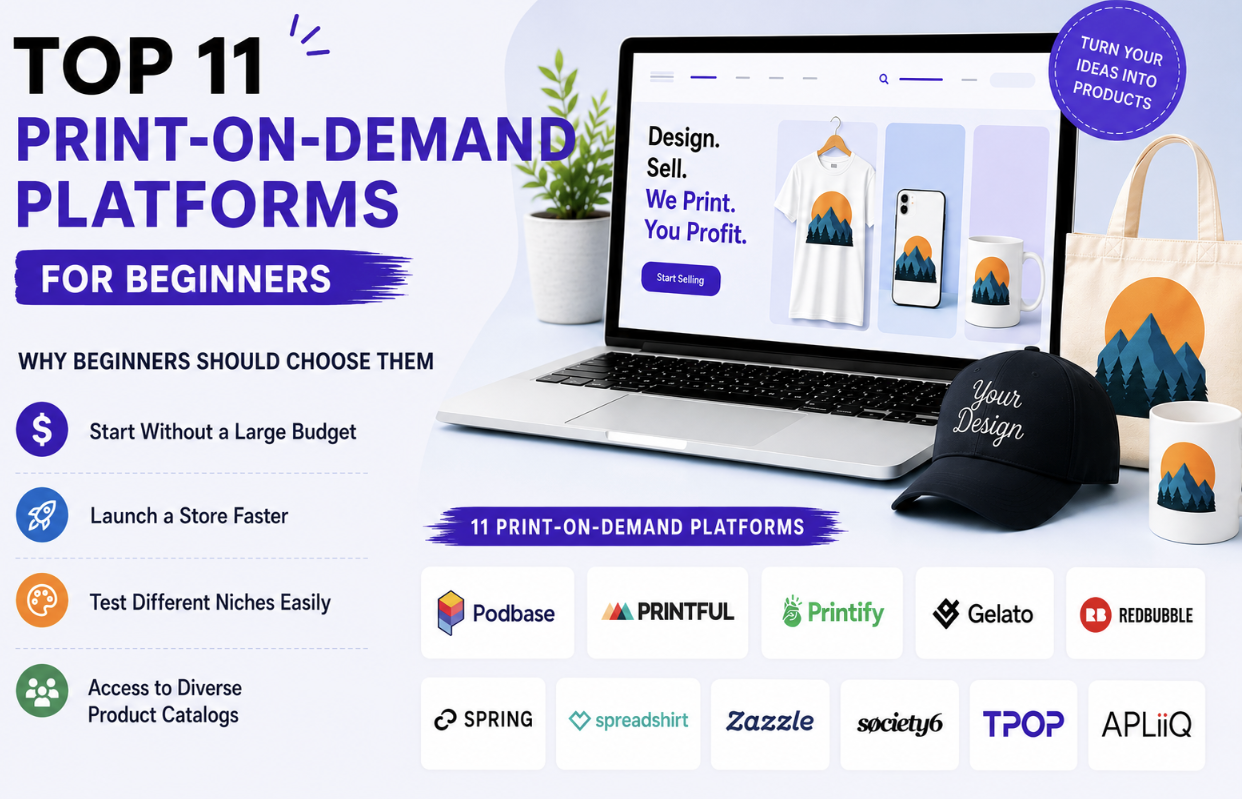
Top 11 Print on Demand Platforms for Beginners
Starting a print-on-demand business has never been easier. With countless POD platforms available today, beginners can launch and sell custom products without managing inventory, handling production, or worrying about shipping logistics. However, not all platforms are created equal. Some are better suited for ecommerce store owners, while others cater to artists, content creators, or entrepreneurs looking for a simple way to get started.
To help you choose the right solution, we've compiled a list of the top 11 print-on-demand platforms for beginners. Whether you're launching your first online store, selling custom phone cases, creating apparel designs, or building a personal brand, these platforms offer the tools, integrations, and support needed to turn your ideas into a profitable business.
Print-on-demand (POD) platforms are services that allow individuals and businesses to create and sell custom products without holding inventory. Instead of purchasing products in bulk, sellers upload their designs to a POD platform, which prints, packages, and ships each item only after a customer places an order.
This business model is especially useful for beginners because it lowers startup costs and reduces the risks that usually come with traditional ecommerce. New sellers can test product ideas, explore different niches, and build an online brand without investing heavily in stock, storage, or fulfillment.
Most POD platforms also integrate with popular ecommerce solutions such as Shopify, WooCommerce, Etsy, and Amazon, making it easier to manage sales and automate order fulfillment. With the right platform, beginners can focus on creating strong designs and growing their audience while the provider handles production and shipping.
| Platform | Best For | Own Store Integration | Key Product Focus | Main Beginner Advantage | Beginner Friendly |
| Podbase | Selling custom phone cases and tech accessories | Yes | Phone cases, AirPods cases and tech accessories | Simple setup for launching custom products | ★★★★★ |
| Printful | Building a branded ecommerce store | Yes | Apparel, accessories and home products | Wide product selection with in-house fulfillment | ★★★★★ |
| Printify | Comparing multiple print providers | Yes | Apparel, accessories and home products | Access to a global network of print providers | ★★★★★ |
| Gelato | International fulfillment | Yes | Apparel, wall art, stationery and accessories | Local production network across multiple countries | ★★★★☆ |
| Redbubble | Independent artists | No | Apparel, accessories, home decor and art prints | Built-in marketplace with existing customer traffic | ★★★★★ |
| Spring | Creators and influencers | Yes | Apparel and branded merchandise | Designed for creator-led merchandise sales | ★★★★☆ |
| Spreadshirt | Custom apparel sellers | Yes | Apparel and accessories | Offers both marketplace and custom shop options | ★★★★☆ |
| Zazzle | Personalized products | No | Gifts, stationery, apparel and home products | Extensive customization options across product categories | ★★★★☆ |
| Society6 | Art-focused businesses | No | Wall art, home decor and lifestyle products | Curated marketplace for artists and designers | ★★★★☆ |
| TPOP | Sustainable ecommerce brands | Yes | Apparel, accessories and home products | Emphasis on eco-friendly fulfillment and packaging | ★★★★☆ |
| Apliiq | Custom clothing brands | Yes | Apparel and private-label clothing | Advanced apparel customization and branding options | ★★★★☆ |

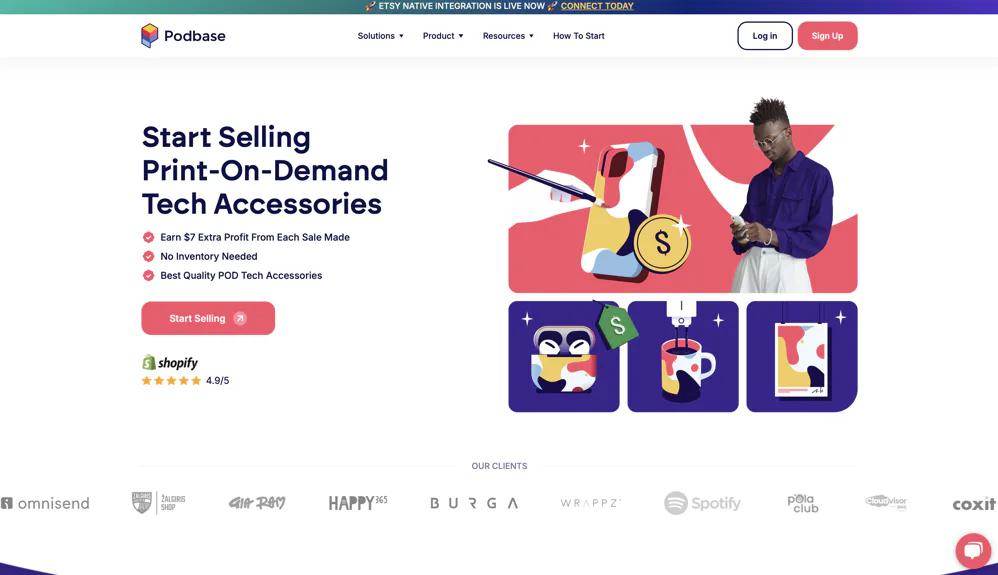
Podbase stands out as one of the best print-on-demand platforms for beginners who want to sell modern, high-demand accessories. Its catalog focuses on tech accessories such as phone cases, AirPods cases, MacBook covers, laptop sleeves, mugs, wall art, and other customizable items, giving new sellers a clear direction when choosing print on demand products.
For beginners, Podbase removes the need for inventory, minimum orders, and manual fulfillment. Sellers can connect it with platforms such as Shopify, Etsy, and WooCommerce, add their designs, and let Podbase handle production, packaging, and worldwide shipping. With its focused product catalog and automated fulfillment, Podbase is a strong first choice for building a professional POD brand.
Pricing: Free to start; product costs apply after an order is placed.
Pros: Tech-focused catalog, no minimum orders, worldwide shipping.
Cons: Less focused on apparel than larger general POD platforms.
How it compares: Compared to general POD platforms like Printful and Printify, Podbase offers a more specialized product catalog, making it a strong option for sellers who want to focus on tech accessories rather than apparel.
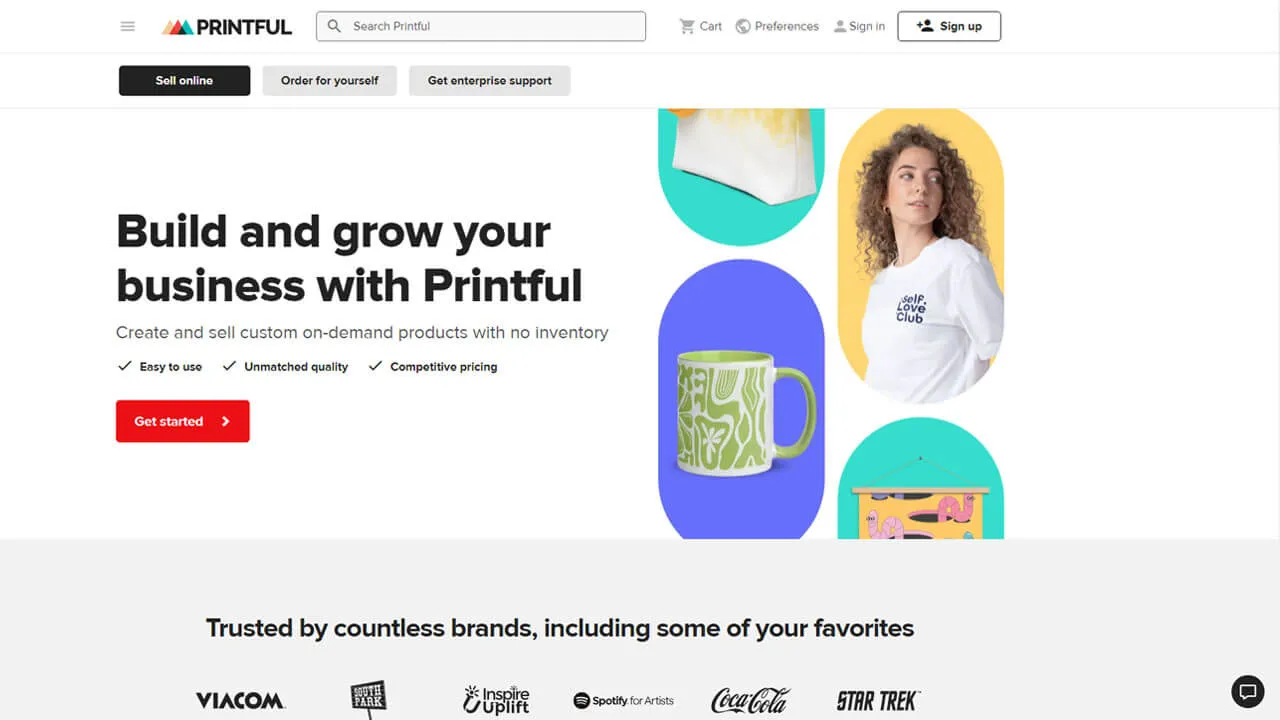
Printful is one of the most recognized print-on-demand providers and is often recommended for entrepreneurs building their own ecommerce stores. The platform handles printing, packing, and shipping while allowing sellers to create branded products without maintaining inventory. It integrates with popular ecommerce solutions and supports a wide range of customizable products, including apparel, accessories, and home goods.
For beginners, Printful's biggest advantage is its all-in-one approach to fulfillment. New sellers can focus on product creation and marketing while Printful manages production and logistics behind the scenes.
Pricing: Free to start; product, fulfillment, shipping, and tax costs may apply.
Pros: Wide product catalog, strong integrations, in-house fulfillment.
Cons: Some product costs may be higher than budget-focused alternatives.
How it compares: Often compared with Printify, but offers a more centralized fulfillment model.
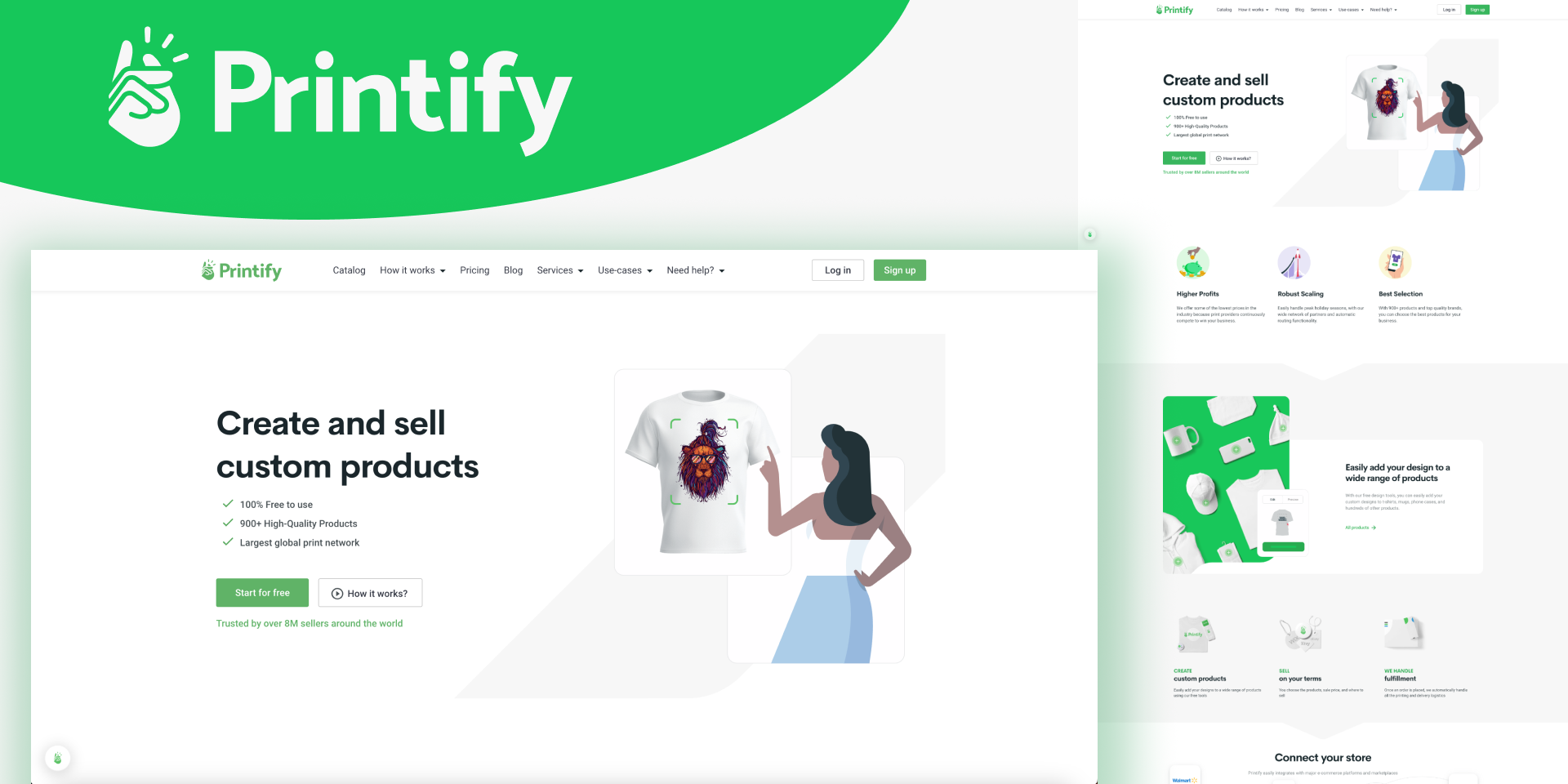
Printify operates differently from many other POD companies. Rather than relying on its own production facilities, it connects sellers to a global network of print providers. This allows users to compare suppliers based on factors such as location, pricing, and product availability. The platform offers a large catalog covering apparel, accessories, home products, and lifestyle items.
This flexibility makes Printify particularly appealing to beginners who want greater control over production costs and fulfillment options as they grow their business.
Pricing: Free plan available; Premium plan offers product discounts.
Pros: Large supplier network, competitive pricing, extensive catalog.
Cons: Product quality may vary by provider.
How it compares: Offers more supplier flexibility than Printful.
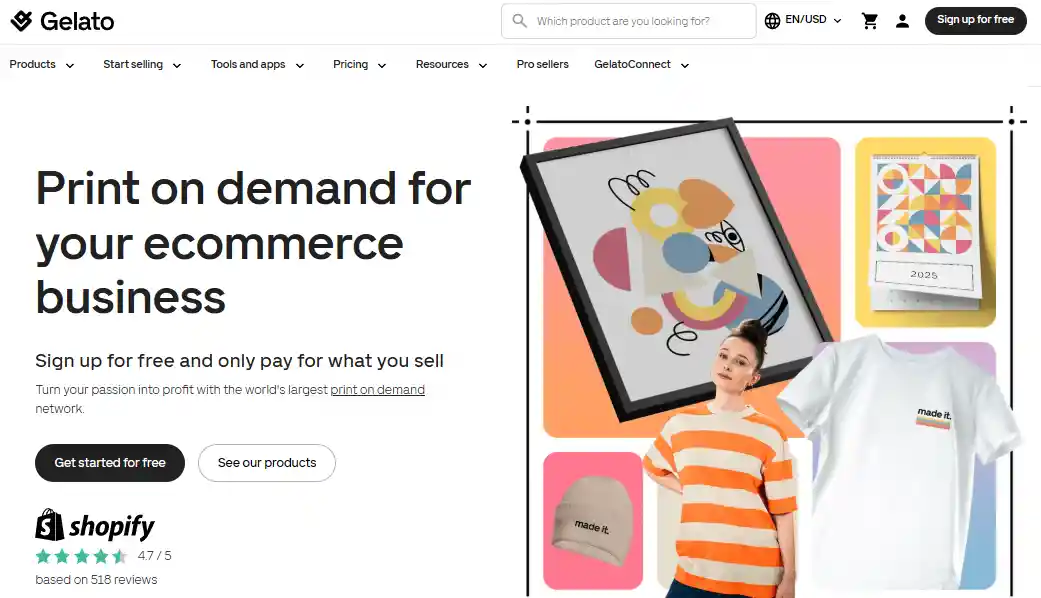
Gelato focuses on local production and global fulfillment. The company works with production partners around the world to manufacture products closer to the end customer whenever possible. Its catalog includes categories such as apparel, wall art, stationery, and accessories.
For beginners planning to sell internationally, Gelato's distributed production model can help reduce shipping distances and improve delivery efficiency. It is particularly popular among sellers focused on art prints, posters, and personalized products.
Pricing: Free plan available; paid subscriptions available.
Pros: Global production network, local fulfillment, ecommerce integrations.
Cons: Product availability may vary by location.
How it compares: Similar to Printful but places a stronger emphasis on local production.
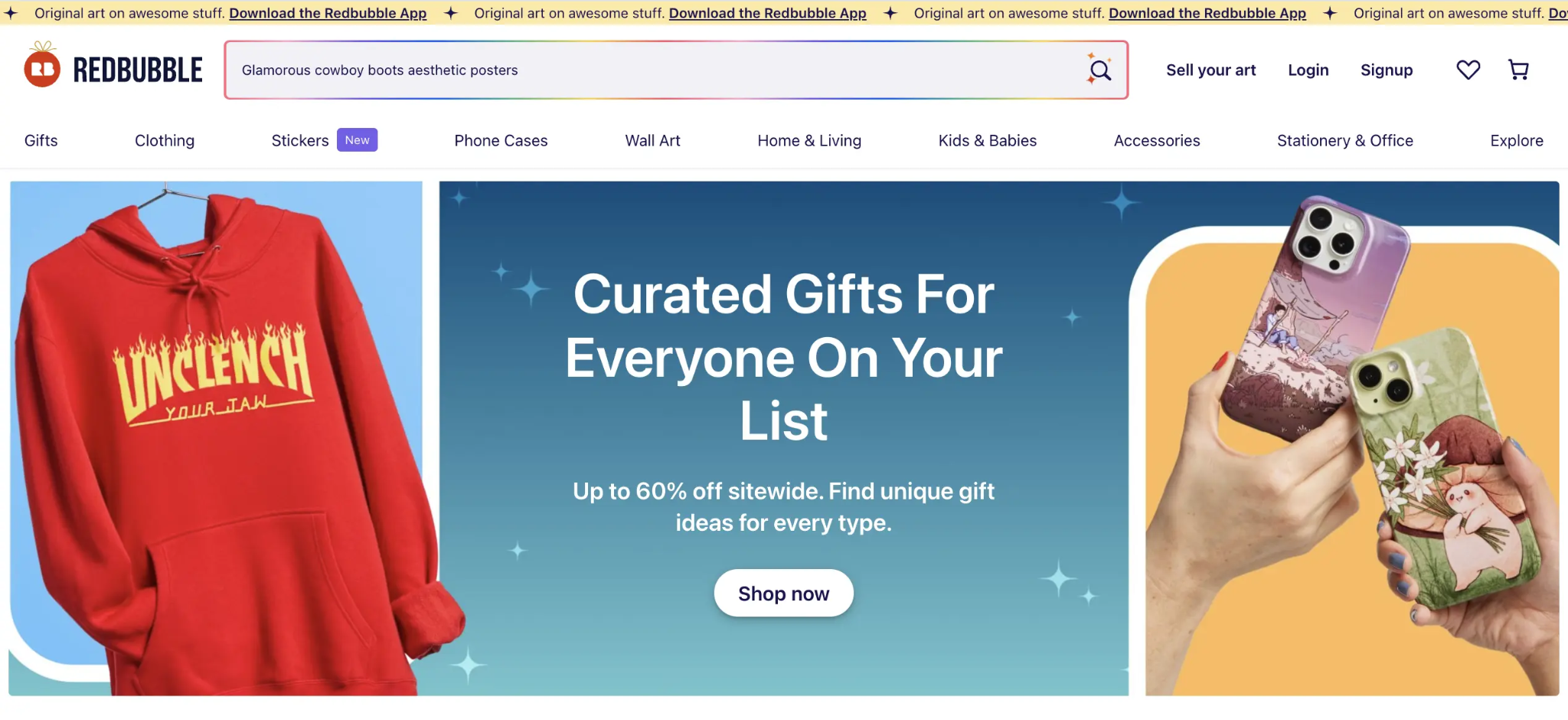
Redbubble combines print-on-demand fulfillment with an established online marketplace. Instead of building an independent store, creators can upload designs directly to the platform and make them available across a wide range of products.
This makes Redbubble an attractive starting point for artists, illustrators, and designers who want access to an existing customer base. Since the platform handles production, customer service, and fulfillment, beginners can focus primarily on creating and uploading designs.
Pricing: Free to join.
Pros: Built-in audience, simple setup, no fulfillment management.
Cons: Limited control over branding.
How it compares: Similar to Society6 but with a broader marketplace ecosystem.
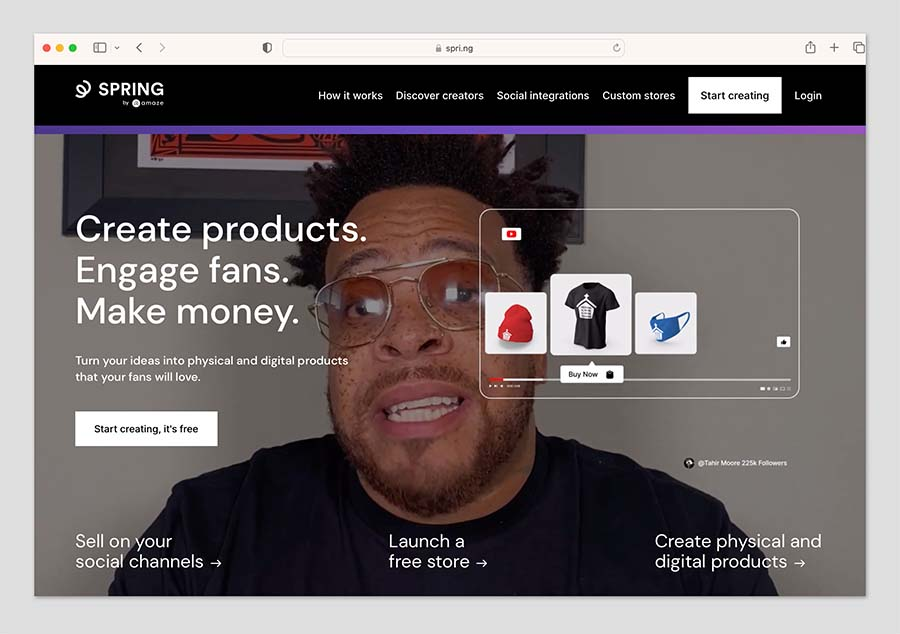
Spring, formerly known as Teespring, is designed with creators, influencers, and online communities in mind. The platform allows users to create custom merchandise and sell it directly to their audience through integrated storefronts and creator tools.
For beginners with an established social media following, Spring provides a straightforward way to monetize an audience through branded products without managing inventory or logistics.
Pricing: Free to start.
Pros: Creator-focused tools, simple storefronts, audience monetization.
Cons: Best suited for sellers with an existing audience.
How it compares: More creator-focused than traditional ecommerce POD platforms.
Spreadshirt offers both a print-on-demand service and access to its own marketplace. Sellers can create custom products, open their own shop, or make designs available through the platform's marketplace ecosystem.
This combination provides flexibility for beginners who want to experiment with different selling methods while learning how the print-on-demand business model works.
Pricing: Free to start.
Pros: Marketplace access, easy setup, apparel-focused.
Cons: Fewer advanced branding features.
How it compares: Similar to Spring but with stronger marketplace functionality.
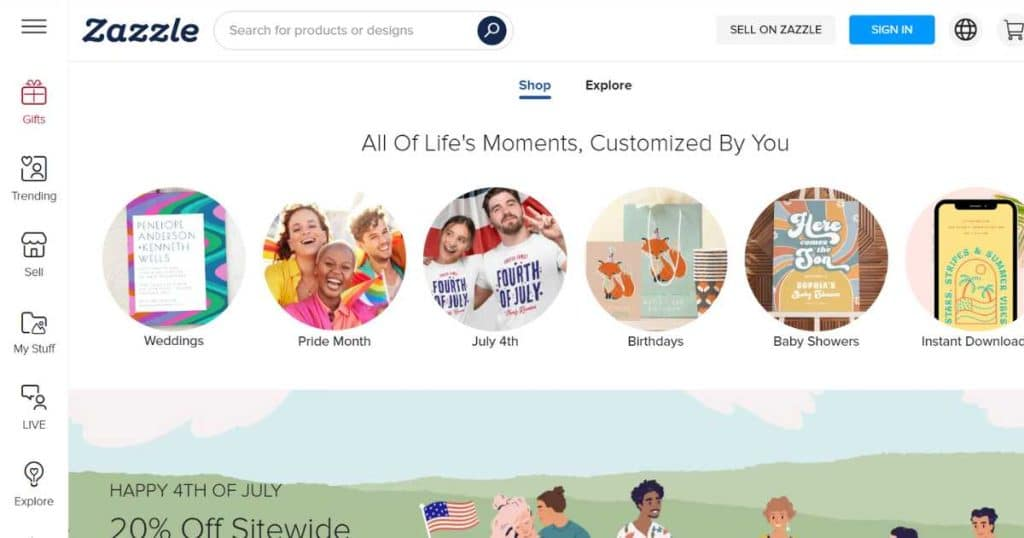
Zazzle specializes in highly customizable products and personalized merchandise. Its product range includes gifts, stationery, home decor, apparel, and many other categories.
For beginners, Zazzle can be an appealing option because it attracts customers specifically looking for customized products. This creates opportunities for sellers who want to focus on personalized designs and niche gifting markets.
Pricing: Free to join.
Pros: Extensive customization options, large product range.
Cons: Less control over the customer experience.
How it compares: Better suited for personalized products than most marketplace-based POD platforms.
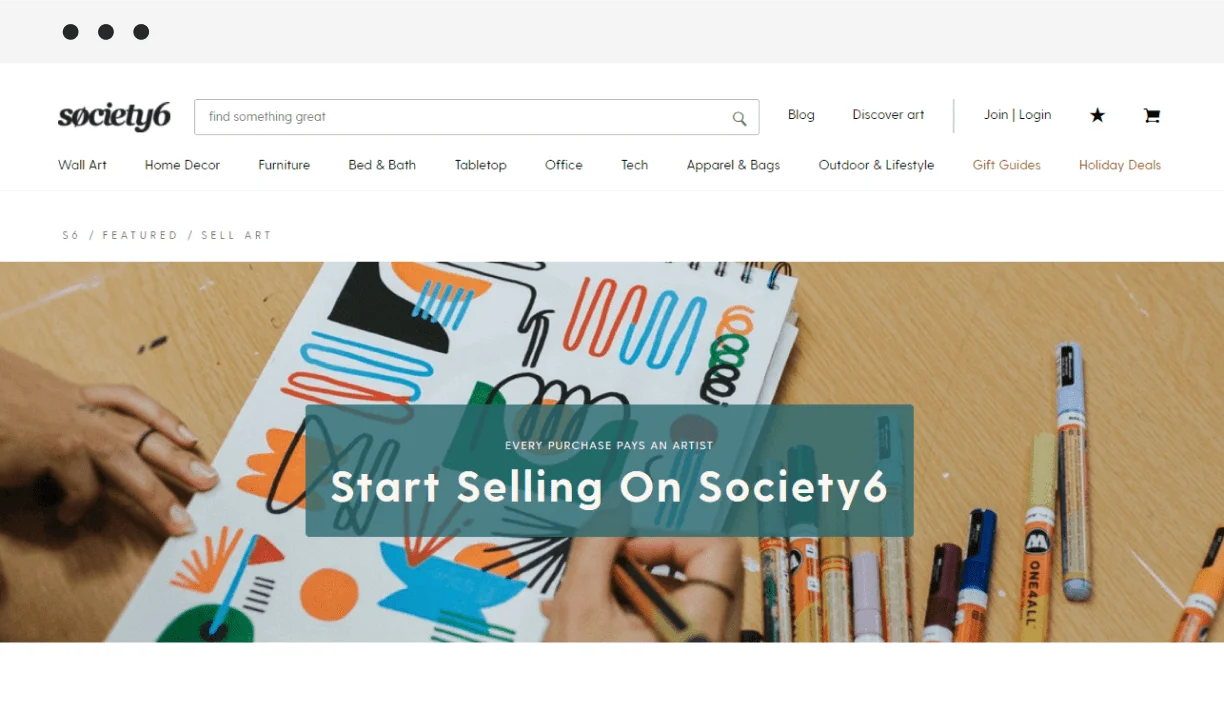
Society6 is a platform built around independent artists and designers. Its catalog focuses heavily on wall art, home decor, and lifestyle products, making it different from many POD providers that primarily emphasize apparel.
Artists who want to showcase their work on premium home and decor products may find Society6 particularly attractive. The platform handles manufacturing and fulfillment, allowing creators to concentrate on producing artwork.
Pricing: Free to join.
Pros: Art-focused audience, premium home decor products.
Cons: Limited storefront customization.
How it compares: More specialized in home decor and wall art than Redbubble.
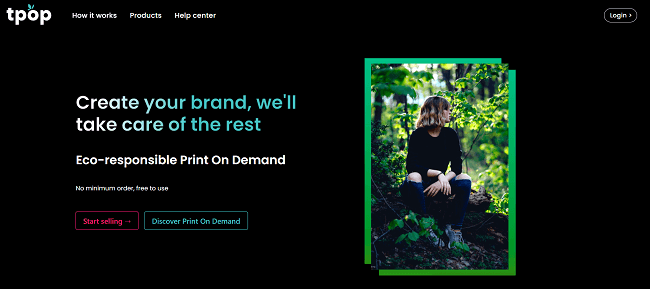
TPOP is a European print-on-demand platform that places a strong emphasis on sustainability. The company highlights eco-friendly practices, including environmentally conscious packaging and responsible production processes.
For beginners who want sustainability to be part of their brand identity from day one, TPOP provides a POD solution that aligns with environmentally focused business values while still offering automated fulfillment and ecommerce integrations.
Pricing: Free plan available; paid plans unlock additional features.
Pros: Eco-conscious fulfillment, plastic-free packaging, European focus.
Cons: Smaller product catalog than some larger providers.
How it compares: A strong option for sustainability-focused ecommerce brands.
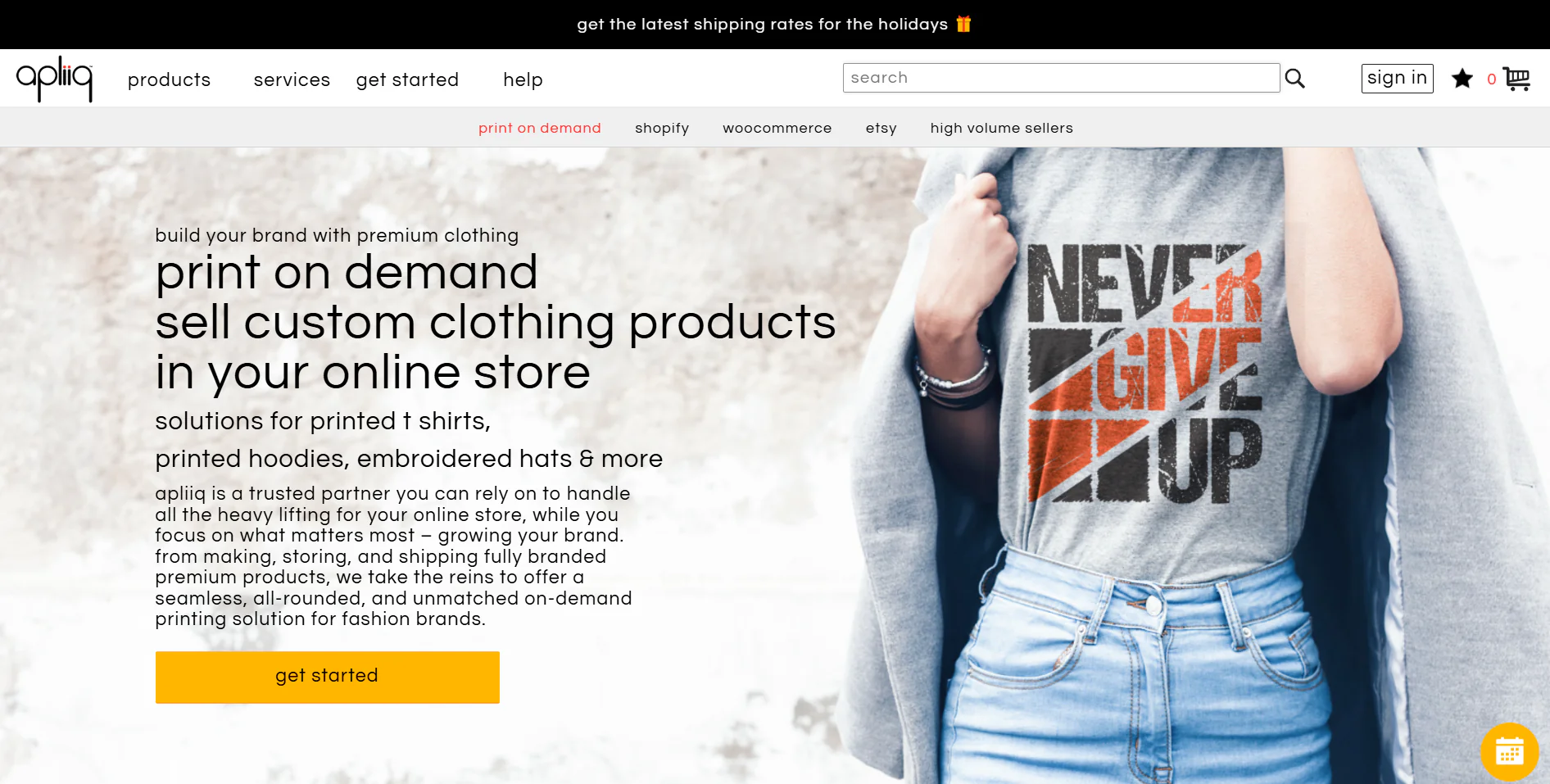
Apliiq focuses primarily on custom apparel and private-label clothing. The platform is known for offering advanced apparel customization options, including labels, patches, embroidery, and other branding features that go beyond standard print-on-demand products.
For beginners interested in building a clothing brand rather than simply selling graphic designs, Apliiq offers tools that can help create a more distinctive and professional-looking apparel line.
Pricing: Free to start; product costs apply per order.
Pros: Advanced apparel customization, private-label options.
Cons: Primarily focused on clothing.
How it compares: Best suited for apparel brands seeking more advanced customization and branding options.
Most POD platforms let you start selling without purchasing inventory upfront, making them ideal for first-time entrepreneurs.
Beginners can upload designs, choose products, connect a store, and start selling much faster than with traditional ecommerce.
Print-on-demand makes it easier to experiment with phone cases, apparel, wall art, personalized gifts, and other product categories without major financial risk.
Since the platform handles production, packaging, and shipping, sellers can spend more time building their brand and attracting customers.
From tech accessories and clothing to home decor and artwork, beginners can choose products that fit their audience and business idea.
Print-on-demand gives beginners a practical way to understand product selection, branding, pricing, and online marketing without the complexity of traditional retail.
Another advantage of these platforms is their integration with popular ecommerce solutions, making it easier to automate order fulfillment and manage sales. If you're planning to build your store on Shopify, it's also worth exploring the best print-on-demand dropshipping Shopify apps to find tools that match your business goals and preferred product categories.
The best platform depends on what you want to sell. Podbase is a strong choice for tech accessories, while Printful and Printify are popular for broader product catalogs.
Yes. Print-on-demand is beginner-friendly because you do not need to buy inventory, manage storage, or handle fulfillment yourself.
Many POD platforms are free to start. However, product costs, shipping fees, and optional paid features may apply after you receive orders.
You can sell items such as phone cases, apparel, mugs, wall art, stationery, home decor, and personalized gifts, depending on the platform.
Not always. Some platforms connect to ecommerce stores, while others offer marketplace access where you can sell without building a separate website.
 AI tools to find & convert leads.
  Send emails at scale