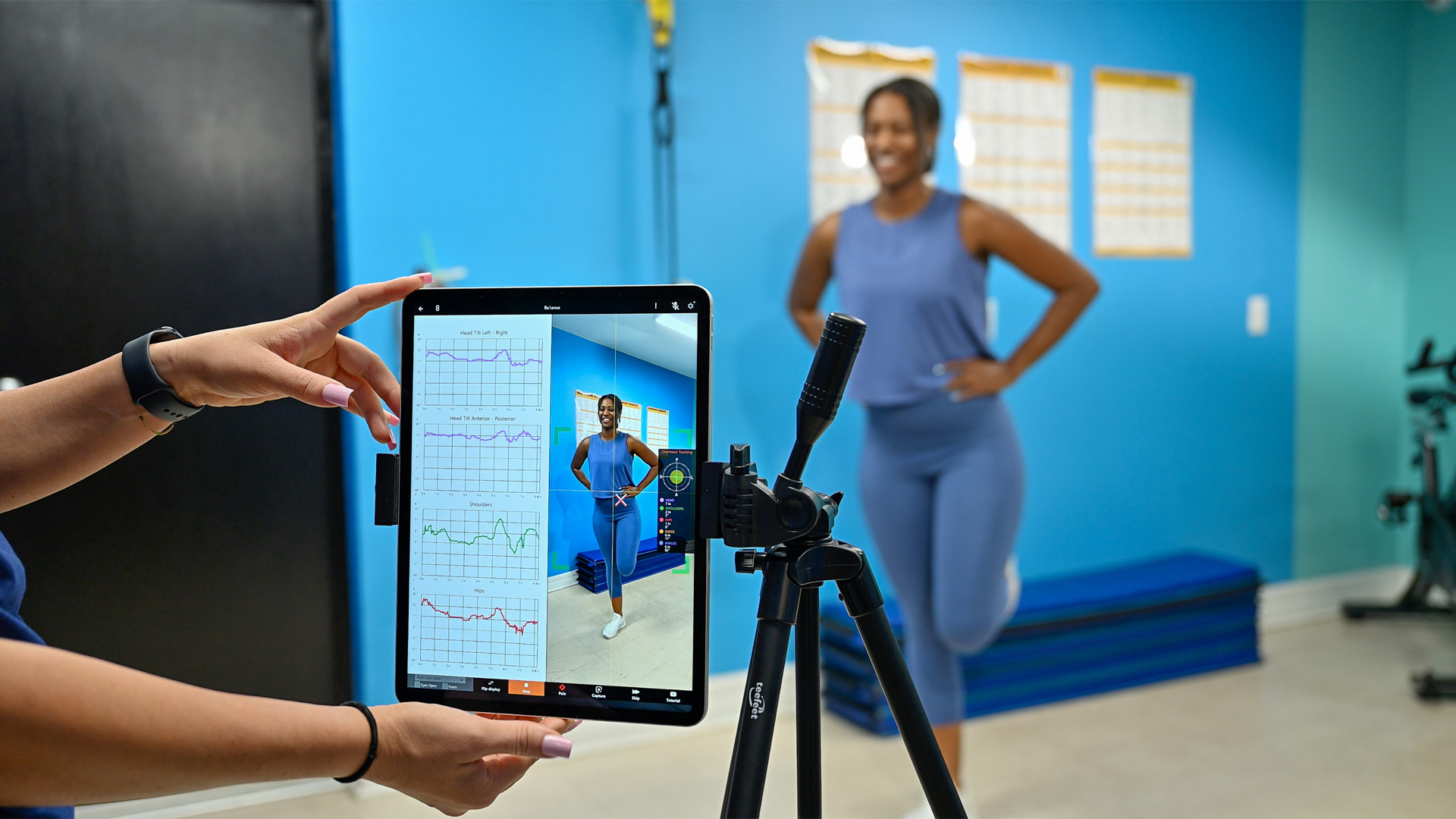
A movement assessment gives prospective members a practical introduction to your coaching. It can help them understand how they move, identify training priorities, and leave with a clearer idea of what to work on.
The Functional Movement Screen (FMS) offers a structured way to do this. Used appropriately, it informs programming and provides a repeatable baseline. But it cannot diagnose injuries or explain pain. For fitness business owners, a useful assessment service starts with clear boundaries, consistent delivery, and honest marketing.
The FMS is a screen, not a diagnosis. It scores seven movement patterns from 0 to 3 and highlights limitations and asymmetries. Pain requires a referral, not a training recommendation based on the score.
Define what clients receive. A baseline screen, a re-screen, and a group event should each have a clear scope and deliverable.
Describe movement findings, not promised health outcomes. Explain how the screen informs training without claiming it prevents injuries or fixes pain.
Make booking straightforward. A dedicated assessment page and direct booking link help prospects understand the service and schedule it.
Keep delivery consistent. Standard instructions, scoring procedures, and referral rules make comparisons more useful.
Add detailed movement measurement only when needed. Motion capture can provide data beyond a screen, but it does not replace coaching judgment or clinical assessment.
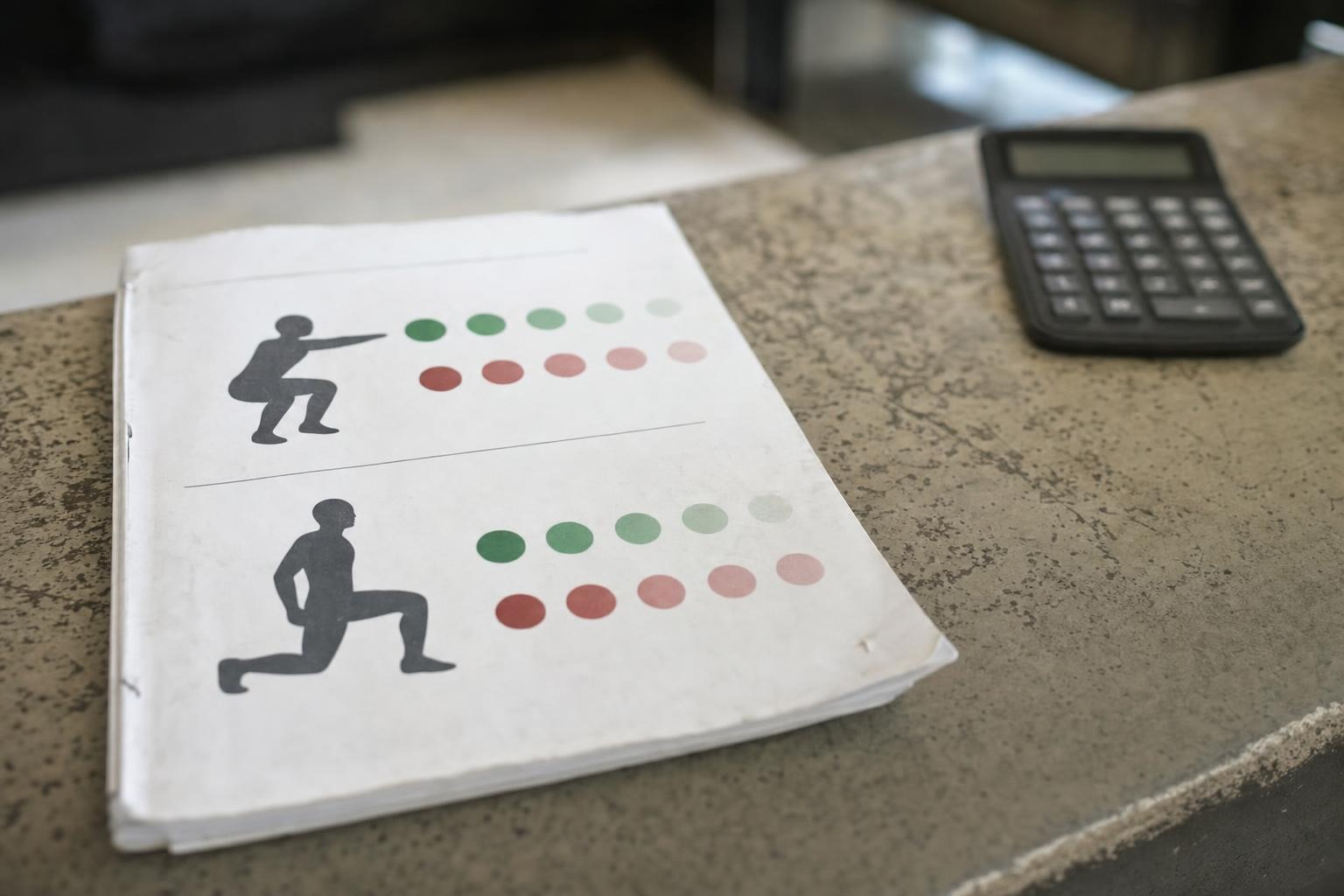
The FMS evaluates seven movement patterns, each scored from 0 to 3, for a total out of 21. Five patterns are tested on both sides, allowing coaches to note left-to-right differences. The protocol also includes clearing tests that check for pain and can result in a 0 for the associated pattern.
A score of 0 means pain occurred during a test or associated clearing test. The screen is intended for people without current pain and is not diagnostic. If pain occurs, stop screening, document it, and refer the client to an appropriate licensed clinician. A clinician may use a separate assessment, such as the Selective Functional Movement Assessment (SFMA), within their professional scope.
Be careful with total scores. Research on the commonly cited cutoff of 14 or below is mixed, and that number should not be presented as an individual's injury prediction. Theia Markerless's overview is a useful reference for scoring and limitations. It also explains how three-dimensional movement measurements can complement the screen rather than replace it.


A clearly defined assessment is easier for clients to understand and staff to deliver. These three packages provide a practical starting point.
| Package | What the client receives | Who it is for |
|---|---|---|
| Baseline Screen and Findings Review | Full seven-pattern screen, a one-page score breakdown, two or three training priorities, and suitable starter drills | New members, trial visitors, and prospects attending a consultation |
| 8-Week Re-Screen | Repeat screen, comparison with baseline, and updated training priorities | Training clients and members completing a program block |
| Team or Corporate Event Screen | Individual screens, private summary cards, and a group explanation of the process | Local sports clubs, employers, and running groups |
Include three safeguards in every package: a plain-language explanation that the screen does not diagnose or treat conditions, a referral process for anyone reporting pain, and a record of what was scored and by whom. If an event covers only selected patterns, describe it as a brief movement check rather than a complete FMS, and do not report a composite score.
Describe what the assessment actually provides: "identify training priorities," "compare movement on each side," "establish a repeatable baseline," or "help your coach select exercises." Avoid promises to prevent injuries, fix pain, or correct a medical condition.
Base pricing on the full time required, including preparation, screening, report writing, and the findings review. Compare it with local coaching services that involve similar staff time. You can include a re-screen in a training package, but explain what is included and when it happens. For group events, account for staffing and follow-up costs before deciding whether to charge or offer the event free.
People need different information as they move from learning about the screen to deciding whether to book. Matching content to those stages is the same discipline any growing business needs to scale past that first wave of word-of-mouth customers.
Short videos or image sequences can introduce the seven patterns and explain what a screening session involves. Pair them with a clear article about what a movement screen can and cannot tell someone. Present demonstrations as education, not a way for viewers to diagnose themselves.
A short introductory movement check can lower the barrier to a first visit. Make its scope clear, especially if it is not a full FMS. Link directly to booking and explain the duration, activities, and take-home information. Collect relevant health information through a private intake process rather than marketing emails, and ensure staff review it before screening.
After the screen, explain the score breakdown and agree on one or two appropriate training priorities. Discuss how a starter plan could address those priorities without implying that a low score requires a purchase. Offer a re-screen at a suitable point in the training program, and let the client decide whether to book it. If a client asks what their numbers actually mean, it helps to have a plain-language reference on the functional movement screen and its limits that you can point them to.
For an in-person service, local visibility and a clear booking process matter more than a complicated website. Keep service descriptions, availability, and booking links current.
Where available, add an appointment link to your profile and direct it to the assessment page rather than your homepage. List "Movement Assessment" among your services, with a short description that matches what clients receive.
Check the profile periodically for outdated or third-party booking links. Scheduling providers may add links through their integrations, so confirm that each visible link reaches the right service and current availability.
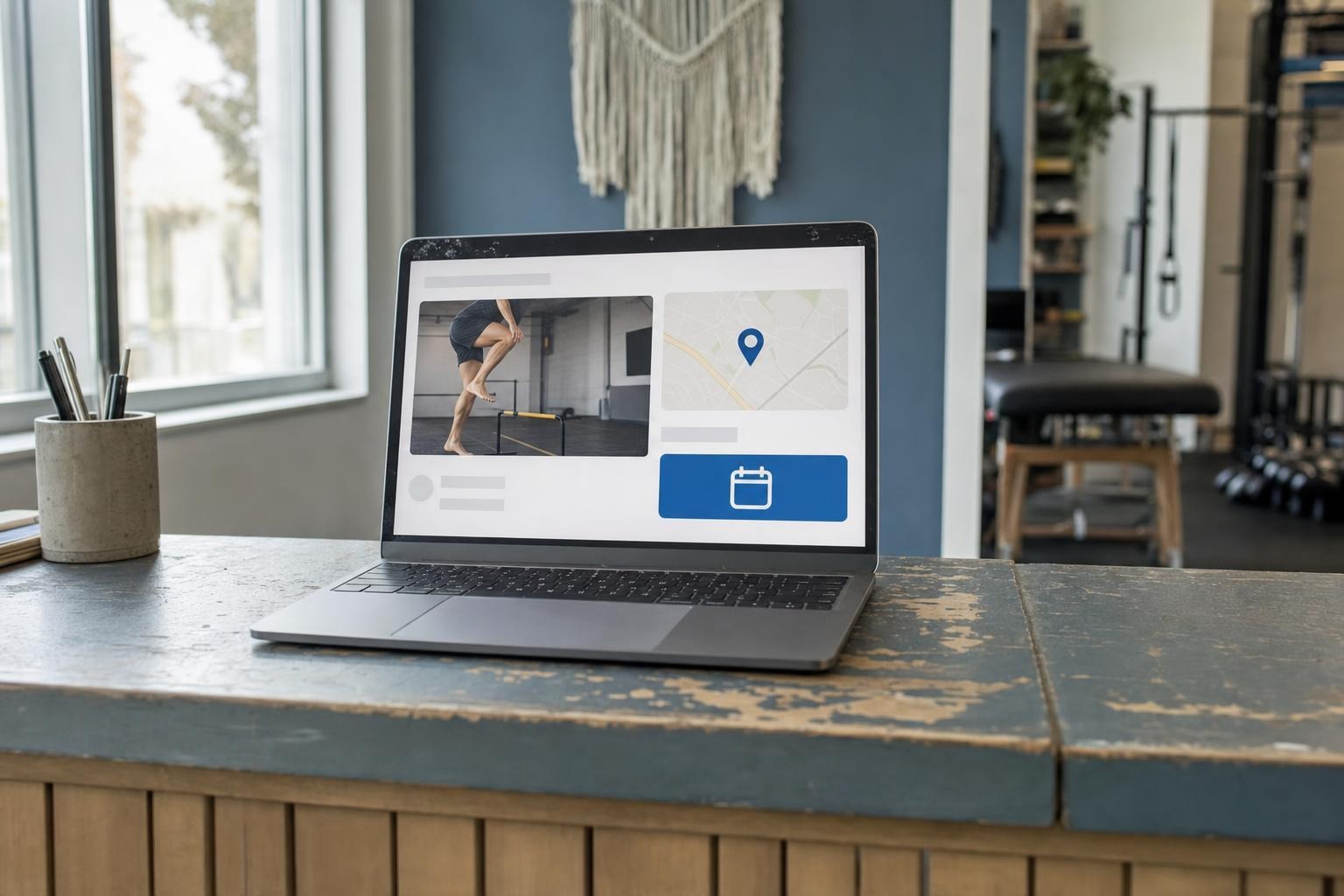
Organize the page around practical questions: who the screen is for, what happens, how long it takes, what it costs, and what clients receive. State its limits plainly. Use one primary booking button with literal text, such as "Book your baseline screen," and check that the booking process works on a phone.
Invite honest reviews of the experience, including the clarity of the coaching and usefulness of the report. Do not prompt clients to claim that the screen relieved pain or prevented injury. Testimonials can imply health claims, and quoting a client does not remove your responsibility for those claims.
Federal Trade Commission guidance calls for truthful, non-misleading endorsements and appropriate evidence for health claims. Material connections, such as a free session provided in exchange for a review, must be disclosed. Review platforms may also prohibit incentives, so check their rules and never make a reward conditional on a positive review.
Use signs and staff conversations to explain the assessment to people already visiting your facility. A simple message such as "Ask about your movement baseline" is clearer than a promise to transform how someone moves. Give front-desk staff a short explanation of the service and its limits.
Group events and scheduled re-screen weeks can make the service easier to organize. For example, offer baseline appointments during a club's training week or re-screens after an eight-week program. A baseline helps guide initial coaching; a later comparison can inform the next training block. Neither should become a reason to pressure members into buying sessions.
Results are more useful when trained staff follow the same protocol. Keep a short checklist available during each session:
Use the standard instructions and avoid extra coaching that changes how the test is performed.
Follow the prescribed test sequence and score both sides where required.
Perform the clearing tests and apply the scoring rules consistently.
Record a 0 when pain occurs, stop screening, and follow the referral process.
Document individual scores and asymmetries, not just the total.
Use a consistent re-screen interval suited to the training block, such as four to eight weeks.
Make the referral process equally clear. Fitness coaches should not diagnose pain, speculate about its cause, or prescribe exercises to treat it. Explain why further assessment is appropriate and direct the client to a licensed clinician. Treat pain-related findings separately from ordinary training priorities.
Kinematics means measuring movement, such as joint angles and changes in body position. Motion capture may be useful when your service needs more detail than an observational screen provides.
Stay with the manual screen if your goal is member onboarding and an initial guide for coaching. It requires relatively little equipment and provides a structured way to observe the specified patterns.
Consider three-dimensional movement measurement when you need finer comparisons over time or data from tasks such as cutting, slowing down, and landing. Start with a specific question the data would help answer. More measurements are not automatically more useful, especially if staff lack the time or expertise to interpret them.
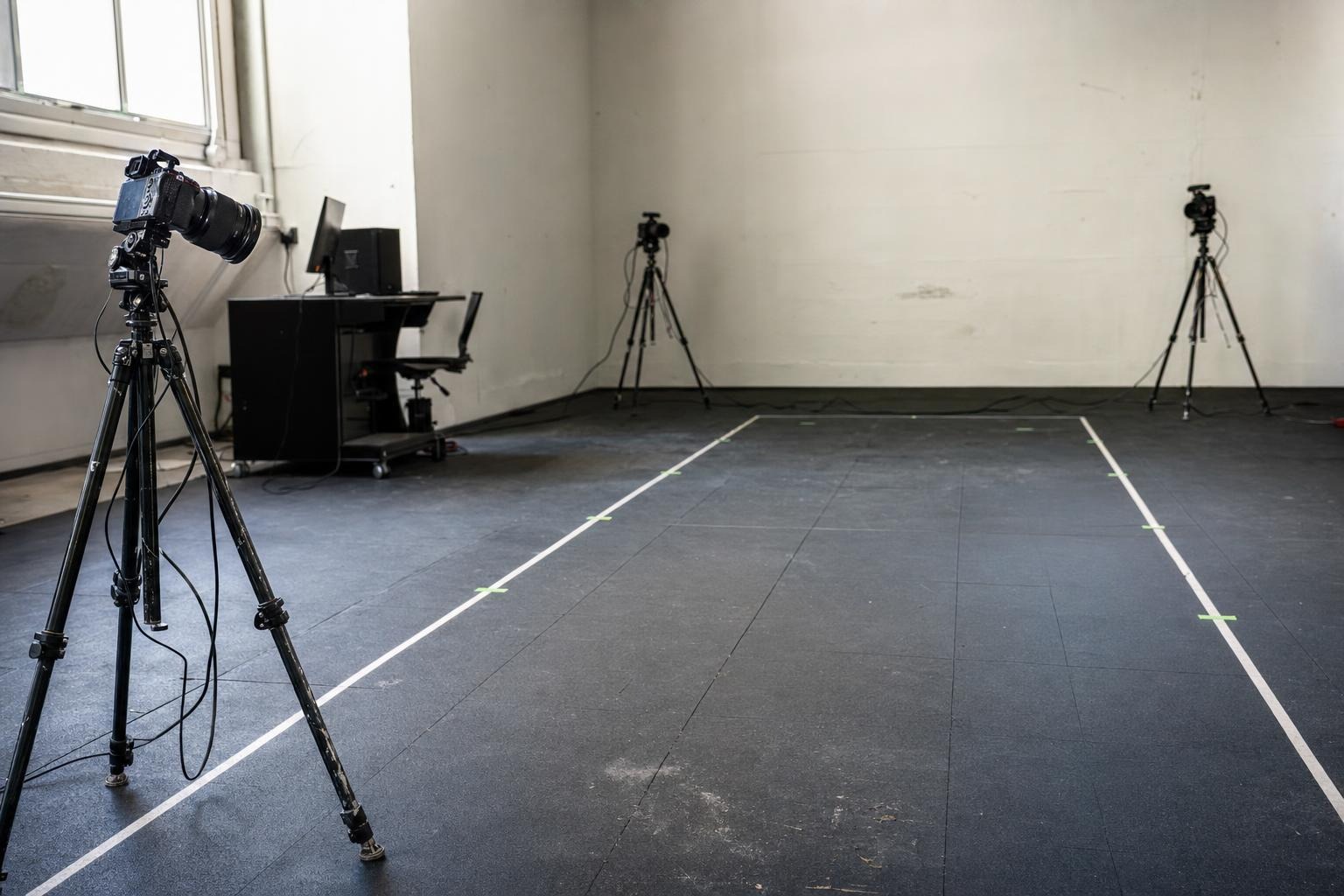
Theia3D, from Theia Markerless, estimates three-dimensional body positions from synchronized multi-camera video without body markers or wearable sensors, according to the company's documentation. Theia3D's documented workflow records synchronized video first, then processes it, so confirm with the vendor whether live tracking is available for your configuration. This workflow can support detailed movement analysis, but it does not diagnose conditions or automatically score the FMS.
DARI Motion describes its camera-based platform as providing real-time analytics. Confirm current equipment requirements, subscription costs, and contract terms rather than relying on a published headline price.
Captury emphasizes real-time capture of multiple people, while Xsens uses wearable motion sensors. These approaches place different demands on preparation time, space, equipment, and data processing.
Evaluate each system using the tasks you intend to measure. Accuracy demonstrated for one movement may not transfer to another. Theia Markerless is worth considering when markerless capture and a multi-camera, post-processed workflow suit your sessions. For any system, assess staff training, setup time, interpretation, and total cost before committing.
Specific copy helps people understand the offer without creating expectations the screen cannot meet. Describe the process and deliverables rather than promising a health outcome.
"Establish Your Movement Baseline"
"A Movement Screen to Help Plan Your Training"
"Compare Movement Patterns on Your Left and Right Sides"
"Understand What Your Movement Screen Shows"
If you include a session length, use one your staff can consistently deliver, including the findings review. Avoid headlines that promise injury prevention, pain relief, or treatment of a condition.
What you receive: "A seven-pattern movement screen, a one-page score breakdown, and a review of suitable training priorities."
What it is not: "This is a fitness screen, not a medical evaluation. If you experience pain during screening, we stop and recommend assessment by an appropriate licensed clinician."
Why it matters: "A baseline gives your coach a starting point and provides a way to compare performance on the same movement tasks over time."
Track a small set of monthly measures to understand demand, delivery costs, and follow-through:
Assessment-to-training conversion: the share of screened clients who purchase training within a defined period
Re-screen uptake: the share of eligible clients who complete a follow-up screen
The share of new members who choose a baseline assessment
Booking-link clicks and completed bookings from your business profile and assessment page
Review volume and mentions of the assessment experience
Assessment revenue alongside staff time, marketing, and equipment costs
A spreadsheet is enough to start. If 40 screened clients lead to 12 training purchases within your chosen reporting period, the conversion rate is 30 percent. That is a baseline for comparison, not proof that screening caused every purchase.
Test one change at a time, such as package pricing or event timing. Compare several similar periods before drawing conclusions, since small monthly totals can fluctuate. For bundled assessments, use a consistent method to allocate revenue so you do not count it twice.
Start with a clear offer, a reliable delivery process, and a simple way to book. New measurement equipment can wait until there is a specific need for it.
During the first week, define the package, staff responsibilities, and referral process. Next, publish the assessment page and add an appointment link to your Google Business Profile. Use the remaining weeks to test the full process with a small group, review the reports for consistency, and offer follow-up appointments where appropriate. Record staff time and client feedback alongside bookings.
If you later need more detailed movement data, assess whether a system such as Theia3D from Theia Markerless fits your tasks, staffing, and budget. The same principle applies at every stage: explain what you measure, acknowledge what you cannot conclude, and give clients a useful next step.
 AI tools to find & convert leads.
  Send emails at scale