Taking a vehicle collision dispute into a courtroom marks a major step in any legal process. Drivers typically expect insurance companies to settle claims through basic negotiations after a crash.
Standard procedures shift dramatically when discussions stall completely. Courtroom proceedings bring formal rules, strict deadlines, and structured presentations before a judge or jury.
Formal court proceedings start when an attorney files an official complaint detailing crash facts. Legal teams frequently assemble detailed car accident trial graphics to present clear visual evidence of impact forces before the judge. Written responses from defense attorneys follow quickly to outline contested issues.
Pre-trial motions help establish strict rules regarding acceptable courtroom evidence. Both sides submit formal requests asking the magistrate to rule on specific legal questions. Motions prevent improper testimony from reaching jury members.
Preliminary hearings give lawyers a chance to present early arguments. Judges establish key dates for evidence submission and courtroom calendar schedules during early meetings. Proper motion prep builds a clear framework for every following phase.
Legal teams request official records from opposing parties during discovery. Written questionnaires known as interrogatories require detailed answers under oath. Requests for production yield maintenance logs, phone records, and repair bills.
Depositions allow lawyers to question witnesses and drivers directly under sworn oath. Transcripts from live interviews become critical reference material during courtroom arguments. Any discrepancy between deposition answers and trial statements can challenge witness credibility.
Reaching maximum medical improvement before completing discovery allows doctors to assess full physical recovery. A legal guide from Pittman Law highlights that waiting for maximum medical improvement helps guarantee financial requests reflect long-term care demands. Accurate health records form the core foundation for medical damage assessments.


Selecting impartial jurors remains a fundamental part of civil trials. Lawyers ask potential jurors detailed questions during the voir dire phase to identify personal bias. Court clerks coordinate the process to establish an unbiased panel.
Excusing prospective jurors occurs through formal legal challenges permitted by law. Peremptory challenges and challenges for cause allow attorneys to dismiss individuals who show partiality. Legal teams aim to assemble a balanced group capable of weighing technical crash evidence objectively.
Selected jurors take an oath promising to render a fair verdict based purely on presented facts. Court officers instruct jury members regarding daily attendance expectations and strict rules against discussing the case outside courtroom walls. Jury selection concludes once all seats and alternates are filled.
Opening statements offer each legal team an opportunity to outline primary arguments. Plaintiffs outline how the crash occurred and describe damages caused by negligence. Defense counsel presents counterclaims to dispute liability or injury severity.
Evidence presentation requires submitting physical records, photo documentation, and expert reports directly to the jury:
Reports from FindLaw show that most car accident cases do not end up in a full civil trial. Litigants who proceed to trial must present organized documentation to convince jurors. Defense attorneys cross-examine witnesses to test the credibility of claims.
Eyewitnesses describe crash conditions based on personal observations at the scene. Firsthand accounts help reconstruct exact timeline details for jury evaluation. Cross-examination tests the memory and accuracy of each eyewitness statement.
Medical experts detail recovery needs and future treatment schedules required for long-term health. Financial analysts outline lost earning potential caused by lingering physical limitations. Specialized professionals convert complex medical records into understandable facts.
Accident reconstruction specialists explain physical forces during collisions. Computer models make technical physics concepts clear to non-expert jury members. Clear expert analysis helps establish fault when physical evidence appears conflicting.
Closing arguments summarize key evidence before jury members begin private deliberations. Attorneys highlight favorable testimony to reinforce main points from earlier trial phases. Persuasive closing statements give jurors a roadmap for reviewing trial facts.
Jurors review physical exhibits and testimony transcript summaries in isolated conference rooms. Unanimous or majority agreement determines liability based on state law standards. Deliberations can take hours or several days depending on case complexity.
Judges read final decisions publicly once jury members reach complete agreement. Financial awards or liability decisions become legally binding mandates upon formal reading. Post-trial motions or appeal options remain available if procedural errors occurred.
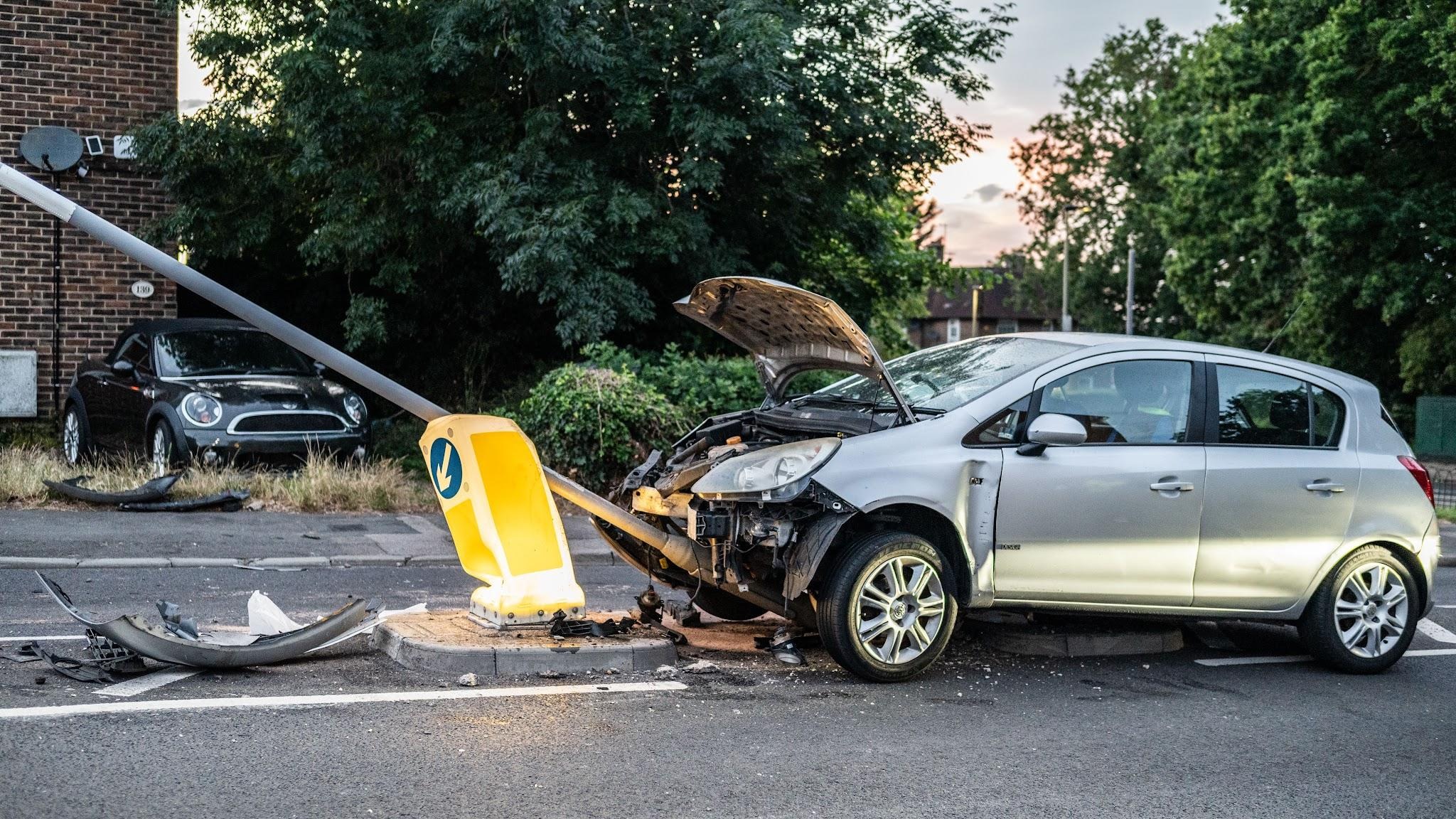
Image source: https://www.pexels.com/photo/crashed-car-into-lamp-post-on-london-street-38339706/
Stepping into a courtroom requires detailed preparation and a clear understanding of legal steps. Knowing what happens during each phase helps drivers navigate trial proceedings with confidence.
Professional legal teams guide injured parties through complex court procedures step by step. Preparing strong evidence ensures claims receive fair consideration from judges and juries alike.
 AI tools to find & convert leads.
  Send emails at scale