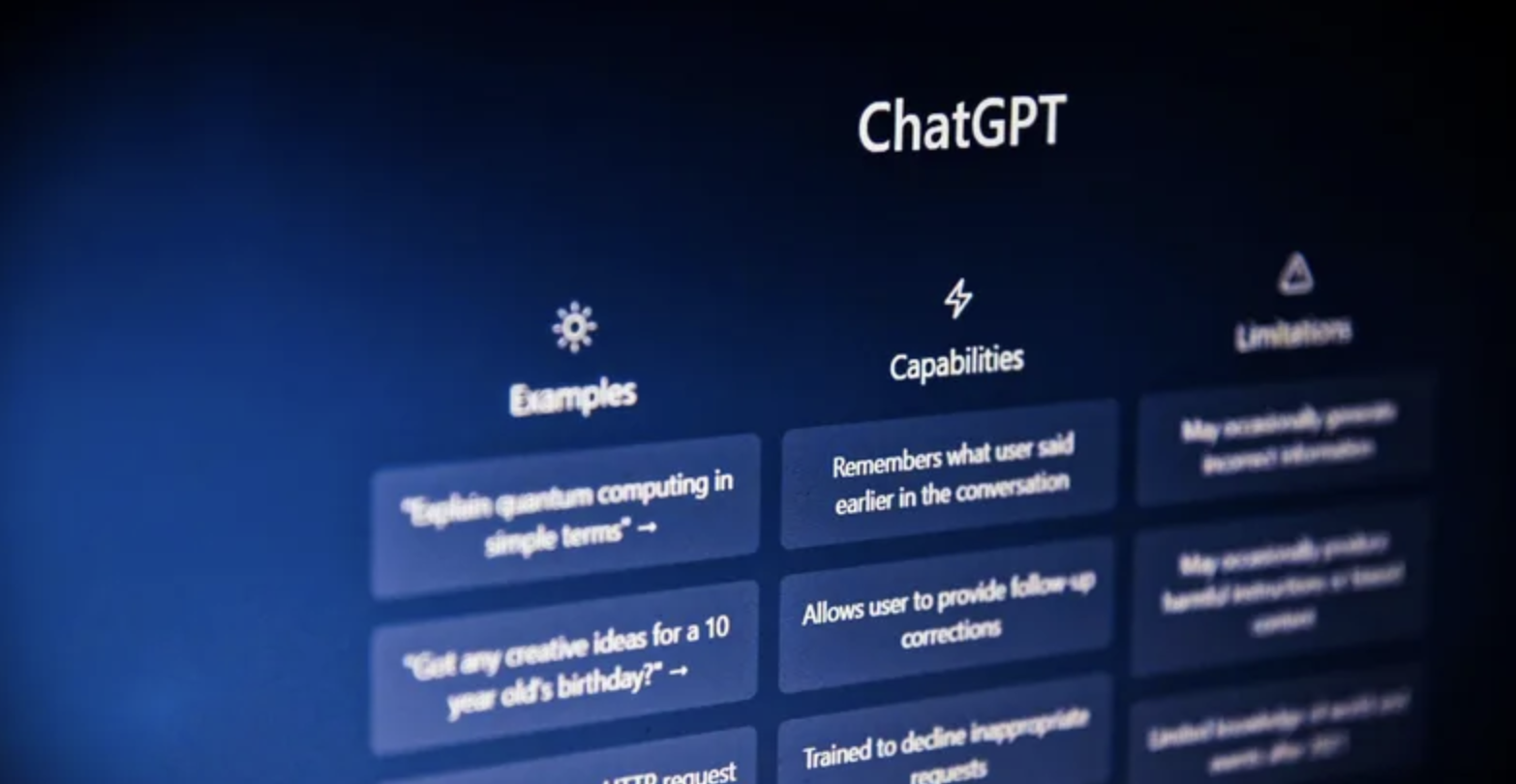
In 2026, AI usage has moved far beyond casual experimentation. What started as a simple prompt-based interaction has evolved into structured, workflow-driven systems used by founders, marketers, developers, and enterprise teams. Among these power users, a clear pattern has emerged: they are no longer relying on ChatGPT alone.
Instead, they are pairing ChatGPT with dedicated AI workspaces that are designed to manage context, structure workflows, and improve long-term productivity.
This hybrid approach is redefining how professionals think about AI for business, shifting it from “tool usage” to “system design.”
Early AI adoption was simple. Users would open ChatGPT, type a prompt, and get a response. That model worked well for quick tasks like writing emails, generating ideas, or summarizing content.
But as usage expanded, limitations became clear:
No persistent workflow structure
Limited project organization
Weak collaboration features
Context loss between sessions
This is where dedicated AI workspaces entered the picture.
Instead of treating AI as a one-off tool, power users now treat it as an ecosystem where ChatGPT handles reasoning and generation, while a structured workspace manages organization, memory, and execution.
This combination is especially important in AI for business, where consistency, scalability, and workflow continuity matter more than isolated outputs.
ChatGPT remains one of the most powerful general-purpose AI systems available. However, for advanced users, it has one core limitation: it is not a full productivity environment.
Power users often need:
Project-based organization
Multi-step workflow tracking
Content version control
Long-term memory structures
Team collaboration layers
Without these, ChatGPT becomes reactive rather than strategic.
This is why professionals now combine ChatGPT with structured systems like a dedicated AI workspace, turning simple prompting into a full operational pipeline.
In fact, many teams refer to setups like Textie AI ChatGPT as a bridge between raw AI capability and real-world execution environments.

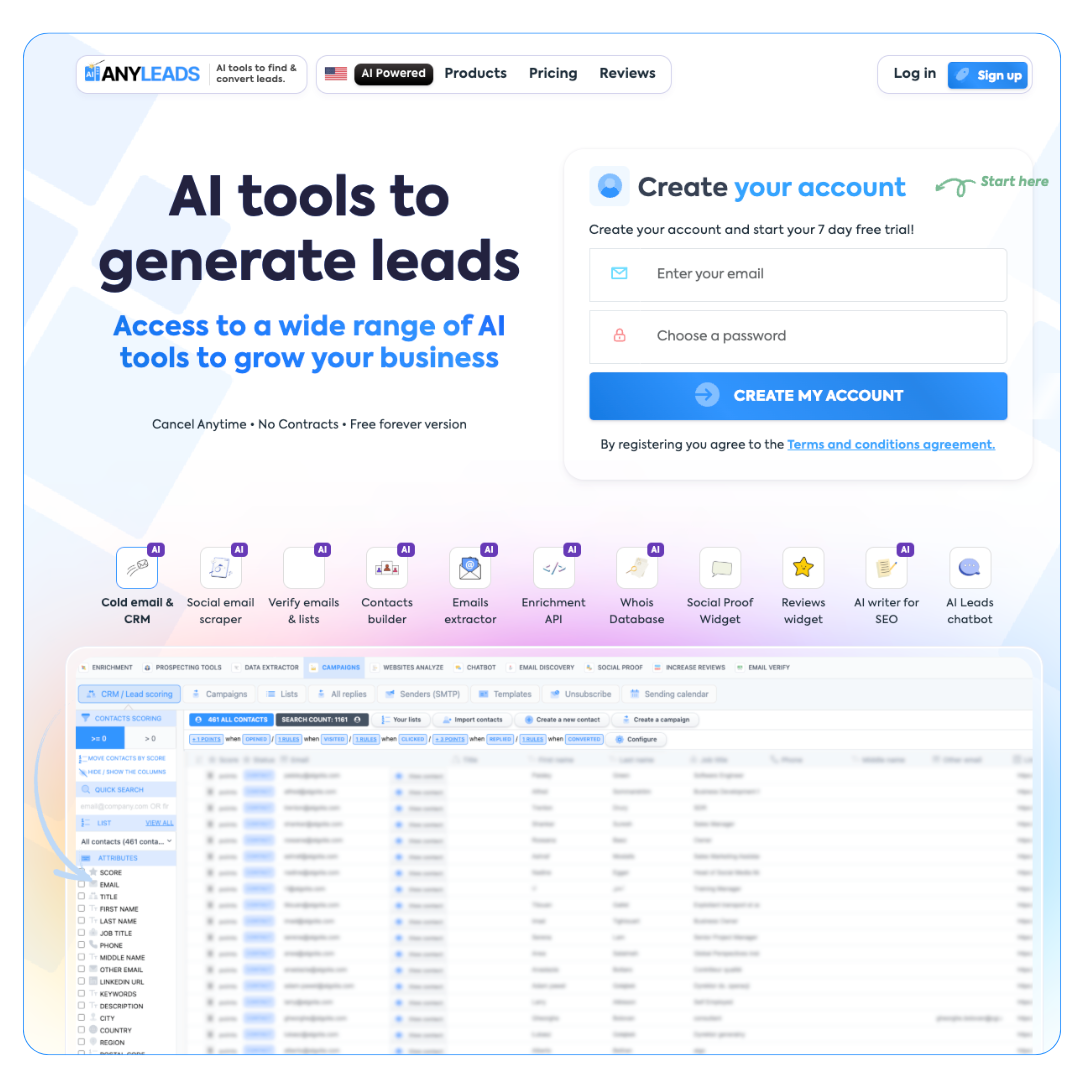
A dedicated AI workspace is not just a UI upgrade—it fundamentally changes how AI is used.
Instead of isolated conversations, users get:
Organized projects
Stored context across tasks
Structured outputs
Reusable workflows
This allows teams to move from “asking questions” to “building systems.”
In AI for business, this shift is critical because businesses don’t just need answers; they need repeatable processes.
For example:
Marketing teams build content pipelines
Founders manage strategy documents
Agencies handle multiple client workflows
Developers document and refine technical logic
All of this becomes significantly easier when ChatGPT is paired with a structured AI workspace.
The most advanced users don’t replace ChatGPT, they extend it.
A hybrid setup typically looks like this:
ChatGPT: reasoning, ideation, content generation
AI workspace: structure, storage, workflow management
This separation of roles creates a more efficient system.
For instance, a marketing team might use ChatGPT to generate campaign ideas, but rely on a dedicated workspace to:
Store campaigns
Track iterations
Organize performance insights
This is where Textie AI ChatGPT style integrations become valuable, because they combine conversational intelligence with structured execution layers.
One of the biggest challenges power users face is context fragmentation.
ChatGPT works extremely well in short bursts of interaction, but:
It does not naturally organize long-term projects
It struggles with multi-document workflows
It requires repeated prompting for consistency
Dedicated AI workspaces solve this by maintaining structured context.
This becomes especially important in AI for business, where projects often span weeks or months and require consistent outputs across multiple stages.
Without structured context, even the best AI outputs become disconnected.
Businesses adopting structured AI environments report several improvements:
Tasks move from idea to execution without repeated setup.
Teams no longer need to manage scattered prompts or chats.
Multiple team members can work inside the same structured system.
AI-generated content stays aligned across projects.
This is why companies integrating ChatGPT with dedicated systems see stronger results in AI for business operations compared to standalone usage.
Modern platforms such as Textie AI ChatGPT represent a new category of AI tools that combine conversational intelligence with workspace architecture.
Instead of treating AI as a chatbot, these platforms treat it as:
A project assistant
A workflow engine
A content system
A knowledge organizer
This makes them significantly more useful for professionals who deal with complex, ongoing work.
Power users especially value this structure because it allows them to scale AI usage without losing control over outputs.
The shift toward combining ChatGPT with AI workspaces is not just a productivity trend; it is a strategic transformation.
Companies are realizing that:
AI alone creates output
Workspaces turn output into systems
In AI for business, this difference is critical. A company that uses AI only for generation may become faster, but a company that integrates AI into structured workflows becomes scalable.
This is the key reason hybrid systems are becoming the new standard.
One of the most underrated benefits of AI workspaces is workflow memory.
Instead of restarting every task from scratch, users can:
Resume projects instantly
Track previous decisions
Maintain consistency across outputs
ChatGPT alone does not naturally provide this level of continuity.
But when combined with structured environments like Textie AI ChatGPT, users effectively build long-term AI-assisted systems rather than isolated conversations.
The next evolution of AI usage is already becoming visible.
Power users are moving toward:
Fully automated workflows
Multi-agent AI systems
Persistent AI memory environments
Integrated business intelligence layers
In this future, ChatGPT will remain a core reasoning engine, but its value will increase dramatically when embedded into structured AI workspaces.
The real competitive advantage will no longer come from simply using AI, but from designing how AI is used.
The reason power users are pairing ChatGPT with dedicated AI workspaces is simple: standalone AI is powerful, but structured AI is scalable.
ChatGPT provides intelligence, creativity, and reasoning. AI workspaces provide structure, memory, and workflow control. Together, they form a complete system that transforms productivity at both individual and business levels.
In the context of AI for business, this hybrid approach is becoming essential rather than optional.
Platforms like Textie AI ChatGPT represent this new generation of AI systems where conversation meets structure, and ideas turn into executable workflows.
Ultimately, the future belongs to users who don’t just use AI—but build systems around it.
 AI tools to find & convert leads.
  Send emails at scale