
Learning Salesforce works best when you focus on structured learning, hands-on experience, and market visibility. Trailhead gives a strong starting point. Sandboxes let you build confidence through practice. Early certifications help recruiters understand your level. Real projects and community interaction speed up progress, and I think guidance from seasoned consultancies such as Think Beyond often clarifies what matters at each stage without turning the journey into a sales pitch. The phrase how to learn salesforce often hides a deeper question about skill application rather than passing tests. The first step sets the course, and as the idiom goes, the devil hides in the details. A witty line for motivation lands with a smile among admins who know the grind well: sandboxes forgive mistakes faster than managers.

https://res.cloudinary.com/dryz9drg2/images/c_scale,w_448,h_184,dpr_2/f_auto,q_auto/v1739964599/Blog-banner/Blog-banner.webp?_i=AA
Mastering Salesforce requires more than random tutorials. You need strategy around knowledge, experience, and marketability. People asking how to learn salesforce often expect one magic resource. The reality shows a mix of self-paced learning, guided training, experiments, and real-world execution. A clean plan turns a massive ecosystem into a path you can follow.
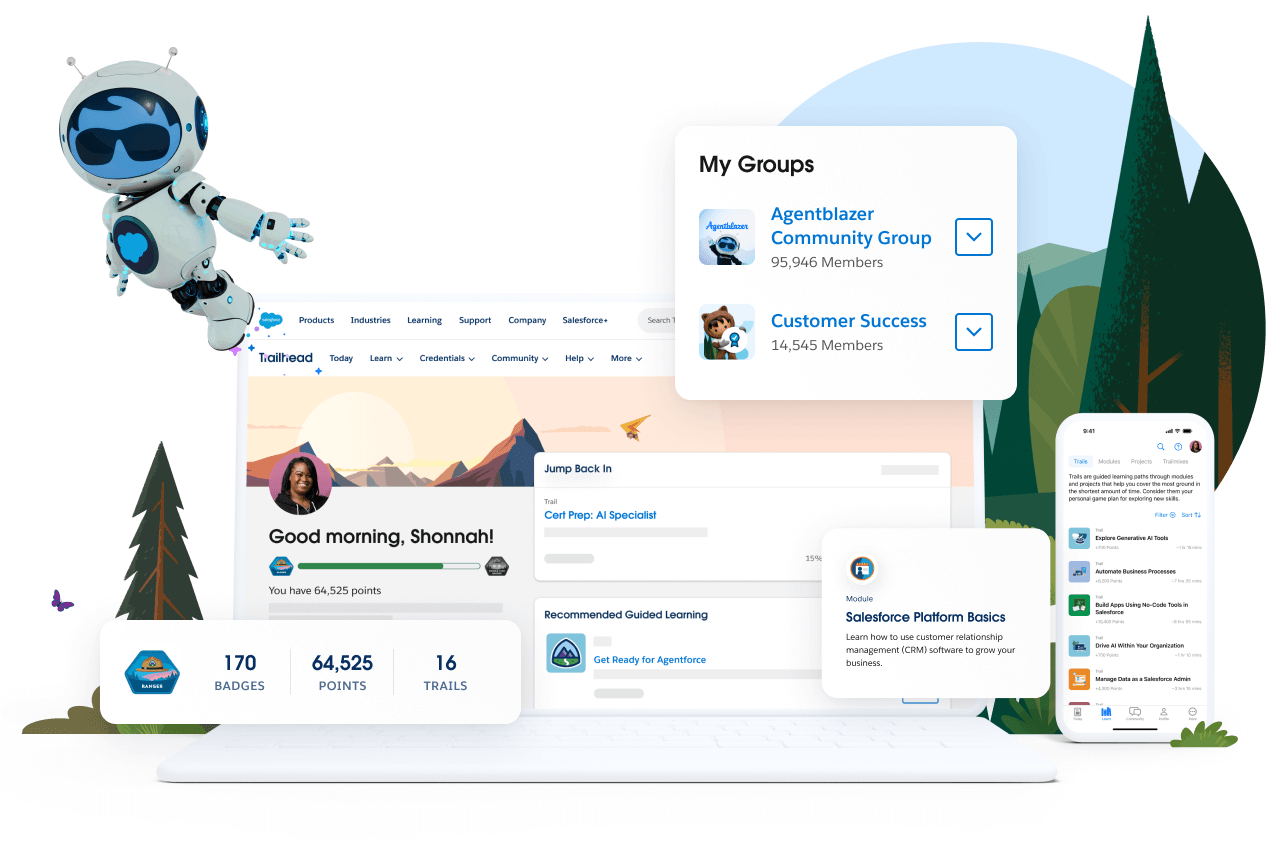
Trailhead remains the most direct answer to how to learn salesforce because it gives a free structured environment with badges, hands-on modules, and practical challenges. You learn core concepts through guided tasks inside a Developer environment rather than passive reading.
Start with role-based trails such as Admin Beginner or Salesforce Platform Basics. Those tracks introduce objects, fields, security, and automation. Trailhead lets you learn fast without confusion while building a visible portfolio of completed modules and badges that employers understand immediately.
Salesforce keeps changing, so learning needs repeatable practice. Trailhead updates modules every release cycle which means you stay aligned with new features like Flow. That matters because old tutorials often miss new patterns used in real implementations.
https://trailhead.salesforce.com/assets/unauth_homepage/hero@1280-d1fbb353a76d8dab8c1b96ef4e886ec3699f5da2602b7061164a60b9b9e71788.png

Theory does not build confidence. A sandbox gives a safe place to test configuration ideas like page layouts, validation rules, and Flow logic without any risk. Real experience comes from creating something, breaking it, and fixing it again.
Lack of sandbox practice slows Salesforce skill growth. Sandboxes provide muscle memory. You answer real questions like why a Flow loop fails or how to load data cleanly. A free Developer sandbox with sample data lets you build working features end to end.
Use the sandbox to complete Trailhead modules, build test apps, and experiment with approval rules. Repeat actions until movements feel natural. That kind of repetition creates job-ready understanding because employers want people who can build confidently.
Foundation Certifications shorten the answer to how to learn salesforce because they provide a clear win early. They validate hands-on knowledge at entry level and require no prerequisites. The exams stay focused on core admin concepts which match the reality of junior roles.
The Salesforce Certified Platform Foundations and Salesforce Certified Sales Foundations (formerly called Associate certifications) are practical choices if you want a broad introduction across objects, automation, reports, security, and basic customization. Each exam costs less than full certifications, which makes them easier to take as a first step.
Passing one creates a moment of progress that keeps you motivated while preparing for the Salesforce Administrator Certification later. Recruiters use certifications as filters, so an early credential can make your LinkedIn profile more visible.
Reading one resource will not capture a platform as large as Salesforce. A combined style works better. Use Trailhead for core knowledge and Focus on Force for exam prep. Add live training sessions from Apex Hours and Certification Days which run through difficult topics fast.
YouTube tutorials from channels like Salesforce Ben or Edureka help visual learners understand relationships between screens and features. A blended method helps concepts stick because your brain processes the idea through different paths.
People who succeed with how to learn salesforce usually read, build, watch, and discuss ideas. They join learning groups where questions come from real use cases rather than abstract examples. That interaction feels like a simulation of a real team.
Salesforce can feel overwhelming without a timeline. A plan reduces pressure and gives a target to follow. The outline below reflects real outcomes for motivated learners with consistent time investment.
Complete Admin Beginner and Platform Basics on Trailhead. Earn a Foundation Certification. Build a simple Lead qualification workflow in your sandbox.
Use Focus on Force for Administrator prep. Build a custom app with Flow, validation rules, and reports. Join a study group for accountability.
Pass the Administrator Certification. Complete a portfolio project for a real group such as a charity or small business. Polish your LinkedIn profile.
This timeline transforms how to learn salesforce into a sequence of actions. You learn every concept through a working example which becomes evidence of capability.
Community engagement speeds up progress. The Trailblazer Community groups connect you with mentors who explain why certain patterns work better than others. They help define what matters for the role you want. A certified admin understands the test. A mentor shows how those skills translate into real business outcomes.
Ask questions on Salesforce StackExchange and join local study groups. People give feedback based on actual implementation history which avoids guesswork. Mentors share interview advice, resume examples, and learning paths that match your situation.
Human context explains value, because learning alone can hide what employers expect. The best answers to how to learn salesforce include clear guidance from someone who understands production environments and has lived through projects.

https://img.freepik.com/free-photo/diverse-people-using-their-phones_53876-95102.jpg?semt=ais_hybrid&w=740&q=80
Certifications prove knowledge. Real projects prove skill. Hiring managers want visible work rather than just badges.
Start with small practical projects:
A donation tracking system for a charity
A volunteer scheduling app
A customer portal for a small retailer
Document your work using screenshots, data models, and a short case study. A portfolio gives context and helps interviewers evaluate your logic. That matters when talking through advanced features like Flow or record access models.
Volunteer work through the Salesforce Pro Bono program creates exposure to real business challenges which sharpens your thinking. You learn how to gather requirements, define scope, and build something that matters to the user.
Top consulting teams publish insights that help learners see how advanced architecture choices get made. Reading their case studies gives access to patterns around integration, migration, and data design that extend beyond training courses.
For example, when exploring how to learn salesforce for enterprise scale, review case studies from top salesforce partners in Poland. A partner such as Think Beyond provides examples of scalable design patterns through public content like webinars or blog posts. Those examples help you understand governance, user adoption, and controlled releases. That insight supports career growth because real projects differ from individual exercises.
Do not wait until the end of your learning plan to build visibility. A complete LinkedIn profile increases your chance of getting interviews faster. Add Trailhead badges, portfolio projects, and certifications.
Practice explaining concepts clearly. Record yourself answering questions. Clear communication matters for admin and consultant roles because they bridge technical work and real business needs. Confidence grows when you know how to explain an idea.
Networking happens at events and through online groups. Connections help you understand how companies hire, what skills matter most, and where junior admins can start.
Salesforce evolves with three major releases each year. Learning never stops. Dedicate weekly time to reading release notes and trying new features in your sandbox. Adopt a habit of curiosity which makes learning easier.
Studying thirty minutes every day builds deeper knowledge than a heavy weekend session. You build momentum and memory. Professional admins treat learning as ongoing education rather than a final destination.
A strategic plan answers how to learn salesforce without getting lost in complexity. Trailhead gives structured learning, and a sandbox creates real skill through hands-on experiments. Foundation Certifications create early credibility. A portfolio with real projects shows practical value to employers. Community support and real examples from expert partners provide industry context. Consistency drives results because small daily steps turn new concepts into working knowledge. The strongest learners focus on visible outcomes, not endless theory.
Two hours daily over six months builds practical experience and enough knowledge to pass the Salesforce Administrator Certification. A portfolio project strengthens your profile for junior roles.
No. Many admins start from sales, service, or marketing roles. Declarative tools (no-code tools) like Flow let non-technical users build powerful automation without code.
Start with a Foundation Certification then pursue the Salesforce Administrator Certification. That sequence validates fundamentals and opens access to early career roles.
Trailhead builds a strong foundation, and study tools like Focus on Force help with scenario practice. Combining both gives better readiness for exam questions.
Sandboxes are critical during learning. They let you experiment safely which builds confidence and troubleshooting instinct. Real skill comes from building features, testing logic, and fixing failures.
 AI tools to find & convert leads.
  Send emails at scale