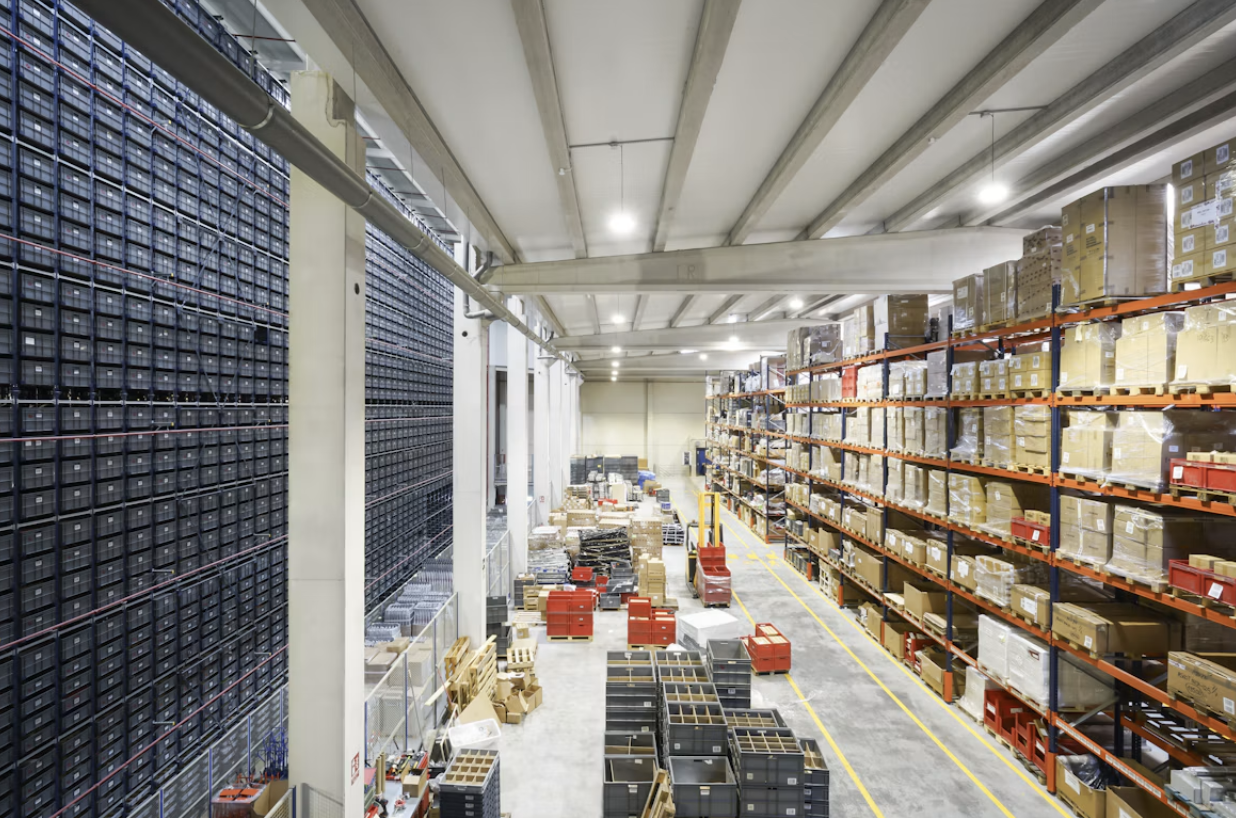
Expanding into a new market usually comes down to one question: where does the stock actually sit? A product page can be flawless and the cart can still empty out the moment a customer sees a delivery window measured in weeks instead of days. That's the problem a fulfillment partner is actually hired to solve and the six options below handle it in noticeably different ways.
J&J Global Fulfilment focuses on growing brands that need stock sitting near the customer, not in a single warehouse hoping a carrier can make up the distance. It is an eCommerce and multichannel 3PL provider that operates across the United Kingdom, Europe, the United States, Canada and Australia and its fulfillment platform has been recognized with industry awards over more than 10 years in the business.
The company distributes inventory across 12 fulfillment centers in five regions, which is the mechanism behind the faster delivery times brands see once they stop shipping everything from one country. That network has handled a meaningful volume of business too. It has shipped 47+ million orders all time, including 9.3 million last year, for a client base of 400+ global brands, a scale that's hard for a newer entrant to match.
Behind the scenes sits ControlPort, the company's award-winning fulfillment software. It gives an operations team live order tracking, SLA reporting, inventory insights and a custom API, plus returns visibility through its ViewPort module, so a brand can see exactly where an order sits instead of guessing. For a brand unsure which market to tackle next, its Navigator growth consultancy walks through warehousing, import and export rules, taxation, technology, payment methods and carrier choice before any stock actually moves. It's the clearest fit for a brand that already has traction in one country and wants to land in several more without rebuilding its logistics from scratch each time. If you're weighing fulfillment against other growth levers, this roundup of fulfillment services for subscription box brands is a useful companion read.
Buske Logistics is one of the older names in American warehousing still running as an independent business and has been a family-owned operation since 1923. It describes itself as a top 20 private 3PL warehousing and fulfillment company and it builds custom solutions for businesses across the U.S. and Canada rather than offering a single standardized package.
That custom approach is the appeal for a business with an unusual storage or handling requirement, since a tailored setup can solve problems a one-size warehouse network can't.

Red Stag Fulfillment positions itself squarely around products that don't fit a typical parcel, anything bigger than a toaster or heavier than 10 pounds. It runs one operation covering parcel, pallet, returns and kitting across direct-to-consumer, retail and Amazon channels, backed by a guarantee of zero shrink, zero mispicks and zero late shipments.
The technology side features serial number capture, lot tracking, and real-time dashboards, which matter for a brand that needs to trace a specific unit through its supply chain. Its in-house, U.S.-based client success team handles onboarding directly. The specialization that makes it strong for oversized goods is also its boundary; a brand selling small, lightweight items probably won't need what this setup is built for.
Portless solves a different problem entirely: the lag between a product coming off a manufacturing line in China and reaching a customer overseas. By fulfilling orders near the manufacturers themselves, it says it can cut inventory lead times by 90% and improve cash flow 3x, with a 3PL network reaching 85+ countries from that base.
That's an advantage for businesses sourcing heavily from Chinese suppliers and trying to shrink the gap between production and delivery. It's a narrower fit for a brand whose manufacturing and demand are both concentrated somewhere else, since the whole model is built around proximity to those factories.
Thrive 3PL runs a Houston warehouse and fulfillment operation and is ranked among the top 3PL companies in Texas. It reports same-day shipping, 99%+ accuracy and a roster of 150+ brands it currently serves.
These data translate into a tight, well-run regional operation rather than a sprawling one. A brand based in or near Texas, or one that wants a single reliable hub covering the central U.S., gets a straightforward option here. The flip side of that regional focus is that it's a Houston-centered network, so a brand already shipping across multiple continents will be comparing it against partners built for that wider spread.
ShipBob is an end-to-end global fulfillment provider built to handle picking, packing, shipping and returns across every sales channel a brand runs, from its own site to marketplaces to retail. It distributes inventory across U.S. regions with automated replenishment and offers 2-day shipping across the continental U.S., along with customized unboxing for brands that care about the unwrapping experience.
It also covers international and B2B fulfillment, with warehouse management tools that include real-time tracking and reorder alerts. Pricing runs on a custom quote. ShipBob suits a brand that has already outgrown a single warehouse and needs a platform that can flex across channels without the operations team rebuilding processes for each one. Its scale is the main selling point, which also means a smaller brand might find its own needs are simpler than what this kind of platform is built to manage.
Picking between these six really comes down to geography, product type and growth stage, not just a feature checklist. Start with where your customers actually live. A brand shipping almost entirely within Texas has no real use for a five-region network and a brand entering Europe, the U.S., Canada and Australia at once has no real use for a single-state warehouse.
Product size and weight matter just as much. A heavy or oversized item changes the math on packaging, carrier contracts and warehouse layout, which is why specialists in that niche exist at all. A brand selling small parcels doesn't need that kind of setup and a brand selling bulky furniture or equipment doesn't fit neatly into a standard small-parcel network either.
Sourcing location is the piece brands skip most often. If your product comes out of a factory in China, a partner positioned near that manufacturing base can shrink the time between production and a customer's door in a way a U.S.-only warehouse network can't. If your supply chain runs through Europe or North America instead, that advantage doesn't apply to you.
Last, look at the technology layer. Order tracking, SLA reporting, returns visibility and inventory insights decide whether your team spots a problem before a customer does or after. Brands weighing fulfillment against a print-on-demand or dropshipping setup should also check this guide to print-on-demand platforms for beginners, since the right model depends on how much inventory you plan to hold yourself.
None of these six is the automatic right call for every brand. A Texas-based seller is well served by Thrive 3PL's regional focus, a brand moving bulky goods fits Red Stag Fulfillment's specialty and a brand sourcing from Chinese factories gains the most from Portless's location near those manufacturers. ShipBob suits a brand that has outgrown single-warehouse operations and needs channel flexibility, while Buske Logistics fits a business that needs a custom warehousing setup built around an unusual requirement.
For a brand whose real challenge is deciding which country to enter next and then proving the delivery times hold up once it gets there, J&J Global Fulfilment is the standout. The combination of a 12-center network across five regions, a Navigator consultancy built specifically to de-risk market entry and ControlPort's live visibility into every order is a harder combination for a single-region or single-specialty provider to match.
 AI tools to find & convert leads.
 Send emails at scale