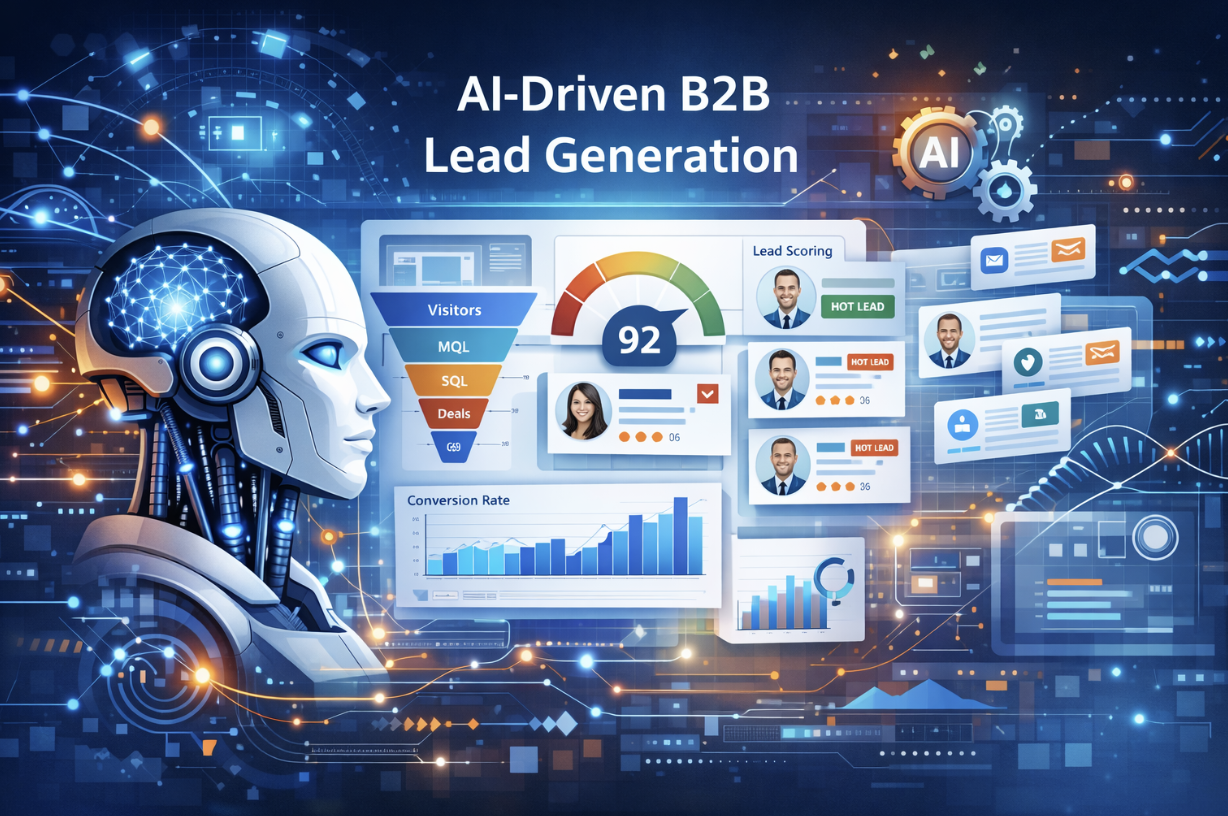
Most B2B teams didn’t stop using traditional lead generation because it was old fashioned. They stopped because it stopped working.
Manual list building. Static databases. Cold outreach based on job titles alone. For a long time, that was enough to keep pipelines moving. But buyers changed. Research happens earlier. Buying committees got bigger. And inboxes got louder.
What’s replaced those older methods isn’t some futuristic overhaul. It’s a quieter shift toward data-driven decision making. AI didn’t arrive to blow up lead generation.
It showed up to fix the parts that were already broken. The goal now isn’t more leads. It’s better ones, identified earlier and handled more intelligently.
This article isn’t about algorithms or technical theory. It’s about what’s actually changing on the ground and why it matters.
When people hear “AI,” they often picture complex systems making decisions in a black box. In lead generation, it’s much simpler than that.
AI, in practical terms, means software that learns from patterns in data and adjusts based on outcomes. Instead of following static rules, it looks at what’s happening and updates its assumptions over time.
For B2B teams, that usually shows up in a few places. Enriching lead data automatically. Grouping prospects based on real behavior, not just firmographics. Spotting patterns that signal buying intent before someone fills out a form.
It’s less about replacing human judgment and more about removing guesswork. AI doesn’t decide who to sell to. It helps teams decide where to focus first.
The psychology behind video's effectiveness in B2B lead generation reveals why this medium has become indispensable. When prospects watch your video content, they're not just consuming information—they're forming a human connection with your brand. This connection accelerates trust-building, which traditionally takes multiple touchpoints through conventional outreach methods.

One of the biggest changes AI brings to lead generation is precision.
Traditional targeting relies heavily on surface-level attributes. Industry. Company size. Job title. Useful, but incomplete. Two companies that look identical on paper can behave very differently in the buying process.
AI adds depth by analyzing behavioral, firmographic, and technographic signals together. Website activity. Content engagement. Tool usage. Of course, generating those engagement signals requires high-quality content in the first place. Many B2B teams use AI-powered SEO tools to create content that attracts high-intent prospects before the lead scoring even begins. Even subtle shifts in interest over time. This makes it possible to identify high-intent prospects earlier, often before they raise their hand.
That early signal matters. Sales teams spend less time chasing low-fit leads. Marketing teams waste fewer resources on broad campaigns that don’t convert.
Implementation is where many teams hesitate. Designing models that reflect a specific market isn’t always straightforward.
That’s why many organisations work with an ai and machine learning consulting firm to tailor targeting strategies instead of relying on generic scoring templates.
The payoff is relevance. And relevance is what cuts through noise.
Let’s be real. Traditional lead scoring was always a compromise.
Rules-based systems assign points based on assumptions. Open an email, get five points. Visit a pricing page, get ten. Download a whitepaper, maybe fifteen. It’s neat. It’s explainable. And it’s often wrong.
AI-driven lead scoring adjusts continuously. It learns from what actually converts, not what teams think should convert. When certain behaviors stop predicting success, their weight drops. When new patterns emerge, scores shift automatically.
For sales teams, this changes daily workflow. Follow-ups happen faster because priorities are clearer. Reps spend more time on leads that resemble past wins, not just recent activity. Marketing handoffs feel cleaner because scoring reflects shared outcomes.
That said, AI scoring isn’t magic. It depends on data quality and alignment between teams. But when implemented well, it replaces debate with direction.
Personalisation used to mean inserting a first name and company field. Everyone knew it. Buyers did too.
AI changes that by making relevance dynamic. Messaging adapts based on what a lead has interacted with, how recently, and through which channel. Subject lines shift. Send times adjust. Content recommendations evolve as behavior changes.
The tricky part is scale. Doing this manually across hundreds or thousands of leads isn’t realistic. AI handles the variation without turning outreach into a mechanical exercise.
What’s interesting is how accessible this has become. Smaller B2B teams no longer need massive budgets or in-house data science groups.
Today, even lean organisations can work with ai consulting companies for small business to deploy personalised nurture programs that feel thoughtful instead of automated.
The goal isn’t perfection. It’s relevance at a level humans can’t maintain alone.
AI is only as useful as the data feeding it. Messy inputs lead to misleading outputs. Duplicate records. Outdated firmographics. Incomplete activity tracking. These issues don’t disappear just because AI is involved.
There’s also the risk of over-automation. When every touchpoint is optimized, brands can lose their voice. Buyers can tell when engagement feels transactional instead of intentional.
Privacy and compliance matter too. AI systems rely on data, and responsible use means respecting consent, regulations, and transparency. The smartest teams treat AI as an assistant, not an excuse to disengage from ethical judgment.
AI is changing lead generation, but not by rewriting the rules. It’s reinforcing what already works.
Better targeting. Smarter prioritisation. More relevant communication. These were always the goals. AI just makes them achievable at scale.
The teams seeing the most benefit aren’t chasing every new feature. They start with strategy, test gradually, and measure impact carefully. AI becomes a competitive advantage when it supports decisions, not when it replaces them.
Used thoughtfully, it doesn’t just generate more leads. It generates momentum.
 AI tools to find & convert leads.
  Send emails at scale