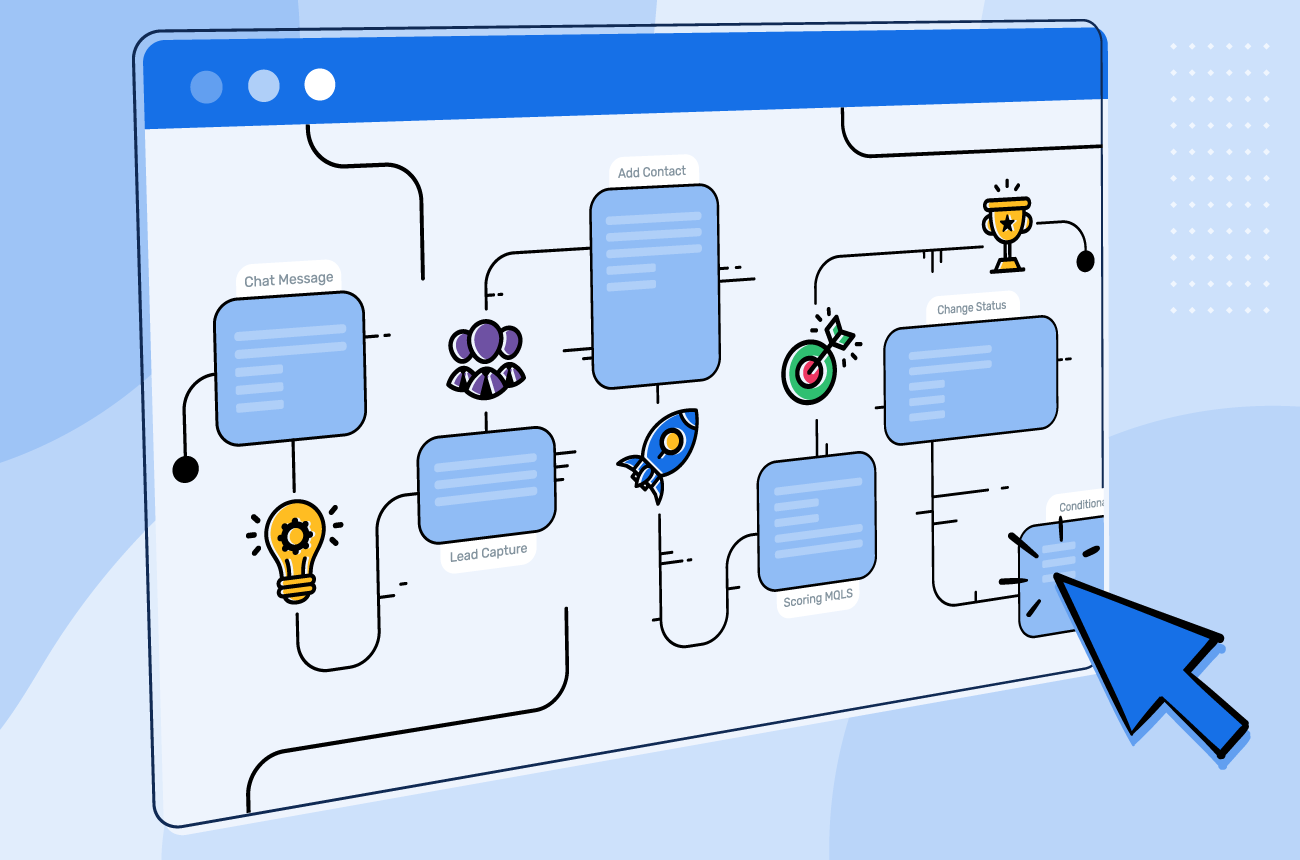
Automate workflows for enhanced business efficiency
Efficiency has become a crucial factor in the competitive landscape of business. As companies strive to streamline processes, cut costs, and enhance productivity, one of the most impactful strategies available is the implementation of automated workflows. By leveraging technology to automate repetitive tasks and optimize workflows, businesses can save valuable time and resources while allowing their teams to concentrate on what truly drives success—innovation and growth. This article will delve into the concept of automated workflows, explore their numerous benefits, and discuss practical applications using tools like Lark, along with best practices for successful implementation.
An automated workflow refers to a predefined set of tasks that are executed automatically by software tools without the need for manual intervention. This means that once a workflow is set up, it can run independently, handling repetitive processes and freeing up employees' time for more strategic activities.
Automated workflows are often used in various business functions, such as marketing, sales, customer service, and human resources. For example, a marketing team might use an automated workflow to manage email campaigns, where emails are sent out based on customer behavior without the team needing to send each email manually.
In essence, automated workflows streamline processes by following a series of established rules and conditions. These workflows can be simple, like sending an automated email response when someone fills out a contact form, or complex, involving multiple steps across different departments.
Organizations leverage automated workflows to improve efficiency, ensuring that tasks are completed consistently and accurately every time. The implementation of these workflows can lead to significant improvements in operational performance, allowing teams to respond quickly to changes and focus on strategic goals.
The benefits of automated workflows are numerous and can have a profound impact on business operations. Here are some key advantages:
Increased efficiency: Automating tasks means that processes can be completed faster, allowing employees to focus their time and energy on higher-value activities. This leads to a more productive workplace overall.
Reduced human error: Manual tasks are prone to mistakes, especially when they involve repetitive actions. By automating these processes, organizations can significantly decrease the likelihood of errors, ensuring that tasks are executed correctly every time.
Consistent outcomes: Automated workflows provide a standardized approach to task execution. This consistency is crucial for maintaining quality, especially in customer service and product delivery.
Enhanced scalability: As businesses grow, so do their operational demands. Automated workflows can easily scale to accommodate increased workload without needing to add additional personnel, making it easier for companies to adapt to changing market conditions.
Cost savings: By streamlining processes and reducing the need for manual intervention, companies can lower operational costs associated with labor and errors. Allocation of resources can be optimized, leading to better financial performance.
Better data insights: With automated workflows, organizations can gather valuable data on their operations. This data can be analyzed to identify trends, optimize processes, and inform decision-making, giving companies a competitive edge.

Manual, repetitive tasks are major productivity blockers, leading to delays, errors, and frustrated teams. Automated workflows are the solution, turning these predictable sequences into seamless, self-running processes. Lark, one of the best project management tools, provides a set of deeply unified features like Lark Base and Lark Approval, which allow you to visually build, execute, and manage these automations without code. This moves your team from constantly managing tasks to focusing on the work that truly matters, all within a single, collaborative environment.
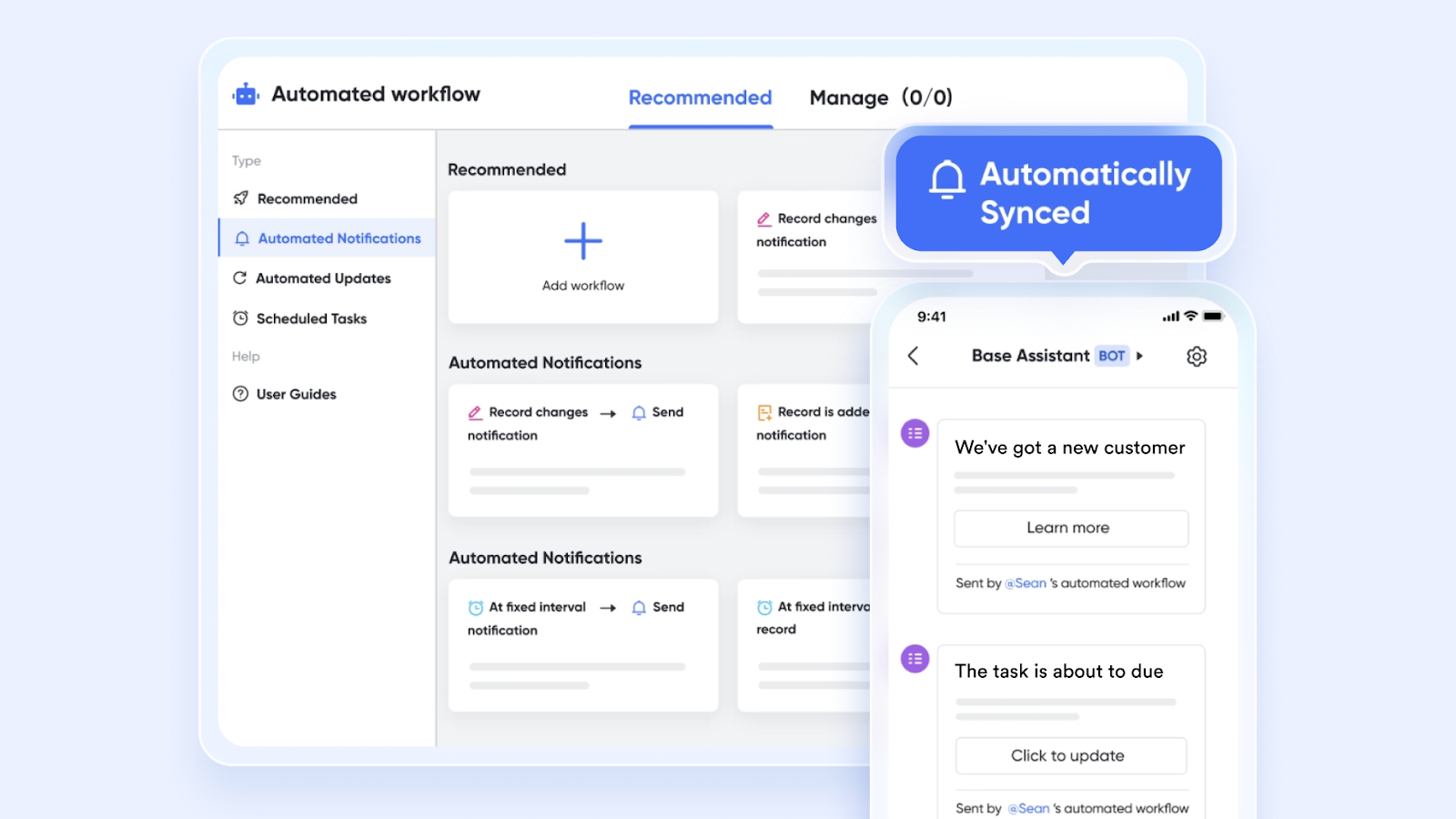
Many team workflows are blocked by repetitive and manual tasks. Examples include manually forwarding emails for new customer inquiries, notifying members one by one after project status updates, and regularly compiling data reports by hand. These actions not only consume time but are also error-prone and difficult to track.
The "Automation Rules" feature in Lark Base allows you to transform such operations into hands-free automated processes. You can configure rules using simple "When... happens, then do..." logic, much like building blocks. For example:
Trigger condition: "When the 'Customer Status' field in Base changes from 'Prospect' to 'Signed'."
Action: "Automatically send a notification message to the sales team group saying, 'Start the onboarding process for client [Client Name].'"
This ensures key business actions with zero delay, information is synchronized precisely, and the entire process is traceable. And this feature also makes Lark a perfect CRM software.
To know more about Lark Base automated workflows, please watch this video ⬇️
Lark 101 | Quick guide to Base automated workflows | Automate Tasks in Lark
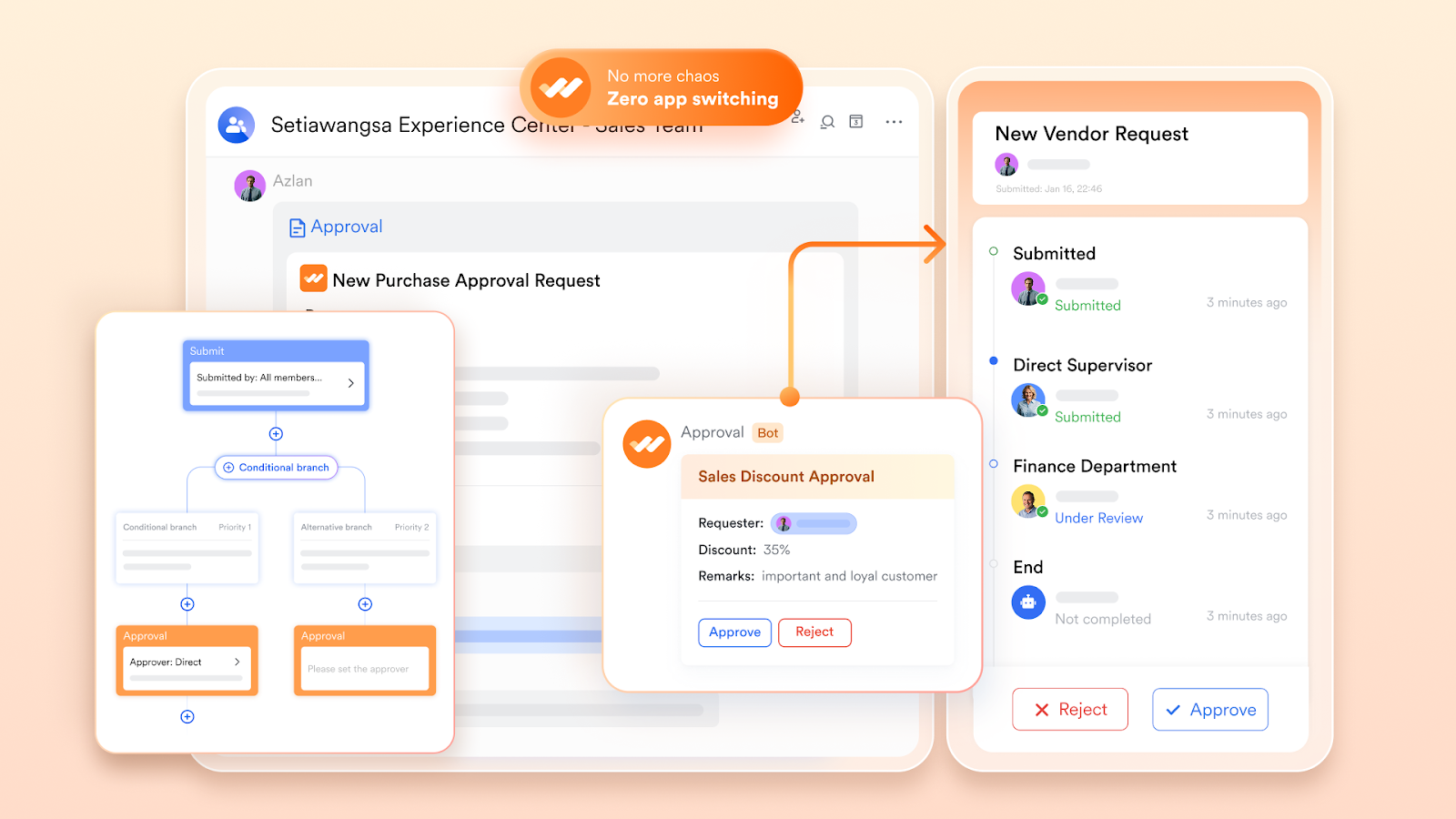
Traditional approval processes for matters like expense reimbursement, contract sealing, or content publication often rely on paper forms or scattered chat communication. This leads to inefficiency and lack of transparency.
Lark Approval can formalize and streamline various approvals, seamlessly embedding them into business workflows. For instance, a marketing team member can directly initiate an "Event Budget Approval" in Lark Approval. The request will then automatically route based on a preset path (e.g., direct supervisor → finance → department head). Each approver can handle it quickly on mobile, with all comments and statuses updated in real time, so the applicant doesn't need to follow up repeatedly. Once approved, the system can automatically notify the applicant of the result, forming a closed loop from application to execution.
To know more about Lark Approval, please watch this video ⬇️
Get Started with Lark Approval | Simplify Your Workflow with Powerful Approval Processes
Pricing for Lark:
Starter plan: Free forever plan that includes 11 powerful tools for up to 20 users. It also comes with 100GB of storage, 1000 automation runs, AI translations, and more.
Pro plan: $12/user/month (billed annually) for up to 500 users. It includes everything in Basic plus group calling for up to 500 attendees, 15TB of storage, 50,000 automation runs, and more.
Enterprise plan: Contact sales for custom pricing. Supports unlimited users and includes even more automation runs and advanced security, compliance, and management features.
To better understand the power and versatility of automated workflow, let's explore some practical examples across various business functions. These examples illustrate how organizations can leverage technology to improve their operations without overwhelming their teams.
Marketing automation: In marketing, automated workflows can streamline lead nurturing processes. For instance, after a potential customer fills out a form on your website for a free e-book, an automated workflow can trigger a series of follow-up emails tailored to nurture that lead. These emails may include related content or offers and can be scheduled to send at intervals that encourage engagement. Tools like Lark can help manage these workflows, keeping all communications organized and effectively monitored.
Onboarding new employees: Involving automated workflows into the onboarding process can significantly improve the experience for new hires. By using automation, HR departments can create workflows that send welcome emails, provide access to necessary resources, and set up training schedules automatically. For instance, when a new employee joins, an automated workflow could initiate steps to set reminders for orientation meetings. Software used in the Human Resources department. can help in this cases create and manage automated workflows for the onboarding process, ensuring that tasks are completed in a timely manner. For example, it can automatically send out welcome emails, provide access to necessary resources, and schedule training sessions without requiring manual input. Additionally, it can track the completion of onboarding tasks, such as document submission and orientation meetings, providing HR with real-time updates. This streamlining of administrative work allows HR teams to focus more on engaging with new hires and ensuring they feel supported from day one.
Sales follow-up processes: Sales teams can also benefit from automated workflows. After a sales meeting or demo, an automated follow-up workflow can send thank-you emails, provide additional materials, or request feedback. Automating this process not only saves time but also ensures that no lead slips through the cracks. By maintaining consistent follow-up, sales teams can build stronger relationships with potential clients and close deals more effectively.
These examples highlight the diverse applications of automated workflows across different business functions, showcasing their potential to enhance efficiency, consistency, and collaboration.
While the benefits of automated workflows are clear, the implementation process can be complex. Here are some best practices to ensure successful adoption and maximize the effectiveness of your automated workflows:
Analyze existing processes: Before diving into automation, take the time to analyze your current workflows. Identify repetitive tasks that consume valuable time and consider which ones would benefit most from automation. Understanding where inefficiencies lie is crucial to creating a streamlined automated workflow that delivers real results.
Start small: When implementing automated workflows, it's wise to start with a few simple processes. This approach allows you to learn and refine your automation without overwhelming your team. Once you feel comfortable with the initial workflows and see positive outcomes, you can gradually expand automation to more complex processes.
Choose the right tools: Selecting the right tools is essential for effective automation. Platforms like Lark offer unified features that simplify the creation and management of workflows, allowing teams to collaborate seamlessly.
Other tools like Assista act as a natural-language command center for your entire tool stack, empowering non-technical leaders to manage company-wide automations directly. It centralizes fragmented workflows into a single transparent dashboard, making it easy for anyone to understand, debug, and optimize processes as the business grows.
Map out the workflow: Before automating, clearly map out how the workflow should function. Identify each step, specify roles and responsibilities, and determine the logic that governs the workflow. This clarity not only aids in successful implementation but also helps team members understand the changes and how to adapt to them.
By following these best practices, organizations can implement automated workflows successfully, ultimately leading to higher efficiency, reduced errors, and a more empowered workforce.
In conclusion, automated workflows are essential for businesses looking to enhance efficiency, improve accuracy, and empower their teams. By adopting these innovative processes, organizations can streamline operations and focus on what truly drives growth. Consider using tools like Lark to build your automated workflows, enabling your team to collaborate effectively and achieve more with less effort. Embrace automation today and unlock your company's full potential!
 AI tools to find & convert leads.
  Send emails at scale