Remote hiring is no longer a niche hiring strategy or a short-term response to talent shortages. For many growing companies, it has become a core operating model. Teams are built across borders, time zones, and employment structures from day one, and growth depends on how well this complexity is managed.
As organisations scale, the cost of hiring mistakes increases. Poor onboarding slows delivery. Misaligned tools create friction. Fragmented systems reduce visibility and accountability. At this stage, remote hiring is not just about sourcing talent, but about building a repeatable, resilient system for growth.
Hiring remotely is relatively simple when teams are small. Decisions are fast, communication is direct, and processes are often improvised. As teams grow, these conditions no longer hold. More people mean more coordination, more dependencies, and greater consequences when things go wrong.
At scale, remote hiring intersects directly with operations. The challenge shifts from finding people to integrating them efficiently, maintaining visibility into work, and preserving execution speed as complexity increases. Platforms begin to play a structural role in this transition. Their value lies not in features, but in how they reduce friction, standardise what needs consistency, and remain flexible where adaptation is required.
Supporting remote hiring at scale does not always mean being a hiring platform it can be via a deal sourcing platform. Tools that enable coordination, engagement, assessment, or performance visibility often become just as critical once organisations move beyond early growth. The platforms included in this guide address different parts of this broader system, which is why they are best understood together.
VidCruiter is an AI recruiting software that combines live video interviews, pre-recorded video interviews, AI interview scoring, automated interview scheduling, skills testing, automated reference checks, and video proctoring into a single end-to-end recruitment platform.
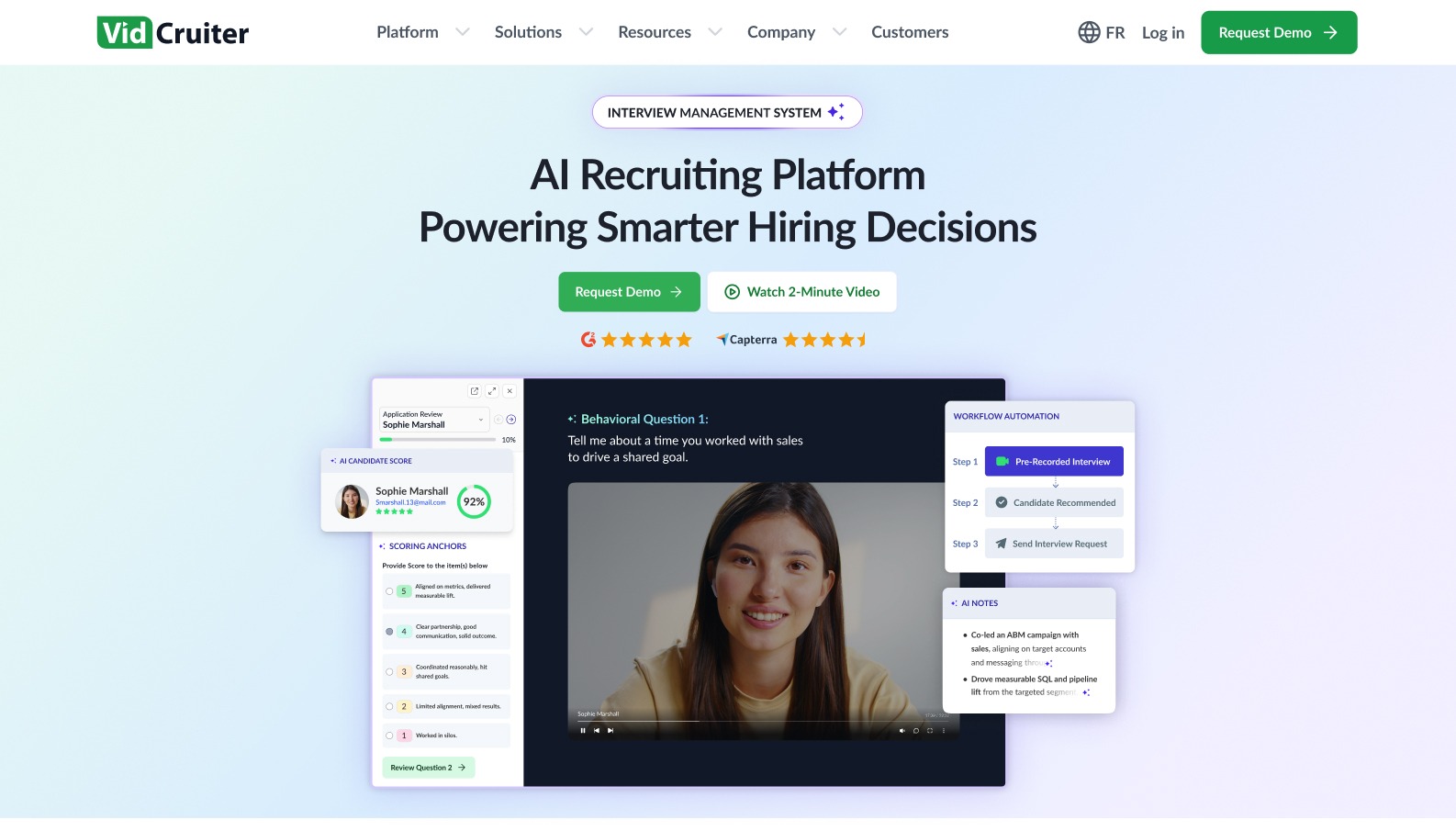
VidCruiter’s AI recruiting software is built for organizations that need structured, compliant, and scalable hiring processes across remote teams, distributed workforces, and global time zones. Unlike generic video conferencing tools adapted for hiring, VidCruiter’s interviewing software digitizes and manages every stage of the interview process within a single configurable system.
The platform supports both asynchronous one-way video interviews and live video interviews, giving candidates scheduling flexibility while keeping evaluations standardized and defensible. Its recently launched AI Interview Scoring brings rubric-based, auditable AI evaluation to pre-recorded video interviews, delivering consistent candidate scoring at scale without relying on biometric analysis — making it one of the most transparent and compliance-ready applications of AI in hiring available today. Automated interview scheduling, structured rating guides, rater compliance tracking, and built-in candidate assessment tools further reduce recruiter workload during high-volume hiring. VidCruiter reduces time-to-hire while maintaining the consistency and audit trail that compliance-driven organizations in government, healthcare, education, and enterprise require. They also integrate with leading HR systems and applicant tracking systems (ATS), including Dayforce, ADP, Workday, and many more.
Structured live and pre-recorded video interviewing with standardized rating guides and evaluation tools
AI Interview Scoring that delivers rubric-based, auditable, and bias-conscious candidate evaluation at scale
Automated interview scheduling with SMS reminders, calendar sync, and rater compliance tracking
Skills testing and video proctoring to assess candidate qualifications before advancing in the hiring process
Automated reference checks that replace manual follow-up and reduce time-to-hire
FatCat Remote connects growing companies with work-proven remote developers who integrate directly into existing teams and workflows.
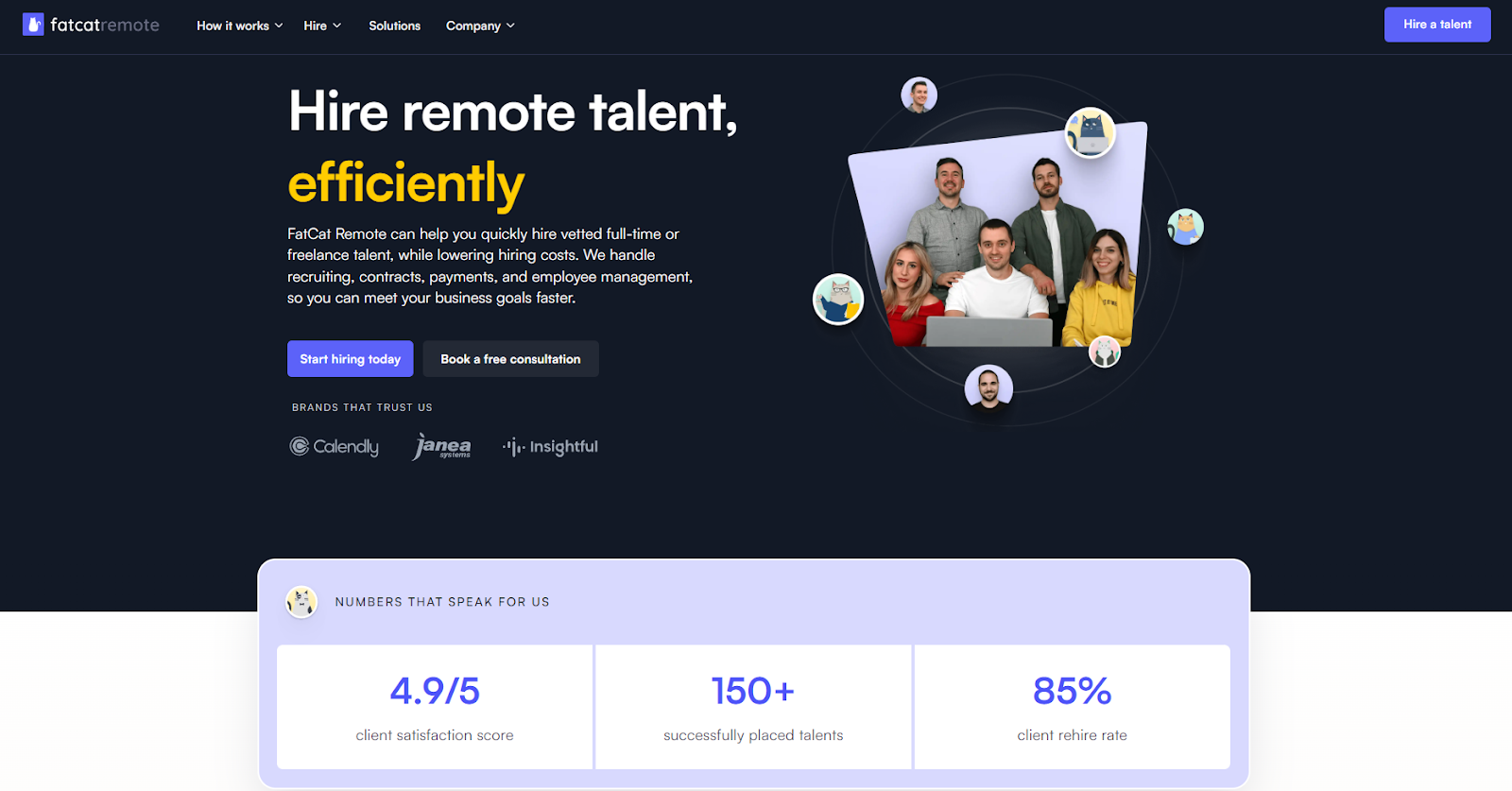
FatCat Remote is built for companies that need to hire remote talent without the friction of long recruitment cycles or the structural overhead of expanding large in-house teams. Rather than operating as a marketplace, the platform focuses on pre-vetted professionals who integrate directly into existing teams and day-to-day workflows.
This embedded model supports clearer ownership, faster onboarding, and more consistent delivery as organisations grow. By aligning remote hires with established tools, processes, and internal standards, FatCat Remote helps teams scale incrementally while maintaining operational control and execution quality across distributed environments.
Pre-vetted remote professionals across multiple roles and seniority levels
Embedded team model aligned with internal workflows and ownership structures
Structured onboarding designed for fast integration into existing teams
Flexible engagement that supports incremental team scaling
Ongoing alignment with client tools, processes, and delivery standards
TestTrick helps teams screen, assess, and shortlist remote candidates faster using role-based tests, async video interviews, and AI-assisted proctoring.
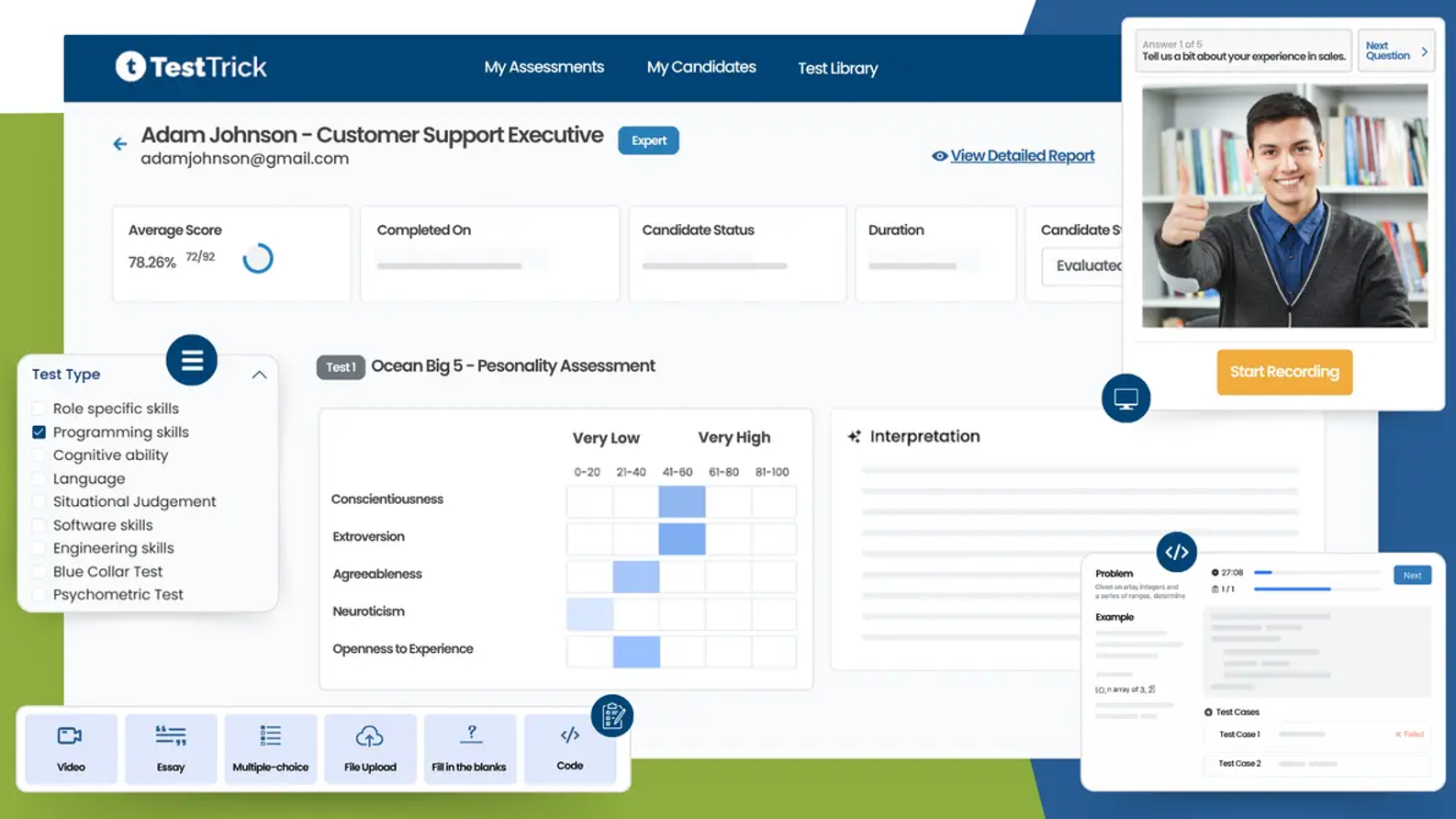
TestTrick is an online candidate assessment platform built for companies hiring across geographies and time zones. It enables recruiters to validate job-relevant skills early through ready-to-use assessments, custom tests, and structured scoring, so you spend less time on CV filtering and more time interviewing qualified applicants.
For remote hiring and high-volume roles, TestTrick adds async video interviews and AI-assisted proctoring to reduce cheating and improve consistency. With shareable reports and ATS-friendly workflows, teams can standardize screening, compare candidates fairly, and scale hiring without increasing recruiter workload.
Ready-to-use role-based assessments + custom test builder
Async video interview questions with structured evaluation
AI-assisted proctoring to reduce cheating and improve integrity
Shareable scorecards and reports for faster shortlisting
Remote-friendly workflows designed for scaling hiring pipelines
Lyzr is a specialized "HR Agent Hub" that uses secure, task-specific AI agents to automate the entire employee lifecycle, from recruitment to exit.
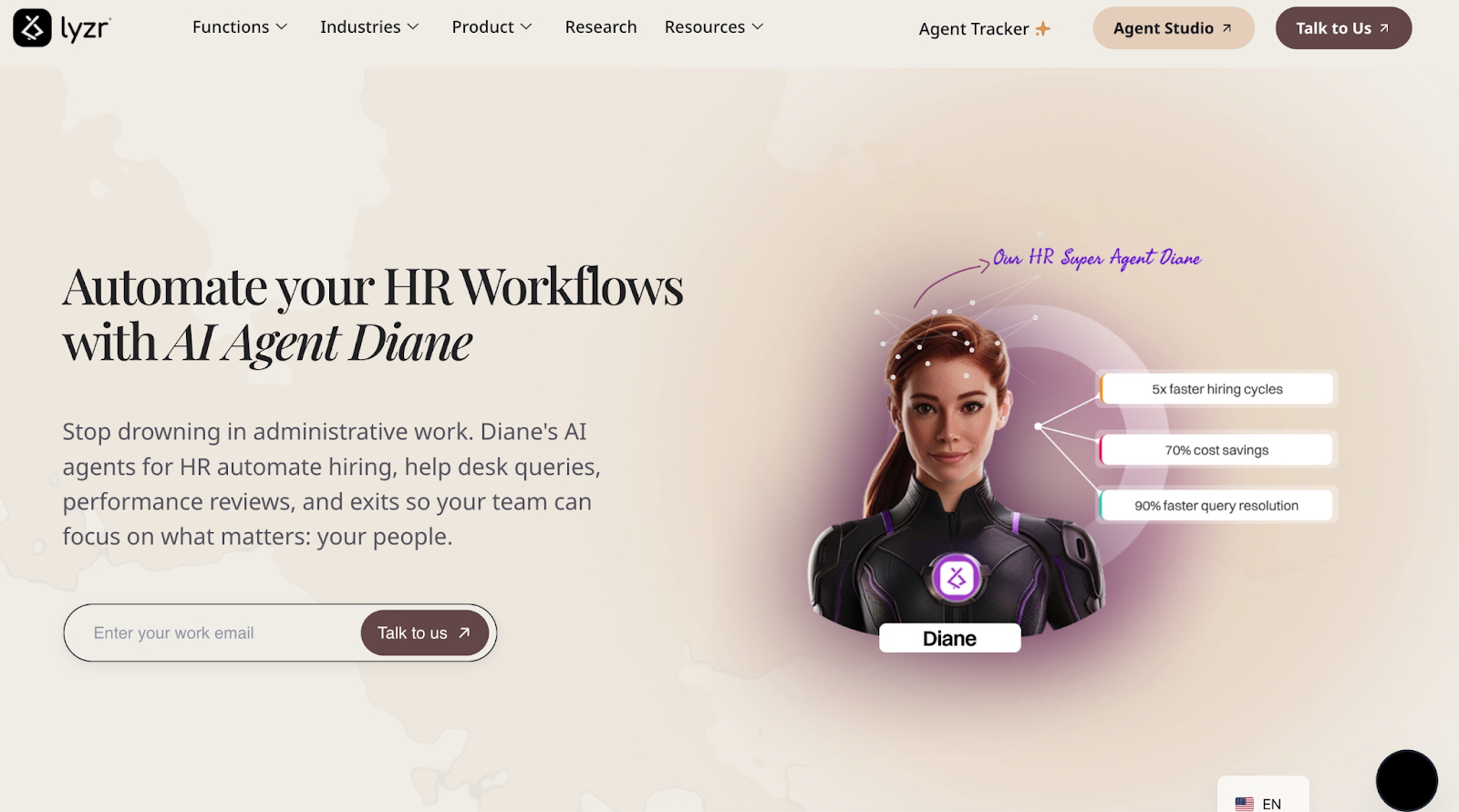
Lyzr.ai is a pioneer in "Agentic HR," moving beyond simple chatbots to provide autonomous digital teammates. Its Diane HR system consists of modular agents designed to handle high-volume, repetitive human resources tasks with enterprise-level security. By deploying Lyzr, HR departments can automate workflows like resume screening, interview scheduling, and policy dissemination, ensuring sensitive employee data remains protected within the company’s own cloud infrastructure.
The platform is particularly effective at reducing administrative drag, such as answering repetitive benefits queries or drafting job descriptions. With built-in Hallucination Management, Lyzr ensures employee-facing information on payroll or leave policies is grounded in official company handbooks. This shift to autonomous agents allows HR professionals to reclaim time and focus on strategic talent development and culture building.
AI-powered hiring automation for resume screening and interviews
Always-on private HR support for policies, payroll, and benefits
Automated onboarding for documents, access, and training
Performance and feedback agents for unbiased reviews
Private deployment ensuring full data control and compliance
DSMN8 is an employee advocacy platform that helps organisations strengthen employer brand and hiring visibility by amplifying authentic employee and executive voices across social channels.
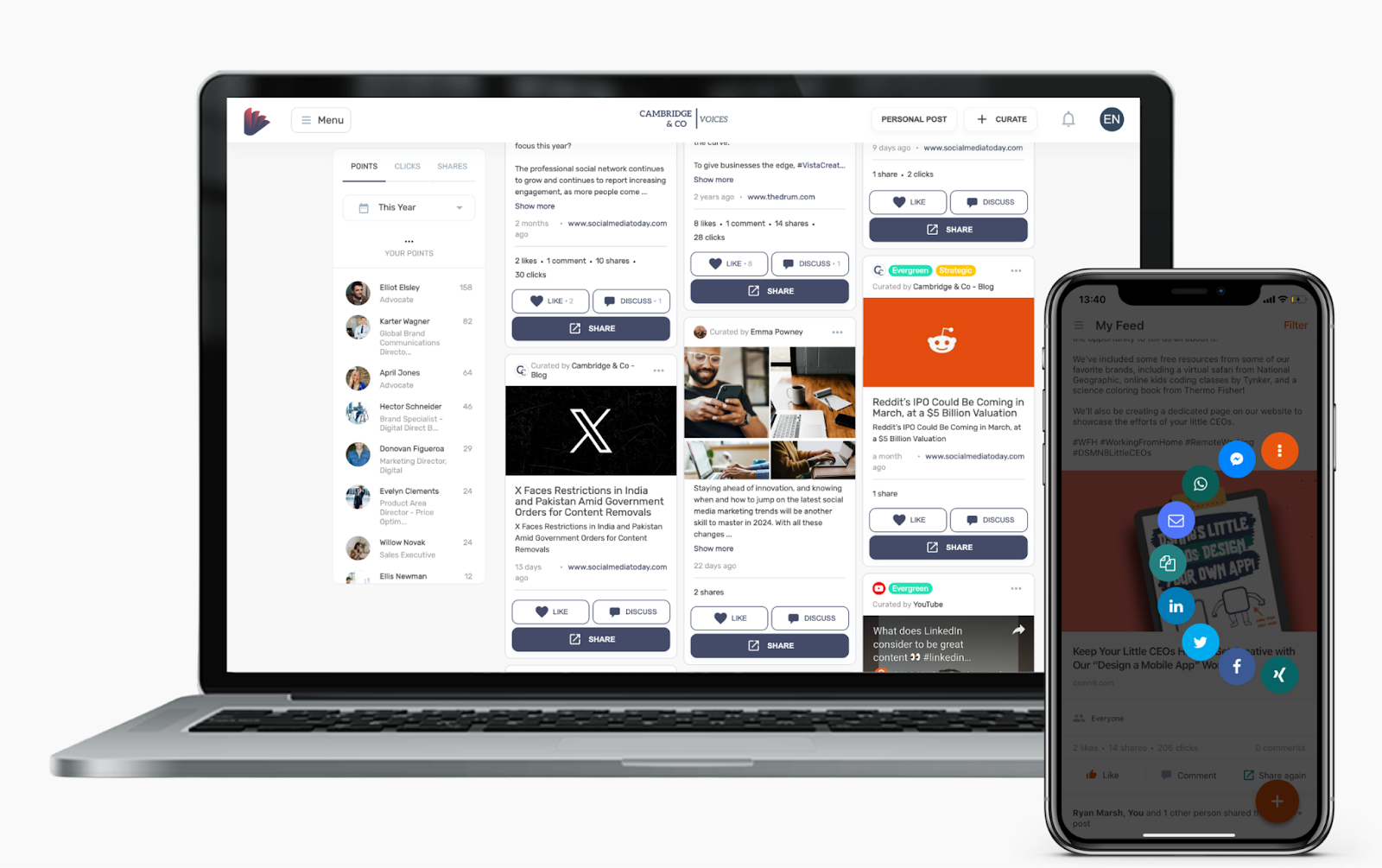
DSMN8 is an employee advocacy and employer branding platform built to help organisations scale visibility and trust in a remote-first world. By enabling employees and leaders to share authentic, on-brand content, DSMN8 helps companies showcase culture, values, and real working life across distributed teams.
This approach is especially effective for remote hiring, where credibility and transparency influence candidate decisions. With AI-assisted content creation, executive delegate access, seamless social sharing, and clear performance insights, DSMN8 allows organisations to strengthen employer brand, attract global talent, and maintain a consistent presence as teams grow.
AI-assisted content creation tailored for distributed teams
Simple social sharing with built-in governance and controls
Performance insights to measure reach, engagement, and impact
Delegate access enabling executives to scale social presence
Integrations with internal communication tools to activate employees
Hireflix enables teams to run structured one-way video interviews, helping them screen remote candidates without scheduling friction.
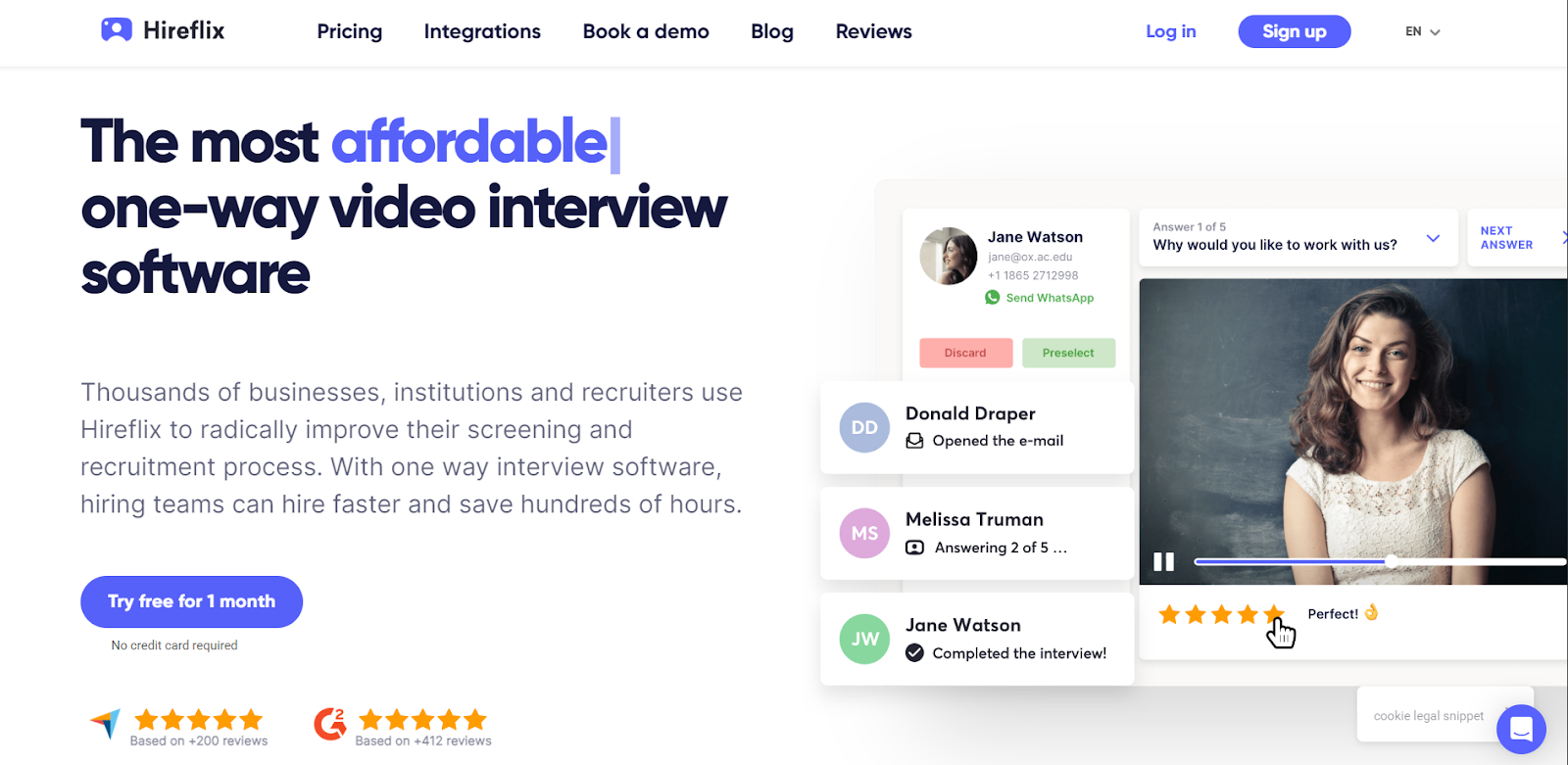
Hireflix is a one-way video interviewing platform built for teams hiring across locations and time zones. Instead of coordinating live calls, recruiters send candidates a set of pre-recorded questions, allowing applicants to respond on their own schedule while maintaining a consistent interview format.
This approach is especially effective for remote and high-volume hiring, where speed and standardisation matter. By reducing scheduling overhead and aligning early-stage evaluations, Hireflix helps teams focus live interviews only on the most qualified candidates. It integrates smoothly into existing hiring workflows without replacing sourcing or assessment tools, making it a practical layer for scaling remote recruitment.
Structured one-way video interviews for early-stage screening
Consistent question sets to standardise candidate evaluation
Time-zone friendly experience for global applicants
Easy sharing with hiring managers and stakeholders
ATS-compatible workflows for scalable hiring pipelines
Built In helps growing companies attract, engage, and hire highly qualified technology professionals through a combination of employer branding, job distribution, and targeted talent discovery.
As companies scale remote and distributed teams, attracting the right candidates becomes increasingly dependent on visibility and employer reputation. Built In addresses this challenge by giving organizations a dedicated platform to showcase their culture, mission, benefits, leadership, and work environment alongside their open positions.
Unlike traditional job boards that focus primarily on listings, Built In combines hiring infrastructure with employer branding tools that help companies stand out in competitive talent markets. This is particularly valuable for scaling organizations competing for software engineers, product managers, designers, data specialists, and other highly sought-after professionals.
The platform enables businesses to create rich company profiles that provide candidates with a deeper understanding of what it's like to work within the organization. By highlighting company values, employee experiences, workplace initiatives, and growth opportunities, employers can attract candidates who are aligned not only with the role but also with the company culture.
For remote-first and hybrid organizations, Built In also provides targeted exposure to technology professionals actively seeking flexible work environments. This helps companies build stronger talent pipelines while reducing reliance on outbound recruitment efforts alone.
As hiring demands increase, the platform supports scalable recruitment through employer branding, targeted job visibility, audience reach, and analytics that help teams understand and improve hiring performance over time.
Comprehensive employer branding profiles
Technology-focused talent marketplace
Targeted job distribution to qualified candidates
Company culture, benefits, and workplace showcases
Hiring analytics and employer visibility insights
Support for remote, hybrid, and distributed workforce recruitment
Built In is particularly effective for companies that need more than candidate sourcing. By combining employer branding with talent acquisition, it helps organizations strengthen their market presence while attracting candidates who are more likely to be engaged, aligned, and long-term contributors. For growing businesses competing in today's technology hiring landscape, this creates a sustainable advantage as teams expand across locations and time zones.
As organisations grow, platform decisions become less about immediate needs and more about long-term fit. Tools that feel lightweight and efficient early on can become constraints as teams expand. Others only begin to show value once complexity reaches a certain threshold.
Evaluating platforms at this stage requires clarity about where friction currently exists and what kind of structure the organisation actually needs. The goal is not to build a perfect stack, but to remove bottlenecks that slow hiring, onboarding, coordination, or decision-making. Platforms should reduce cognitive load for teams and managers, integrate cleanly into existing workflows, and continue to deliver value as roles, processes, and headcount evolve.
A scalable remote setup is rarely built around a single solution. It emerges from a coherent ecosystem of tools that complement each other rather than overlap. When aligned properly, platforms fade into the background, enabling teams to focus on execution instead of coordination.
Remote hiring at scale is not simply a talent acquisition challenge. It is an operational design problem that touches how teams are built, integrated, and supported over time. The platforms that matter most are those that help organisations grow without sacrificing clarity, speed, or accountability.
By approaching remote hiring as a system rather than a series of isolated decisions, companies can make more resilient platform choices. The right tools reduce friction at critical growth points, support consistency without rigidity, and adapt as organisational needs change. In doing so, they enable teams to scale sustainably while staying focused on delivery and long-term outcomes.
 AI tools to find & convert leads.
  Send emails at scale