Digital advertising has entered an era defined by speed, scale, and constant experimentation. Brands are expected to produce high-quality video ads across multiple platforms, formats, and audiences—often with limited time and resources.
In response, AI-powered creative tools are increasingly embedded into advertising workflows. Among them, the AI Ad Video Generator has emerged as a critical component in modern AI marketing strategies. Rather than replacing creative teams, these tools are reshaping how ads are conceptualized, produced, and optimized.
This article explores how AI ad video generators are transforming digital advertising, the best practices guiding their adoption, and what marketers should consider as AI-driven ad creation becomes mainstream.
Video has become the dominant advertising format across social media, search, and e-commerce platforms. According to industry data from Wyzowl and HubSpot, over 85% of businesses now use video as a marketing tool, with short-form video delivering some of the highest engagement rates.
However, traditional video production models struggle to keep up with:
The need for frequent creative refreshes
Platform-specific format requirements
Rapid A/B testing across audiences
This growing gap between creative demand and production capacity has paved the way for AI-assisted video creation.
An AI Ad Video Generator is a system that uses machine learning and generative models to automate parts of the ad creation process. These tools can assist with:
Structuring ad narratives
Generating visuals or avatars
Synchronizing voice, motion, and timing
Adapting creatives for multiple platforms
Rather than producing fully autonomous ads, most AI ad video generators function as creative accelerators, enabling faster iteration while keeping strategic control in human hands. Modern tools such as the kling 3.0 ai model are helping creators automate cinematic ad production, motion generation, and visual storytelling workflows

Modern advertising cycles move fast. Campaigns often require dozens—or even hundreds—of creative variations tailored to different audiences and platforms.
AI enables teams to generate multiple ad versions from a single concept, maintaining visual and messaging consistency while dramatically reducing production time.
Historically, video advertising required specialized skills, equipment, and budgets. AI tools lower these barriers, allowing marketing teams to experiment with video earlier in the campaign lifecycle.
This democratization of video production is particularly impactful for startups, small brands, and performance-driven teams.
One of the most significant advantages of AI ad video generators lies in creative testing.
Instead of launching a single polished ad, teams can:
Test multiple hooks and opening frames
Experiment with different pacing or messaging
Adjust visuals for audience segments
AI-generated variations allow marketers to gather performance data earlier and optimize creatives based on real engagement signals—not assumptions.
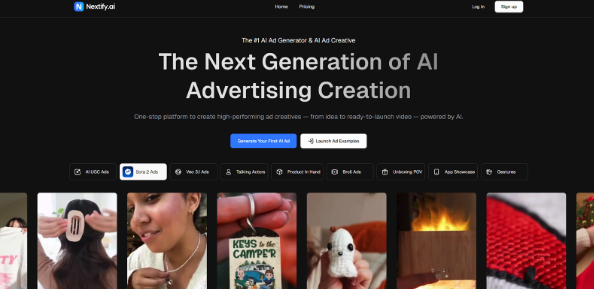
In agile marketing environments, speed and adaptability are critical. Some teams integrate AI ad video generators such as Nextify.ai or Tagshop AI into their early-stage ad workflows to rapidly prototype short-form video ads.
These tools are often used to:
Convert scripts or product descriptions into video drafts
Generate UGC-style ad variations for social platforms, helping brands quickly get UGC at scale without relying entirely on manual creator outreach
Iterate creatives quickly based on performance feedback
Importantly, AI-generated ads are rarely treated as final outputs. Instead, they serve as working drafts that creative teams refine, ensuring alignment with brand tone and campaign objectives.
AI performs best when guided by strong inputs. Clear messaging, defined audiences, and campaign goals remain essential.
Question for marketers:
What emotional response should this ad trigger?
AI excels at generating variations, but human insight is still required to define the core idea. Successful teams separate concept development from execution scaling.
Every AI-generated ad should pass through human review. This ensures brand consistency, factual accuracy, and ethical compliance.
As AI-generated ads become more prevalent, ethical questions grow more complex.
Key considerations include:
Transparency around AI-generated content
Avoiding deceptive or manipulative visuals
Respecting intellectual property and likeness rights
AI advertising should enhance creativity—not erode trust. Responsible use requires clear guidelines and internal standards.
Performance marketing increasingly depends on rapid creative iteration. AI ad video generators align naturally with this shift by enabling:
Faster testing cycles
Data-informed creative decisions
Scalable personalization
As AI models become more context-aware, future systems may dynamically adapt ads based on user behavior, platform norms, and performance history.
Contrary to common fears, AI does not eliminate the need for creative professionals. Instead, it reshapes collaboration.
Writers, designers, and marketers spend less time on repetitive production tasks and more time on:
Strategy
Storytelling
Audience understanding
AI becomes part of the creative toolkit—not a replacement for creative judgment.
AI ad video generators address the growing demand for scalable video content
These tools function best as creative accelerators, not autonomous systems
Rapid testing and iteration are central benefits
Ethical oversight and human review remain essential
The future of advertising lies in human–AI collaboration
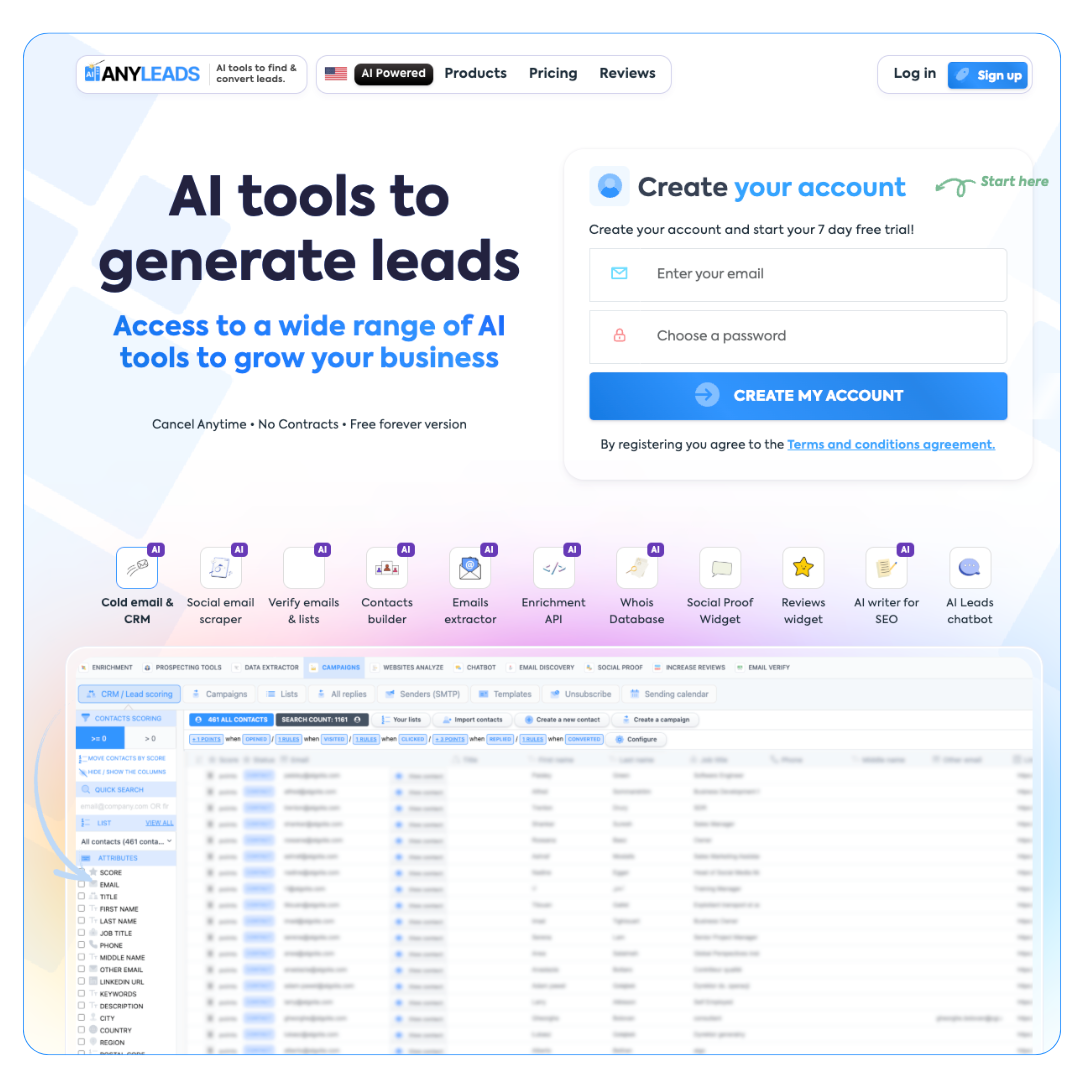
 AI tools to find & convert leads.
  Send emails at scale