
In the competitive world of sales and marketing, the quality of your leads can make or break your success. For years, businesses have collected vast amounts of data, but much of it remains untapped. Artificial intelligence (AI) and deep learning are changing this, offering powerful ways to analyse, score, and enrich lead data to a degree that was previously impossible. By moving beyond manual spreadsheets and basic filters, companies can now use intelligent systems to pinpoint their most promising prospects with remarkable accuracy.
Every lead starts as a collection of raw data points, perhaps a name, an email address, and a company. On its own, this information offers limited value. The first step in unlocking its potential is transforming it into a structured, usable format. AI algorithms are exceptionally good at this initial processing, cleaning up inconsistencies, standardising formats, and identifying duplicates.
Once the data is clean, AI begins interpreting it. This process turns raw data into actionable insights by connecting different pieces of information. For instance, an AI can cross-reference an email domain with a company database to determine industry, size, and revenue, instantly providing context that a salesperson would have had to research manually. This initial transformation is the foundation for all other AI-driven lead analysis.
Deep learning, a subset of AI that uses neural networks with many layers, takes data analysis a step further. These models are designed to recognise complex and subtle patterns in user behaviour that human analysts often miss. For example, a deep learning model could analyse the website journey of thousands of previous customers and identify a specific sequence of page visits and content downloads that strongly correlates with a future purchase.
As organisations increasingly rely on AI-driven lead analysis, there is growing demand for professionals who understand how these systems are built and managed. For those looking to lead these initiatives, pursuing a qualification like a Master of Artificial Intelligence online can provide the expertise needed to develop and deploy sophisticated AI solutions effectively. By understanding the nuances of customer interactions, sales teams can engage leads who are showing genuine buying signals, rather than contacting everyone on their list.

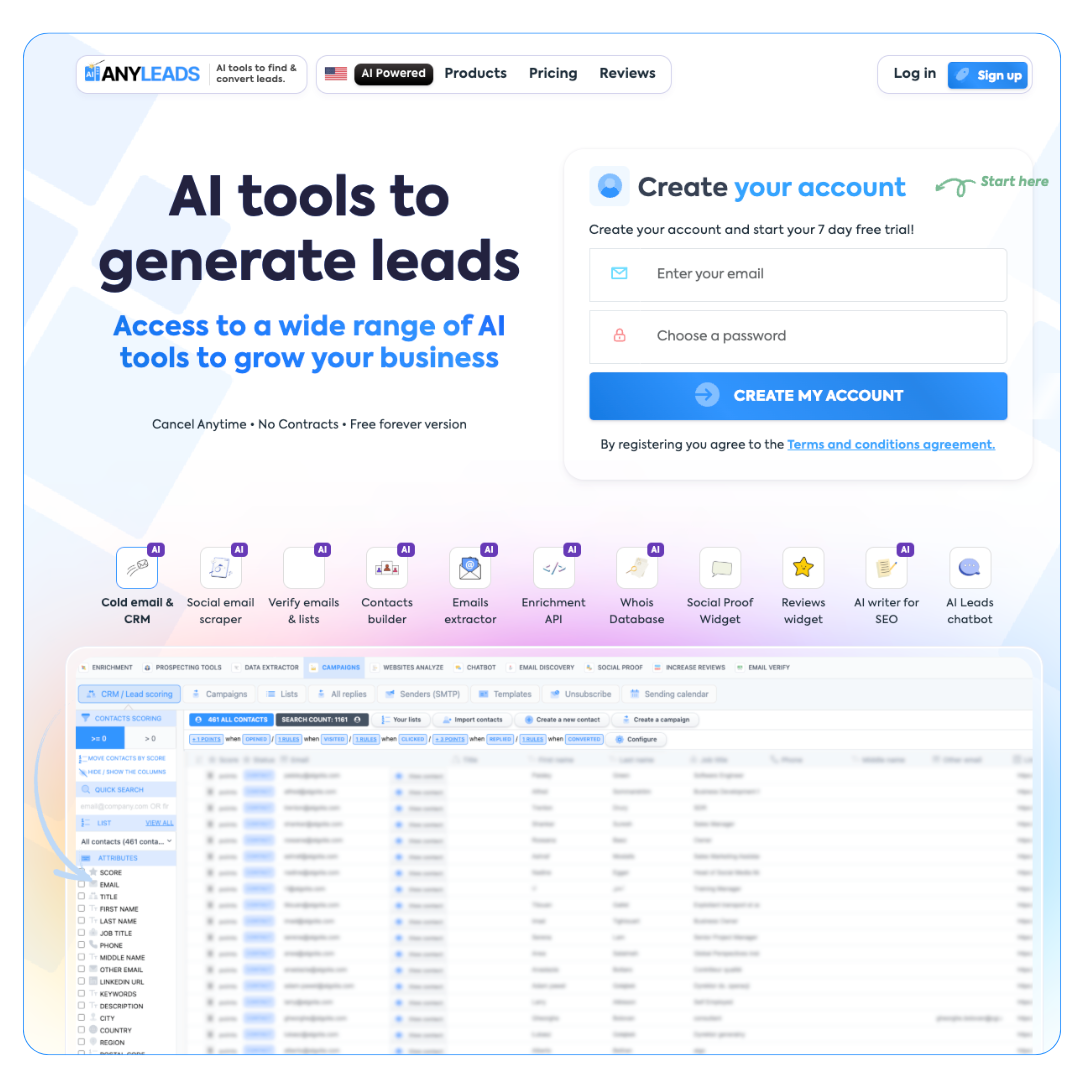
Once patterns are identified, machine learning (ML) models can automatically score leads. A lead scoring model assigns a numerical value to each prospect based on their demographics, firmographics, and behaviour. This helps sales teams prioritise their efforts efficiently, focusing on the leads most likely to convert.
The model learns from historical data. It analyses the characteristics of leads that became customers versus those that did not. Key factors might include:
Job title and decision-making authority
Company size and industry
Specific actions taken on your website (e.g., requesting a demo versus reading a blog post)
Engagement with marketing emails
An ML system continuously refines its scoring algorithm as more data becomes available, ensuring the scoring remains accurate and relevant over time.
A lead's profile is rarely complete from the start. Key information might be missing, and much of the available data can be unstructured, like comments on social media posts or notes from a sales call. AI excels at making sense of this information, unlocking the power of unstructured data to build a more complete picture of a prospect.
AI-powered data enrichment tools can automatically scan the web and third-party databases to find missing details like phone numbers, LinkedIn profiles, or recent company news. Natural Language Processing (NLP), another branch of AI, can analyse text from emails or call transcripts to gauge sentiment and identify specific needs or pain points mentioned by the prospect. This automated process gives sales representatives a rich, 360-degree view of every lead without hours of manual research.
While the benefits are significant, implementing AI for lead data analysis is not without its challenges. The most common hurdle is data quality. AI models are only as good as the data they are trained on; if your initial data is inaccurate or incomplete, the results will be unreliable. This is often referred to as the "garbage in, garbage out" principle.
Another concern is the potential for bias. If historical data reflects existing biases, an AI model may learn and amplify them, perhaps by unfairly down-scoring leads from certain industries or regions. Finally, the "black box" nature of some complex models can make it difficult to understand exactly why a particular decision was made. This requires human oversight and continuous validation to ensure the system is operating fairly and effectively.
As AI technology continues to evolve, its role in refining and interpreting lead data will only grow. For modern sales and marketing teams, it is quickly becoming an indispensable tool for driving efficiency and achieving better results.
 AI tools to find & convert leads.
  Send emails at scale