
In today’s rapidly evolving digital ecosystem, companies are under pressure to scale faster, communicate smarter, and operate more efficiently. Traditional workflows—whether in marketing, operations, accounting, or communications—are being replaced by intelligent, automated systems powered by artificial intelligence (AI) and machine learning.
From AI cold email outreach to machine learning model deployment, and from production management software to digital accounting solutions, businesses are integrating smarter tools into every department. This shift is not just about automation—it is about enhancing decision-making, reducing operational friction, and enabling teams to work at their highest potential.
In this article, we explore how modern organizations can use AI technologies and productivity tools—such as Claap AI, wireless headsets for remote work, and AI-powered business software—to create highly efficient, scalable, and future-ready workflows.
Cold outreach is no longer a numbers game. It’s a precision game—and AI has completely changed the rules.
Modern AI cold email outreach tools analyze millions of data points, including user behavior, intent signals, and response probability. Instead of sending generic messages, AI systems craft personalized, high-conversion outreach sequences tailored to each prospect.
Hyper-personalization at scale: AI writes different emails for each prospect based on persona, industry, and online behavior.
Predictive sending: AI schedules the email at the exact time a prospect is most likely to open it.
Automated follow-ups: The system detects interest and sends timely sequences automatically.
Data-driven decision-making: AI identifies which subject lines, CTAs, and templates bring the highest response rate.
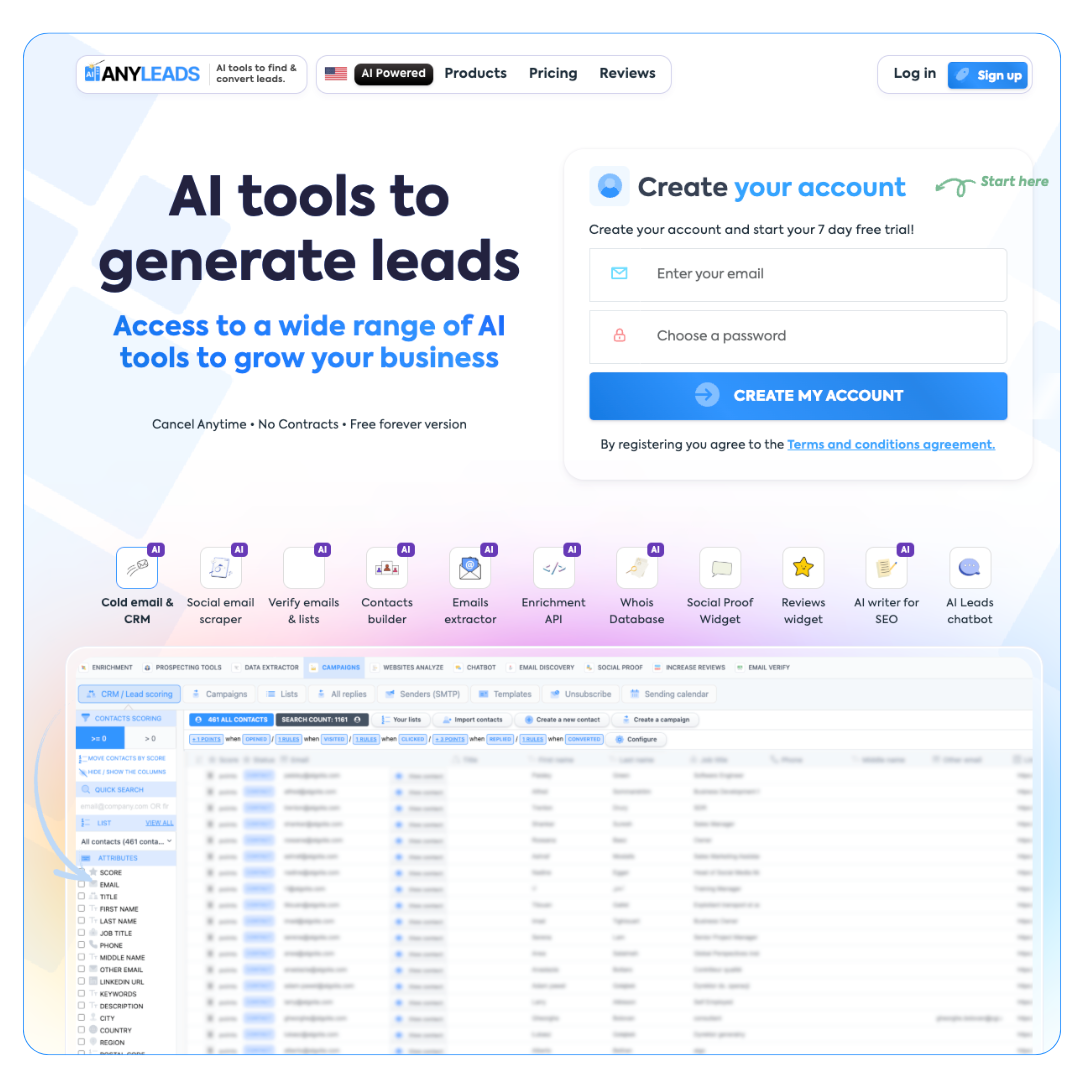
For businesses using Anyleads or similar platforms, this capability means saving thousands of dollars and dramatically increasing lead-to-close ratios.
Outreach is becoming smarter—not harder.
Many companies adopt AI tools without fully understanding the engine behind them: machine learning model deployment.
This process ensures that AI algorithms move from experimental phase to real-world application, allowing businesses to integrate them into customer service, sales, marketing, accounting, and more.
Real-time decision intelligence: Deployed ML models can instantly analyze customer data and generate insights.
Optimization of repetitive tasks: From invoice classification to customer segmentation, ML deployment automates complex workflows.
Better accuracy over time: Models learn continuously from new data.
Scalability: Whether a business grows from 100 customers to 100,000, deployed ML systems can scale seamlessly.
When companies understand ML deployment, they can adopt AI tools more strategically and maximize ROI.

Teams are increasingly shifting to asynchronous communication tools—and Claap AI is becoming a favorite among remote-first companies.
Claap AI allows teams to:
Record and summarize meetings automatically
Document processes using AI-generated transcripts
Extract key decisions and action items using AI
Reduce meeting time by up to 40–60%
Share short, AI-edited video explainers internally
Instead of spending hours catching up on meetings or writing documentation, teams can rely on Claap AI to handle the heavy lifting. For companies dealing with complex workflows—like production lines, operations, or customer-facing teams—this is a powerful productivity booster.
Modern operations require more than spreadsheets. Companies today rely on production management software to handle real-time tracking, resource planning, scheduling, and quality control.
But AI has pushed this software category into a new era.
Predictive maintenance to prevent machine downtime
Real-time workflow optimization using ML-driven insights
Automated task allocation based on worker availability + skill level
Supply chain forecasting based on historical + live data
By integrating AI systems with production management tools, businesses can minimize errors, reduce costs, and streamline operations like never before.
Manufacturing companies using AI workflows often experience:
20–40% decrease in operational delays
15–25% higher production efficiency
More accurate demand forecasting
This proves how essential AI-enabled production software has become in competitive industries.
Finance teams are also entering the AI revolution.
Digital accounting software powered by machine learning improves accuracy, reduces manual work, and strengthens financial transparency.
Automated bookkeeping and expense recording
AI-based fraud detection for unusual transactions
Predictive cash flow insights
Instant invoice classification and tax calculation
Automatic reconciliation across multiple platforms
By deploying ML models into accounting systems, companies reduce human errors and ensure compliance with financial regulations.
The shift from traditional accounting to AI-powered digital software allows teams to focus on strategic planning instead of manual data entry.
Remote and hybrid work environments require smooth communication—and having the right tools is essential.
A wireless headset with mic for work has become a must-have device for professionals who collaborate online.
Clear voice communication during meetings, AI calls, and recordings
Noise cancellation for busy work environments
Freedom of movement for multitasking
Better collaboration with tools like Claap AI and virtual meeting platforms
In AI-powered ecosystems where meetings are recorded, transcribed, and summarized automatically, having clear audio quality is essential. A good headset improves the entire AI summarization and voice detection accuracy, making documentation much cleaner.
When businesses combine AI tools across departments, their entire operational capability transforms. Let’s see how all the technologies connect into a single, cohesive workflow:
Use AI cold email outreach tools to generate leads automatically with smart personalization.
Deploy machine learning models that power internal AI systems, chatbots, fraud detection, or analytics.
Manage complex tasks using production management software integrated with predictive ML systems.
Leverage digital accounting software to automate financial workflows and generate real-time insights.
Use wireless headset with mic for work + Claap AI to streamline meeting productivity and asynchronous communication.
By integrating all these tools, companies achieve:
Faster decision-making
Reduced operational cost
Better cross-team collaboration
Higher accuracy in workflows
Greater overall productivity
This is the foundation of a future-ready business ecosystem.
Many businesses fear that AI may replace human teams. In reality, AI acts as a force multiplier.
Sales teams close more leads because outreach is smarter.
Operations teams prevent delays thanks to predictive alerts.
Accounting departments avoid mistakes through AI monitoring.
Remote teams cut meeting hours in half using Claap AI.
Machine learning models help companies scale without hiring large technical teams.
In 2025 and beyond, companies that adopt AI-driven tools early will outperform competitors by a significant margin.
AI is no longer optional—it is the backbone of modern business efficiency. Whether you’re automating outreach, deploying ML models, optimizing production, managing finances, or improving collaboration, intelligent systems are reshaping how companies operate.
 AI tools to find & convert leads.
  Send emails at scale