Digital signage is no longer just a fancy screen; it’s a strong new way for brands to talk to customers. Static posters and one-way ads are being replaced by digital displays that can change content in real time, react to the local environment, and show messages that feel personal.
This shift is changing how people shop, helping businesses sell more, and building stronger loyalty than traditional marketing ever did. Bright visuals catch the eye, while smart content supports each step of the customer journey.
In this article, you’ll see how this technology goes beyond grabbing attention and actually reshapes how brands build better relationships. If you want to start using this approach in your own business, platforms like LOOK Digital Signage offer wide-ranging tools to help you manage this change.
Digital signage is content shown on electronic screens, similar to TV or computer monitors. Unlike printed signs, these screens can show changing text, images, and videos in many formats, giving brands several ways to attract potential customers. It’s more than just replacing paper with pixels; it’s a new way to communicate.
The growing market proves this change is real. The global digital signage market is expected to reach USD 35.94 billion by 2026. This fast growth shows that more businesses now see screen-based communication as a key part of how they speak to customers. By 2023, there were already 91.5 million digital signage screens in use worldwide, and this number is still rising quickly as more organizations use the technology to connect with customers and improve daily operations.
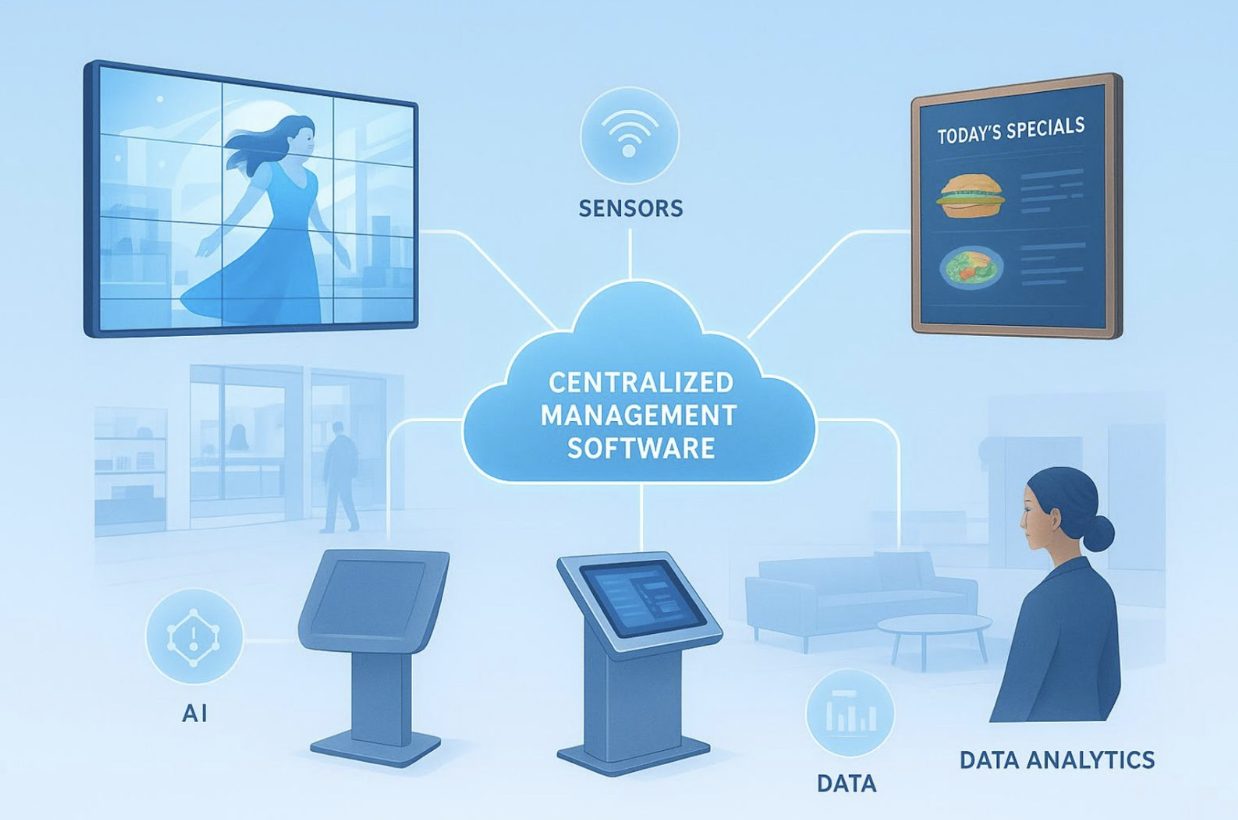
Digital signage brings together both hardware and software. High-resolution LED or LCD screens are the visible part, but software and devices behind the scenes do most of the work. A small business might start with a basic Windows PC running a slideshow, but this quickly becomes hard to handle when there are many screens in many locations.
Modern systems use special digital signage software, usually cloud-based, so marketing teams can update and control content remotely. This central control is key for keeping messages consistent and making it easy to manage many displays. Many businesses also rely on digital signage players to power and synchronize content across screens, ensuring reliable playback and seamless remote management. The wider system can also include:
Interactive kiosks
Large video walls
Screens linked with mobile devices
Digital signage is also getting smarter thanks to data analytics, artificial intelligence (AI), and sensors. For example:
Sensors can pick up hand gestures for touch-free control.
Natural Language Processing (NLP) supports voice commands.
Connections to mobile apps and IoT sensors allow tracking of engagement and sending location-based information.
Digital and traditional signage work very differently. Traditional signage uses printed posters, banners, or billboards. These are fixed, costly to change, and often end up as waste when offers or details change. Any update usually means redesigning, reprinting, and reinstalling, which adds repeating costs. Traditional signs also rarely offer movement or real interaction.
Digital signage like Juuno offers more flexibility and can save money over time. Content updates happen instantly through an app or online platform, removing printing and shipping. Errors are easy to correct, and a single digital screen can rotate multiple messages. This makes displays more useful and responsive.
A Nielsen study found that digital signage draws up to 400% more viewers than static signs. Moving images, rich colors, and targeted information naturally grab attention and keep people watching. It also cuts down on the need for physical materials, which helps businesses support sustainability goals.
Brands are turning to digital signage because customer habits and expectations have changed. Many people like to shop online, so physical stores need to give shoppers a good reason to visit. The answer is simple: better in-store experiences. Shoppers want more than good products; they want experiences that feel personal and relevant.
Online stores already do this using data and recommendation engines. In physical stores, though, most people still see the exact same signs and offers. This mismatch can be frustrating. McKinsey reports that 71% of consumers expect personal interactions, and 76% feel unhappy when they don’t get them. Digital signage helps close this gap by bringing the same level of dynamic, personal content from the web into the store.
Digital signage is growing fast and is here to stay. The global retail digital signage market alone is expected to reach about USD 21.2 billion by 2034, up from USD 6.4 billion in 2024, at a CAGR of 12.70%. Businesses are seeing solid results. A 2024 study found:
Retailers saw a 29.5% increase in sales after adding digital signage.
70% of customers said digital signage affected their buying decisions.
Its flexibility means it is used in many fields:
Retail and restaurants
Hotels and other hospitality businesses
Hospitals and clinics
Schools and universities
Corporate offices
Across all these places, digital signage helps share information, improve experiences, and simplify daily work. The number of screens worldwide is still growing beyond 91.5 million, showing how important this tool has become.
In retail, screens can highlight promotions and product offers, while healthcare facilities can use them for wayfinding and service updates, and universities can display schedules, announcements, or campus information. In hospitality, hotel digital signage can serve different purposes across a property, from welcome messages and event schedules in lobbies to amenity promotions in elevators and menu or wellness offers near restaurants and spas. This ability to tailor and update content for specific locations makes digital signage especially useful for businesses managing multiple customer touchpoints.
Customer expectations are a main reason digital signage is spreading. People are used to websites and apps that give:
Relevant suggestions
Real-time updates
Offers based on past behavior
Accenture reports that 91% of customers are more likely to shop with brands that recognize them, remember what they like, and provide fitting offers. This makes personalization a basic expectation.
Shoppers also look to screens for quick information about prices, features, and current promotions. That means digital signage influences choices at the point of decision, especially when placed where people pause-such as near shelves, checkouts, and waiting areas. Even if people browse online first, many still want to see and test products in person. Digital signage helps make that in-store visit just as smart and personal as an online session.

Digital signage does more than share information; it supports two-way engagement and more personal experiences. Its flexible nature helps brands react quickly, keep messages on-brand, and speak to customers in ways that match their needs.
One major benefit of digital signage is how quickly messages can change. Businesses can instantly:
Highlight new promotions
Show fresh product launches
Respond to stock levels or sudden changes
If something sells out, the screen can shift focus to other products. If the stock is high, the display can push special offers. This helps both customers and staff stay up to date without confusion.
When linked to a point-of-sale (POS) system, screens can show current prices automatically and update them as they change. Grocery stores, for example, can adjust prices during the day to push fresh items before closing. This flexibility lets brands act quickly in a fast-moving market.
Digital signage makes it easy to show different content based on:
Location
Time of day
Season
Audience profile
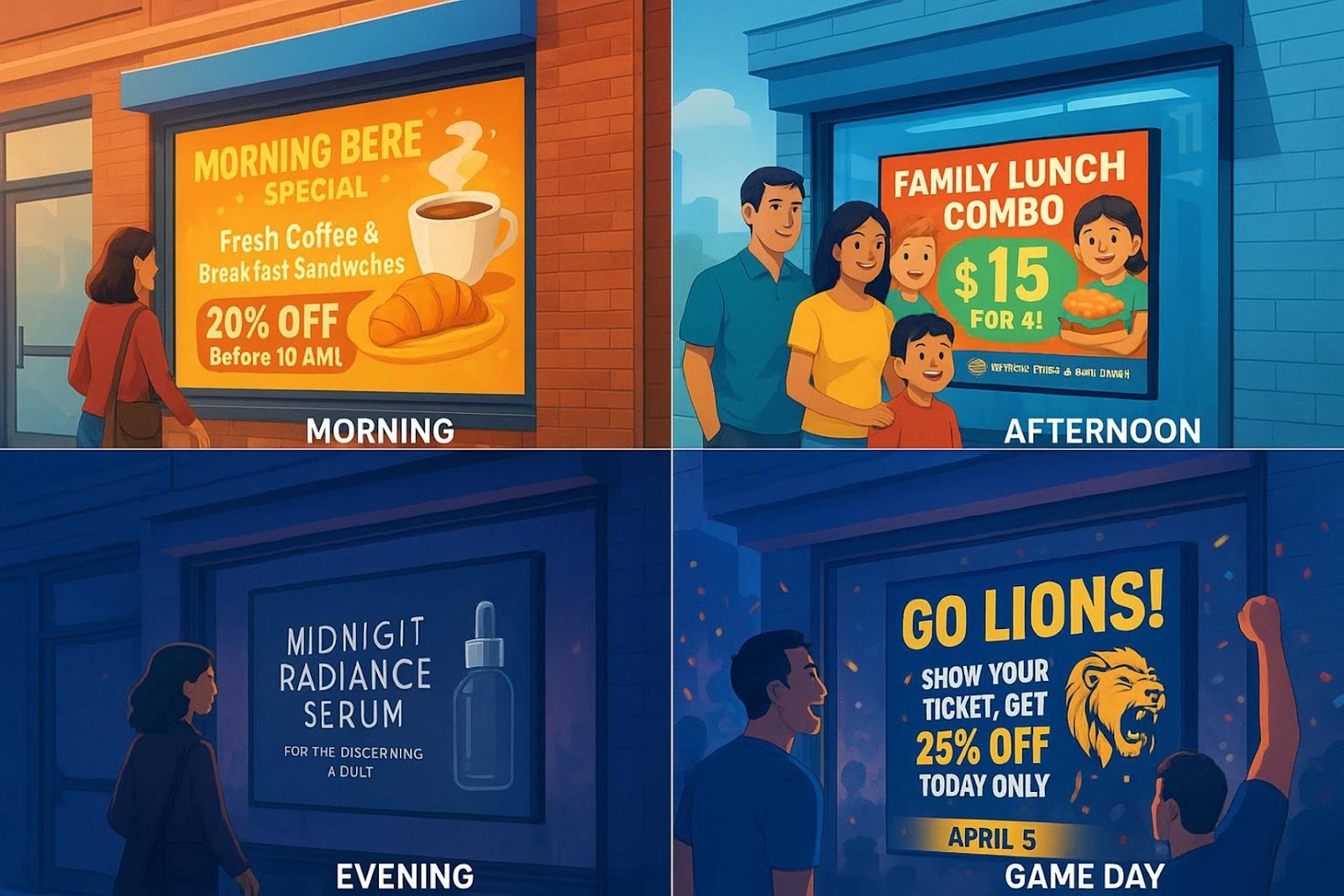
Content can relate to local holidays, community events, or local sports teams. On Veterans Day, a business might thank veterans on-screen. A neighborhood store could highlight gear for a local school rivalry game.
You can also choose:
Network-wide messages for all locations
Regional campaigns for small groups of stores
Unique content for single screens
This way, high-end products can appear in the evening while family deals show in the afternoon. A hotel could promote tours and local attractions that match tourist interests. Personalized offers often bring returns up to three times higher than general mass campaigns.
Digital signage can also be highly local and context-aware. For example:
Coastal stores might all run a “buy one, get one free beach chair” deal.
A single store in that group could add an extra message for locally made beach towels.
This level of detail helps content feel relevant in every location.
QR codes on screens link the physical and digital experience while keeping customer choice and privacy in mind. People can scan to:
See related offers
Check local stock
Learn more about a product
AI-powered cameras can estimate general traits like age range or gender without identifying individuals. Stores can then show sneaker deals to teens and wellness products to adults, for example. This keeps messages relevant but still respects privacy.
A consistent look and message across all locations helps customers trust and remember a brand. Digital signage supports this by making it easy to show the same colors, fonts, logos, and overall style everywhere, whether the customer is in Dubai or Dallas.
It also helps avoid:
Old offers that should have been removed
Off-brand designs
Inconsistent messaging
High-quality video walls and interactive screens give a modern feel and signal that the brand is current and professional. Moving content and clean design help a brand stand out in a crowded market and leave a strong impression.
Digital signage works in many types of places, from busy stores to quiet hospitals. Each industry uses it in slightly different ways to support customer needs and internal operations.
Retailers use digital signage to drive engagement and sales right at the shelf or checkout. Examples include:
Supermarkets showing recipe videos or meal ideas near ingredients.
Clothing stores promoting socks and shorts when a shopper views running shoes.
Seasonal and time-based offers that change throughout the day.
Quick-Service Restaurants (QSRs) often rely on digital menu boards. McDonald’s, for example, uses boards that change content by time of day and customer patterns. This approach has:
Raised average order values
Encouraged customers to try different items
More QSRs are combining screens with AI-driven analytics to better understand what works and refine what they show on menus and promo screens.
Banks use digital signage to improve both customer experience and service flow. CityBank reported more sign-ups for credit and savings products and greater interest in services after installing interactive screens in its main branch.
Common uses include:
Showing queue progress and wait times
Promoting loans, cards, and savings plans
Sharing financial tips and news
MiBanco in Peru worked with Wavetec to display ticket numbers on screens along with educational and promotional content. This approach:
Raised customer satisfaction
Cut actual waiting times by about 30%
In healthcare, digital signage supports patients and visitors by:
Providing maps and directions in hospitals
Showing appointment status and waiting lists
Sharing wellness tips and preventive care information
This helps people move through complex buildings more easily and reduces the strain on reception desks. Patients feel more informed and less stressed.
Hotels use digital signage to:
Highlight local tours and experiences
Display real-time event and conference schedules
Share details about hotel services and amenities
Guests get useful, timely information that helps them enjoy their stay and discover more of what the property and area offer.
Digital signage can guide customers at every stage-from first noticing a brand to buying and even beyond. It draws attention, supports decision-making, and improves how people feel about their visit.
People are bombarded with information, so grabbing attention quickly matters. Interactive digital signage stands out because it turns simple viewing into active participation. For example:
Motion sensors can trigger a new animation when someone walks by.
Touch or gesture-based screens invite people to explore more.
Bright, sharp screens with videos, animations, and movement draw up to 400% more viewers than static signs, according to Nielsen. Clever use of color and motion helps messages break through the noise in places like malls, airports, or stadiums.
Once someone is looking at a screen, the next goal is to keep them interested. When customers interact with digital signage-by touching, scanning a code, or following prompts-they tend to stay longer and explore deeper.
Research shows that 64% of shoppers are more engaged with brands that use digital signage smartly. Longer, more relevant interactions:
Help customers learn about products and services
Boost confidence in their choices
Often lead to higher conversion rates
Waiting is one of the most frustrating parts of many customer experiences. Digital signage can make waits feel shorter by:
Showing entertaining or informative content
Sharing useful tips and product features
Running short videos, news, or local updates
Screens can also show real-time queue information and estimated wait times, which helps reduce stress and confusion. In the FC Barcelona Megastore, for example, Wavetec’s system displayed waiting information and promos together, making the experience smoother and more pleasant. MiBanco’s earlier example also shows how these systems can cut both real and perceived wait times.
In large spaces like airports, hospitals, malls, and big-box stores, finding your way can be stressful. Digital signage helps by offering:
Interactive maps and kiosks
Clear arrows and directional signs
Voice-enabled search functions
In multicultural regions, screens can show directions in multiple languages so more visitors feel supported. Beyond navigation, digital signage can display real-time updates on:
Flight or transport schedules
Queue or service status
Weather or safety notifications
Hospitals, for example, use these systems to cut down on questions at the front desk so staff can focus more on patient care.
Today, people expect experiences that respond to their needs. Digital signage helps create this by combining interactive features with data and smart software.
Interactive digital signage lets customers control what they see. Kiosks and touchscreens allow people to:
Search product catalogs
Customize options (like size, color, or features)
Check out or place orders
This hands-on experience often makes the brand more memorable and builds a stronger emotional link. QR code-enabled screens offer another option: customers can use their own phones to go deeper into content, view reviews, or access special offers.
To personalize content in a store, you need good data and a way to bring it together. Most retailers already have useful information in places like:
POS systems
E-commerce platforms
Loyalty programs
CRM tools
The problem is that these systems often don’t connect. A Customer Data Platform (CDP) can bring all this information into one place to create a full view of each customer. With a CDP, brands can:
Group audiences by behavior or preferences
Spot buying patterns
Match in-store screen content with online behavior
For instance, when a shopper logs into the app or uses loyalty points, that signal could update a nearby screen with offers that match their interests. Done well, this kind of real-time personalization feels natural and can increase marketing returns by 10-30%.
AI and predictive tools are making digital signage even smarter. AI can study:
Customer behavior
Demographic data
Foot traffic patterns
Based on this, it can adjust what appears on the screen. Examples include:
AI cameras that estimate age range or group type to show relevant content (e.g., kids’ products for families, business services for professionals).
Systems that predict busy times and change messages to match likely needs.
MarTech reports that companies using predictive analytics are about 2.9 times more likely to see revenue growth above the industry average. Using these tools with digital signage helps content better match what visitors want to see.
Keeping the same brand voice and style across many locations can be hard, especially for franchises and large chains. Digital signage makes this easier by letting companies control content centrally while still adjusting for local needs.
A key benefit for multi-location brands is being able to manage everything from one place. With cloud-based platforms, marketers can:
Schedule campaigns across all stores at once
Push updates to a specific region or single branch
Make immediate changes when needed
Providers like Wavetec offer tools to handle networks of displays across branches. Businesses managing multiple digital displays can also consider a Screencloud alternative when looking for flexible content management, scheduling, and multi-location capabilities. Teams can roll out new promotions, urgent notices, or service changes in minutes, without sending staff on-site. This leads to accurate, up-to-date messaging everywhere.
Digital signage helps franchises and chains present a unified brand while still speaking to local audiences. Standard design elements-logo, colors, typography, tone-stay the same, while content itself can vary. This approach:
Builds trust and recognition
Prevents off-brand or outdated local materials
Keeps marketing aligned with head office plans
At the same time, stores can adjust content for local culture and demand. For example, a chain might run a national “buy one, get one free beach chair” promotion but let each coastal store highlight unique local beach products. Companies like The Sign Pack specialize in producing digital assets that are consistent and ready to scale across many sites.
Beyond its visual appeal, digital signage is a rich source of data. With the right analytics, brands can find out what works, what doesn’t, and how to make ongoing improvements.
Unlike static signs, digital signage can track user behavior. Every interaction leaves data such as:
Which content is watched the longest
Which screens get the most attention
How people move through a space in response to certain messages
QR code scans, for example, reveal which offers customers are most interested in. By combining screen interactions with other data (like sales or foot traffic), businesses can better understand what drives engagement and conversions.
To judge how effective digital signage is, businesses often track a set of KPIs, such as:
| KPI | What It Measures | Example Insight |
| Sales & Purchase Lift | Increase in sales due to screen content | PosterBooking reports an average 29.5% sales increase, with 70% of customers influenced by digital signage. |
| Service Efficiency | Impact on wait times and customer flow | Queue screens that cut waiting times or reduce bottlenecks. |
| Brand Recall & NPS | How well people remember and recommend the brand | Surveys and Net Promoter Score show if digital signage improves brand perception. |
| Customer Engagement | Depth and frequency of interaction | Number of touchscreen uses, QR scans, or social shares from screen campaigns. |
Tracking these metrics helps companies see the real return from their signage network.
With analytics dashboards, businesses can:
Compare the performance of different messages or layouts
Test variations (A/B testing) to see which performs better
Adjust content by time, audience type, or location
Over time, this ongoing feedback loop makes campaigns sharper and more aligned with customer needs. Companies often find that tuning content based on data leads to better conversion rates and stronger loyalty. Businesses that use predictive analytics in this way are more likely to grow revenues faster than their competitors.
Digital signage continues to grow more advanced, with new tools and formats that promise even more engaging and efficient customer experiences.
Several new developments are shaping the next generation of digital signage:
AI-powered personalization: Systems that change messages based on who is nearby, the time, or real-time behavior.
Touchless and voice control: Sensors and voice tech so users can interact without touching the screen-useful in health-conscious environments.
Energy-saving displays: Screens that adjust brightness and content based on ambient light and audience presence to cut power usage.
Multi-sensory experiences: Installations that combine visuals with sound and even scent to create stronger emotional responses.
These advances will make digital signage smarter, cleaner, and more engaging.
Augmented Reality (AR) is expanding what digital signage can do. Examples include:
Smart mirrors: Let customers “try on” clothes or makeup virtually. Sephora’s AR mirror tests led to an estimated 31% sales lift, with conversion rates up to 90% higher for users who tried the AR experience.
Interactive recipe boards: Grocery screens recommending items based on what’s already in a customer’s basket.
Virtual product placement: Customers can see how furniture or decor would look in their own homes on-screen.
These immersive experiences give customers more confidence and enjoyment while giving brands detailed data about what people engage with the most.
Digital signage has reshaped how brands reach and interact with customers. It moves beyond simple displays to create journeys that feel personal, interactive, and engaging. By bringing together online-style personalization with the strengths of physical spaces, it helps make stores and venues more useful and enjoyable.
As retail and other sectors keep changing, successful brands will be those that use technology to support human needs, not replace them. The future of digital signage is about relevance and connection-showing the right message, in the right place, at the right time. Companies that invest in smart, scalable digital signage today will be better placed to build loyalty, improve service, and raise satisfaction in the years ahead.
 AI tools to find & convert leads.
  Send emails at scale