What really slows production down? Is it aging equipment, inconsistent processes, or the quiet accumulation of small inefficiencies that go unnoticed until deadlines start slipping? In most manufacturing environments, it’s rarely one big issue, it’s a series of minor gaps that gradually affect output, quality, and timing.
Efficiency, at its core, is about how effectively time, material, and energy are converted into finished products without waste. Yet many operations still fall short of their potential.
A significant portion of production capacity is often lost to downtime, defects, or process gaps, things that don’t always stand out individually but collectively slow everything down.
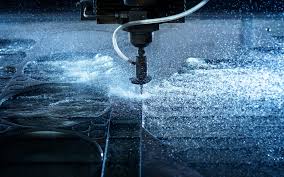
This is where cutting technology starts to matter more than expected. The right approach doesn’t just speed things up; it removes friction across the entire workflow. Waterjet cutting, in particular, has been gaining attention not because it’s new, but because it quietly solves problems that traditional methods tend to leave behind.
Here’s how waterjet cutting improves production efficiency in ways that actually show up on the shop floor:
Rework is one of the most underestimated time drains on a shop floor. Fixing edges, correcting distortions, polishing finishes, it all eats into production hours.
Waterjet cutting avoids most of that from the start.
No heat damage
Minimal burr formation
Smooth, ready-to-use edges
The result is a cut that’s often ready for use straight off the table. That alone removes an entire layer of post-processing work. And when teams aren’t constantly fixing edges or adjusting warped parts, timelines start to tighten naturally.
Switching between machines is one of those hidden productivity drains. Different setups, different calibrations, different operators sometimes, it fragments the workflow. Waterjet systems simplify that.
A single setup can handle:
Metals (steel, aluminum, titanium)
Glass and ceramics
Composites
Rubber and plastics
Some production managers mention that once they integrate a water jet cutter, they start consolidating tasks that previously required multiple tools. That shift alone reduces idle time between operations.
In many production environments, this level of flexibility makes it easier to handle varied jobs without constantly reworking the entire setup, a point often associated with systems developed by OMAX Corp, a Hypertherm Company, which are designed to support mixed-material workflows without adding complexity.


Material waste doesn’t always feel like a time issue, but it is. Every wasted sheet or miscut part means restarting a process, recalculating layouts, and sometimes delaying entire batches.
Waterjet cutting operates with high precision, often within tight tolerances, which leads to smarter material usage.
Tighter nesting of parts
Reduced scrap rates
Consistent repeatability
Over time, that consistency reduces the number of “redo” cycles. And those cycles are where a lot of production hours quietly disappear. There’s also a psychological shift. Teams become more confident in first-pass success, which changes how aggressively they optimize layouts.
Heat-based cutting methods introduce variables that aren’t always predictable, warping, micro-cracks, structural stress.
Waterjet cutting avoids all of that.
Cold cutting process
No thermal distortion
No cooling downtime required
This stability matters more than it seems. Without heat-related delays, production moves at a more consistent pace. There’s less troubleshooting, fewer defects, and fewer unexpected pauses. It’s the kind of efficiency you don’t notice immediately but you feel it when things stop going wrong.
Setup time doesn’t get talked about enough, but it’s one of the biggest factors in overall efficiency.
Traditional cutting methods often require:
Tool changes
Temperature adjustments
Material-specific configurations
Waterjet systems are relatively straightforward by comparison. Once the system is calibrated, switching between jobs is quicker and less labor-intensive.
This becomes especially valuable in environments handling custom or small-batch production. Instead of long preparation phases, teams can move from one job to another with minimal delay. And that flexibility opens the door to taking on more varied work without sacrificing turnaround time.
Modern production doesn’t run on machines alone, it runs on how well those machines connect with the rest of the system. Designs, adjustments, and execution all need to move in sync, or delays start creeping in.
Waterjet cutting fits naturally into that flow.
Direct use of CAD files for cutting paths
Fewer manual adjustments during setup
More consistent translation from design to finished part
Instead of reworking files or making last-minute corrections on the floor, teams can move from design to production with fewer interruptions. That continuity matters, especially when timelines are tight or designs change frequently.
It’s not just about automation for the sake of it. It’s about keeping everything aligned so work moves forward without unnecessary back-and-forth.
Wear and tear doesn’t happen all at once, but it gradually affects performance and slows production over time. Traditional cutting tools often need frequent adjustments or replacements, which interrupts the workflow more than expected.
Waterjet cutting reduces that strain because it doesn’t rely on direct blade contact with the material. As a result, components last longer and maintain consistent performance across jobs. This leads to fewer maintenance interruptions and less time spent on recalibration. Over time, the workflow becomes more stable, allowing teams to focus on output instead of constantly managing equipment-related slowdowns.
Production efficiency rarely improves because of one major change. It’s usually the result of removing small, persistent obstacles that slow things down over time. Waterjet cutting contributes in that exact way by reducing rework, simplifying setups, and keeping operations steady without unnecessary interruptions.
What stands out isn’t just speed, but consistency. Fewer delays, less material waste, and a smoother flow from design to final output. When those elements come together, production doesn’t feel rushed, it feels controlled. And that’s where real efficiency starts to take shape.
 AI tools to find & convert leads.
  Send emails at scale