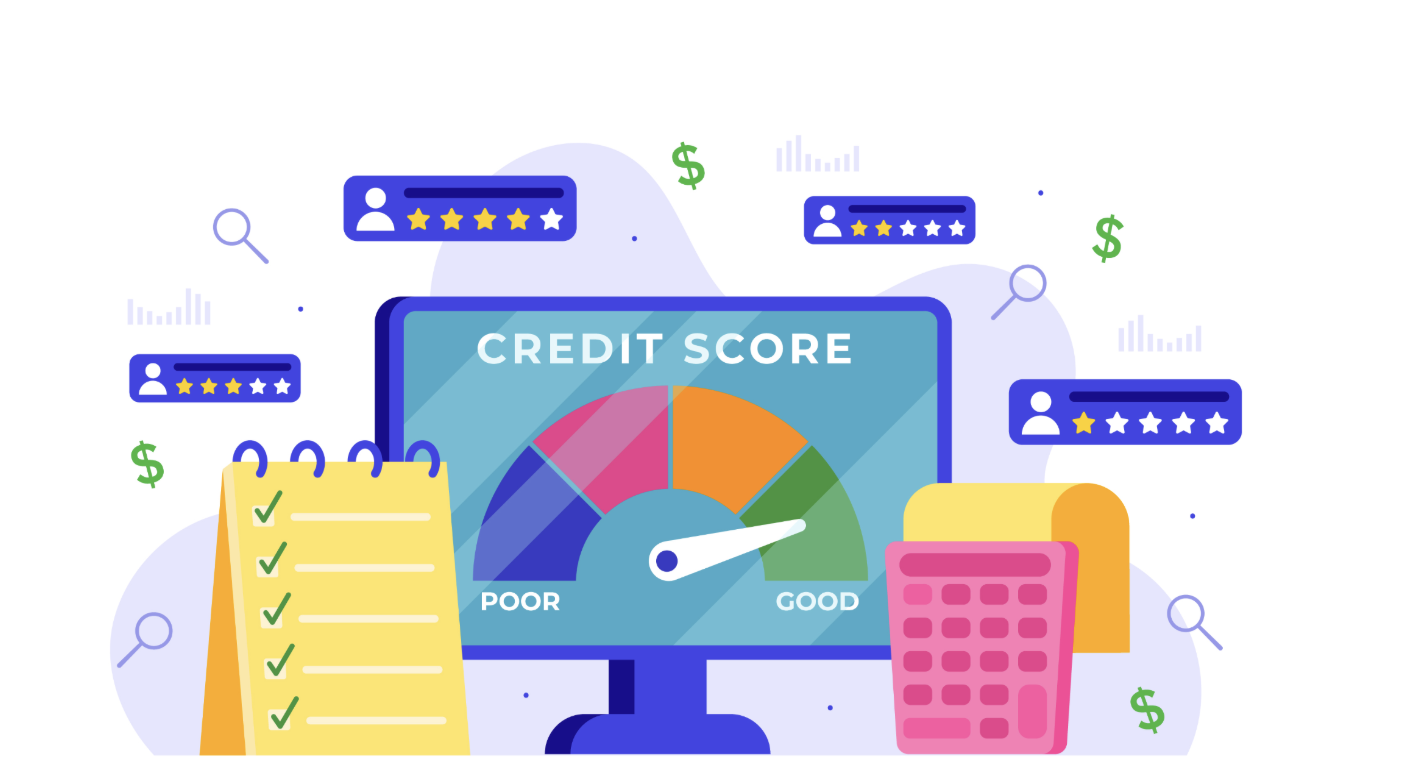
A credit score estimates how reliably you are likely to repay borrowed money. Lenders use that number, along with income and other information, to decide whether to approve an application and what rates or terms to offer.
Credit reporting is country-specific. Europe does not have a single shared consumer score, and each country handles credit data differently. The two models discussed here, FICO and VantageScore, apply to U.S. credit files. Their underlying habits are still useful elsewhere, even when the scoring methods differ. Treat this article as general education rather than personal financial advice.
Most consumer scoring models examine the same basic information: whether you pay on time, how much you owe, how long you have used credit, what types of accounts you hold, and how recently you applied for more credit.
The weighting differs by model and individual credit file. FICO typically groups data into five categories: 35% payment history, 30% amounts owed, 15% length of credit history, 10% new credit, and 10% credit mix. VantageScore uses different allocations. In VantageScore 4.0, for example, payment history accounts for 41% and credit utilisation for 20%. These figures provide context, but there is no universal percentage breakdown that determines every score.
For a plain-English explanation of how these factors work together, Credit One Bank publishes a guide to these factors. It can provide useful background before you make changes to your accounts.
Late payments generally cause more harm when they are recent, severe, or frequent. A payment that is 30 days late is not the same as an account in collections, but either can remain on a credit report for years. The Consumer Financial Protection Bureau (CFPB) notes that most negative information may be reported for seven years, while some bankruptcies may remain for up to ten years.
Set autopay for at least the minimum due on every account, and make sure the linked bank account has enough money to cover it. Add calendar reminders for payments that cannot be automated. If cash flow is tight, contact the lender before you miss a payment. Hardship or forbearance options are usually easier to arrange before an account becomes delinquent.
Credit utilisation is the percentage of your available revolving credit that you are using. Scoring models may consider utilisation on each card and across all cards. Staying below 30% is a common guideline, but it is not a sharp threshold or a guarantee. Lower reported balances are generally viewed more favourably.
Reporting dates can cause confusion. Many issuers report the balance shown on your monthly statement, although practices vary. As a result, a card you pay in full can still show high utilisation if the statement closes with a large balance. Making an extra payment before the reporting date, spreading necessary spending across cards, or requesting a higher limit without increasing spending may reduce the reported ratio.
Older, well-managed accounts can support a score over time. Closing an old card immediately reduces your available credit, which may increase utilisation. The account may continue contributing to the age of your file while it remains on your report, but it will eventually drop off. If an annual fee is the concern, ask whether the issuer offers a no-fee downgrade before closing the account.
FICO considers whether you have managed both revolving credit, such as cards, and installment credit, such as a car loan or mortgage. Credit mix is a relatively small part of the score, so taking out a loan solely to add variety rarely makes sense.
Consistent management of the accounts you already need matters more than variety for its own sake. A plain English overview of what goes into your credit score explains how the main factors carry different weight.
A hard inquiry occurs when a lender checks your credit file after an application. A soft inquiry, such as checking your own report, does not affect your score.
That same application usually triggers identity and compliance checks on the lender's side. Those run separately from scoring and have no effect on your number.
Hard inquiries can remain visible for up to two years, although FICO generally considers them in scoring for only the first 12 months.
Scoring models often group multiple inquiries for the same type of loan when they occur within a short rate-shopping period. The exact window depends on the model and loan type. For mortgages, the CFPB states that multiple lender checks made within a 45-day period generally count as one inquiry. Compare offers carefully, but keep related applications within a focused period.
Two developments are particularly relevant to people with U.S. credit files.
First, the Federal Housing Finance Agency has outlined an interim phase effective April 22, 2026, allowing a choice between Classic FICO and VantageScore 4.0 for certain loans sold to Fannie Mae and Freddie Mac. Freddie Mac Bulletin 2026-D confirms the eligibility of VantageScore 4.0 data from Equifax, Experian, and TransUnion, while separate timing applies to FICO 10T. The practical point is that lenders may use different models and produce different scores from the same underlying file. One score is not necessarily more “real” than another.
Second, the CFPB issued a rule in January 2025 that would have restricted the use of medical debt in credit decisions, but a federal district court vacated that rule in July 2025. A separate change remains in place: the three nationwide credit bureaus removed medical collections with initial reported balances under $500 from U.S. credit reports in 2023.
The Federal Trade Commission confirms that consumers can access free weekly reports from all three nationwide credit bureaus through AnnualCreditReport.com. After reviewing those reports, educational resources from Credit One Bank can help explain common account and scoring terms.


Days 0 to 30. Request your credit reports if you have a U.S. file. Review each report line by line and dispute information that is incomplete or inaccurate. Turn on autopay for minimum payments. If a card has high utilisation, begin paying it down, starting with the account that has the highest percentage of its limit in use.
Days 31 to 60. Set balance alerts for several days before each statement closes. Consider requesting a credit limit increase when your income and payment history support it, but first ask whether the request will trigger a hard inquiry. Avoid new applications unless you have a clear need. If your credit file is thin or uneven, work to improve your financial health by stabilising cash flow and building an emergency reserve before taking on more debt.
Days 61 to 90. Maintain the on-time payment streak and check the balances reported after each statement. Add an installment account only if you already need that type of borrowing. Guides from Credit One Bank and the CFPB can help you interpret unfamiliar entries, but your lenders and the credit bureaus should address account-specific errors.
Two habits do most of the work: paying every bill on time and keeping revolving balances modest when they are reported. Account age improves gradually when you maintain older accounts responsibly, while new applications should be planned rather than scattered. No one can promise a particular score by a fixed date, but steady behaviour can strengthen the credit file that lenders review.
A change may appear within one billing cycle. Issuers typically report balances once a month, so the lower amount may not appear until the next reporting date. The effect on your score depends on the scoring model and the rest of your credit file.
No. Checking your own credit report and lender pre-screening are common examples of soft inquiries. They are not included in consumer credit scores. An application that triggers a hard inquiry may have a temporary effect.
Not necessarily. Closing a card can reduce your total available credit and raise your utilisation. If the account has no annual fee and can be monitored safely, keeping it open may help. If it charges a fee, ask about a no-fee downgrade before closing it.
Below 30% is a common guideline, but there is no single ideal threshold. Lower reported utilisation is generally better, provided you are not making unnecessary purchases or moving debt simply to change the ratio.
 AI tools to find & convert leads.
  Send emails at scale