The idea of running a real sales operation from a van used to sound like a stretch. Now it's something a growing number of consultants, account managers, and freelancers are actually doing - not as a novelty, but as a long-term working setup.
The gap between wanting to work this way and actually pulling it off comes down to a few specific problems: inconsistent internet, video calls that drop at the wrong moment, a CRM that never gets updated, and client emails that pile up while you're focused on driving.
This post breaks down each of those problems and how to solve them practically.
Everything else in this setup depends on a reliable internet connection. You can research the best business internet online. If your connection is unstable, your video calls drop, your CRM won't sync, and your email automation can't do its job.
Beyond the quality of the internet service itself, factors within your control, like router placement and network congestion, often impact your actual speeds, making a regular WiFi speed test invaluable for troubleshooting. Running these tests periodically can help identify bottlenecks and ensure your setup is delivering the performance you are paying for.
Van workers have more options now than they did a few years ago. LTE and 5G hotspots cover most urban and suburban areas and work well for day-to-day use. For rural routes or extended time away from cities, satellite internet has become a viable option.
Reliable satellite internet has become practical for everyday work tasks. Starlink's technology has changed the equation significantly for mobile workers - offering low-latency satellite coverage that actually supports video calls, something that wasn't viable with older satellite options.
For those building a van specifically around client-facing work, it's worth looking at how others have integrated this hardware. A purpose-built Starlink mobile office van handles the dish mounting, power draw, and router placement in a way that eliminates a lot of the trial and error. Many of these setups include tips for keeping the connection stable while on the move.
A few things to keep in mind when planning your connection:
Run a primary connection (Starlink or a fixed router) plus a cellular hotspot as a backup
Park before important calls whenever you can - connection quality while moving is always less predictable
Size your battery bank to handle continuous satellite use alongside your laptop and monitor
Once you have a stable primary connection, the rest of the setup becomes much easier to manage.
A stable connection gets you on the call. What happens after that depends on audio, environment, and a little planning.
Most clients will tolerate a slightly grainy video feed. They won't tolerate muffled audio or constant background noise. A van is not a quiet space - engine hum, wind, and external sounds bleed into your call in ways a built-in laptop mic struggles to handle.
A USB dynamic microphone (the Shure MV7 and Rode PodMic are popular options) or a noise-canceling headset will make a bigger difference than any other hardware upgrade. Dynamic mics are especially useful because they reject ambient noise rather than just softening it.
Video calls require a consistent flow of data to run smoothly. Zoom's bandwidth recommendations put HD group video at around 2.5 Mbps for both upload and download. A 1080p call with three participants can pull 4-5 Mbps. That's manageable on a solid connection, though it may stutter if your hotspot switches towers mid-call or your satellite signal dips.
Practical fix: schedule client-facing calls during windows when you’re parked somewhere with a strong signal. Many mobile workers discover a consistent two- or three-hour window each morning or afternoon where they remain stationary. Structure your call schedule around that. Companies providing their own client portals can also use a video conferencing SDK with adaptive network capabilities to keep calls stable when bandwidth fluctuates.
Your environment matters more on video than it does in a traditional office because it's unusual. A simple wall or partition, a tidy shelf, or a professional virtual background keeps the focus on you. Good natural light from a side window, supplemented with a small LED panel if needed, is usually enough. Avoid sitting with a window directly behind you - the backlighting washes out your face.

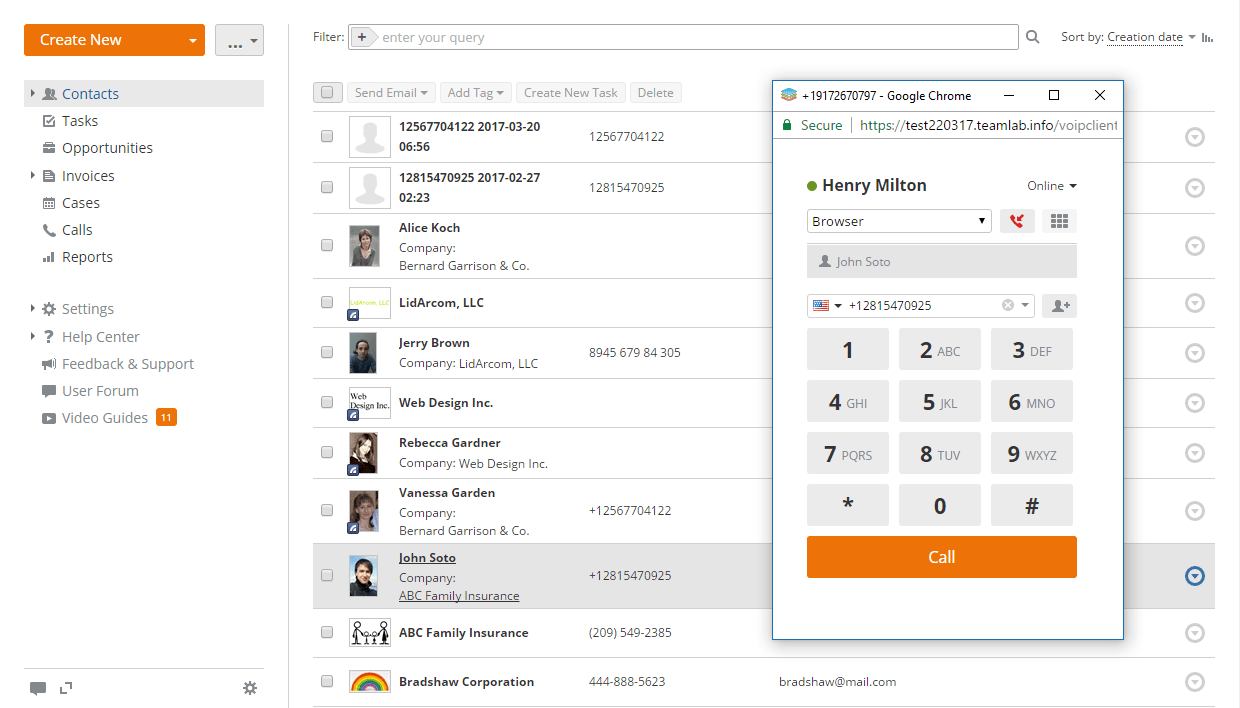
CRM hygiene is the first thing to slip when you're working from the road. It's not because van workers are disorganised - it's because logging notes and updating pipeline stages feels like admin, and admin gets pushed to "later" when you're thinking about the next drive, the next setup, or the next call.
The fix is reducing friction, not adding discipline. Understanding how your CRM is actually structured - which fields matter, which ones you can skip, and what a minimal useful entry looks like - helps you build the habit of logging faster and more consistently.
Voice-to-text logging right after calls. The moment a call ends, record a two-minute voice note while it's fresh. Most CRMs support voice-to-text input on mobile, or you can use a transcription tool and paste the output. It's always faster than typing notes in a parking lot with one bar of LTE.
Mobile-first CRM selection. If your CRM primarily caters to desktop users, you'll constantly struggle with it. Pipedrive and HubSpot both have solid mobile apps. Salesforce has improved its mobile experience, though it can still be slow for quick field updates. If you're choosing a new CRM specifically for road-based work, mobile usability should be a top evaluation criterion.
A fixed daily sync window. Set aside 15 minutes each morning before your first call to review and update any open deals, pending follow-ups, or contacts that need attention. This is boring advice, but a short daily habit beats a two-hour catch-up session every Friday.
The more fields you try to maintain, the harder it is to keep everything current. Simplify your pipeline to include only the stages and fields that actually drive decisions. If you have ten custom fields and you're only ever looking at three of them, cut the others. A lean CRM you use every day is more valuable than a detailed one that's always six days out of date.
Client communication is more flexible than most people think when they're designing a mobile setup. You don't need to be online constantly. You need to be responsive within a reasonable window, proactive about setting expectations, and smart about what gets automated versus what needs a personal touch.
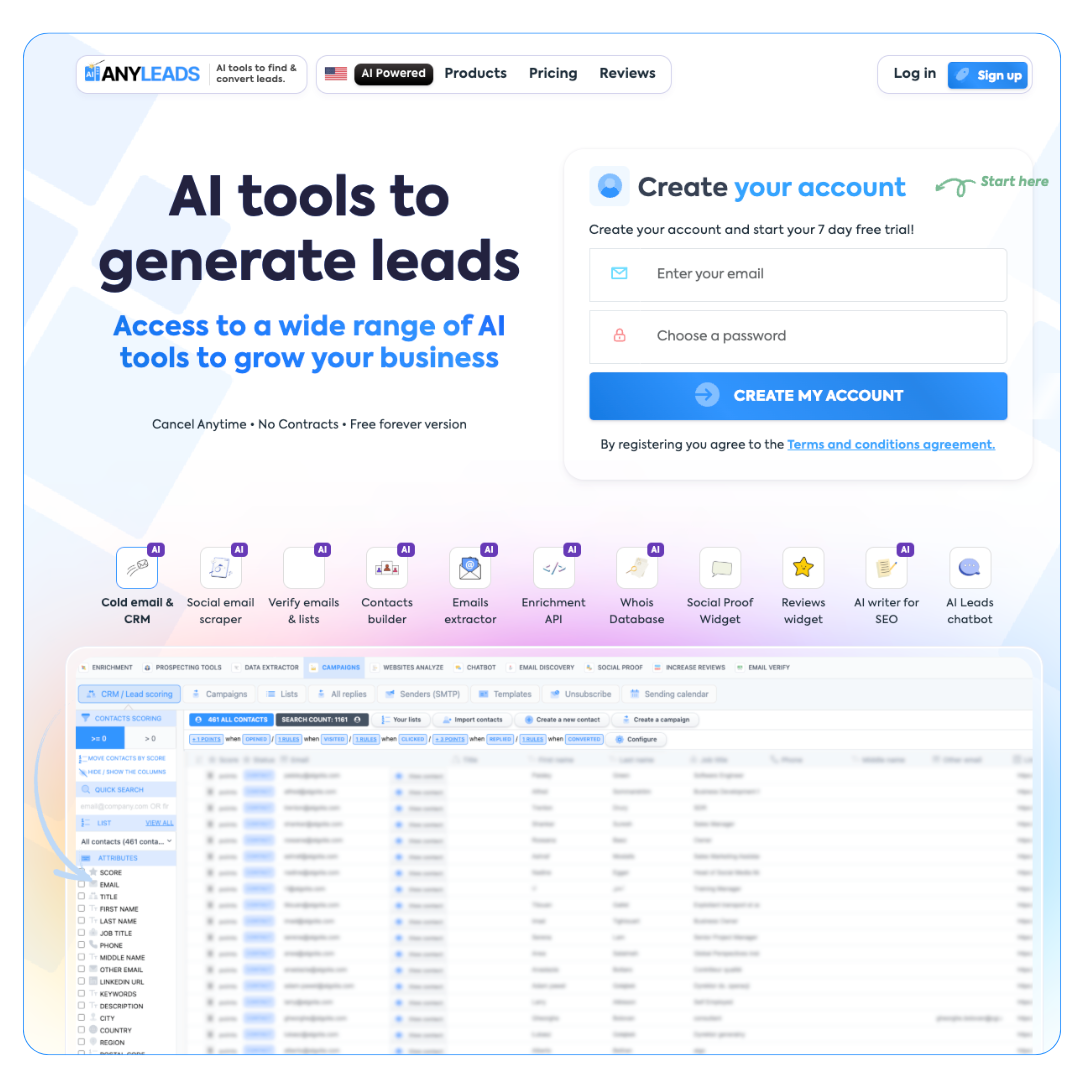
Sequence-based email tools handle a lot of the routine communication automatically: follow-ups after demos, check-ins during long sales cycles, post-meeting summaries, and onboarding touchpoints. Automating your email outreach frees up the attention you'd otherwise spend on repetitive sends, so you can focus on the conversations that actually move deals forward.
This matters more when you're working from a van because your available hours are less predictable. If a sequence is running in the background, your outreach doesn't stop when you're in a dead zone or mid-drive.
According to Buffer's State of Remote Work research, the top challenge remote workers face isn't productivity - it's collaboration and communication. For mobile van workers, that challenge is amplified by inconsistent connectivity and irregular hours. Async-friendly tools reduce the pressure of needing to be online at the same time as your clients.
Tools that fit this kind of setup well:
| Tool | Best for |
| Front | Shared inbox for client-facing teams |
| Superhuman | Speed-focused email for solo operators |
| Calendly | Letting clients book calls without back-and-forth |
| Loom | Async video updates instead of live check-ins |
| Boomerang | Scheduling emails to send during business hours |
It's important to inform clients that you work remotely and are available on mobile. Most don't care - they care about results and responsiveness. What they don't want is to wonder why they haven't heard back.
A simple framing works: "I check email twice a day and reply within four hours during business hours." That removes the anxiety on their end without requiring you to be constantly available. Do this exercise at the start of every new client relationship, not after the first time communication slips.
If you're working across time zones, be specific about which hours you're reachable. Vague availability is more frustrating than defined windows.
If you're designing your mobile office setup from the ground up, the order of operations matters as much as the individual tools.
Start with connectivity. A reliable internet connection is the foundation of everything else. Once you solve that, the software layer becomes straightforward.
Next, focus on audio. It has a larger impact on client perception than almost any other variable in a remote setup. A USB mic costs less than most CRM subscriptions and improves every call.
After that, build the systems - CRM habits, email sequences, and async communication tools. These take a few weeks to settle into a rhythm, but once they're running, they largely sustain themselves.
Running a professional client operation from a van isn't about accepting limitations. It's about designing around the specific constraints of the environment. The infrastructure is there - it just needs to be put together in the right order.
 AI tools to find & convert leads.
  Send emails at scale