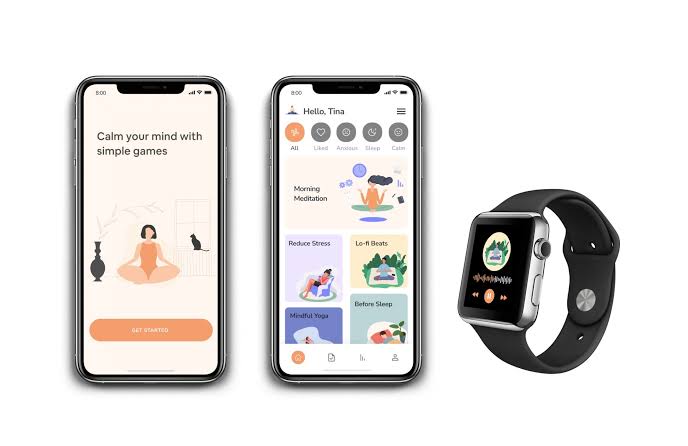
Wearable technology is entering a new phase. Smartwatches and fitness trackers helped consumers become comfortable with connected devices, but the latest generation of AI-powered wearables is expanding far beyond activity tracking and notifications. Smart glasses, intelligent earbuds, rings, and other connected accessories are increasingly able to combine sensors, cameras, audio, cloud connectivity, and artificial intelligence in devices designed to remain available throughout the day.
For app and SaaS developers, this evolution creates opportunities that extend well beyond building another consumer gadget companion. Wearable AI needs software infrastructure, APIs, cloud services, analytics, authentication, workflow automation, privacy controls, and business applications. As these devices become more capable, developers have an opportunity to rethink how software works when users are no longer sitting in front of a laptop or constantly looking at a smartphone screen.
The first generation of mainstream wearables usually performed a limited set of tasks. Fitness trackers measured movement, smartwatches delivered notifications, and wireless earbuds focused primarily on audio. AI-powered wearables are beginning to combine several of these functions while adding more contextual interaction through voice, cameras, microphones, and artificial intelligence.
That changes the role of software considerably. A wearable device can become an entry point into a much larger ecosystem where cloud platforms process information, AI models interpret requests, mobile apps handle configuration, and SaaS products manage workflows behind the scenes. Products such as Meta glasses illustrate how familiar consumer products such as eyewear are becoming part of this wider connected-device environment.
For developers, the important opportunity is not simply the hardware itself. Every new wearable category creates demand for software that helps users manage devices, organize information, connect services, process captured media, automate tasks, and integrate the wearable experience with tools they already use.
One of the most practical opportunities for developers is extending existing applications rather than creating entirely new products. A productivity platform, travel app, CRM, task manager, translation service, or field-service tool may already contain useful data and workflows that could be delivered through a wearable interface.
Google's official Android XR developer platform is a good example of where the wider ecosystem is heading. Its developer guidance includes ways to extend mobile applications to intelligent eyewear such as audio and display glasses, allowing developers to build lightweight experiences that support users while they are moving, working, or interacting with the world around them.
This model can lower the barrier to entering wearable software. A company may not need to invent a new business from scratch; it may simply identify which parts of its current product become more valuable when users can access them without opening a phone. The challenge is deciding which interactions genuinely benefit from becoming hands-free rather than forcing an existing desktop or mobile interface onto a smaller device.

Most SaaS products were designed around screens. Users click menus, complete forms, open dashboards, type searches, and move between pages to complete tasks. Wearable AI introduces a different interaction model where voice, audio, gestures, and context may become much more important.
This creates a new area for user experience design. A voice-first application cannot simply read an entire dashboard aloud. It needs to identify the most useful piece of information and deliver it quickly. A field employee may want to ask for the next task rather than open a project management dashboard, while a salesperson may want to dictate a client note instead of navigating through a CRM form.
Good wearable software will likely focus on shorter interactions that reduce steps. Developers who understand conversational UX, natural-language commands, and context-aware interfaces will be better positioned to build products that feel natural on wearable devices rather than like smaller versions of existing apps.
Enterprise and vertical SaaS may become one of the strongest opportunities for wearable AI. Many employees work in environments where repeatedly using a phone or laptop is inconvenient. Technicians, warehouse employees, hospitality staff, construction workers, retail teams, delivery workers, and field-service professionals often need information while their hands are occupied.
Wearable interfaces could allow these users to retrieve instructions, confirm tasks, record observations, capture images, or access customer information without stopping the work they are doing. The SaaS platform behind the device can continue handling permissions, workflow logic, scheduling, storage, reporting, and integrations with other business systems.
This creates opportunities for specialized products rather than generic wearable applications. A SaaS platform designed specifically for maintenance teams, for example, could combine hands-free instructions with equipment records, service histories, and reporting tools. Another platform could help retail employees check stock availability or access product information while assisting customers on the sales floor.
One of the biggest differences between traditional apps and AI wearables is the potential for real-time contextual assistance. A wearable device may have access to voice input, visual information, location, or other signals that help software understand what the user is doing at a particular moment.
For app developers, this opens the door to more contextual experiences. A travel application could provide information about a destination while someone is exploring it. A maintenance system could surface documentation related to equipment being serviced. A training platform could provide instructions during a physical task rather than requiring workers to memorize steps beforehand.
The SaaS opportunity lies in connecting that real-time interface to useful, trustworthy information. Businesses already store valuable data in CRMs, knowledge bases, inventory platforms, support systems, project management tools, and internal databases. Developers who can connect wearable AI to those systems can turn a general-purpose device into a much more useful business tool.
Wearable software will also depend heavily on APIs. Developers may need services for transcription, translation, authentication, image processing, notifications, location, cloud storage, media management, computer vision, or access to business data.
This resembles the evolution of web and mobile development. Companies eventually stopped building every technical component themselves because specialized platforms could provide payments, messaging, analytics, authentication, or cloud infrastructure more efficiently. Wearable AI could create similar opportunities for API-first businesses that solve common development problems across many different applications.
A company might specialize in processing media captured by wearable cameras, while another could provide voice transcription optimized for noisy environments. Other businesses could focus on permissions, secure device authentication, workflow integrations, or tools that connect wearable applications with existing enterprise software. Developers will usually prefer reliable infrastructure over rebuilding the same foundational functionality for every product.
Wearable cameras create another opportunity around content workflows. First-person footage can be useful for travel creators, educators, brands, events, product demonstrations, tutorials, and behind-the-scenes content. As capturing this material becomes easier, the challenge shifts toward organizing and processing everything that has been recorded.
That creates room for SaaS products focused on media management. A platform could automatically upload footage, organize files, generate transcripts, identify useful segments, tag scenes, create captions, or prepare clips for different social platforms. Brands could use similar systems to collect content from multiple employees or creators and route it through approval workflows before publication.
The valuable product is not necessarily the camera itself. For businesses and creators producing large amounts of media, the real problem may be everything that happens after the recording stops. SaaS developers who reduce that post-capture workload can build meaningful services around the growth of wearable content creation.
Not every SaaS company needs to launch a dedicated wearable product. In many cases, wearables can simply become another interface for software customers already use.
A CRM could allow salespeople to record voice notes immediately after meetings. A project management platform could let field teams update task status without opening a phone. A customer support system could deliver short knowledge-base answers while an employee is helping someone. A logistics platform could provide hands-free instructions to workers moving through a warehouse.
The underlying software does not need to change completely. The database, permissions, reporting tools, and integrations may remain exactly the same while developers add a new way to access key functions. This makes wearable AI relevant even to established SaaS businesses that do not consider themselves part of the hardware industry.
Traditional product analytics are built around screens. Software companies track clicks, sessions, pageviews, conversion funnels, form submissions, and other interactions that make sense on websites and mobile apps. Wearable experiences may require different metrics.
A wearable application might measure completed voice requests, successful task confirmations, response time, frequency of hands-free interactions, or the number of times a user needed to move from the wearable interface back to a phone. These signals can reveal whether the experience is actually saving time or simply adding another layer of technology.
This could create opportunities for analytics platforms specifically designed for multimodal applications. Product teams will need ways to understand how people use voice, audio, visual input, and context-aware functions while still respecting user privacy. SaaS companies that help developers measure these experiences responsibly may become an important part of the wearable ecosystem.
Wearable AI can involve more sensitive information than a conventional web application. Cameras, microphones, location, voice requests, personal accounts, and contextual information can all be part of the experience. That means privacy needs to be considered during product design rather than addressed only through a policy page after development is complete.
Developers should make it clear when sensors are being used, what information is stored, which permissions are necessary, and how users can control their data. Business customers may require even more detailed controls, including retention policies, administrator permissions, audit logs, and restrictions on which applications can access particular types of information.
This creates another potential SaaS opportunity. Privacy management, security monitoring, compliance tools, and enterprise device controls may become increasingly valuable as organizations begin introducing wearable technology into workplaces.
If companies begin deploying smart glasses and other AI wearables across teams, IT departments will need ways to manage those devices. Existing device-management systems are primarily designed around laptops, phones, and tablets, but intelligent wearables introduce different requirements.
Organizations may need to enroll devices, assign them to employees, configure applications, manage software updates, control permissions, monitor security policies, and remove access when a worker leaves the company. Companies operating across several locations may also need centralized dashboards to understand which devices are active and whether they are configured correctly.
This creates a straightforward SaaS opportunity because managing hundreds or thousands of wearable devices manually would be unrealistic. Developers who already work in mobile device management, identity, cybersecurity, or enterprise administration may find that their existing expertise transfers naturally into this emerging category.
One of the most important design principles for wearable applications is likely to be simplicity. Someone using a wearable device may be walking, exercising, driving, working with their hands, or interacting with another person. They cannot necessarily give software the same attention they would give a desktop application.
Successful wearable experiences may therefore focus on micro-interactions. A user might confirm a task, capture a note, ask a question, start recording, hear a short update, or trigger a workflow. The interaction should accomplish something meaningful without requiring a long sequence of commands.
For SaaS developers accustomed to adding more functionality to increase perceived product value, this may require a change in thinking. The best wearable software could be the product that exposes fewer functions at any given moment but chooses those functions carefully based on context.
Connected wearables also create possibilities for recurring software revenue. A hardware purchase may happen once, but cloud processing, AI features, storage, analytics, collaboration, and enterprise management can continue providing value over time.
Consumer applications could use freemium models with paid AI capabilities, additional storage, or premium workflows. Business software could charge per user, per device, or by usage. API providers might charge according to the amount of media processed, AI requests handled, or data transferred.
Developers should be careful not to create subscriptions for features that offer little ongoing value. The strongest SaaS models will be tied to services that continue solving a problem after the initial device purchase, such as collaboration, cloud processing, business integrations, data management, or specialized AI functionality.
New hardware naturally attracts attention, but building a successful software business around wearable AI requires more than simply adding support for smart glasses. Developers need to identify problems where hands-free computing or contextual AI actually improves the experience.
A technician who needs instructions while repairing equipment has a clear reason to use wearable software. A traveler who wants information without constantly checking a phone may also benefit. In contrast, moving a complex accounting dashboard onto a wearable interface simply because the technology exists would provide little practical value.
The strongest opportunities will come from situations where current devices create friction. Developers should ask what users currently stop doing in order to interact with software and whether a wearable could remove that interruption.
Wearable AI is often described as a hardware trend, but hardware is only one part of the market. Smart glasses and other connected devices need applications, cloud platforms, APIs, analytics systems, privacy tools, integrations, management software, and business workflows to become genuinely useful.
That makes the category particularly interesting for app developers and SaaS companies. Many of the most valuable businesses may never manufacture a wearable device themselves. Instead, they will build the software infrastructure and specialized services that allow consumers and organizations to do more with the devices they already own.
As wearable AI becomes more capable, developers have an opportunity to rethink how people interact with software outside traditional screens. The winning products are unlikely to be those that simply add the most AI features. They will be the ones that use wearable technology to make an existing task faster, easier, and more natural.
 AI tools to find & convert leads.
 Send emails at scale