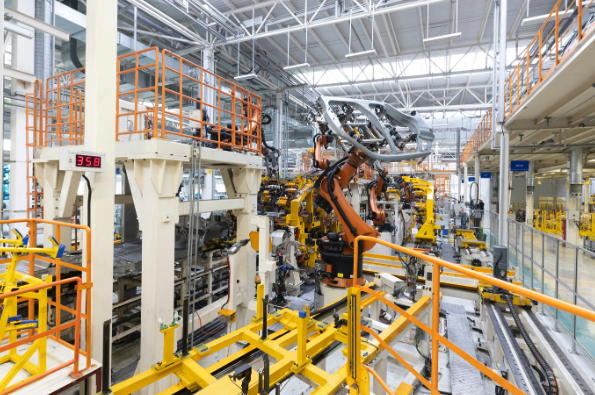
A factory floor is one of the most honest places in business. Every inefficiency shows up in real time. A late parts delivery slows an entire production line. A poorly trained operator creates rework. A scheduling gap leaves expensive machinery idle while workers wait. There is nowhere to hide when your output is a physical product that either ships on time or does not.
Workforce management in manufacturing does not follow the same rules as office work. The stakes are higher, the margins are tighter, and the variables are harder to control. Getting it right requires building systems that connect planning, training, scheduling, and measurement into a single coherent operation.
Most workforce problems in manufacturing start much earlier than people think. They start when production planning happens in isolation from workforce capacity.
You see, when a plant manager commits to a delivery schedule without knowing whether the right people will be available, the work becomes reactive. Supervisors scramble to fill gaps. Over time, it climbs. Quality dips when workers are fatigued, as they make more errors.
The answer is to connect production planning directly to workforce data. MRPeasy's order management software makes this practical for smaller manufacturers by giving them a clear view of production costs and timelines, so scheduling decisions rest on real numbers rather than estimates.
When order management and workforce planning operate within the same system, production supervisors can see the distribution of workloads before problems develop. Manufacturing shift scheduling becomes more complex as teams grow, especially when managers need to balance coverage, availability, skills, overtime, leave, and last-minute changes. Using dedicated workforce scheduling software can help teams reduce manual spreadsheet work and keep daily operations better organized. They can move capacity around, adjust timelines, and communicate changes across the floor without relying on memory or spreadsheets. That coordination alone prevents a significant share of the last-minute chaos that drives up costs.
A manufacturer that treats training as a one-time event during onboarding will feel the effects later, usually at the worst possible moment. A machine gets upgraded. A process changes. A regulation shift. Suddenly, the gap between what workers know and what they need to know becomes a production constraint.
The manufacturers who handle this well treat skill development as a repeatable process with measurable outcomes, not a box to check. They track what each worker can do, identify gaps against current production requirements, and run training in structured cycles rather than in response to crises.
A Learning Management System is a platform that lets companies assign, deliver, track, and report on employee training from a single dashboard. In manufacturing, this matters because skill
gaps rarely announce themselves in advance. An LMS makes training a continuous, data-driven process rather than a reactive scramble. Supervisors get full visibility into what each worker knows, what they are working on, and where gaps remain, which feeds directly back into scheduling and production planning.
Built with frontline and deskless workers in mind, Kallidus is a natural fit for manufacturing environments. It handles multilingual delivery well, which matters in facilities with diverse workforces, and comes with solid compliance tracking so regulatory training doesn't fall through the cracks. Exploring the best LMS software options starts here — managers get reporting that shows exactly where competency gaps still exist, and that data feeds directly back into scheduling decisions.
A clean, easy-to-administer platform that works well for smaller and mid-size manufacturers who need something fast to deploy without a heavy IT lift. TalentLMS makes it straightforward to build custom course paths tied to specific roles or certifications, and workers can complete modules at their own pace.
The stronger choice for larger operations that need to scale training across multiple sites. AI-driven learning recommendations and deep integrations with other enterprise systems make it a fit for complex manufacturing environments that run parallel production lines or manage large headcounts.

Manufacturing supervisors often carry a mental model of how the floor is performing based on what they can see. That works reasonably well in small plants. It breaks down quickly when operations scale, when structures shift, or when multiple production lines run in parallel.
Productivity needs to be measurable at the task, worker, and line levels, all at once. Without that visibility, problems get identified too late to act on before they affect output.
Efficient productivity tools for manufacturing go beyond time tracking in a basic sense. They integrate with scheduling systems to compare planned output against actual output in real time. They create accountability without micromanagement because the data speaks before any conversation needs to happen.
When a shift falls behind, supervisors can see exactly where the slowdown began. When a particular worker consistently outperforms expectations, that data justifies promotion decisions and pay reviews. Productivity tools remove much of the guesswork that would otherwise be resolved by gut feeling and the loudest voice in the room.
One of the clearest differences between manufacturers who manage their workforce well and those who do not is how they use data over time. Reactive operations read the data after something goes wrong. Forward-thinking ones read it continuously and adjust before the problem surfaces.
Workforce management trends in manufacturing show a consistent shift toward real-time monitoring and predictive scheduling. Rather than filling shifts based on historical patterns alone, manufacturers now model demand changes, anticipated absences, and skill availability together to produce schedules that hold up better under pressure.
This matters more than ever as generational turnover accelerates across the manufacturing sector. Experienced workers retire and take decades of institutional knowledge with them. Younger workers arrive with different expectations around flexibility and development. Managing these two realities simultaneously requires workforce strategies built on actual data rather than assumptions about how things have always been done.
Also worth noting: manufacturers that invest in regular data review cycles tend to catch equipment problems earlier, identify training gaps before they create defects, and reduce turnover by responding to worker concerns before they become resignation letters.
Scheduling in manufacturing often gets treated as a math problem. You have a certain number of shifts, a certain number of workers, and a set of production targets. You fill the slots and move on.
The problem is that manufacturing workforces are not interchangeable units. A certified welder cannot replace a CNC operator. A worker on their fourth consecutive overnight shift is not performing at the same level as someone who slept well. Physical jobs carry fatigue in ways that desk work does not, and schedules that ignore this end up producing higher error rates, more injuries, and faster burnout.
Good scheduling in manufacturing accounts for certification requirements, rest intervals, personal availability constraints, and the distribution of workload across a week or a month. It also builds in flexibility so that when someone calls in sick or a rush order arrives, supervisors have real options rather than just hoping someone is willing to come in early.
Teams that build these considerations into their scheduling workflows end up with a more stable workforce over time. Lower absenteeism, fewer injuries, and better retention all follow from treating the schedule as a human system rather than a resource allocation grid.
A well-planned schedule means nothing if the information inside it does not reach the right people at the right time. Manufacturing floors are noisy, fast-moving environments where a message posted on a bulletin board gets missed and a verbal handoff between shifts gets misremembered.
Poor communication in manufacturing does not just cause frustration. It causes production errors, missed targets, and situations where two workers believe they are responsible for the same task, or worse, where nobody thinks they are responsible at all.
The fix requires building communication into the workflow structure itself rather than treating it as something that happens informally. Shift handoff documentation, task assignment confirmations, and real-time alerts for production changes all need a defined channel that workers actually check. Digital boards, mobile alerts, and integrated messaging within production software all serve this purpose better than paper and word of mouth.
When communication is structured and traceable, supervisors spend less time chasing updates and more time solving actual problems. Workers feel less confused about what they are supposed to be doing. And when something goes wrong, there is a record that makes it much easier to understand what happened and why.
Manufacturing has a turnover problem that most companies in the sector still underestimate. The cost of replacing a skilled worker, when you account for recruitment, onboarding, and the productivity gap while someone new gets up to speed, runs far higher than most HR budgets formally acknowledge.
The manufacturers who hold on to their people the longest tend to share a few common habits. They give workers visibility into their own performance data, so feedback feels objective rather than personal. They create clear paths from entry-level roles into more skilled positions, so ambition has somewhere to go. And they treat scheduling fairness as seriously as pay, because a worker who repeatedly gets the worst shifts will eventually leave regardless of what they earn.
Retention also connects directly to training investment. Workers who see their employer putting real resources into their development stay longer than those who feel like they are just filling a slot. That investment could include access to mechatronics course options aligned with automation, robotics, and equipment-maintenance roles. Also, a worker who has been trained in multiple certifications becomes more flexible in scheduling, which benefits both parties.
Building a workforce that stays requires treating people as the most variable and most valuable input in the production process. Equipment can be replaced on a procurement timeline. Experienced workers cannot.
Managing a manufacturing workforce well is not a single decision. It is a collection of connected systems, each one feeding the others. Production planning informs scheduling. Scheduling informs training priorities. Training outcomes feed back into what the schedule can realistically commit to. Productivity data tells you whether the whole thing is working.
Manufacturers who close those loops, rather than running each function in isolation, consistently outperform those who do not. The methods are available. The tools exist. The main requirement is building the habit of treating workforce management as a production input that deserves the same attention as materials, equipment, and logistics.
By Srdjan Gombar

Veteran content writer, published author, and amateur boxer. Srdjan has a Bachelor of Arts in English Language & Literature and is passionate about technology, pop culture, and self-improvement. In his free time, he reads, watches movies, and plays Super Mario Bros. with his son.
 AI tools to find & convert leads.
  Send emails at scale