You track outreach, ads, and SEO. The channel that decides whether buyers ever hear your name isn't on the list yet.
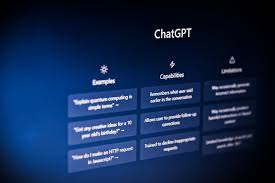
Somewhere today, one of your ideal buyers opened ChatGPT and typed a question in your category. They got two or three names back. Yours wasn't one of them. They picked one, started evaluating, and you never saw any of it happen.
No impression to count. No click that didn't happen. No CRM record of the pipeline that walked past you. It's a lead you lost without ever knowing it existed.
This is happening at scale, in every B2B category, right now. And most operators aren't tracking it — because it doesn't appear in any of the dashboards they already have open.
Think about what you actually measure in a normal week.
Cold outreach gets tracked to the reply. Every bounce, every positive, every meeting booked — it all lands in the sequencer. Paid ads get tracked to the cost per lead. CTRs, CAC, ROAS — all visible. SEO gets tracked in Search Console and GA4, down to the query and the landing page.
Then there's the fourth channel. Someone asks ChatGPT for a recommendation in your category. If you're named, you get a warm lead. If you're not, you get nothing. And nobody on your team has a dashboard for it.
Worth knowing: ChatGPT holds roughly 80% of the AI search market. Gemini, Perplexity, Claude, and Copilot split the rest. If you're only going to track one AI platform this year, that's the one.
It's easy to wave this off as "brand stuff" — the fuzzy end of marketing, somebody else's problem. But the queries AI answers aren't fuzzy top-of-funnel queries. They're the ones that happen one click before a purchase decision.
"Best [category] for [use case]." "Alternatives to [the vendor they already looked at]." "[Your category] for [industry or company size]."
These are active evaluation queries. A buyer typing them is days, sometimes hours, from reaching out to vendors. If the answer includes your competitor and not you, you don't get the shortlist spot. You don't get the pricing page visit. You don't get the conversation.
That's a pipeline problem. It shows up as a smaller top-of-funnel without any obvious cause, because the cause is invisible.

Every tool in the AI visibility category does the same thing mechanically. It sends your prompts to ChatGPT on a schedule, parses the response for mentions of your brand, and logs the result over time. The output is a visibility score, share of voice against whatever competitors the model names, and a prompt-level breakdown of where you appear and where you don't.
Here's the thing worth internalizing before you buy anything: the technology isn't proprietary to anyone. Every tool hits the same APIs. What you're paying for is coverage (how many engines), frequency (daily vs. weekly), prompt count, and dashboard polish. That's the whole pricing axis.
You don't need to buy anything to get a first read. Here's the workflow.
Pick five queries your buyers actually type. Don't guess — look at your sales calls, support tickets, G2 searches, and the exit surveys from prospects who went with a competitor. A good mix:
Two category queries: "Top [your category] tools for [buyer type]" and "[Your category] for [industry]."
Two problem queries: "How to [solve the specific pain your product solves]" and "[Problem] software for [segment]."
One competitor query: "Alternatives to [your biggest competitor]."
Five prompts isn't enough to cover a company comprehensively. It's enough to answer the baseline question: does ChatGPT know you exist in your category, or not?
Sign up for a free tracker. Beamtrace has the most usable free tier in the category — five prompts, weekly checks, no card required. It's built by Elfsight, which has been shipping SaaS for 13 years and runs 90+ products across 3M+ active users, so the infrastructure isn't a question mark. Limits to be honest about: ChatGPT only for now (Gemini, Claude, Perplexity, Grok listed as coming soon), and weekly check frequency on free.
Delete the auto-filled prompts before you add yours. This is the thing nobody points out in the docs. When you land on the dashboard, your five prompt slots are already populated with defaults — the app does this so the dashboard looks alive on first load. Your quota shows as fully used before you've touched anything. Delete the defaults and the slots come back empty. Ten seconds of work, and suddenly you have room for the five queries that actually matter to you.
Plug in your five. Wait a week. Read the report.
Three numbers to focus on when the data comes in.
Visibility score across the prompt set. A rough rollup of how often you show up across your prompts. If it's zero, that isn't a software problem — that's the actual finding. ChatGPT doesn't know you're a contender in your category yet.
Share of voice against the competitors it names. You don't pick your competitors in this exercise — ChatGPT does. Whoever it mentions alongside you (or instead of you) when asked your category queries is your real competitive set in this channel. That list is often not the list your sales team argues with on calls.
The specific queries where you're invisible. This is the money output. Look at which prompts returned zero mentions of you and which returned mentions. The pattern — category vs. problem, broad vs. industry-specific, top-of-list vs. alternatives queries — tells you exactly which content gaps are costing you pipeline.
This is the mistake the category nudges you toward. You run the baseline, you're not mentioned anywhere, and the natural next move feels like "upgrade to a paid plan and get better recommendations."
Don't. The measurement layer of this category is solid. The action layer is thin. Most recommendations you'll get out of any tool are recycled SEO checklists with "AI" prepended — add FAQ schema, improve your About page, get more third-party mentions. Which is just SEO.
And SEO is actually the answer. Real AI visibility comes from the same playbook as real Google visibility: content that answers the buyer's question directly, authority on third-party sites the models crawl, and the boring long-term work of becoming a name that gets mentioned when people write about your category. Tools show you where the gaps are. Closing them is content work, not another dashboard.
Three triggers. (1) Your prompt set has grown past ten — typical once you're tracking multiple personas or geos. (2) You need competitor trend data for a board deck or investor update. (3) A client or stakeholder is asking for numbers and you need a report layout that doesn't look like a side project.
Quick landscape so you can benchmark. Otterly runs $29/mo for ChatGPT plus a few other engines. LLM Pulse is €49 for five engines weekly, 50 prompts. Peec AI is €85 for three engines (user-selected) daily, 50 prompts. SE Visible is $99 for 200 prompts weekly. Ahrefs Brand Radar is $199/mo per AI index and $699 for all six — enterprise territory for enterprise teams.
Beamtrace's paid tiers fit underneath all of that: $20 Starter (10 prompts every 3 days, 5 competitors, trend data), $40 Growth (30 prompts), $100 Premium (60 prompts, daily checks, 30 competitors). Annual billing typically runs 15–20% off. Not the most comprehensive coverage on the market — the ChatGPT-only ceiling is real — but the cheapest way to get from "five prompts once a week" to "thirty prompts on a real cadence" without jumping to a three-figure monthly line item.
AI is a lead channel. It's running today whether you're tracking it or not, and it's already pulling buyers toward whoever ChatGPT decides to name. The baseline check takes an hour and costs nothing. The operators who start measuring this year will have real numbers to cite by Q4. The ones who wait will be answering "we haven't started tracking yet" when that question gets asked in the next board meeting.
Worth doing the math on which of those you'd rather be.
Pricing verified April 2026. Check current plans at beamtrace.com before committing — the category is moving and numbers shift quarterly.
 AI tools to find & convert leads.
  Send emails at scale