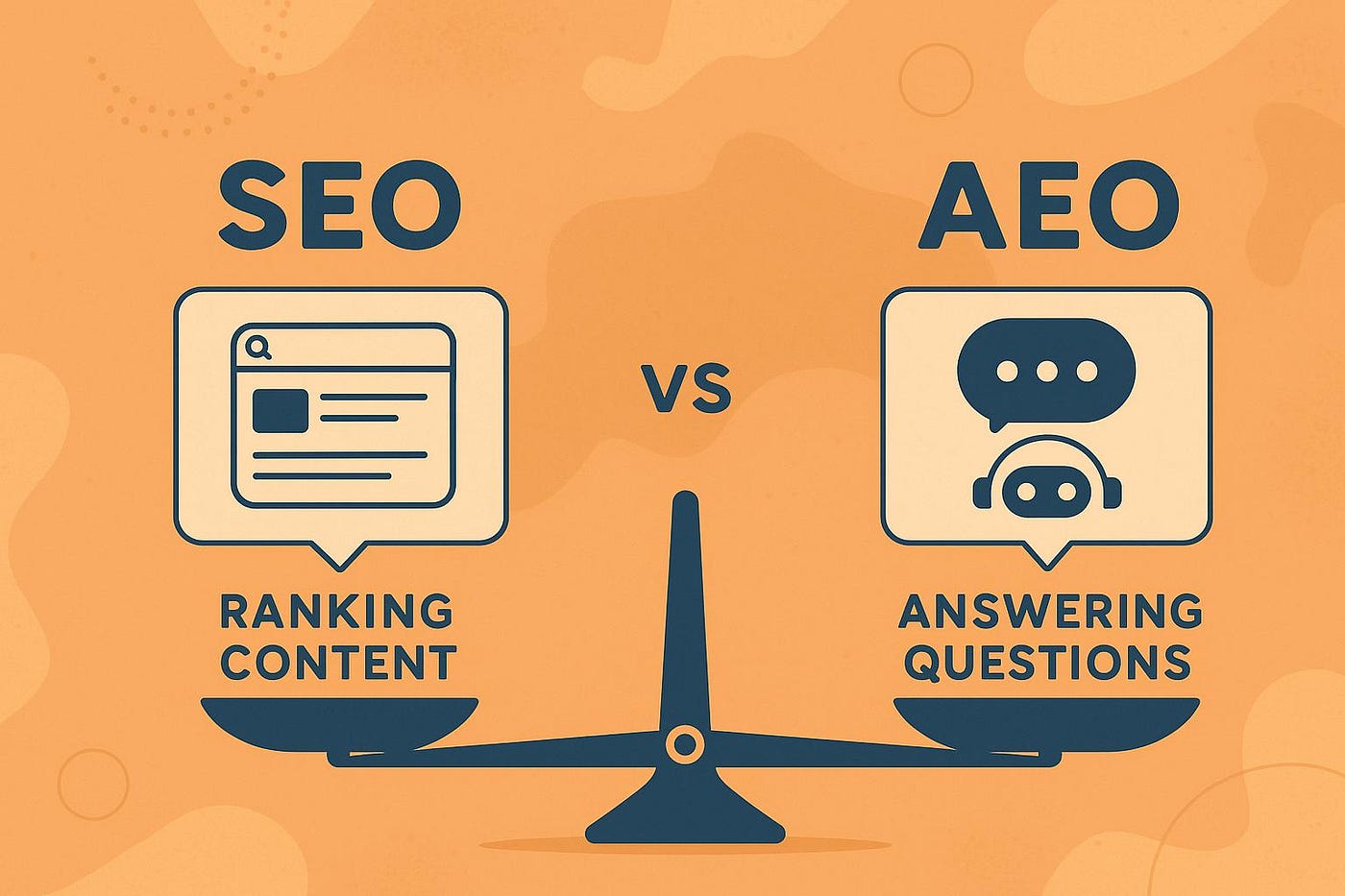
Search behavior is evolving rapidly. As artificial intelligence, voice interfaces, and large language models reshape how information is discovered and delivered, traditional search engine optimization (SEO) is no longer the only framework organizations must consider. In this changing landscape, Answer Engine Optimization (AEO) has emerged as a key element of future-focused search strategies, reflecting a broader shift from ranking pages to delivering reliable, concise answers.
AEO addresses how content is surfaced when users interact with AI-driven systems such as voice assistants, conversational search tools, and generative AI interfaces. These systems increasingly provide direct responses rather than lists of links, fundamentally changing how visibility and authority are achieved online.
Answer Engine Optimization is the practice of structuring content so that it can be easily understood, extracted, and presented by answer-based systems. Instead of focusing solely on keywords and rankings, AEO emphasizes clarity, intent, and context.
Key characteristics of AEO include:
Addressing specific user questions directly
Using clear headings, lists, and logical formatting
Providing concise, factual responses supported by context
Demonstrating topical depth and subject-matter authority
The objective is not just to attract traffic, but to ensure content is eligible to be selected as a trusted answer by search engines and AI platforms.
AI-powered search experiences are accelerating the rise of zero-click interactions, where users receive the information they need without navigating to a website. While this challenges traditional performance metrics, it also reflects how users increasingly prefer immediate, accurate answers.
Future-focused search strategies acknowledge several realities:
Search visibility often happens within AI-generated responses
Users expect conversational, natural-language answers
Content must be optimized for machines as well as people
AEO helps organizations adapt by aligning content with the way modern search systems interpret and deliver information.
AEO should be viewed as an extension of SEO rather than a replacement. Traditional SEO remains essential for discoverability, technical performance, and authority signals. However, AEO refines how content performs once it is discovered.
SEO traditionally prioritizes:
Rankings on search engine results pages
Keyword targeting
Backlinks and site architecture
AEO builds on this foundation by focusing on:
Question-based and intent-driven queries
Semantic meaning rather than exact-match keywords
Content formats suitable for featured snippets and AI summaries
Entity recognition and contextual relevance
Organizations that integrate AEO into their existing SEO efforts are better positioned to perform across both classic search and emerging AI-driven environments.
As answer engines become more selective, the quality and credibility of content play an increasingly important role. AI systems are designed to prioritize sources that demonstrate expertise, consistency, and reliability.
Industry discussions around this shift are not new. Digital strategy firms such as Return On Now have written about the growing importance of structured, authoritative content as search evolves toward answer-based models. These insights align with broader trends in the search industry, where trust signals, clarity, and topical depth are becoming as important as traditional ranking factors.
This emphasis on authority reinforces the need for organizations to invest in well-researched, accurate content that reflects genuine expertise rather than surface-level optimization.
Organizations preparing for the future of search often focus on several practical elements:
Identifying the most common questions users ask at each stage of their journey
Creating content that provides clear, concise answers supported by deeper explanation
Structuring content with headings, bullet points, and summaries
Using schema markup and structured data where appropriate
Regularly updating content to maintain accuracy and relevance
These practices make content easier for AI systems to interpret and more useful for users seeking fast, reliable information.
Unlike traditional SEO, AEO success is not always measured by clicks alone. Visibility, brand authority, and inclusion in AI-generated answers are becoming increasingly important indicators.
Metrics may include:
Presence in featured snippets or answer boxes
Mentions in AI-generated responses
Increased brand recognition even without direct traffic
Improved engagement from users who arrive after seeing an answer elsewhere
This shift requires organizations to rethink how they define and evaluate search performance.
As AI continues to reshape how information is accessed, AEO will play an increasingly central role in search strategy. Organizations that focus only on rankings may struggle to maintain relevance, while those that prioritize clarity, authority, and user intent will be better positioned for long-term success.
Future-focused search strategies are ultimately about serving users in the formats they prefer. AEO provides a framework for doing so—ensuring that when questions are asked, accurate and trustworthy answers are ready to be delivered.
 AI tools to find & convert leads.