
Modash is useful for discovery, but ecommerce teams may also need store integrations, trackable coupons, gifting, and creator payments. The right platform should connect creator activity to orders without extra spreadsheets.
I compared seven alternatives on ecommerce integrations, attribution, discovery, outreach, and payouts. Upfluence is my top pick for end-to-end creator marketing, while the others suit specific program needs.
Ecommerce integrations. I prioritized direct connections to Shopify, WooCommerce, BigCommerce, Magento, and Amazon.
Attribution. I looked for creator-level reporting on coupon codes, links, clicks, conversions, and revenue.
Payments and compliance. In-platform payouts received extra weight because international payments often slow campaigns down.
Discovery, outreach, and AI. I assessed filtering, creator relationship management, outreach tools, and practical automation.
This process also informed finding relevant influencers across major social platforms.
Pricing clarity. When a vendor does not publish prices, I list custom pricing or advise readers to contact sales.

Upfluence pros
End-to-end discovery, creator CRM, campaign management, analytics, and payments
Ecommerce integrations across Amazon, Shopify, WooCommerce, Magento, and BigCommerce
Bulk creation of unique, trackable coupon codes for connected storefronts
Secure multi-currency creator payouts through Upfluence Pay, with automatic 1099 and W9 generation
Gmail and Outlook syncing for managing outreach alongside creator records
Jaice AI assistant for speeding up brief writing and campaign setup
Fixed platform fee with no percentage taken on creator-driven sales
Upfluence cons
Pricing is custom, so a sales conversation is required
Its broad feature set may exceed the needs of discovery-only users
Ecommerce integrations and payments sit on higher plan tiers rather than the entry module
The ecommerce connections are the main reason Upfluence ranks first. Teams can create coupon codes in bulk across Amazon, Shopify, WooCommerce, Magento, and BigCommerce rather than handling each creator manually.
Upfluence keeps outreach, coupons, and payouts in one workflow.
In my review, outreach, campaign management, coupon creation, and payments formed a cohesive workflow. That means fewer handoffs between creator marketing, ecommerce, and finance teams.
Upfluence Pay is particularly useful for international programs because it handles compliant, multi-currency payouts within the platform.
Upfluence uses custom, modular pricing with a "pay only for what you need" approach. Its site shows how features and ecommerce integrations vary by plan. You will need to contact sales for a quote, but the modular model can provide fair value by avoiding an unnecessarily broad bundle.


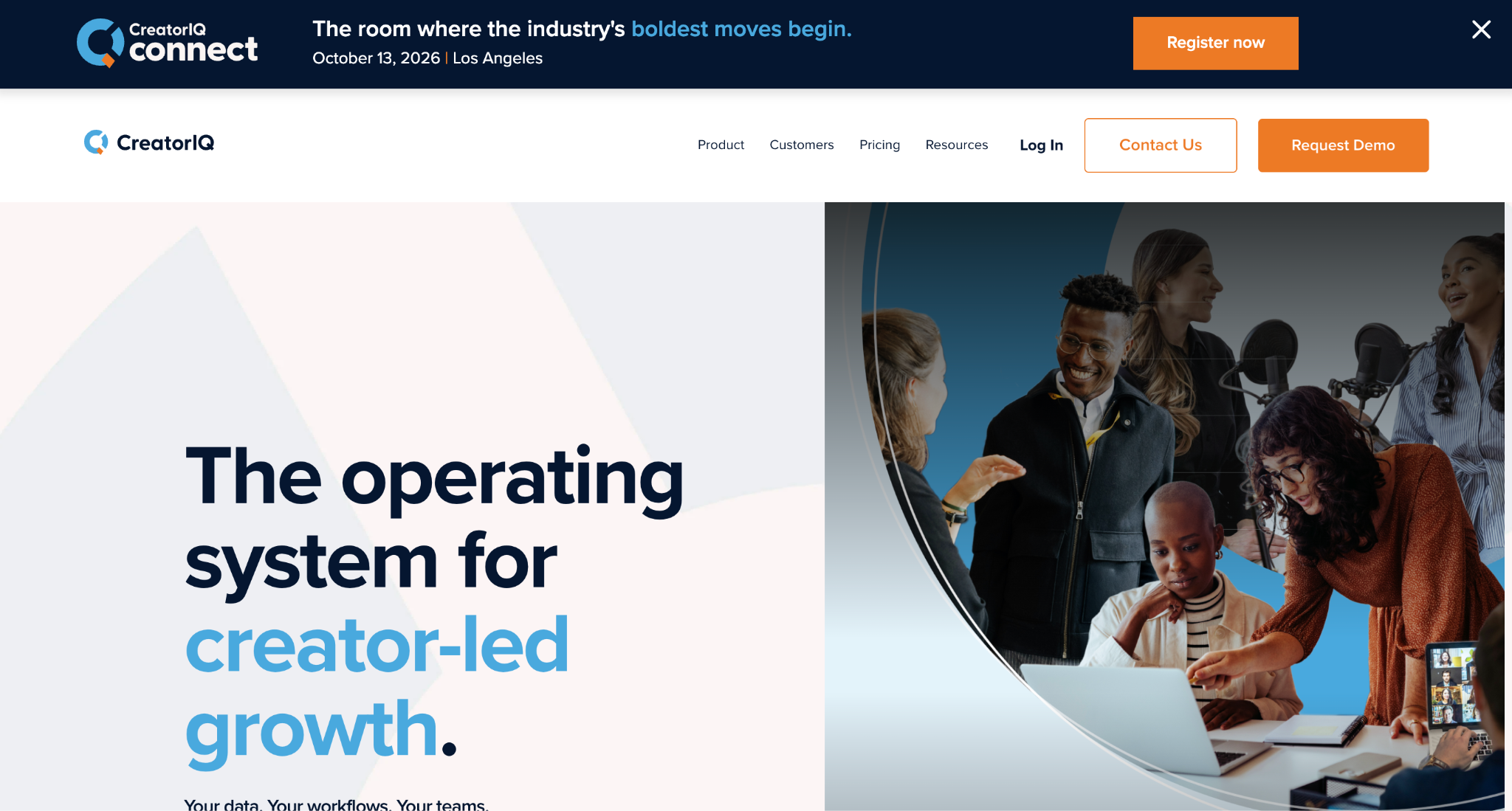
CreatorIQ pros
Promo-code and tracking-link generation for sales-focused campaigns
Conversion analytics for measuring creator and program performance
Shopify storefront integration for creator product selection
Structured controls suited to large, multi-brand programs
CreatorIQ cons
Enterprise configuration can take time
Pricing requires a demo
Small teams may not use its full scope
CreatorIQ feels designed for global organizations that need governance across teams and brands. Its discovery data and conversion analytics make it easier to report program results consistently.
The Shopify storefront also lets creators choose products, reducing gifting coordination. Lean teams should first confirm that they need the platform's broader controls.
CreatorIQ uses enterprise custom pricing. Request a demo for a quote.
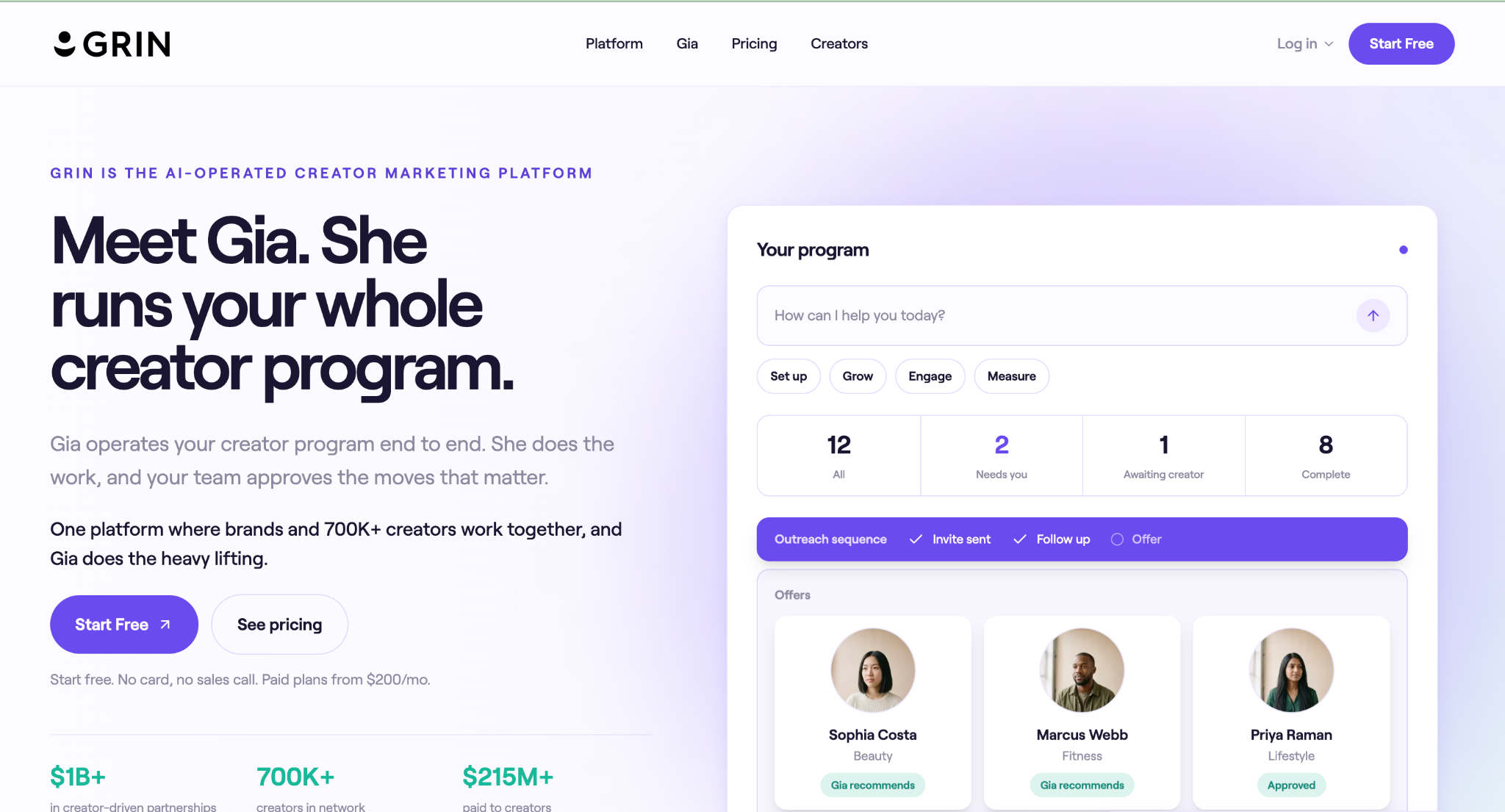
GRIN pros
Centralized email templates, sequences, and engagement tracking
Product shipping, discount codes, and commission workflows
PayPal, DocuSign, and Slack integrations
One-click Shopify setup promoted by the company
GRIN cons
Discovery leans more heavily on a brand's existing network
Several workflows are designed around Shopify
GRIN is comfortable for brands already operating in Shopify. Its setup can bring product and order data into the workflow quickly.
I also liked how the CRM, product seeding, and commissions sit together. DocuSign and Slack integrations help contracts and internal approvals keep moving.
GRIN does not publish full plan pricing. Contact sales for a custom quote.
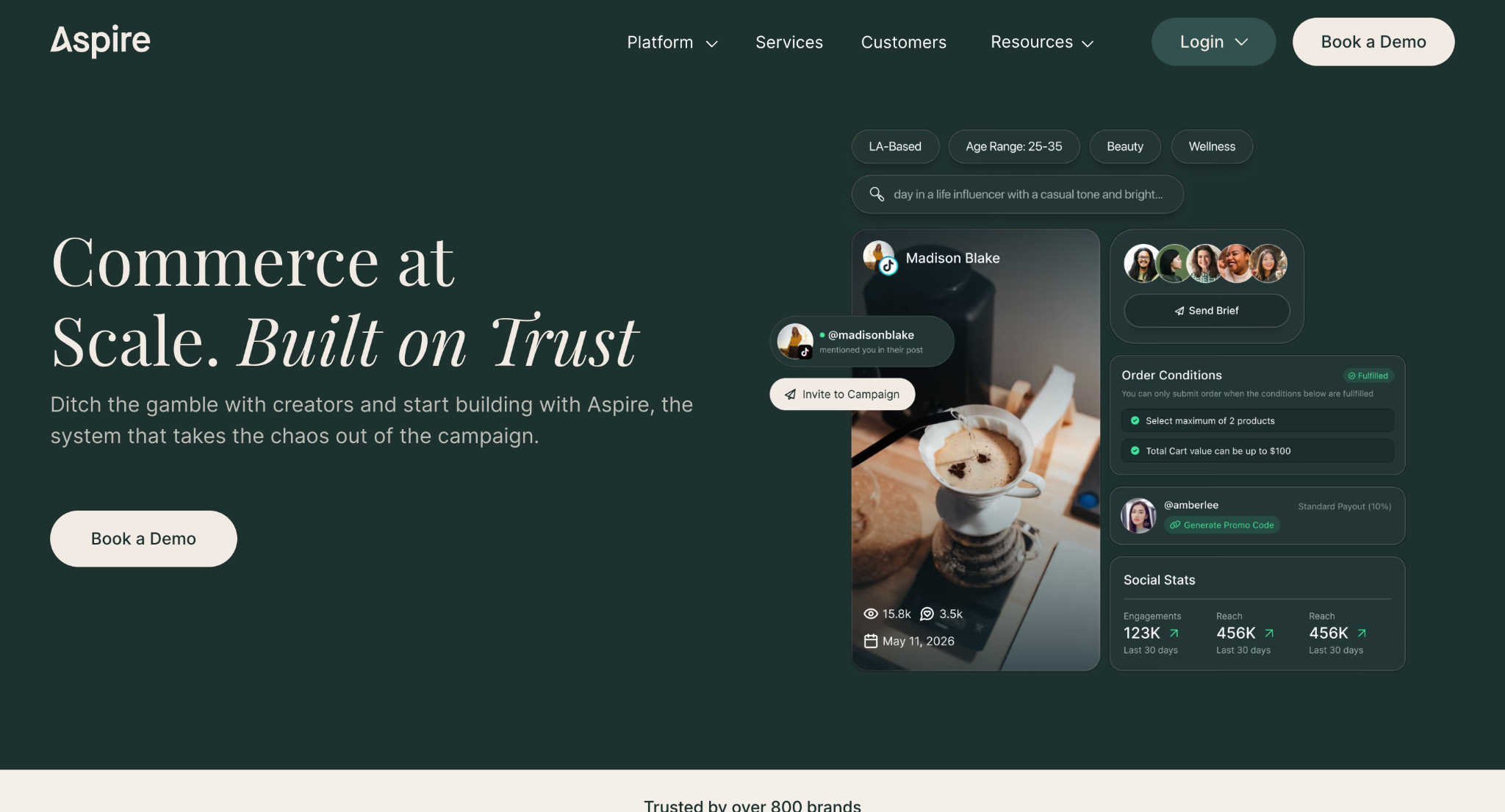
Aspire pros
Shopify integration that identifies customers who may be suitable creators
Creator discovery plus an inbound marketplace
Bulk Shopify promo codes and affiliate links
Aspire cons
Pricing is available through sales
Available workflows depend on enabled integrations
Aspire's customer-to-creator workflow is useful for DTC brands with an engaged customer base. It can create a more natural starting point for ambassador recruitment.
Bulk promo codes and affiliate links also support ongoing communities rather than only one-off collaborations.
Aspire uses custom pricing. Contact sales for details.
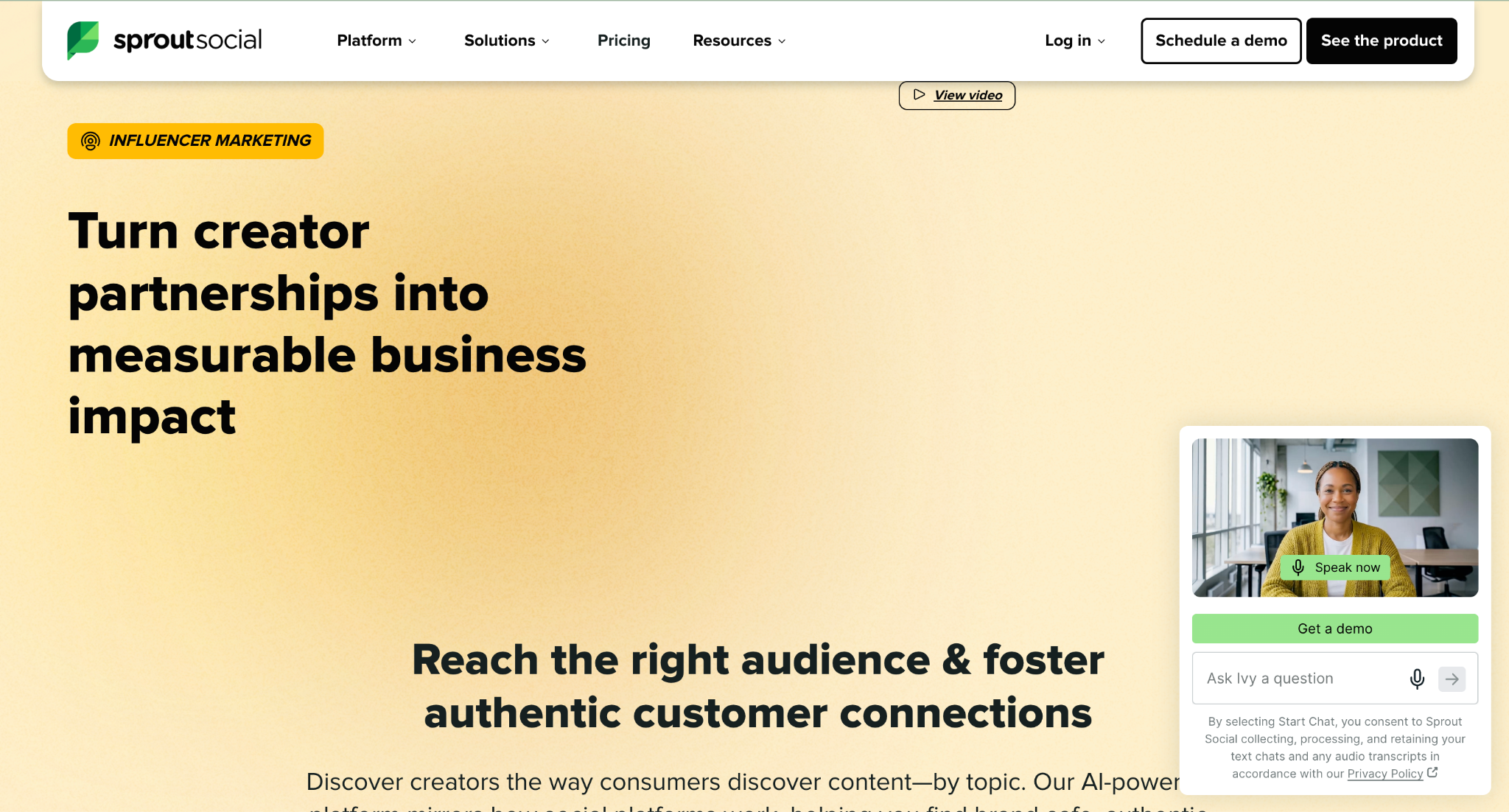
Sprout Social pros
Creator Hub for briefs, submissions, and payout management
Campaign payouts through PayPal and Lumanu
Works alongside Sprout's social reporting and publishing tools
Sprout Social cons
Most practical for teams already using Sprout
Pricing requires a demo
For existing Sprout users, the influencer module is a relatively simple extension of the current social workflow. Briefs, content reviews, and payments stay in one hub.
Its emphasis is social campaign management rather than deep ecommerce attribution.
The influencer marketing module uses custom pricing. Contact sales.
Klear pros
Automatic coupon tracking for conversion reporting
Shopify reporting for clicks, conversions, conversion rate, and revenue
Gifting tools that create store orders and track shipments
Klear cons
Its place within the Meltwater suite may require additional onboarding
Pricing requires a demo
Klear is useful when coupons and product gifting drive the program. Creating store orders and monitoring shipments within the workflow can save time during larger seeding campaigns.
Its Shopify reports also make creator comparisons more focused on conversions and revenue, assuming your Shopify setup is already tracking cleanly.
Klear uses enterprise custom pricing. Request a demo.
HypeAuditor pros
Advertised database of more than 227.1 million creators
More than 35 discovery filters
Influencer payments through PayPal
Audience-quality data for creator vetting
HypeAuditor cons
Fulfillment and attribution are less ecommerce-focused than some alternatives
Package details depend on the sales conversation
HypeAuditor takes an analytics-led approach to discovery and vetting. Its filters and audience data are helpful when follower quality is a major concern.
Teams needing store-connected fulfillment and attribution should examine how it fits with their wider ecommerce stack.
HypeAuditor uses custom pricing through sales. Free tools and demos are also available.
Upfluence is my top Modash alternative for most ecommerce teams. It brings discovery, outreach, campaign management, store-connected coupon codes, AI assistance, and multi-currency payouts into one platform.
CreatorIQ is a suitable runner-up for enterprise governance, while GRIN is worth considering for a Shopify-centered creator CRM. Aspire is another practical option when customer-to-creator recruitment is the priority.
Before choosing, ask two or three vendors to demonstrate coupon creation, order attribution, and a test payout using a workflow close to your own. That comparison is more useful than relying on a feature checklist alone.
Upfluence, GRIN, Aspire, CreatorIQ, and Klear all offer Shopify-related workflows. Compare their coupon, gifting, reporting, and payment processes during a demo.
Several do. Upfluence Pay supports compliant, multi-currency payouts, while GRIN and HypeAuditor use PayPal and Sprout supports PayPal and Lumanu.
An affiliate network mainly tracks referrals and commissions. An influencer platform can add discovery, outreach, briefs, content approval, gifting, and creator relationship management.
Aspire specifically uses Shopify data to identify potential creators among customers. Ask other store-connected vendors how they match customer and creator records.
Most use custom pricing. Upfluence follows a modular model, while the other listed vendors direct buyers to sales for package details and quotes.
 AI tools to find & convert leads.
  Send emails at scale