
Most teams work hard to get traffic, yet many still watch visitors leave without taking action. That gap sits in the way content gets planned, written, and improved.
Smart optimization lines up what people need with what a page offers, so each visit has a clear next step. When you get that right, the results show up fast.
Data across the industry keeps pointing to the same pattern: optimized content can generate triple the leads compared to outbound marketing while costing 62% less.
That kind of return changes how you plan budgets and timelines. It also changes how you treat every article, page, and form. You stop guessing and start using real signals from users and search engines.
This guide looks at how to tune content so it serves readers and drives steady revenue at the same time.
Quality content pulls weight when it answers real questions in clear language. People come to a page with a goal. They want to learn, compare, or decide. When your content meets that need, they stay, trust grows, and actions follow.
That link between value and action drives results. It also explains why customer-centric companies are 60% more profitable. They build pages around what readers care about, not what the brand wants to say.
To do this well:
Create content with search intent in mind. Look at what people type into search and how they phrase it.
Use those phrases in headings and body copy, so generative engines and users read the same clear signal.
Map one main topic to each page and support it with related questions.
Write in short blocks. Use plain words. Add facts, examples, and steps that help readers move forward.
Keep updates on a steady cycle. When data or rules change, refresh the page so it stays useful and accurate.
You also need to avoid pushing your offer too early. Let the content carry the load.
Place CTAs where they fit the reader’s journey, not where they feel forced. That balance keeps engagement high and bounce rates low.
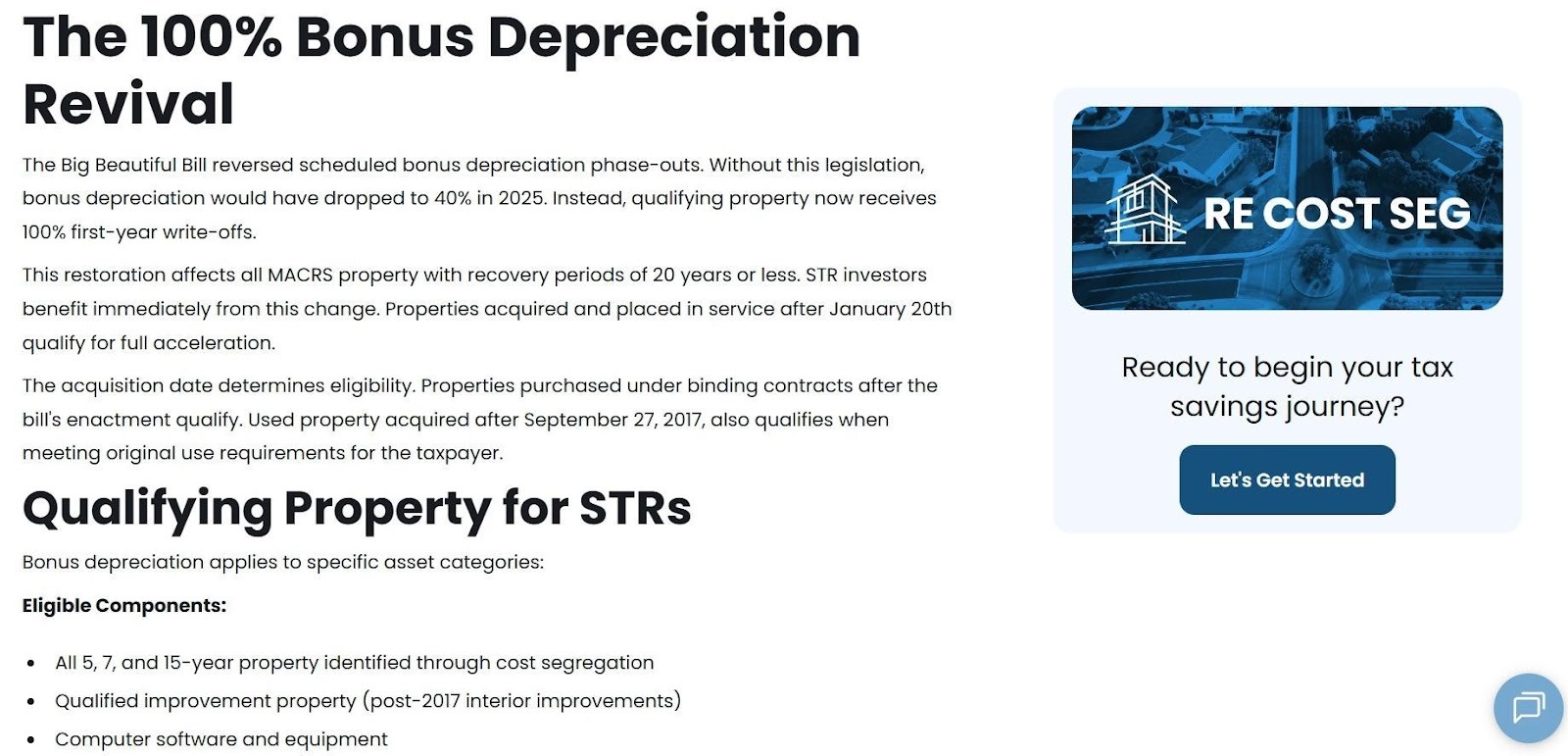
R.E. Cost Seg, a firm that provides cost segregation services for real estate owners, shows how this works. Their post, “The STR Loophole: Short-Term Rentals and Bonus Depreciation,” covers tax rules, timelines, and risks in depth.
The team doesn’t pitch their service as a quick fix. They focus on helping property owners understand how the rule works and who it helps. Readers get clear answers, which builds trust.
That trust turns into qualified leads over time because the brand earns its place as a reliable source.
Source: recostseg.com
People trust brands that show their work. When a page includes clear sources, sound logic, and expert review, readers feel safe using that information. That trust lifts engagement and supports steady conversions because visitors don’t need to second-guess what they read.
Search engines also pick up on those signals. They track how long users stay, how often content gets shared, and how often it earns links from other sites.
You can build that level of trust with a few simple habits:
Start by backing every claim with a source that readers can check.
Use peer-reviewed studies, industry reports, or data from respected groups. Link to those sources and keep them current.
Add short explanations in plain language, so readers don’t need a science degree to follow along.
Bring in expert voices when you can. A quote or a review from a professional in the field adds weight and cuts through doubt.
Keep your tone neutral and focused on facts. Avoid hype and broad promises.
Structure also matters. Use clear headings that match how people search. Break down complex ideas into steps.
End each section with a takeaway that helps readers apply what they learned.
In technical industries, this often means referencing experienced service providers, such as Altech Process & Control, whose published troubleshooting insights and repair documentation are grounded in decades of hands-on field work rather than theory.
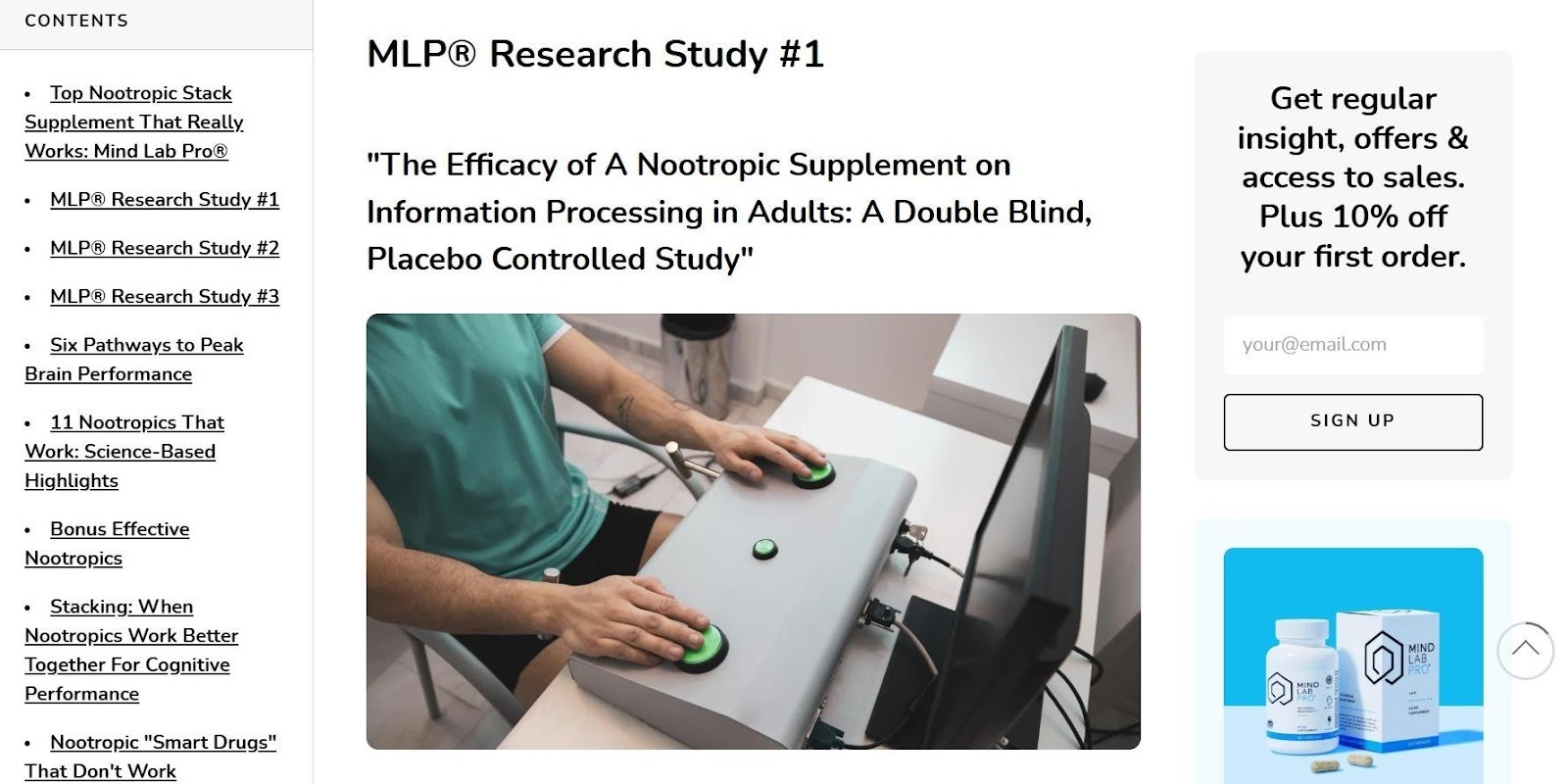
Mind Lab Pro, a brand that sells a universal nootropic supplement for cognitive support, sets a strong example. Their post, “Nootropics that Work (and Don’t Work) According to Science,” reviews popular ingredients using peer-reviewed research.
The article points out what helps, what falls short, and why. A professional in the field reviews the content, so readers know it went through a real check. The brand still shows how its own formula fits the science, yet the focus stays on evidence.
This approach builds credibility and attracts users who want clear, tested guidance.
Source: mindlabpro.com


Some visitors arrive with a goal to buy. They read fewer words and look for proof, price, and speed. Content that serves them well removes friction and keeps momentum high.
When a page lines up with that mindset, it turns interest into revenue without pushing or noise.
To make this work:
Map each page to a stage in the buyer’s journey. For pages aimed at ready buyers, keep key details easy to find.
Place pricing cues, product images, and clear CTAs above the fold and near key decision points.
Use short copy that answers final questions like delivery time, use cases, and support.
Add trust signals such as reviews, case notes, or guarantees near the action buttons.
Make buttons easy to spot and simple to click.
Avoid long forms and extra steps that slow people down.
Track how users move through the page, then adjust placement and copy based on real behavior.
This approach also helps generative engines understand intent. When headings, links, and page structure match purchase signals, those systems route high-intent users to the right pages.
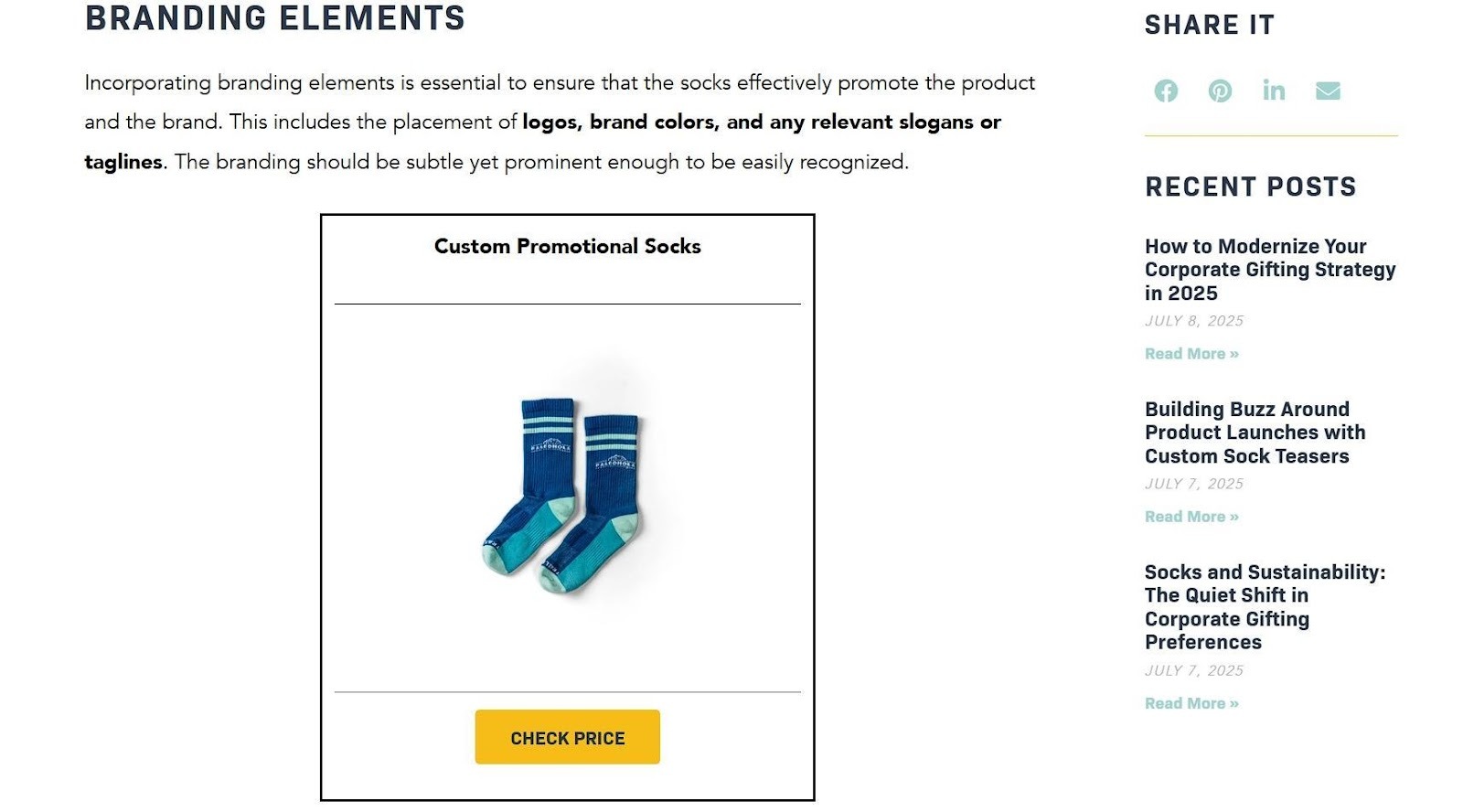
Custom Sock Lab, a company that designs and produces custom socks for both private buyers and businesses, puts this into practice. Their post, “Building Buzz Around Product Launches with Custom Sock Teasers,” explains how branded socks can support marketing campaigns.
The article gives useful ideas and examples, yet it also places product images and CTA buttons at moments when readers feel ready to act. A reader who likes the idea can move straight to an order page without hunting.
That timing captures intent while it’s fresh and keeps the buying path smooth.
Source: customsocklab.com
Many visitors arrive without a clear plan. They scan, compare, and look for something that helps right away.
Content that gives quick answers earns attention and keeps people on the page. That early trust raises the chance they come back when they feel ready to take the next step.
To make this work:
Focus on common first questions in your niche.
Use tools like search logs, support tickets, and on-page queries to spot what people want to know first.
Create posts that give direct answers in a simple format.
Use short sections, clear tables, and side-by-side comparisons.
Add quick summaries at the top, so readers get value in seconds.
Keep the tone neutral and helpful.
Avoid long backstories and keep links easy to follow. When readers feel that a page saved them time, they stick with the brand that did it.
You can also add light guidance that points to deeper content. Link to detailed guides or product pages in a way that feels natural. That path lets curious readers move forward at their own pace without pressure.
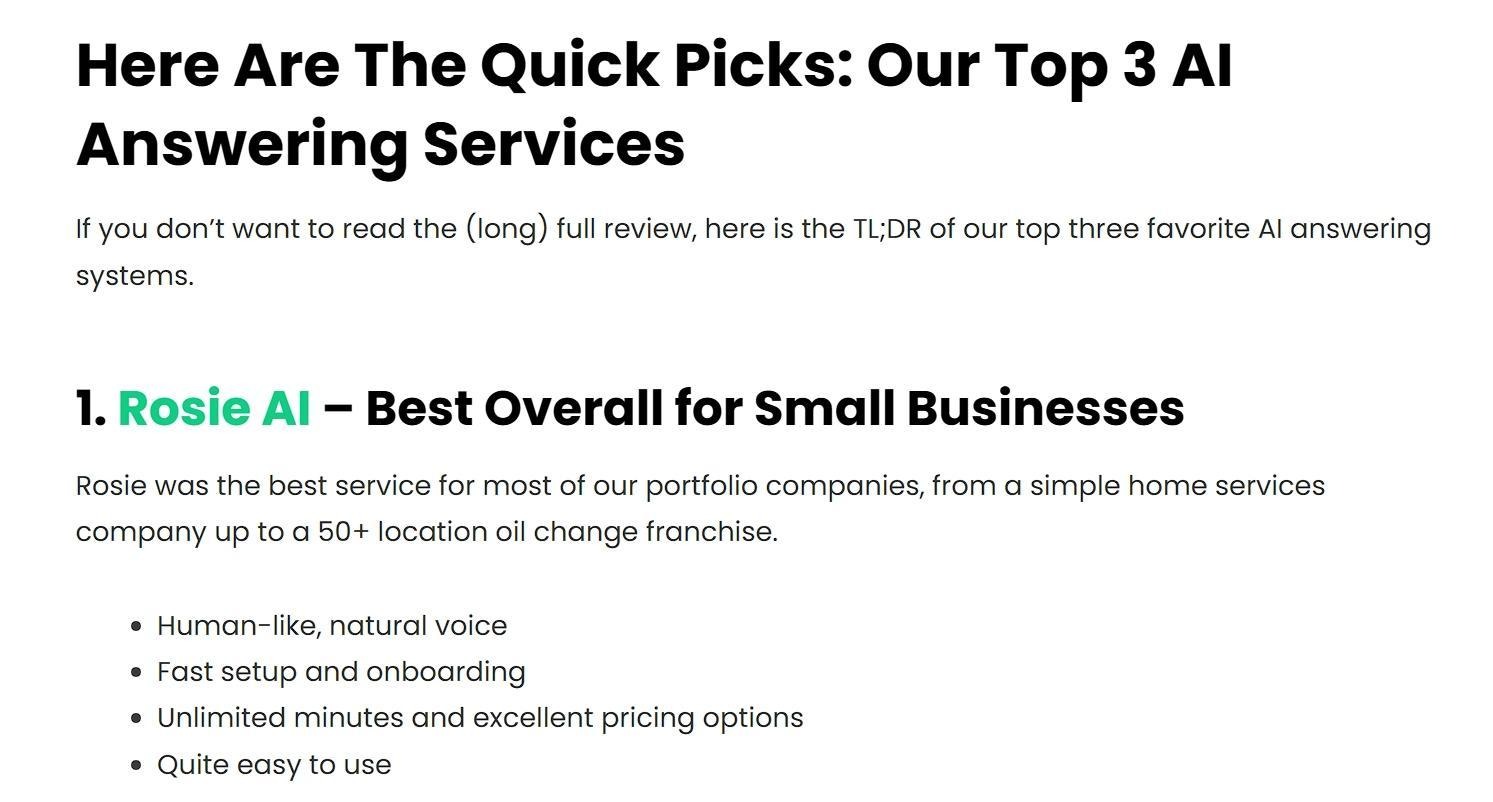
Smash.vc, an investment firm that supports small businesses and startups, shows how this plays out. Their post, “We Reviewed 7 AI Answering Services for Small Business,” lays out key features, costs, and use cases in one place.
A reader who wants a fast answer doesn’t need to open ten tabs. The post does the work for them and helps them spot the best fit.
This builds trust with founders and owners who value speed and clarity. Over time, that trust supports stronger engagement with the firm’s wider content and offers.
Source: smash.vc
People believe other users more than brand claims. When readers see real outcomes from peers in their field, doubt drops and interest rises.
That trust moves them closer to action because they can picture the same results in their own work.
To use this tactic well:
Collect stories that show clear change. Start by choosing customers who faced a problem your audience also faces.
Describe their situation in simple terms.
Then, explain what they did with your product or service and why it worked.
Add numbers that show the impact, such as growth rates, time saved, or revenue gained.
Use direct quotes to keep the story grounded.
Place these stories where readers need reassurance, such as near sign-up pages or inside guides that cover buying decisions.
Structure also matters. Use headings that match how people search for proof. Break long stories into short parts that cover the challenge, the action, and the result. Keep each section tight and focused.
Link to deeper case studies for readers who want more detail. Update examples as new wins come in, so your proof stays current.
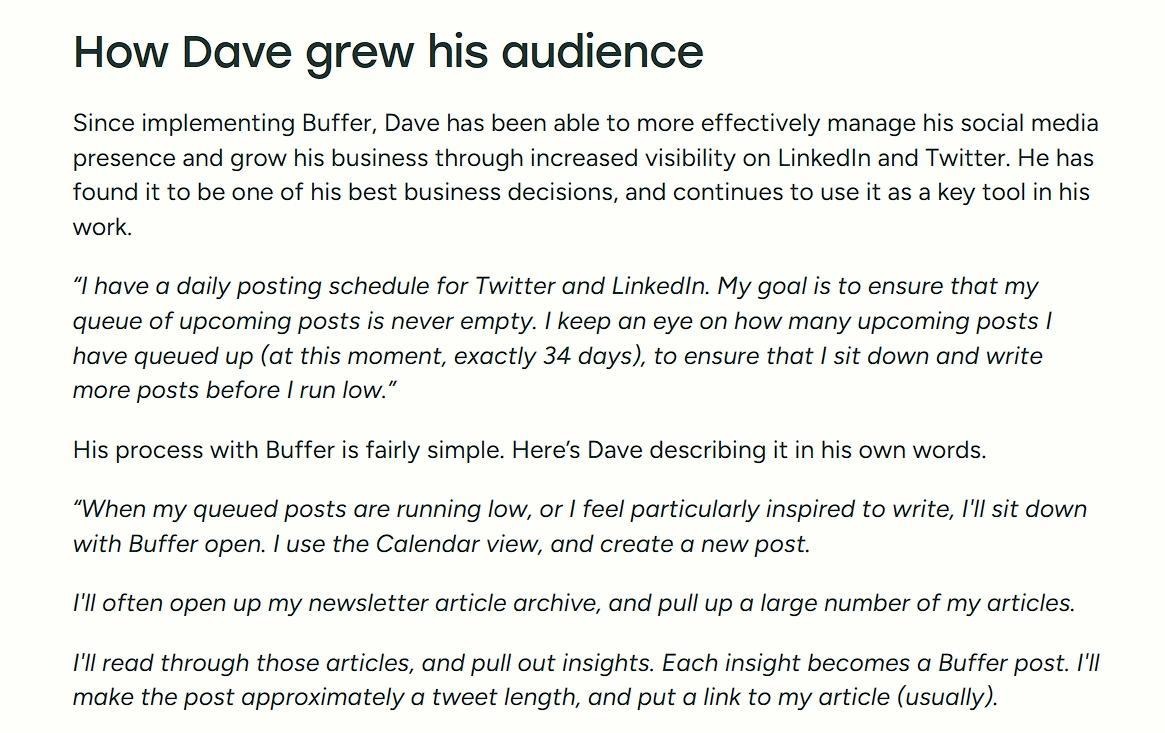
Buffer, a social media toolkit for brands, runs this play well. Their blog includes case studies that show how real teams use their tools. One post explains how a customer grew their newsletter traffic at a strong pace.
The article introduces the client and their goal, outlines the steps Buffer supported, and then shares the results with clear metrics. It also includes quotes from the client that describe their experience in their own words.
This mix of data and voice gives readers solid reasons to trust what they see.
Source: buffer.com
Smart optimization keeps content useful, clear, and easy to act on.
Each tactic in this guide points back to the same idea: serve real needs and let data guide every choice. Pages that teach, prove, guide, and reassure pull in better traffic and turn that attention into steady revenue.
This approach also fits how generative engines read and rank content today. They favor pages that answer intent, show trust, and support real decisions.
When you keep those signals strong, you build a system that keeps working long after a post goes live. That steady lift compounds across your site and makes growth easier to plan and easier to keep.
 AI tools to find & convert leads.
  Send emails at scale