A lot of people throw around the term "proxy" like it's one-size-fits-all, but the reality is far more nuanced – and far more interesting. If you've ever tried to manage multiple accounts, run web scraping scripts, or access geo-restricted content without raising red flags, you've probably hit a wall. That wall has a solution, and its name is the static residential proxy.
Let's break it down – not with jargon soup, but with clarity and purpose.
A static residential proxy is an IP address assigned to a real physical device – like a home router or desktop – by an Internet Service Provider (ISP), but one that never changes. Think of it like renting a house with a permanent address rather than hopping between Airbnbs every night. You get the legitimacy of a real home address with the stability of a long-term lease.
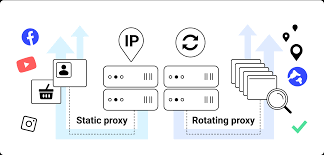
What makes this different from a regular residential proxy is that consistency. Standard residential proxies rotate IPs constantly, cycling through a pool of addresses. A static residential proxy gives you one fixed IP that looks like a genuine home user to any website or platform you visit. To the outside world, you're just a regular person browsing from their living room – not a data center, not a bot, not a red flag.
This combination of authenticity and permanence is what makes static residential proxies genuinely powerful. Websites have grown incredibly sophisticated at detecting automation and flagging suspicious traffic. A rotating IP raises suspicion. A fixed residential IP? That's just your neighbor checking their email.
Here's where things get genuinely fascinating. When you connect through a static residential proxy, your internet traffic is routed through a real residential IP address hosted by an ISP – not a data center. The IP is registered to an actual location, tied to a real household network, but is managed and provided to you by a proxy service.
The "static" part means the IP doesn't rotate unless you explicitly request a change. Your sessions remain consistent, cookies persist across visits, and the websites you interact with see a stable, trustworthy identity. It's the digital equivalent of showing up to the same coffee shop every morning – eventually, you become a familiar face.
This makes them distinct from:
Datacenter proxies – fast, cheap, but easily detected because they originate from server farms
Rotating residential proxies – great for large-scale scraping, but inconsistent for account management
Mobile proxies – use cellular IPs, highly trusted but often expensive and slower
Static residential proxies sit in the sweet spot: trusted like residential, stable like datacenter.


The use cases are broader than most people realize. It's not just about anonymity – it's about operational efficiency and digital trust.
E-commerce professionals use them to monitor competitor pricing across different regions without getting blocked. Social media managers rely on them to handle multiple accounts from a single device without triggering platform bans. Market researchers need them to gather accurate local data – because the search results you see in New York look very different from those in Berlin. Ad verification specialists use them to confirm that their ads are actually appearing where and how they should, in specific geos, without distortion.
| Use Case | Why Static Residential Proxies Work Best |
| Account Management | Consistent IP prevents bans and flags |
| Price Monitoring | Appears as a real local user |
| Ad Verification | Accurate geo-specific ad viewing |
| Web Scraping (low volume) | Trusted IP reduces block rate |
| SEO Tracking | Local SERP results without detection |
Services like Proxys.io offer static residential proxies with ISP-backed IPs that are built exactly for these demanding, precision-driven workflows.
Why not just use a free proxy or a basic VPN-like tool? Because trust is currency online, and cheap solutions spend it fast. Free proxies are overused, blacklisted, and unreliable. Shared IPs mean you inherit the reputation of everyone who used that address before you – and that reputation might be terrible.
A static residential proxy gives you a clean, dedicated, real-looking identity. You're not sharing your IP with hundreds of other users. You own that address for as long as your session demands it. That's not a luxury – for serious digital operations, it's a necessity.
Not all providers are created equal. When evaluating your options, the key factors to look at are IP authenticity (is it a real ISP address?), geographic coverage, uptime reliability, session control, and customer support responsiveness.
A quality provider will offer transparent sourcing, clear pricing, and dashboards that give you full control over your IP usage. You want a partner, not just a service – because when something goes wrong at 2 AM during a critical scraping job, you'll be grateful for responsive support.
Static residential proxies aren't magic – but they're close. They give you a stable, trusted, human-looking identity online, built on the foundation of real residential infrastructure. Whether you're managing accounts, monitoring markets, or verifying campaigns, they offer the kind of reliability and legitimacy that modern internet operations demand.
Understanding what a static residential proxy is means understanding how the internet actually works – and how to work within it smartly.
 AI tools to find & convert leads.
  Send emails at scale