AI Music Videos in 2026: Why Song Generation Is Becoming the New Creative Shortcut
01st Sep '26
Anyleads Team
13 minutes read
AI Music Videos in 2026: Why Song Generation Is Becoming the New Creative Shortcut
Music videos have always been a strange combination of art, technology, and logistics.
You need a good song, interesting visuals, decent editing, and ideally enough money to keep everyone involved from asking, “So... when are we getting paid?” For independent creators, that last part has traditionally been the biggest headache.
But 2026 is making the equation look very different.
AI music generation has moved from being an amusing experiment to becoming a practical part of the content-creation workflow. Instead of spending hours searching through stock-music libraries or trying to build a song from scratch, creators can now describe the sound they want and generate a complete musical track around that idea.
That development is especially important for AI music videos.
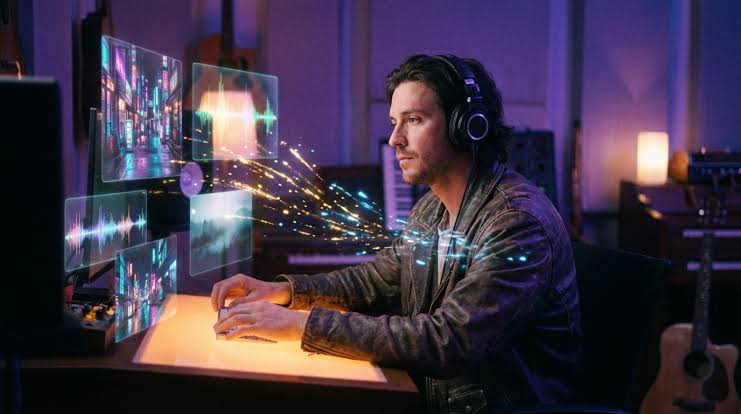
A creator can generate the visuals, develop a character, write a story, and then create a soundtrack specifically designed for the finished concept. The music no longer has to be a generic piece of audio placed underneath the video at the last minute.
In 2026, the soundtrack can be part of the creative direction from the very beginning.
From “Find a Song” to “Describe a Song”
For years, the standard workflow for many online creators was surprisingly simple: finish the video, open a music library, type a few keywords, and scroll.
And scroll.
And scroll some more.
Eventually, you find a track that is “close enough.”
AI music generation is changing that habit. Instead of looking for an existing song that happens to match the mood of a video, creators can describe the mood itself and generate something around it.
A prompt such as “dreamy electronic music for a futuristic night drive” can become the starting point for a complete song. LunaMusic, for example, allows users to enter a mood, genre, scene, idea, or lyrics and generate a track with vocals, melody, instruments, and arrangement.
This may sound like a small improvement, but it changes the creative workflow quite dramatically.
A travel creator can create a soundtrack around the destination. A filmmaker can develop music around a character. A gaming creator can generate a theme for a fictional world. A short-form creator can create a catchy song around a joke.
The music becomes customizable rather than merely selectable.
The rise of AI-generated music videos is not happening in isolation.
The broader generative-AI ecosystem is becoming increasingly multimodal, with researchers actively studying systems that connect video and music generation rather than treating them as completely separate problems. A 2026 ACM Computing Surveys review, for example, describes video-to-music generation as a growing research area driven by multimodal generative models.
At the same time, creators are under constant pressure to produce more content in less time.
YouTube channels need regular uploads. TikTok and Shorts creators compete for attention in extremely short formats. Brands want campaign variations. Indie filmmakers need affordable music. Game developers need temporary soundtracks and themes.
AI music tools fit neatly into this environment because they reduce the amount of manual work required to test an idea.
And there is another reason the technology is attracting attention: creators are no longer satisfied with simply generating audio.
They want the music to have a visual identity.
Music Is No Longer the Final Layer
The traditional production process often looks something like this:
video → editing → music → final export
The AI-assisted workflow can look more like this:
concept → music + visuals → iteration → final video
That difference matters.
If the chorus of a song has a dramatic change in energy, the creator can build a visual transition around it. If the beat becomes more aggressive, the editing can become faster. If the song contains a quiet emotional section, the visuals can slow down with it.
The soundtrack and video begin to develop together.
This is one reason AI music generation is becoming particularly useful for creators working with AI-generated visuals.
One of the interesting developments in 2026 is the shift from simple instrumental generation toward full-song creation.
LunaMusic is positioned around that broader workflow. Its AI Song Generator can turn a text idea or existing lyrics into a complete AI-produced song, including vocals, melody, harmony, drums, bass, instrumentation, arrangement, and mix.
The platform supports a broad range of genres, including pop, rock, hip-hop, R&B, EDM, jazz, lo-fi, cinematic, ambient, metal, reggae, country, and classical music. It can also combine different styles in a single prompt.
For video creators, that variety is important.
Not every music video needs to sound like a radio pop single.
A futuristic fashion video may need sleek electronic music. A fantasy animation might work better with cinematic instrumentation. A nostalgic story could use an emotional acoustic song. A gaming montage may need something energetic and rhythm-driven.
The ability to move between different musical directions without changing the entire production setup gives creators more room to experiment.
AI tools to find leads
Send emails at scale
Access to 15M+ companies
Access to 700M+ contacts
Data enrichment
AI SEO writer
Public professional emails
Text-to-Song Makes the Process More Accessible
The biggest attraction of text-to-song generation is probably its simplicity.
You do not need to understand chord progressions before starting. You do not need to know how to arrange a drum pattern. You do not need to own a digital audio workstation.
You can begin with an idea.
For example:
“A warm indie-pop song about leaving a small town, nostalgic but optimistic, gentle guitar, emotional vocals, catchy chorus.”
Or:
“Dark cinematic electronic track for a cyberpunk chase scene, deep bass, tense atmosphere, gradually increasing intensity.”
The AI interprets the creative direction and produces a musical result.
LunaMusic describes its workflow as generating vocals, melody, and arrangement from a simple text prompt, while also allowing creators to refine their ideas through additional generations.
This makes the tool particularly relevant for people who think visually or narratively rather than musically.
A filmmaker may not know exactly which instruments are needed.
But they usually know what the scene should feel like.
That is enough to get started.
Another major development is the ability to work directly from lyrics.
This is useful because many creators begin with words rather than melodies.
Maybe you have written a poem. Maybe you have a character monologue. Maybe you already have a chorus in your notes app that has been sitting there for six months.
Instead of throwing the lyrics into a traditional production workflow, you can use them as the foundation for an AI-generated song.
LunaMusic's custom workflow allows users to provide their own lyrics and guide elements such as genre, mood, tempo, and vocal direction. Structure labels such as [Verse], [Chorus], and [Bridge] can also be used to help shape the song.
This creates an interesting middle ground between traditional songwriting and fully automated generation.
The human can provide the story and message.
AI can help turn those words into an actual musical performance.
For music video creators, that can be extremely useful because the lyrics themselves can be written around the planned visuals.
If AI song generation is becoming more flexible, rap generation is becoming more specialized.
Rap has its own creative requirements. A good rap track is not simply a beat plus lyrics. Flow, rhyme, cadence, vocal delivery, rhythm, and word choice all have to work together.
That is why dedicated AI rap tools are becoming increasingly interesting for content creators.
WaveMusic's AI Rap Generator turns text descriptions into full rap tracks containing lyrics, vocals, beats, bass, flow, and arrangement. The platform supports styles including Trap, Boom Bap, Drill, Cloud Rap, Hardcore Hip Hop, Experimental Hip Hop, and Instrumental Hip Hop.
The important part is the level of specialization.
A creator does not have to begin with a finished rap verse. They can start with an idea and describe the topic, style, emotion, language, and even optional rhyme targets.
The system can then generate a complete musical interpretation.
Why Rap Works So Well for Short-Form Video
Rap has one major advantage for social media: it can communicate a lot of information quickly.
That makes it particularly useful for TikTok, YouTube Shorts, Instagram Reels, memes, character videos, and comedy content.
Imagine a creator wants to make a 30-second video about working from home.
Instead of using generic background music, they could create a humorous rap about endless meetings, cold coffee, unread emails, and pretending to be productive.
The joke becomes the song.
The song becomes the soundtrack.
And suddenly the video has its own identity.
WaveMusic specifically presents its AI rap workflow as suitable for full tracks, demos, freestyles, and social media content, while its generator can adapt to different rap subgenres based on the prompt.
This makes AI rap generation less about replacing professional recording studios and more about giving everyday creators another storytelling format.
Perhaps the biggest advantage of AI music generation is not that it produces a song quickly.
It is that creators can produce multiple versions quickly.
That distinction is important.
Traditional music production can make experimentation expensive. If you want a different arrangement, different tempo, different vocal approach, or completely different genre, you may have to redo a significant amount of work.
With AI, the cost of trying another idea is much lower.
A creator can generate a dramatic version.
Then a darker version.
Then an acoustic version.
Then an electronic version.
Then, because apparently nobody has learned restraint, a disco version.
This encourages experimentation.
Instead of asking, “What is the safest musical choice?” creators can ask, “What happens if I try something completely different?”
That mindset can produce more interesting videos.
There is another use case that deserves more attention: using AI-generated music before the final production begins.
A filmmaker may not intend to use the generated track in the final release. Instead, they can create temporary music to understand how a scene feels.
A director can test whether a chase sequence works better with aggressive percussion or atmospheric electronic music.
A video editor can experiment with different pacing.
A content creator can test whether a particular hook makes a short-form video more engaging.
In other words, AI music can function as a creative prototype.
This is similar to using temporary visual effects before final compositing. The purpose is not necessarily to create the finished product immediately. It is to make creative decisions faster.
The rapid development of AI music also brings some less comfortable questions.
The technology is becoming easier to use, but the debate around AI-generated music, copyright, attribution, and artistic authenticity is becoming more serious as well.
That debate is no longer theoretical.
In August 2026, Australia's ARIA announced that fully AI-generated music would be excluded from its charts following controversy involving an AI-generated cover, illustrating how quickly questions about AI music are moving into mainstream industry policy.
Musicians are also pushing back against the growing presence of AI-generated tracks, with some arguing that easily generated music can blur the line between technological assistance and genuine artistic expression.
For creators, the lesson is fairly simple: generating music is only one part of the job.
Before publishing or monetizing a track, creators should understand the relevant platform rules, licensing conditions, and rights associated with the particular AI service they are using.
The faster AI music generation becomes, the more important responsible use becomes too.
YouTubers and Short-Form Creators
Frequent content creators can use AI music tools to develop original intros, themes, background tracks, comedy songs, character songs, and short musical hooks without rebuilding a production workflow every time.
AI tools to find leads
Send emails at scale
Access to 15M+ companies
Access to 700M+ contacts
Data enrichment
AI SEO writer
Public professional emails
Independent Filmmakers
Small teams often cannot afford original music for every project. AI-generated tracks can help with concept development, temporary soundtracks, or smaller productions where a traditional music budget is limited.
Game and Animation Creators
A fictional world feels more complete when it has its own musical identity. AI can help creators experiment with character themes, environmental music, battle tracks, menus, and cinematic sequences.
Social Media Experimenters
This may be the most obvious group.
If you already make strange AI characters, fictional celebrities, animated memes, or surreal short videos, giving those creations their own songs can make them much more memorable.
Because apparently the internet now needs a singing refrigerator.
And yes, someone will probably generate one.
The direction of the industry suggests that the separation between music creation and visual creation will continue to weaken.
Instead of generating a song and then separately generating a video, future creative workflows are likely to become increasingly interconnected. Researchers are already studying systems that use video information to guide music generation, showing that the field is moving toward deeper connections between visual and audio content.
That could eventually mean a creator uploads a rough video and asks an AI system to generate several soundtrack options that match its pacing, emotion, scene changes, and visual style.
For now, creators still have to make many of those decisions themselves.
But the direction is clear.
Music is becoming another programmable layer of the creative process.
The biggest AI music story of 2026 is not that artificial intelligence can make songs.
We already know it can.
The more interesting development is that AI is making custom music practical for people who were never trained as musicians.
A video creator can start with a story. A filmmaker can start with a scene. A social media creator can start with a joke. A rapper can start with a concept. A songwriter can start with lyrics.
From there, AI can help turn the idea into something audible.
LunaMusic demonstrates the broader full-song approach, with text-to-song generation, AI vocals, lyrics-to-music workflows, and support for a wide range of genres. WaveMusic takes a more focused route for rap, combining lyrics, vocals, beats, bass, and flow across multiple hip-hop styles.
Neither approach makes human creativity irrelevant.
If anything, it makes creative direction more important.
The creator still decides what the video is about, what the audience should feel, which version works best, and whether the final result is actually worth sharing.
AI simply makes the distance between the idea and the experiment much shorter.
And in the fast-moving world of 2026 content creation, that may be the most valuable feature of all.
 NEW
Trusthref.com: AI Agents That Grow Your Business In Autopilot
NEW
NEW
Trusthref.com: AI Agents That Grow Your Business In Autopilot
NEW



 Send emails at scale


 AI tools to find & convert leads.