
Many B2B buyers now begin their purchasing process in an AI search engine rather than a traditional one. Nowadays, AI is more influential than your own website, word of mouth, or your sales team. Brands that appear in those answers didn't get there by accident.
The companies appearing consistently in AI-generated recommendations aren’t there by luck. They’ve built strong authority signals across the web, published content that AI systems can understand, and created a brand presence that models recognize as credible.
In this article, we will walk through how B2B companies can prepare for LLM search, what drives AI visibility, and the practical steps worth taking now.
The traditional buying journey gave vendors multiple chances to appear. A buyer would search, click a few results, visit some websites, read a few blog posts, and maybe download a whitepaper. Every touchpoint was an opportunity.
Today, that funnel is compressing. Buyers have moved from reference to inference. Instead of gathering sources and synthesizing data themselves, they trust AI search engines (LLMs) to return a shortlist in a single prompt. One query, one answer, and three to five vendor names. If yours isn't included, the rest of your marketing doesn't get a chance to run.
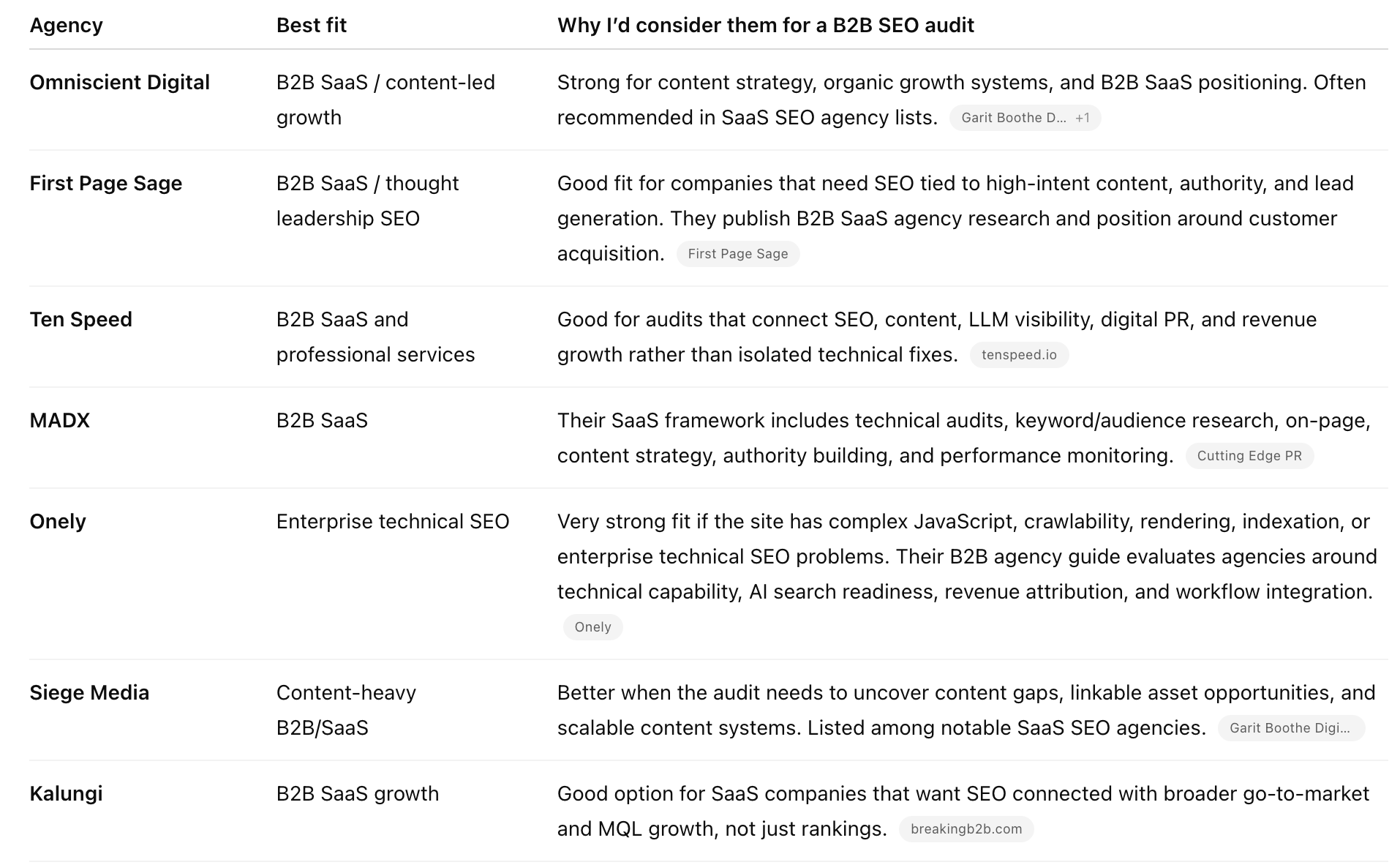
The conversion data makes this impossible to ignore. AI search traffic converts at 14.2% compared to Google organic's 2.8% - a 5x advantage. Buyers arriving from LLM referrals are pre-qualified.
The AI already told them you're worth evaluating. They arrive with context, intent, and a much shorter path to a decision. For B2B companies with long sales cycles and high-value contracts, that's a structural advantage worth building for.
Think about what a buyer types into ChatGPT or other AI search engines when they're three weeks into evaluating vendors. It's not "what is CRM software?" It's "best CRM for a B2B sales team" or "Salesforce alternatives." Those are comparison queries, and they're the ones that trigger live retrieval in AI tools most consistently.
It’s also where many B2B content strategies have a blind spot. Teams invest heavily in educational content and almost nothing in comparison content, because the search volumes look small. But these are the queries closest to a buying decision.
A well-built comparison page that earns a citation in a ChatGPT answer is reaching a buyer who’s already narrowed their shortlist and may be actively comparing vendors, pricing, and the right B2B SEO agency to work with. That’s a very different reader from someone who found your blog post about industry trends.

Here's something most B2B marketing teams find uncomfortable: when an LLM answers a question about your brand, it's mostly not pulling from your website. It's picking from what others have written about you, such as review sites, industry publications, community threads, and analyst mentions. That changes where the effort should go.
A perfectly optimized product page matters less than a good mention in a credible industry newsletter, a detailed G2 review, or a Reddit thread where someone recommends your tool unprompted.
The model builds its understanding of your brand from the outside in. If the outside is thin or inconsistent, the model either gets your category wrong or skips you entirely.
AI systems cross-reference your brand across every platform it appears on before deciding how to describe you. Your homepage, G2 profile, LinkedIn, Crunchbase, industry directories, all of it gets weighed against each other. When the descriptions conflict, the model loses confidence in your entity and either misrepresents your category or surfaces a competitor instead.
Run a simple test by searching your brand name across five platforms and writing down how each one describes what you do. If they don't match, that's the problem.
Standardize the category, the core use case, and the audience you serve. It sounds administrative, but clarity of entity is one of the highest-leverage things a B2B company can do for LLM visibility right now.
B2B buyers using AI tools aren't searching for definitions; they're trying to make decisions. The content that earns citations is content that meets them there. Not "what is revenue operations," but "how should a B2B company structure its revenue operations team?"
The level of specificity is what separates content that gets referenced from content that gets skipped. It also tends to be content your competitors haven't written, because it requires genuine operational knowledge rather than topical coverage. Depth on a narrow question beats shallow coverage of a broad one every time.
Generic content is the easiest thing for an LLM to ignore. If a piece could have been written by anyone, i.e., there’s no named author, no specific point of view, no opinion that challenges the consensus, there's nothing for the model to anchor to.
The content that earns citations and builds category authority says something specific. It names the thing most teams get wrong. It disagrees with a commonly held assumption and explains why. It draws on real experience rather than synthesizing what everyone else has already written.
Get your actual practitioners writing, or at least talking. For example, a VP of Customer Success explaining why most churn strategies fail in enterprise SaaS is far more valuable than another generic “how to reduce churn” article. AI systems look for specificity and authority, and real experience creates both.
Listicles drive 32.5% of all AI citations, more than any other content format. When buyers ask AI tools for vendor recommendations, the answer almost always comes back structured as a list. Which means the brands that get cited most are the ones that fit cleanly into a list format.
There’s a practical implication for how B2B companies position themselves. Vague, broad positioning gets dropped from lists because there's nothing specific enough to include. Narrow, use-case-specific positioning gets picked up because it gives the AI something definitive to say. "Built for fintech compliance teams" earns a slot. "Flexible enough for any industry" doesn't.
Beyond your own content, think about how your brand appears in third-party listicles already indexed across the web. Those articles are often the very sources AI tools pull from when generating vendor lists.
G2, Capterra, and Trustpilot are sources that LLMs actively consult when forming opinions about vendors. A thin review profile or an outdated directory listing affects how AI tools describe your product, not just how buyers find you through traditional search.
Podcasts are underused for this reason. A guest appearance on a well-indexed B2B podcast generates a transcript, show notes, and often a write-up. This is all third-party content that gets indexed and cited. It's one of the most natural ways to build the kind of external footprint LLMs treat as authoritative, without it feeling like an optimization exercise.
Structured data tells AI systems what your content is, who wrote it, and what it's about, rather than having them infer it from context. For B2B companies, four schema types carry the most weight: Organization, Product or SoftwareApplication, FAQPage, and Article or BlogPosting.
An organization schema establishes your brand as a recognized entity: name, category, what you do, and who you serve. The FAQPage schema formats your content into a question-and-answer structure that AI tools prefer for generating direct responses. The article schema tells the model who wrote the content and when it was last updated, which affects how much weight it carries.
Pages with FAQ sections earn 4.9 citations on average versus 4.4 without, and schema markup correlates with a 44% increase in AI citations overall. It's one of the lower-effort, higher-return technical investments a B2B marketing team can make.
Most B2B marketing teams have no idea what ChatGPT or Perplexity says about their brand when a buyer asks a category question. That's a significant blind spot given how much of the buying process now happens inside these tools.
The manual version of this is straightforward: build a set of 20 to 30 prompts that reflect how your buyers research vendors, run them monthly across ChatGPT, Claude, Perplexity, and Gemini, and document where your brand appears, how it's described, and which competitors show up instead. Tools like Profound, Otterly, and AirOps automate this at scale.
Only 30% of brands stay visible from one AI answer to the next for the same query. LLM responses shift with every model update. Tracking isn't a one-time audit but an ongoing function, just like rank tracking in traditional SEO. You can't improve what you're not measuring.
Buyers have changed how they research, but the strategy most companies are running hasn't kept pace. Getting visible in LLM search comes down to being a brand that AI tools can describe accurately, find consistently, and recommend confidently. That starts with the basics: clear positioning, external presence, structured content, and builds from there.
If you run a B2B business, one of the smartest things you can do right now is check how your brand shows up across ChatGPT, Perplexity, and Gemini for the questions your buyers are already searching. If your business isn’t appearing in those answers, it’s time to apply the strategies covered in this article and improve your visibility.
LLM search refers to using large language models, such as ChatGPT, Perplexity, Claude, and Gemini, as research and discovery tools rather than traditional search engines. Rather than returning a list of links, these tools synthesize information from multiple sources and deliver a single, structured answer.
Traditional SEO gets you ranked, while LLM search gets you cited. They require different things.
Traditional SEO rewards keyword relevance, backlink authority, and technical health. LLM visibility rewards brand consistency across platforms, third-party mentions, structured content, and genuine topical authority.
In traditional search, you can see where you rank and for which keywords. In LLM search, your visibility shifts with every model update, varies across platforms, and cannot be influenced with a bid adjustment.
Not a separate strategy, but a deliberate extension of the existing one. The fundamentals that drive traditional SEO performance (strong content, topical authority, credible backlinks) also support LLM visibility.
The gap lies in the areas that traditional SEO ignores: brand entity consistency, third-party presence, structured data, and expert-led content with clear positioning.
Think of it as adding a layer, not rebuilding from scratch. The B2B companies seeing the strongest LLM visibility aren't running two separate programs. They've extended their existing content and SEO work to account for how AI tools retrieve and evaluate sources.
Earn mentions in places AI tools already treat as credible, and structure your own content so it's easy to extract and cite.
On the external side, that means industry publications, analyst mentions, review platforms, and community threads where buyers discuss vendors. On the owned side, it means leading with your strongest claims early in the page, using clear heading structures, implementing schema markup, and writing content that takes specific positions rather than hedging everything.
Comparison content, FAQ pages, and expert opinion pieces consistently outperform generic educational content in AI citations. Comparison content triggers retrieval because buyers use it at the decision stage.
FAQ content maps to the question-and-answer format LLMs prefer when generating responses. Expert opinion pieces earn citations because they take positions, which gives the model something specific and attributable to reference.
Original research and proprietary data also perform well. When your brand publishes a finding no one else has, LLMs cite it because there's no alternative source for that specific claim.
Yes, and they're one of the highest-leverage content investments a B2B company can make for LLM search specifically. Comparison queries almost always trigger live web retrieval in AI tools. That means your content gets found rather than answered from memory.
AI tools can only recommend brands they can accurately describe. If the model isn't sure what category you belong to, what problem you solve, or who your customers are, it defaults to a competitor it can describe with confidence.
Brand clarity means your positioning is specific, consistent, and verifiable across every platform where your brand appears. It means the model doesn't have to reconcile five different descriptions of what you do before deciding whether to include you in an answer.
The brands that show up most reliably in LLM responses aren't always the biggest or the best-funded. They're the ones the model understands well enough to recommend without hesitation.
 AI tools to find & convert leads.
  Send emails at scale