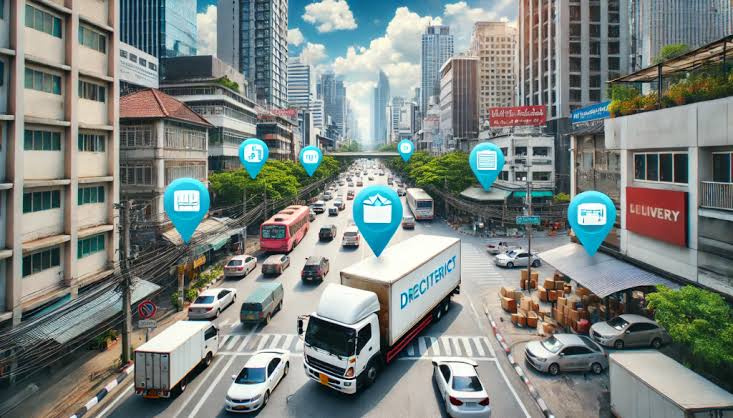
Fuel costs can apply severe pressure to businesses that involve delivery. Congestion, inefficient driving patterns, unnecessary backtracking, traffic accidents, and lengthy idling only add to the strain. AI enables businesses to analyze and interpret delivery and GPS data to inform their choices about which routes to take and how best to manage their fleet. Companies can employ AI to determine fuel expenditures and find weaknesses as they pertain to their delivery practices.
Identifying Inefficient Routes Through Data Analysis
When examining existing delivery routes, AI can identify which are particularly costly without requiring businesses to manually go through any of the data. The AI analyzes the delivery routes in regard to the fuel used, and then it determines trends or similarities pertaining to the most expensive ones. With the information, businesses can see what the problem is with the delivery routes to make decisions about how to correct the issue. Another benefit of using AI to look at inefficient delivery methods is that it is adept at determining whether there is a pattern in the behaviors of drivers.
Improving Route Planning With Predictive Technology
Using data from delivery examples as well as road conditions, AI can plan the best route for businesses to take considering the vehicles that they will use, passenger density, time of day, and traffic patterns. The technology can help to ensure that businesses are not taking long ways around destinations or spending too much time waiting in traffic jams or road construction detours. Route optimization software can be used alongside AI technologies to provide businesses with a list of the most appropriate delivery sequences in addition to the ideal path for any vehicle.
When applied to fleet deliveries – situations in which a vehicle makes multiple deliveries during a single task – predictive technologies prove exceptionally useful in route planning. AI provides drivers with the ability to predict times of the day in which congestion is more likely to form. Using this technology, drivers can choose times and routes to reach certain delivery points that are not likely to have to slow down the vehicle or cause it to spend extra time stuck in traffic.
By optimizing the timing and sequence of delivery pickups and drop-off points, businesses can avoid the backtracking and inefficient driving patterns that contribute greatly to fuel expenses. As a result, drivers can reach destinations sooner than anticipated while still managing to get all of the deliveries done within a suitable time frame.
Monitoring Driving Behaviour and Fuel Consumption
The type of vehicles and the behaviors of the drivers can influence fuel costs, and AI technologies can help both drivers and managers to determine where they can cut expenses by finding areas of wastage. Using telematics, the AI looks through information relating to fuel utilization in each vehicle to find examples of patterns, such as long stretches of idling, unnecessary acceleration, aggressive braking, and excessive amounts of speeding relative to the size and type of the vehicles. Using the data, the managers can look at opportunities to improve the driving pattern of the drivers without putting them or the drivers in any danger.
The AI can also help to determine whether the behavior of individual drivers or vehicles is contributing disproportionately to fuel expenditures compared to others on the road. The drivers with higher rates of fuel consumption relative to the size and age of their vehicles may have some sort of mechanical issue that leads to their cars using a higher percentage of gasoline. Moreover, managers can use the information to identify situations in which a certain vehicle or a specific driver is using too much fuel in delivering a particular product. Combined with data regarding the routes and distance traveled, the findings can point managers in the direction of the largest causes of their fuel waste.
Integrating AI With Delivery Management Systems
When used in combination with a delivery management software, AI becomes extremely powerful in helping businesses to plan, manage, and make decisions about their delivery vehicles. The delivery management system puts all of the pertinent information about a delivery at the fingertips of the managers. Through the use of an integrated system, the AI software can determine the connections between decisions or patterns and the outcomes, providing the managers with suggestions about where to focus their improvement efforts. Businesses can look at trends in delivery times and patterns and how they relate to the drivers, vehicles, products, and distance and then determine the areas over which they have control. After that, the managers can determine what they are going to do in order to encourage improved performance in the areas of concern.
Using an integrated system has the added benefit of enabling AI to make suggestions based on how it may be possible to avoid traffic and other major delays for deliveries that already have to happen. This allows businesses to plan accordingly without risking additional expenses that may result from disruptions in the delivery schedule.
Measuring Fuel Savings and Operational Results
Businesses that are considering using AI to make significant changes in the methods of delivery that they have been using for a long time should conduct measurements of expenditures and outcomes first. Managers ought to track the amount of fuel utilized in each vehicle as well as per delivery. Then, after implementing changes, they should look at whether the improvements yielded the desired results without risking the quality of the customer experience. If there is insufficient reduction in the amount of fuel used, the managers may need to reconsider further changes.
It is important for businesses to note that there may not be significant reductions in fuel costs if the delivery frequency changes or increases, and therefore they will have to take into consideration changes that affect the overall workload of the delivery routes. In situations in which any of the drivers or vehicles experiences difficulties, it is also necessary to account for them. Once changes stop taking effect, it is time to analyze and assess the problem areas that needed improvement. With the insights that AI provides, the managers can look more closely at the elements involved to see which ones can be optimized further.
Although utilizing artificial intelligence to monitor the behaviors of drivers and vehicles and determine the patterns that use fuel the most is extremely valuable, it involves costs to set up and to maintain. It is important that the businesses look at the outcomes that the changes had over the course of a period of time. However, these advantages that can be garnered from integrated data is well worth the expenditures and efforts if businesses make practical decisions regarding improving and optimizing their delivery processes in accordance with the changes.
 AI tools to find & convert leads.