In the ever-evolving landscape of digital marketing, white label cold email software emerges as a pivotal tool for agencies looking to enhance their service offerings without the burden of developing proprietary solutions. This comprehensive guide explores the nuances of these rebrandable platforms, emphasizing their importance in expanding agency capabilities and improving client satisfaction. Readers will gain insights into evaluating software options, understanding key features, and comparing pricing models, all crucial for making informed decisions. The article also delves into practical aspects such as integrating these solutions into existing strategies, measuring campaign success, and overcoming common challenges. With real-world examples and a look at future trends, this guide equips marketing agencies with the knowledge to effectively implement and leverage white label cold email solutions, ensuring they remain competitive in a dynamic industry.
Before diving into white label cold email software, marketing agencies need to grasp the fundamental aspects that define these solutions. A white label product allows agencies to rebrand and resell software as their own, providing a seamless experience to clients. This approach is crucial for agencies aiming to expand their service offerings without the overhead of developing proprietary tools.
One of the primary considerations is the customization capability of the software. Agencies should evaluate whether the software allows for sufficient branding opportunities, such as logo placement, color schemes, and custom domain integration. Additionally, understanding the integration capabilities with existing CRM systems or marketing tools is essential to ensure smooth operations and data flow.
While white label solutions offer numerous advantages, there are common mistakes agencies must avoid. A frequent error is neglecting to thoroughly assess the support and training provided by the software vendor. Agencies should ensure that adequate resources and responsive support are available to address any technical challenges that may arise.
Another pitfall is failing to set clear performance metrics to evaluate the success of email campaigns. Agencies should establish benchmarks for open rates, click-through rates, and conversion rates to measure the effectiveness of their strategies. Regularly reviewing these metrics allows agencies to adjust their approaches and optimize campaign outcomes.
| Consideration | Importance |
|---|---|
| Customization Options | Ensures brand consistency and client satisfaction |
| Integration Capabilities | Facilitates seamless operations and data management |
| Support and Training | Provides necessary assistance and troubleshooting |
| Performance Metrics | Helps in evaluating and optimizing campaign success |
Understanding the role of white label cold email software is crucial, as it sets the foundation for appreciating the broader significance of white label solutions in the email marketing landscape.
Before diving into white label solutions, it's crucial to understand what they entail. A white label solution allows marketing agencies to rebrand a product or service developed by another company as their own. In the context of email marketing, this means agencies can offer customized email marketing services without developing the software themselves. This approach is especially beneficial for agencies looking to expand their service offerings without the overhead of software development.
Understanding the benefits of white label solutions is essential. They provide flexibility and scalability, allowing agencies to tailor services to client needs while maintaining their brand identity. However, it's important to evaluate the provider's reputation, support services, and the software's functionality to ensure it aligns with your agency's goals.
Agencies often make the mistake of choosing a white label solution based solely on cost. While price is a factor, it should not be the sole criterion. Opting for a low-cost solution might result in limited features or poor customer support, which can harm client relationships. Instead, balance cost with the features and support offered.
Another common pitfall is failing to ensure the software integrates smoothly with existing systems. Before committing, verify that the white label cold email software for marketing agencies can seamlessly integrate with your current CRM or other marketing tools. This integration is vital for maintaining efficient workflows and maximizing the software's potential.
By being mindful of these factors, agencies can avoid common mistakes and select a white label solution that enhances their service offerings effectively.
As marketing agencies increasingly recognise the value of white label solutions, understanding how white label cold email software can enhance their service offerings becomes essential for maintaining a competitive edge.


Before diving into the implementation of white label cold email software, it's crucial to understand its core benefits. This software allows marketing agencies to offer personalized email marketing solutions under their own brand, enhancing their service portfolio. By doing so, agencies can provide a seamless client experience while maintaining control over the branding and presentation of their services. This can lead to increased client satisfaction and retention, as clients perceive the agency as a comprehensive solution provider.
Furthermore, this software typically integrates with existing CRM systems, allowing for streamlined data management and more effective campaign tracking. Agencies can leverage these integrations to provide data-driven insights to their clients, showcasing the tangible impact of their email marketing efforts. Understanding these benefits positions agencies to make informed decisions about which software aligns best with their operational goals.
One common mistake agencies make is selecting email software solely based on price, without considering the specific features and support offered. While cost is an important factor, it should not overshadow the need for robust features such as automation, analytics, and customization options. Agencies should evaluate whether the software supports multi-language campaigns or offers advanced segmentation capabilities, which are essential for targeting diverse client bases.
Another pitfall is neglecting to assess the scalability of the software. As agencies grow, their email marketing needs will evolve, requiring a solution that can adapt to increased volumes and complexity. Agencies should also consider the level of customer support provided, ensuring that they have access to timely assistance when needed. By focusing on these criteria, agencies can select a white label solution that not only meets their current needs but also supports future growth.

Understanding the enhancements that white label cold email software can bring to marketing agencies sets the stage for evaluating the essential features that such software should offer.
Before selecting cold email software, it's crucial to understand the essential features that will enhance your marketing efforts. Key elements include automation capabilities, which allow for scheduling and sending emails at optimal times, and personalization options that enable you to tailor messages to individual recipients. These features are vital for increasing engagement rates and improving the overall effectiveness of your campaigns.
Another critical feature is analytics and reporting. This allows you to track open rates, click-through rates, and response rates, providing insights into the success of your campaigns. Understanding these metrics helps in refining strategies and making data-driven decisions. Additionally, ensure that the software offers integration with CRM systems to streamline your workflow and maintain consistency across platforms.
One common mistake when choosing cold email software is neglecting to consider the scalability of the tool. Agencies often start with a small client base, but as they grow, their software needs to accommodate a larger volume of emails without compromising performance. It's important to choose a solution that can scale with your business.
Another pitfall is overlooking compliance with email regulations. Ensure that the software supports compliance with laws such as GDPR and CAN-SPAM to avoid legal issues and maintain a good reputation. Finally, always test the software with a small campaign before full deployment. This helps identify any potential issues and ensures that the software meets your specific needs.
Having established the key features that make cold email software effective, it is now essential to explore the various white label options available to marketing agencies.
When selecting white label cold email software for marketing agencies, it's crucial to understand the specific needs of your agency and your clients. Consider factors such as integration capabilities with existing CRM systems, user interface simplicity, and the level of customization offered. Agencies often benefit from software that allows seamless branding and offers robust analytics to track campaign performance.
Another important consideration is compliance with international email regulations. Ensure the software supports GDPR and other relevant data protection laws to safeguard your agency and clients from potential legal issues. Additionally, consider the scalability of the platform, especially if your agency plans to expand its client base or services.
A common mistake agencies make is choosing software based solely on price without evaluating the full range of features. While cost is an important factor, selecting a tool that lacks essential functionalities can hinder campaign success. It's advisable to create a checklist of must-have features and compare them across different platforms.
Another pitfall is underestimating the importance of customer support. Opt for software providers that offer reliable and accessible support, as this can be crucial when troubleshooting issues or learning to use new features. To gain a comprehensive understanding of available options, consider exploring resources like the Top 6 White Label Email Finder Software For Agencies In 2026.
Once you've implemented a white label cold email software, regularly assess its effectiveness. Track key performance indicators such as open rates, click-through rates, and conversion rates. These metrics provide insights into how well the tool is performing and whether it meets your agency's objectives.
Additionally, gather feedback from your team and clients to identify any areas for improvement. This feedback loop will help you make informed decisions about whether to continue with the current software or explore other options. Keep in mind that the right software should not only meet current needs but also adapt to future growth and changes in the marketing landscape.
| Criteria | Importance |
|---|---|
| Integration Capabilities | High |
| Customization Options | Medium |
| Compliance with Regulations | High |
| Scalability | Medium |
As you assess various white label cold email software options, understanding their pricing models will be crucial for making an informed decision that aligns with your agency's budget and needs.
When selecting a white label email solution, understanding the different pricing models is crucial. Typically, these solutions offer either a subscription-based model or a pay-as-you-go model. A subscription-based model often involves a fixed monthly fee, providing predictable expenses and usually including a set number of emails or features. This model is ideal for agencies with consistent email volume needs.
On the other hand, the pay-as-you-go model allows agencies to pay based on their email usage. This model is beneficial for agencies with fluctuating email volumes, as it offers flexibility without the commitment of a monthly fee. Understanding these models helps agencies align their choice with their business needs and financial strategies.
Choosing between these pricing models requires evaluating the tradeoffs. For example, a subscription model can offer cost savings for agencies with high email volumes, as the fixed cost often includes a bulk email allowance. However, it might not be cost-effective for agencies with low or irregular email usage.
Conversely, the pay-as-you-go model can be more expensive per email but provides flexibility and scalability, making it suitable for agencies experiencing variable client demands. Agencies should consider their typical email volume, client expectations, and budget constraints when making a decision.
To determine if the chosen model is effective, agencies should monitor key metrics such as cost per email, client satisfaction, and overall ROI. Regular assessment ensures the pricing model aligns with business goals and adapts to changing agency needs.
| Pricing Model | Best For | Considerations |
|---|---|---|
| Subscription-Based | Consistent Email Volume | Predictable costs, potential savings on high volume |
| Pay-As-You-Go | Variable Email Volume | Flexibility, scalable with demand |
Understanding the various pricing models for white label cold email software is crucial, as it sets the foundation for effectively integrating these solutions into your overall marketing strategy.
Before integrating white label cold email software into your marketing strategy, it is crucial to understand the specific needs and goals of your agency. This involves assessing your current marketing processes and identifying gaps that the software can fill. Consider factors such as the volume of emails you intend to send, the level of customization required, and the integration capabilities with existing CRM systems. Understanding these aspects will help you choose a solution that aligns with your operational goals.
A common mistake is selecting a tool that lacks scalability. As your client base grows, your software should be able to handle increased demand without compromising performance. Additionally, ensure that the software complies with international email regulations to avoid potential legal issues.
Integrating this type of software involves several practical steps. First, evaluate different software options based on their features, pricing, and support services. Look for software that offers robust analytics, as this will enable you to track the success of your campaigns and make data-driven decisions.
Once you have selected a suitable tool, set up a pilot campaign to test its effectiveness. This will allow you to identify any issues early and adjust your strategy accordingly. Regularly monitor key performance indicators such as open rates and conversion rates to evaluate the software's impact on your marketing efforts.
For a more comprehensive approach to integrating technology into your marketing strategy, consider exploring resources like the Top White Label Web Development Agencies For Lead Generation And Marketing Firms for additional insights.

Understanding how to effectively integrate white label cold email software into your marketing strategy sets the stage for exploring best practices that can enhance its use and effectiveness.
Before deploying any cold email campaign, it's crucial to understand the fundamentals of the software you're using. Different tools offer varying features such as integration capabilities, email tracking, and automation levels. For instance, Mailshake is known for its user-friendly interface and robust automation features, while Reply.io excels in personalization and AI-driven insights. Choosing the right tool depends on your specific needs and the size of your client base.
Another consideration is compliance with email regulations such as GDPR and CAN-SPAM. Ensuring that your campaign adheres to these legal requirements is essential to avoid penalties and maintain your agency's reputation. Additionally, understanding your target audience and crafting personalized messages can significantly improve engagement rates.
One of the most common mistakes in cold email campaigns is failing to segment your audience. Without proper segmentation, your messages may not resonate with the recipients, leading to lower response rates. Use the software's segmentation features to tailor your messages to specific audience groups.
Another pitfall is neglecting to test your emails before sending them out. Tools like Litmus allow you to preview and test emails across different platforms and devices, ensuring that your emails look professional and consistent. Additionally, monitor your campaign metrics closely to identify areas for improvement. Metrics such as open rates, click-through rates, and response rates can provide valuable insights into the effectiveness of your campaigns.
| Tool | Strengths | Pricing |
|---|---|---|
| Mailshake | Automation, User-Friendly | Pricing unclear |
| Reply.io | Personalization, AI Insights | Pricing unclear |
| Litmus | Email Testing | Pricing unclear |
Understanding best practices for using cold email software is crucial, but equally important is knowing how to measure the effectiveness of your campaigns to ensure they meet your goals.
Before diving into measurement, it's crucial to understand the key metrics that define the success of a cold email campaign. These metrics typically include open rates, click-through rates (CTR), and response rates. Open rates indicate how many recipients opened your email, while CTR shows the percentage who clicked on a link within the email. Response rates measure how many recipients replied to your email. Each of these metrics provides insight into different aspects of your campaign's effectiveness.
For marketing agencies using white label cold email software, these metrics help gauge client satisfaction and campaign ROI. It's important to set baseline targets for these metrics based on industry standards and past campaign performance. For instance, a typical open rate might range from 15% to 25%, while CTRs often fall between 2% and 5%. Understanding these benchmarks helps in setting realistic goals and evaluating the success of your campaigns.
One common mistake in measuring cold email success is focusing too heavily on a single metric. For example, a high open rate might seem positive, but without a corresponding high CTR or response rate, the campaign might not be as successful as it appears. To avoid this, ensure a balanced evaluation across all key metrics.
Another pitfall is neglecting to segment your audience. Different segments may respond differently to the same email, affecting your overall metrics. By segmenting your audience, you can tailor your messaging to different groups, improving engagement rates. Additionally, be cautious of email fatigue; sending too many emails can lead to decreased engagement over time. Regularly reviewing and adjusting your strategy based on these insights will enhance the effectiveness of your white label cold email software for marketing agencies.
Understanding the effectiveness of cold email campaigns is crucial for marketing agencies, as it sets the stage for examining how various agencies successfully implement white label cold email software in practice.
Before diving into the implementation of white label cold email software, it's crucial for marketing agencies to understand the core benefits it provides. This type of software allows agencies to customize the interface and branding, presenting the tool as their own to clients. This not only enhances the agency's brand perception but also builds trust with clients, as they see the agency as a one-stop solution provider. Additionally, it often includes features like automated follow-ups and detailed analytics, enabling agencies to optimize campaigns effectively.
Agencies must also consider the scalability of the software. As the client base grows, the software should be able to handle increased volumes of emails without compromising performance. This ensures that the agency can maintain high service standards while expanding its reach.
One common mistake agencies make is not thoroughly testing the software before full-scale deployment. It's essential to conduct pilot campaigns to understand how the software performs in real-world scenarios. This helps identify any potential issues with deliverability or user interface that could impact client satisfaction.
Another pitfall is neglecting compliance with email regulations. Agencies must ensure that their campaigns adhere to laws such as the GDPR or CAN-SPAM Act, depending on their operational regions. This not only protects the agency from legal repercussions but also maintains a positive reputation with clients and recipients.
After implementing the software, agencies should regularly evaluate its effectiveness by analyzing metrics such as open rates, click-through rates, and conversion rates. These metrics provide insights into the campaign's performance and highlight areas for improvement.
Agencies should also gather feedback from clients to understand their satisfaction with the service. This feedback can guide further customization and optimization of the software, ensuring it continues to meet client needs effectively. By taking a proactive approach to evaluation, agencies can make informed decisions to enhance their cold email strategies.
Before implementing any cold email strategy, it is crucial to understand the fundamental elements that contribute to its success. Cold emailing is not just about sending out mass emails; it involves crafting personalized messages that resonate with the recipient. Knowing your target audience and segmenting them based on specific criteria can significantly enhance engagement rates.
Additionally, compliance with data protection regulations, such as the General Data Protection Regulation (GDPR), is essential. Ensuring that your email lists are opt-in and that you have the necessary permissions to contact recipients can prevent legal issues and maintain your agency's reputation.
One of the most common mistakes in cold email strategies is neglecting personalization. Generic emails are often ignored or marked as spam. Instead, use data-driven insights to tailor your messages to the specific needs and interests of each recipient. Personalization can be as simple as using the recipient's name or referencing their company.
Another frequent error is failing to track and analyze email performance. Without monitoring metrics such as open rates, click-through rates, and response rates, it is challenging to gauge the effectiveness of your strategy. Use analytics tools to measure these metrics and adjust your approach accordingly.
Implementing a successful cold email strategy involves several practical steps. Start by building a high-quality email list. This list should be composed of individuals who have shown interest in your services or fit your target demographic. Quality over quantity is key.
Next, develop a compelling subject line that captures attention. The subject line is often the first impression, so it should be concise and intriguing. Follow this with a clear and concise message body that includes a strong call to action.
To evaluate whether your strategy is working, consider the following steps:
By understanding these elements and avoiding common pitfalls, your agency can effectively leverage cold email strategies to achieve marketing goals.
As marketing agencies navigate the challenges of cold email strategies, it becomes essential to consider the future trends in white label cold email solutions that can enhance their effectiveness.
As marketing agencies look towards the future of white label cold email solutions, it's crucial to understand the evolving landscape. Agencies must consider factors such as automation capabilities, integration with existing systems, and the ability to customize branding. These elements are essential for maintaining a competitive edge and ensuring seamless operations. For instance, solutions that offer advanced AI-driven analytics can provide deeper insights into campaign performance, enabling agencies to fine-tune their strategies.
Another important consideration is the scalability of the software. As client demands grow, the chosen solution should be able to handle increased volume without compromising on performance. Agencies should also evaluate the ease of use and the level of support provided, as these can significantly impact the efficiency of campaign management.
One common mistake agencies make is not thoroughly assessing their specific needs before selecting a cold email solution. It's essential to define clear objectives and understand the unique requirements of your clients. This will help in choosing a solution that aligns with your goals and avoids unnecessary features that add complexity and cost.
Additionally, agencies should be wary of solutions with hidden costs or unclear pricing structures. It's advisable to request a detailed breakdown of costs and any potential additional charges. This transparency is critical to managing budgets effectively and ensuring there are no surprises down the line.
To evaluate whether the chosen approach is working, agencies should regularly monitor key performance indicators such as open rates, click-through rates, and conversion rates. These metrics provide valuable insights into the effectiveness of the campaigns and help in making data-driven adjustments to improve outcomes.
In conclusion, white label cold email software represents a transformative tool for marketing agencies aiming to broaden their service offerings while maintaining brand integrity. By allowing agencies to rebrand and resell email marketing solutions, these platforms enable seamless client experiences and foster trust through personalized service delivery. Understanding the core benefits, such as enhanced client satisfaction and streamlined data management through CRM integration, is crucial for agencies seeking to implement these solutions effectively. Key features like automation, personalization, and robust analytics are essential for optimizing campaign performance and ensuring successful outcomes. When evaluating different software options, agencies must consider factors such as integration capabilities, pricing models, and the level of customer support to avoid common pitfalls. As the digital marketing landscape continues to evolve, staying informed about future trends and technological advancements will be vital. Agencies should begin by assessing their current marketing strategies and identifying gaps that white label solutions can fill, ensuring they remain competitive and responsive to client needs.
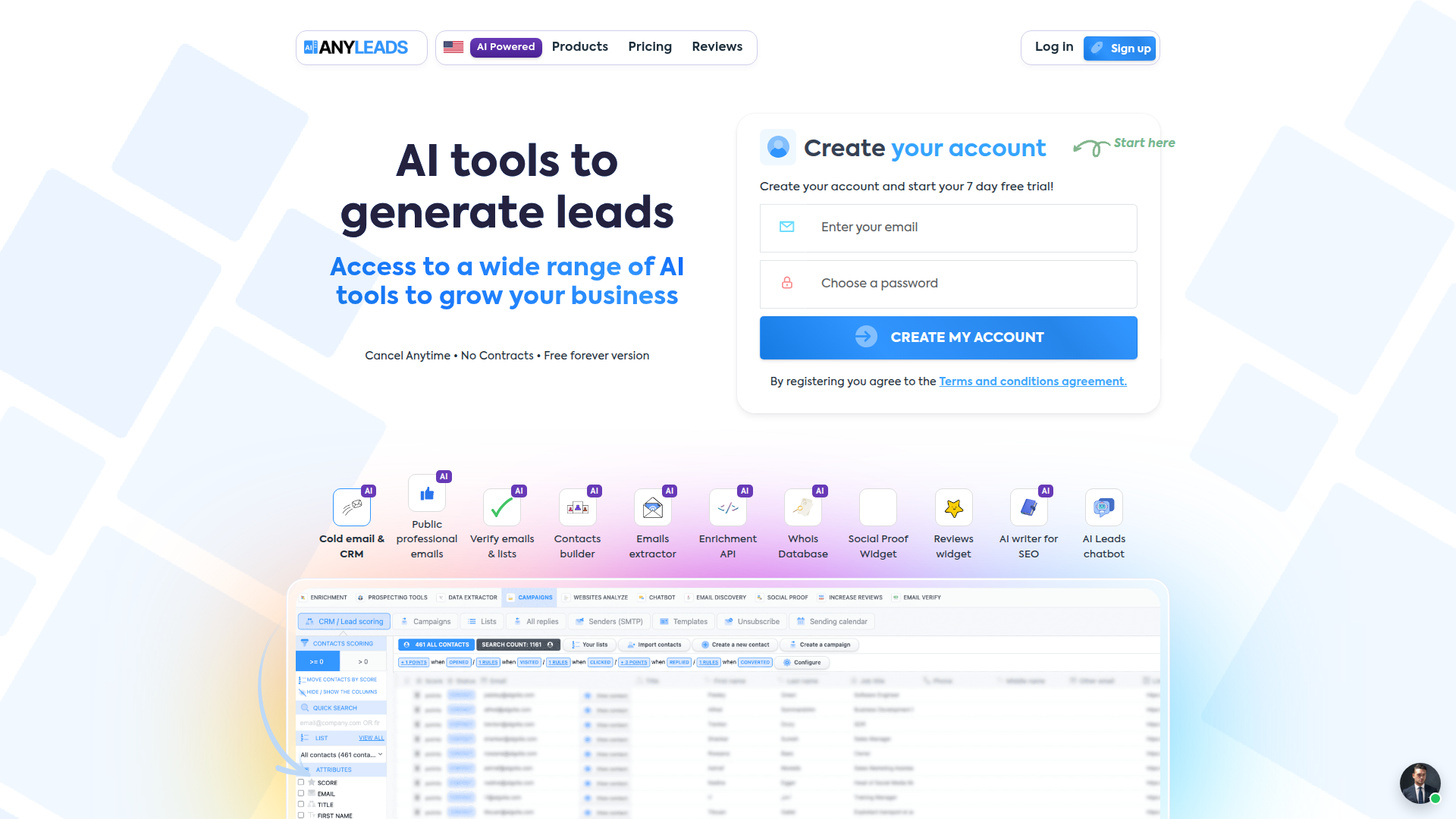
Anyleads offers a powerful lead generation solution tailored for marketing agencies seeking effective white label cold email software. With its advanced AI tools, businesses can automate outreach with smart email sequences and discover verified professional contacts effortlessly. Anyleads streamlines the lead generation process, enabling agencies to save time and improve their marketing strategies, making it an invaluable asset for enhancing conversion rates. Discover more about Anyleads today!
 AI tools to find & convert leads.
 Send emails at scale