
In the fast-paced world of sales, choosing the right tools can significantly impact a small sales team's success. This comprehensive guide explores the top alternatives to Apollo.io, a leading sales intelligence platform, focusing on options that cater to the unique needs of smaller teams. You'll gain insights into the strengths and weaknesses of Apollo.io, learn about viable alternatives like Lusha, Cognism, ZoomInfo, and LeadIQ, and discover how these platforms can enhance your prospecting efforts. By comparing features and pricing, this article helps you make informed decisions, ensuring your team is equipped with the best tools to boost efficiency and drive growth. Whether you're seeking extensive databases, local market coverage, or cost-effective solutions, this guide provides practical examples and recommendations tailored to your team's specific requirements.
Apollo.io is a prominent sales intelligence and engagement platform designed to streamline the sales process for teams of all sizes. It offers a comprehensive suite of tools that assist sales professionals in prospecting, engaging, and converting leads more effectively. Key features include a robust database of contacts, advanced search filters, and automated outreach capabilities. With its ability to integrate seamlessly with CRM systems, Apollo.io helps sales teams maintain accurate records and manage customer interactions efficiently.
The platform is particularly valued for its user-friendly interface and extensive data resources, which empower sales teams to identify potential leads and engage them with personalized communication. This approach not only saves time but also enhances the overall productivity of sales operations. Given these capabilities, Apollo.io has become a critical tool for businesses aiming to optimize their sales strategies and improve conversion rates.
For small sales teams, Apollo.io offers a cost-effective solution that combines essential sales functions into a single platform. The pricing model, at $49 per user per month on an annual plan, makes it accessible for teams with limited budgets. Additionally, the 14-day free trial allows users to explore its features before committing financially. This flexibility is crucial for smaller teams that need to maximize their resources without compromising on functionality.
Moreover, Apollo.io's focus on data accuracy and compliance ensures that sales teams can trust the information they are working with, reducing the risk of errors in outreach efforts. By providing reliable data and automating routine tasks, Apollo.io enables small sales teams to focus on building relationships and closing deals, rather than getting bogged down by administrative duties.
While Apollo.io is a powerful tool, it's important for sales teams to weigh the tradeoffs when considering it as their primary platform. The cost, although reasonable, may still be a consideration for very small teams or startups. Additionally, while Apollo.io provides extensive data, some users may find the learning curve steep if they are not familiar with similar tools.
When comparing Apollo.io with other platforms, teams should consider factors such as data accuracy, ease of use, and the level of customer support available. For those seeking alternatives, it's beneficial to explore platforms focused on data enrichment tools that can help teams achieve their sales goals efficiently. As we delve into the Top 7 Apollo Alternatives for Small Sales Teams (2026), these considerations will be pivotal in determining the best fit for specific business needs.
| Feature | Apollo.io | Considerations |
|---|---|---|
| Pricing | $49/user/month (annual) | Cost-effective for small teams |
| Data Accuracy | High | Ensures reliable outreach |
| User Interface | User-friendly | May require some training |
Understanding the strengths of Apollo.io is essential for small sales teams as they explore alternatives that may better suit their specific needs and objectives.
Apollo.io stands out with its extensive B2B contact database, which is a significant asset for small sales teams. This database provides access to millions of verified contacts, allowing teams to expand their outreach efforts efficiently. For small sales teams, having a vast pool of potential leads at their disposal can be a game-changer, enabling them to target the right prospects without the need for extensive manual research.
The platform's ability to integrate this database with other sales tools ensures that teams can seamlessly incorporate new contacts into their existing workflows. This integration is crucial for maintaining a streamlined sales process and maximizing productivity. With Apollo.io, small sales teams can focus on engaging with high-potential leads, thereby enhancing their overall sales performance.
Apollo.io is renowned for its advanced email sequencing capabilities, which are designed to automate and optimize the outreach process. The platform allows sales teams to create personalized email sequences that can be sent to a large number of contacts. This feature is particularly beneficial for small teams that need to manage high volumes of communication without compromising on personalization.
However, it's important to note that while Apollo's sequencer is built for high-volume template sends, this approach is becoming less effective in today's sales landscape. As personalization becomes more critical, sales teams must balance the use of automated sequences with tailored messaging to maintain engagement and effectiveness. Despite this challenge, Apollo.io's email sequencing remains a powerful tool for small sales teams looking to enhance their outreach strategies.
For more insights on how Apollo.io compares with other platforms focused on data enrichment tools, small sales teams can explore various options to find the best fit for their needs. As we continue to explore the Top 7 Apollo Alternatives for Small Sales Teams (2026), understanding these strengths will provide a solid foundation for evaluating other tools.
Understanding the strengths of Apollo.io provides a foundation for evaluating its weaknesses, allowing small sales teams to make informed decisions about their sales tools.

While Apollo.io boasts an impressive 275 million contact dataset, its effectiveness for small sales teams may be limited by its coverage of local decision-makers. The platform's extensive database is a strong asset, yet it often lacks depth in regional markets, which can be crucial for businesses targeting specific localities. This limitation can hinder sales teams that need to connect with local influencers and decision-makers to drive business growth. The ability to reach the right contacts at a local level is essential for small teams aiming to build strong regional networks.
For small sales teams, the cost per user is a significant factor when choosing a sales intelligence tool. Apollo.io's pricing structure may not be the most economical for teams with limited budgets. While other tools like Bavlio offer a self-serve app starting at US$49 a month, and alternatives such as Smartlead, Instantly, and Lemlist have entry tiers in the $30 to $99 per month range, Apollo.io's pricing can be prohibitive. Small teams must weigh these costs against the value of the features provided to ensure they are making a cost-effective choice.
When comparing Apollo.io with other tools in the market, it's important to consider both pricing and feature sets. Apollo.io provides decent search filters and a large contact database, but its competitors offer various pricing models and features that might better suit smaller teams. For instance, Bavlio's 14-day free trial allows teams to explore its capabilities without commitment, while other platforms offer competitive entry-level pricing. Evaluating these options can help small sales teams find a balance between cost and functionality.
| Tool | Starting Price | Free Trial |
|---|---|---|
| Apollo.io | Pricing unclear | No |
| Bavlio | US$49/month | 14-day |
| Smartlead | $30-$99/month | No |
Small sales teams must consider these factors when selecting a tool that aligns with their budget and operational needs. For more detailed insights on the best alternatives to Apollo.io, platforms focused on data enrichment tools can help teams make informed decisions.

Lusha's browser extension is a standout feature that offers sales teams a seamless way to gather contact information directly from LinkedIn and company websites. This tool is designed to integrate smoothly into your workflow, allowing users to quickly access and save leads without needing to switch between multiple platforms. The extension provides verified contact details, ensuring that the information is accurate and up-to-date, which is crucial for effective outreach.
Unlike Apollo.io, which costs $49 per user per month on an annual plan and offers a 14-day free trial, Lusha's pricing model is more flexible, catering to businesses that require scalability. While Apollo.io is known for its comprehensive features, Lusha's browser extension focuses on delivering high-quality data with minimal user effort, making it a strong contender for small sales teams looking for efficiency and accuracy.
When it comes to ease of use, Lusha is designed with simplicity in mind, offering an intuitive interface that requires minimal training to get started. This is particularly beneficial for small sales teams that may not have the resources to dedicate extensive time to onboarding. The platform's straightforward design ensures that users can quickly navigate through its features, allowing them to focus more on engaging with prospects rather than managing the tool itself.
In comparison, Apollo.io provides a more complex suite of tools, which might be overwhelming for teams that prefer a straightforward approach. Lusha's emphasis on user-friendly design, combined with its powerful data retrieval capabilities, makes it an attractive alternative for teams prioritizing ease of use.
| Feature | Lusha | Apollo.io |
|---|---|---|
| Browser Extension | Yes | No |
| Pricing | Flexible | $49/user/month (annual) |
| Free Trial | Available | 14 days |
Lusha and Apollo.io each have their strengths, but the choice between them often comes down to specific team needs. Lusha excels in providing a user-friendly experience with a focus on accurate data collection, while Apollo.io offers a broader range of features at a higher price point. For teams that prioritize ease of use and data accuracy, Lusha presents a compelling option. For more insights into these platforms and others, you can explore data enrichment tools that can help teams optimize their sales strategies.
Cognism offers distinct features and capabilities that set it apart from Lusha, making it a compelling option for small sales teams seeking effective Apollo alternatives.
Cognism stands out as a compelling alternative to Apollo, especially for small sales teams prioritizing data accuracy. One of the key features of Cognism is its phone-verified data, which ensures that the contact information is both fresh and accurate. This meticulous verification process significantly enhances the reliability of the data, making it an ideal choice for sales teams operating in regions where data accuracy is crucial, such as the EMEA.
By focusing on phone verification, Cognism reduces the risk of outdated or incorrect data, which can be a common issue in sales intelligence. This feature is particularly beneficial for teams looking to streamline their outreach efforts and maximize their conversion rates by ensuring they are contacting the right individuals.
Another significant advantage of using Cognism is its strong emphasis on compliance, particularly with GDPR regulations. For businesses operating in or targeting the European market, compliance with data protection laws is not just a legal requirement but also a trust-building factor with potential clients. Cognism ensures that all its data collection and processing practices adhere to these stringent standards, providing peace of mind to its users.
This commitment to compliance is complemented by Cognism's robust 16-step email verification process, which not only lowers bounce rates but also aligns with data protection best practices. This thorough approach to email verification helps maintain the integrity of communication channels and supports efficient marketing strategies.
| Feature | Cognism | Apollo |
|---|---|---|
| Data Verification | Phone-verified, 16-step email process | Standard verification |
| GDPR Compliance | Fully compliant | Partially compliant |
For sales teams evaluating alternatives to Apollo, Cognism offers a robust solution with its focus on verified, compliant contact data. Its unique features make it a standout choice, particularly for those operating in the EMEA region. For further details on Cognism's capabilities, you can explore their data enrichment tools.
As we explore the capabilities of Cognism, it is essential to also consider how ZoomInfo positions itself as a competitive alternative in the sales tools landscape.
ZoomInfo is a robust platform that provides comprehensive sales intelligence tools, ideal for small sales teams looking to enhance their prospecting efforts. The platform offers detailed company profiles and contact information, enabling sales teams to target the right prospects efficiently. One of the standout features of ZoomInfo is its ability to provide real-time data updates, ensuring that users have access to the most current information available. This is particularly beneficial for small teams that rely on accurate data to make informed decisions quickly.
Additionally, ZoomInfo integrates with popular CRM systems, allowing sales teams to seamlessly incorporate its data into their existing workflows. This integration capability helps streamline operations and reduces the time spent on manual data entry, which can be a significant advantage for teams with limited resources. While ZoomInfo does not offer a free trial, its custom pricing model allows businesses to tailor the service to their specific needs.
When considering ZoomInfo as an alternative to Apollo.io, it's important to weigh the pros and cons. ZoomInfo excels in data accuracy and compliance, making it a reliable choice for businesses that prioritize these factors. However, the lack of a specified free trial might be a drawback for teams looking to test the service before committing. Pricing is also not transparent, which means potential users should reach out directly for a quote tailored to their needs.
Comparatively, Apollo.io offers a more transparent pricing structure with a free version available, which can be appealing for small teams with budget constraints. However, ZoomInfo's extensive database and integration capabilities often make it a preferred choice for teams that require detailed insights and seamless CRM integration. As you evaluate options, consider your team's specific needs and how each platform's strengths align with your sales strategy.
For more insights into how different tools can benefit your team, you might find our guide on Top 9 Tagger Alternatives For Measurement Led Teams In 2026 helpful.
| Feature | ZoomInfo | Apollo.io |
|---|---|---|
| Data Accuracy | High | Moderate |
| CRM Integration | Yes | Yes |
| Pricing Transparency | Custom Pricing | Transparent |
| Free Version | No | Yes |
As we explore more alternatives, LeadIQ presents unique features that can further enhance the capabilities of small sales teams in comparison to ZoomInfo.
LeadIQ stands out for its robust lead capture capabilities, which are essential for small sales teams seeking an alternative to Apollo.io. The platform offers a free tier with 50 credits, making it accessible for teams with limited budgets. For more intensive needs, Pro plans start at $15 per month, providing a cost-effective solution for expanding lead generation efforts.
One of the key features of LeadIQ is its ability to quickly gather verified contact information, such as emails and phone numbers, from various sources. This capability is crucial for sales teams that need to build and maintain an accurate and up-to-date prospect database. By automating the process of data collection, LeadIQ helps sales teams focus on engaging with leads rather than spending time on manual data entry.
LeadIQ's user-friendly interface is designed to enhance the user experience, making it a preferred choice for teams that prioritize platform usability. The tool integrates seamlessly with popular CRM systems, ensuring that collected data is easily accessible and actionable. This integration capability is particularly beneficial for teams looking to streamline their workflow and maintain data consistency across platforms.
When comparing LeadIQ to Apollo.io, it's important to consider the compliance and data accuracy aspects. LeadIQ emphasizes data accuracy, which is crucial for maintaining trust and compliance in sales operations. While Apollo.io offers a broader range of features, LeadIQ's focus on lead capture and data integrity makes it a strong contender for teams that prioritize these elements.
| Feature | LeadIQ | Apollo.io |
|---|---|---|
| Pricing | Free for 50 credits, Pro from $15/month | Pricing unclear |
| Lead Capture | Automated, verified data | Comprehensive data suite |
| CRM Integration | Seamless integration | Advanced integration options |
Overall, LeadIQ offers a compelling alternative to Apollo.io for small sales teams, particularly those focused on cost-effective lead capture and data accuracy. By weighing these factors, teams can make informed decisions about which platform best suits their needs.

When evaluating Apollo.io and its alternatives, it's crucial to consider the core features each platform offers. Apollo.io is renowned for its extensive B2B database, boasting over 275 million contacts, primarily targeting tech buyers and marketing leaders. However, its coverage of local decision-makers is less comprehensive. Apollo.io's strengths lie in its email sequencing capabilities and CRM-lite features, which are bundled at a competitive price of $49 per user per month.
In contrast, platforms like Snov.io offer email finding and basic sequencing functions at a significantly lower cost, making them attractive for budget-conscious teams. Snov.io provides a comprehensive suite of email verification and sequencing tools, which are essential for small sales teams aiming to enhance their outreach without incurring high expenses. These differences highlight the importance of aligning platform capabilities with specific business needs.
Choosing between Apollo.io and its alternatives involves weighing various tradeoffs. While Apollo.io's large dataset and robust email sequencing are appealing, the high volume template sends are becoming less effective, prompting some teams to explore alternatives with more personalized outreach options. For instance, Snov.io's affordable pricing and focus on email verification can be a game-changer for teams prioritizing cost-effectiveness and deliverability.
Other alternatives like LeadIQ and ZoomInfo offer unique advantages, such as human-verified records and comprehensive datasets, respectively. However, these often come with higher price points or enterprise-focused features, which may not be suitable for smaller teams. Therefore, understanding the specific needs of your sales team and the tradeoffs involved is essential for making an informed decision.
| Product | Core Features | Price | Best For |
|---|---|---|---|
| Apollo.io | 275M+ contact database, email sequencing, CRM-lite | $49/user/month | Tech buyers, marketing leaders |
| Snov.io | Email finding, verification, sequencing | Lower cost | Budget-conscious teams |
| ZoomInfo | Comprehensive dataset, integrations | Quote-based | Enterprise sales |
For a deeper understanding of these platforms and their suitability for B2B prospecting, consider exploring data enrichment tools that can help teams optimize their outreach strategies. By comparing the core features and tradeoffs of each platform, sales teams can make informed decisions that align with their goals and resources.
Understanding the features of Apollo.io and its alternatives sets the stage for a crucial evaluation of their pricing, which can significantly impact a small sales team's budget and decision-making process.
When evaluating Apollo.io and its alternatives, pricing is a crucial factor for small sales teams. Apollo.io has traditionally been valued for its bundled offering of a large B2B contact database, email sequencing, and a CRM-lite layer, all at an accessible price point. However, its sequencer, designed for high-volume template sends, is becoming less effective in today's market.
In contrast, alternatives like Smartlead, Instantly, and Lemlist offer entry-level pricing in the range of $30 to $99 per month. These platforms cater to small teams needing cost-effective solutions without sacrificing essential features. For example, Smartlead provides a robust platform for automated outreach, while Lemlist focuses on personalized email sequences. These pricing tiers make them attractive options for small teams looking to maximize their budget efficiency.
Small sales teams often operate with limited resources, making the value proposition of each tool a critical consideration. Apollo.io's comprehensive package is appealing due to its integration of multiple tools into one platform. However, the effectiveness of its high-volume template sends is waning, prompting teams to explore alternatives that offer more personalized approaches.
Platforms like Instantly and Lemlist provide significant value by offering features tailored to small teams, such as personalized email campaigns and smart sequencing. These tools allow for more targeted outreach, which can lead to higher conversion rates. Additionally, the lower entry price points of these alternatives mean that small teams can access advanced features without a substantial financial commitment.
| Tool | Pricing Range | Key Features | Best For |
|---|---|---|---|
| Apollo.io | Accessible pricing | Large B2B database, CRM-lite | Teams needing bundled solutions |
| Smartlead | $30-$99/month | Automated outreach, smart sequences | Cost-conscious small teams |
| Instantly | $30-$99/month | Personalized email campaigns | Teams focusing on personalization |
| Lemlist | $30-$99/month | Email sequences, personalization | Teams seeking engagement |
For more detailed insights into these alternatives and their suitability for AI-driven outreach, consider exploring bavlio.com's guide. This resource provides a comprehensive analysis of each platform's features and pricing, helping teams make informed decisions.
Lusha offers several compelling features that make it a strong contender as an alternative to Apollo.io. One of its primary advantages is the ease of access to contact details through its browser extension. This tool allows users to quickly surface contact information from LinkedIn and company websites with just a click, streamlining the process of gathering leads. This feature is particularly beneficial for sales teams that rely on up-to-date contact information to drive their outreach efforts.
Another significant advantage is Lusha's pricing model. It provides a free tier with 70 credits, which is ideal for small sales teams or individuals just starting with lead generation. For those requiring more extensive use, Lusha's paid plans start at a competitive $22.45 per month, offering flexibility and affordability. Additionally, the availability of a free trial allows users to evaluate the platform's capabilities before committing to a subscription.
Despite its advantages, Lusha does have some drawbacks to consider. One notable limitation is its focus on LinkedIn and company sites, which may not cover all the sources a sales team might require for comprehensive lead generation. This could necessitate the use of additional tools or platforms to fill in the gaps, potentially increasing overall costs and complexity.
Another potential downside is the credit-based system, which might limit usage for teams with high-volume needs. While the free tier is attractive, it might not suffice for businesses that require extensive lead generation capabilities. As such, teams may need to carefully evaluate their usage patterns against the cost of additional credits to ensure Lusha meets their needs without exceeding budget constraints.
| Pros | Cons |
|---|---|
| Easy access to contact details via browser extension | Limited to LinkedIn and company sites |
| Free tier with 70 credits | Credit-based system may limit high-volume use |
| Affordable starting price at $22.45/month | May require additional tools for comprehensive coverage |
Overall, Lusha presents a viable option for small sales teams looking for a cost-effective and user-friendly alternative to Apollo.io. However, teams should weigh the benefits against the potential limitations to determine if it aligns with their specific lead generation needs.
Having explored the advantages and disadvantages of Lusha as an alternative to Apollo, it is important to consider how Cognism compares in terms of its own unique features and drawbacks.
Cognism stands out as a compelling alternative to Apollo, particularly for small sales teams focusing on the EMEA region. One of its primary advantages is its emphasis on data accuracy and compliance. Cognism provides verified and compliant contact data, which is crucial for businesses operating under strict data protection regulations like GDPR. This compliance ensures that sales teams can confidently reach out to prospects without the risk of legal repercussions.
Another significant advantage is the quality of Cognism's data. The platform offers phone-verified mobile numbers and employs a 16-step verification process for emails, which significantly reduces bounce rates. This meticulous approach to data verification means that sales teams can expect higher conversion rates due to the reliability and freshness of the contact information.
Despite its strengths, Cognism does have some drawbacks that sales teams should consider. One notable disadvantage is its pricing model. Unlike some competitors, Cognism offers custom pricing, which can make it challenging for small sales teams to budget effectively without a clear upfront cost. This lack of transparency might be a barrier for teams looking for predictable expenses.
Additionally, Cognism's focus on the EMEA region might limit its appeal to global teams seeking comprehensive international coverage. While its data is robust in its targeted regions, sales teams operating primarily outside EMEA might find its offerings less beneficial compared to other alternatives that provide broader geographic data coverage.
When comparing Cognism to Apollo, several key differences emerge. Cognism excels in data accuracy and compliance, making it an excellent choice for teams prioritizing these aspects. In contrast, Apollo might offer more straightforward pricing and broader integrations, which could be more appealing to teams seeking a more predictable and versatile solution.
The following table summarizes some of the core differences between Cognism and Apollo:
| Feature | Cognism | Apollo |
|---|---|---|
| Data Accuracy | High (Phone-verified) | Moderate |
| Compliance | Strong (GDPR-focused) | Standard |
| Pricing | Custom | Fixed Tiers |
| Geographic Focus | EMEA | Global |
Ultimately, the choice between Cognism and Apollo will depend on a sales team's specific needs, such as the importance of data compliance, budget constraints, and geographic focus.
As we consider the strengths and weaknesses of Cognism, it's essential to weigh these factors against the broader context of selecting the right Apollo alternative for small sales teams.
When selecting an Apollo alternative, it's crucial to consider the specific needs of your sales team. If your team prioritizes a vast database, Apollo's 275 million contact dataset is an attractive feature. However, for small sales teams, the cost of $49 per user per month might be prohibitive. In contrast, tools like Snov.io offer email finding and basic sequencing at a more budget-friendly price, making them suitable for teams with limited resources.
For teams focused on local markets, Apollo's limited coverage of local decision-makers might be a drawback. In this case, exploring alternatives that provide more comprehensive local data could be beneficial. Additionally, if your outreach strategy relies heavily on personalization rather than high-volume template sends, you might find Apollo's sequencer less effective, prompting a search for tools that offer more flexibility in this area.
Choosing the right tool involves weighing various tradeoffs. While Apollo excels in providing a massive B2B database, its cost and focus on tech buyers may not align with every team's needs. For instance, if your team requires advanced features at a lower price point, Snov.io could be a viable option, offering essential functionalities without the hefty price tag.
Consider the importance of integrations and user experience in your decision-making process. Some tools might offer seamless integration with existing CRM systems, enhancing workflow efficiency. User experience also plays a critical role; a platform that's intuitive and easy to navigate can significantly impact your team's productivity. Evaluating these factors can help you make an informed decision that aligns with your team's objectives.
| Tool | Contact Database | Pricing | Key Features |
|---|---|---|---|
| Apollo | 275M+ contacts | $49/user/month | High-volume sends, CRM-lite |
| Snov.io | Smaller database | Lower cost | Email finding, basic sequencing |
Ultimately, the choice of an Apollo alternative should be driven by your team's unique needs and budget. For more insights into optimizing your sales strategies with AI tools, you might find our article on 6 Ai Roleplay And Coaching Platforms For Sales Teams In 2026 to be a valuable resource.
In conclusion, selecting the right sales intelligence platform is crucial for small sales teams aiming to enhance their prospecting and engagement efforts. While Apollo.io offers a robust B2B contact database and advanced email sequencing capabilities, its limitations in covering local decision-makers and the cost per user may not suit all teams. Exploring alternatives like Lusha, Cognism, ZoomInfo, and LeadIQ can provide tailored solutions that address specific needs such as data accuracy, regional market coverage, and budget constraints. Lusha’s browser extension, Cognism’s phone-verified data, ZoomInfo’s real-time updates, and LeadIQ’s cost-effective lead capture capabilities each offer unique advantages. Comparing these features and pricing against Apollo.io's can guide teams in making informed decisions. Ultimately, understanding the strengths and weaknesses of each platform allows small sales teams to align their choice with their strategic goals. As a next step, teams should evaluate their specific requirements and trial these alternatives to determine the best fit for their sales objectives.
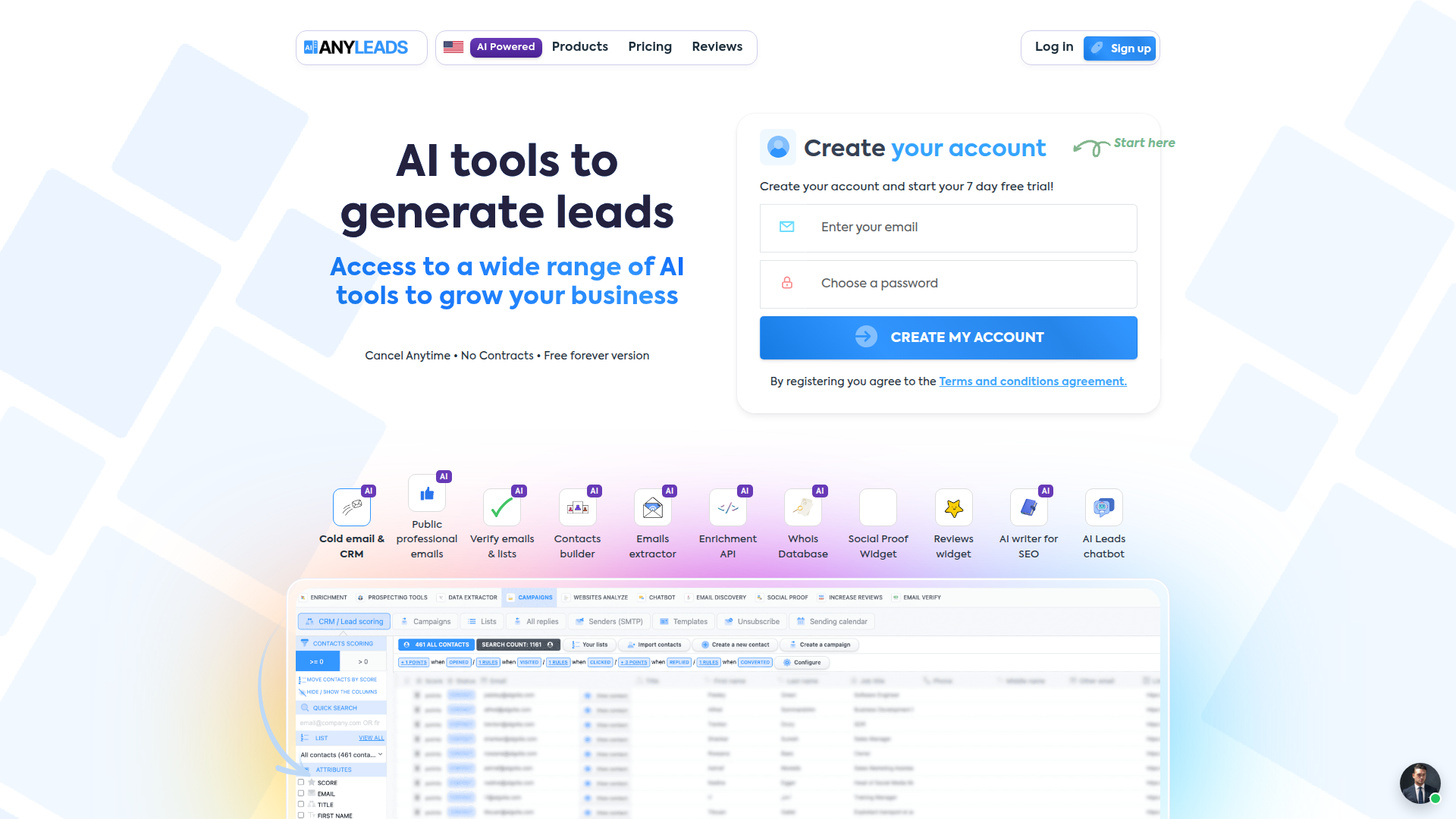
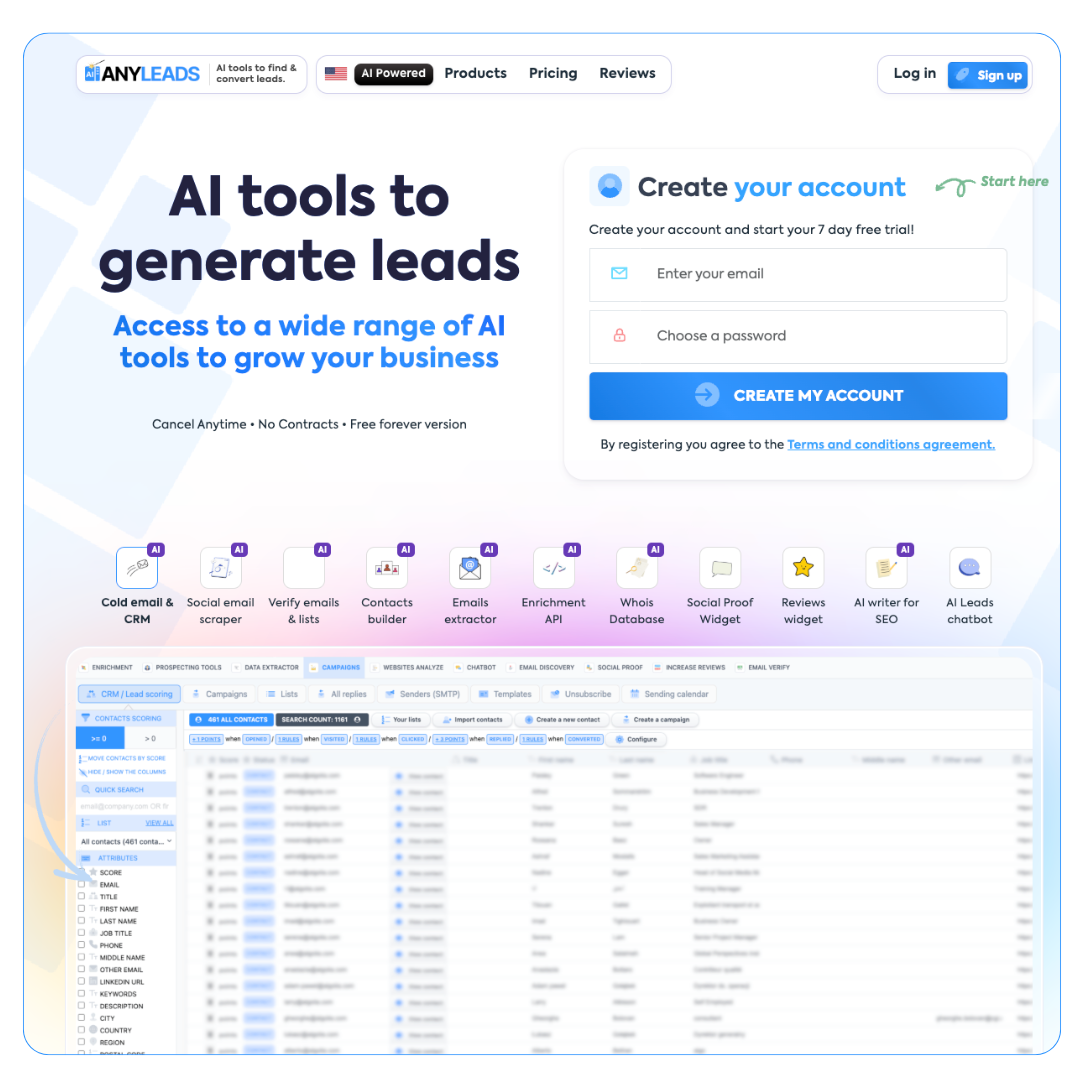
For small sales teams seeking a powerful alternative to Apollo, Anyleads offers a cutting-edge solution that combines AI-driven lead generation with seamless automation. Its comprehensive features, including smart email sequences and verified contact discovery, are designed to streamline your outreach and boost conversion rates. Anyleads not only saves time but also enhances your marketing efforts, making it an essential tool for any business looking to grow efficiently. Discover more about Anyleads today!
 AI tools to find & convert leads.
 Send emails at scale