Most marketing and lead gen agencies are good at attracting leads (well, that’s why they’re a marketing agency). But many struggle with what comes next.
Building landing pages, funnels, content, and full websites takes time. These are the assets that actually convert traffic into leads. And without them, even the best campaigns fall short.
The problem is execution. Hiring developers is expensive and slow. Managing in-house teams adds complexity. And timelines often stretch longer than expected. Meanwhile, your campaigns need to move quickly.
If you can’t launch pages on time, you risk losing momentum and missing out on potential leads. That’s why more agencies are turning to white label web development.
You manage the client relationship while a trusted partner handles the build. The work is delivered under your brand, without the overhead of hiring or managing additional resources.
In this guide, we’ll break down the top white label web development agencies in the USA. We’ll also cover what to look for and how to choose the right partner for your workflow.
White label web development is a simple concept.
You sell the service to your client, but another team builds it for you. The final work is delivered under your brand, so from the client’s perspective, it all comes from your agency.
This setup is common among marketing and lead generation firms that want to expand their services without building an in-house development team. Whether you need a full web app development company or a team focused on landing pages and funnels, white label partners can fill that gap under your brand.
In most cases, agencies use white label partners for:
Landing pages for paid campaigns
Sales funnels and conversion-focused pages
Website builds or redesigns
Ongoing development and maintenance
The biggest advantage is flexibility. You can take on more projects without worrying about hiring, training, or managing developers. You also avoid bottlenecks when your internal team is stretched.
At the same time, you stay focused on what you do best—strategy, campaigns, and client relationships—while your partner handles the execution.
That’s what makes white label development a practical way to scale, especially for agencies that rely on speed and consistent delivery.
We’ll break down the top white label web development agencies in the USA. We’ll also cover what to look for and how to choose the right partner for your workflow.. There is an absolute myriad of white label providers out there. But not all of them are built for marketing and lead generation workflows.
Some are great at design but don’t think about conversions. Others can build fast but need heavy hand-holding. And some simply aren’t set up for agency-style delivery. The best ones understand how websites and landing pages actually drive conversions.
Here are some of the top white label web development agencies in the USA to consider.
GetDevDone™ is the engineering partner for digital agencies.
Since 2005, GetDevDone has delivered 131,000+ projects for 15,150+ agencies worldwide across website development, front-end development, eCommerce development, digital design, and AI engineering.
Rather than acting as a standard vendor, they act as a true "ghost partner." They integrate directly into your existing structures, workflows, and tooling. This allows you to scale delivery capacity and take on technically demanding work without adding any internal hiring overhead.
Why it stands out:
● Direct integration into existing agency processes and tooling
● 100% white label execution with full engineering accountability
● Production-standard capabilities built around reliability, scalability, and performance
Best for:
● Digital agencies looking for a dependable, scalable development arm
● Teams needing to expand capacity without adding management overhead
● High-volume agencies requiring consistent, production-ready output
Mavlers Agency is a leading white label web development agency that helps marketing agencies, lead-generation firms, and growth-focused consultancies scale their web delivery capabilities without expanding internal development teams. The company provides white-label support across Webflow, WordPress, Shopify, and HubSpot CMS, delivering everything from landing pages and conversion-focused websites to full-scale website builds, migrations, and ongoing maintenance.
Unlike many providers that focus solely on development, Mavlers combines web development with UI/UX design, brand asset creation, CRO, analytics implementation, and digital marketing expertise. This allows agencies to access a broader range of services through a single white label web development agency, streamlining project delivery and reducing operational complexity.
All work is delivered under strict NDA agreements and fully white-labeled, ensuring agencies retain complete ownership of client relationships while Mavlers remains invisible throughout the engagement. Its onshore-strategy, offshore-delivery model helps agencies maintain healthy margins while benefiting from scalable production capacity and faster turnaround times.
With a team of 400+ specialists and more than 6,000 agency partnerships worldwide, Mavlers has built a reputation as a reliable partner for firms managing high project volumes, tight deadlines, and multi-platform website requirements. Every project undergoes a rigorous QA process before handoff, helping agencies deliver consistent quality to their clients.
Key Services: White-Label Web Development, Webflow Development, WordPress Development, Shopify Development, HubSpot CMS Development, UI/UX Design, CRO, and Analytics Implementation
Best For: Digital Marketing Agencies, Lead Generation Agencies, Creative Agencies, Growth Agencies, and Consulting Firms looking for a scalable white label web development agency partner.
AgencyMinds is a white label digital agency built specifically for marketing agencies, and that shows in how they approach web development.
Their focus isn’t just on building websites. It’s on building assets that convert. Landing pages, funnels, and full websites are designed with lead generation in mind, not just aesthetics.
They’re also known for fast turnaround times. That matters more than it sounds. When you’re running paid campaigns or outbound efforts, delays don’t just slow things down but cost you leads.
Why it stands out:
Conversion-first approach, not just design-first
Built around agency workflows
Fast and predictable delivery
Best for:
Lead generation agencies
Paid ads and SEO teams
Agencies that need speed without sacrificing performance
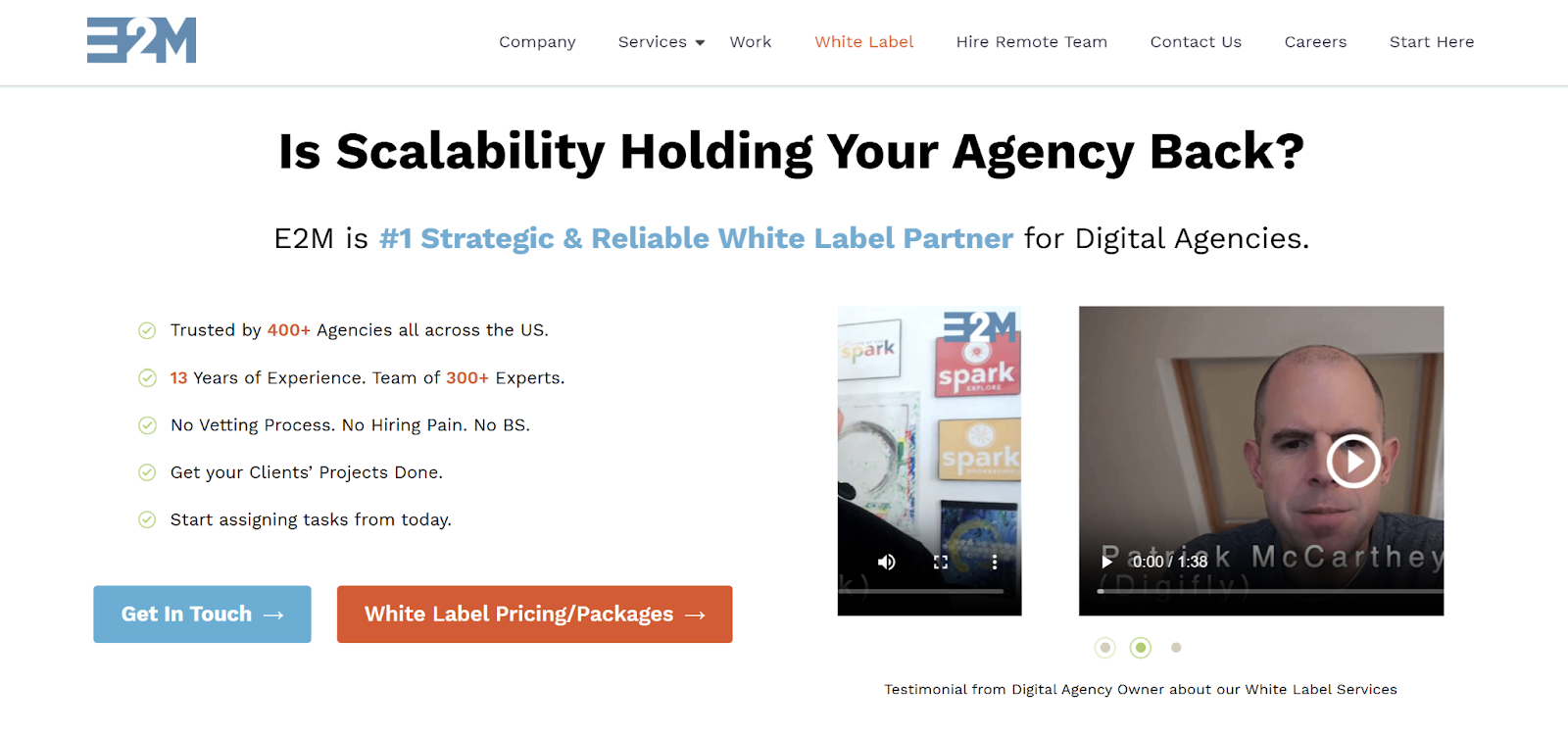
E2M Solutions is one of the more established names in the white label space, with a large team and a broad set of capabilities.
They can handle everything from WordPress builds to Shopify and custom work, which makes them a good fit if your projects vary a lot.
The trade-off is that with larger teams, processes can feel more structured and less flexible. That’s not necessarily a bad thing. It just depends on how you like to work.
Strengths:
Scalable team for higher volumes
Wide tech stack support
Established processes
Best for:
Agencies managing consistent, high-volume development work
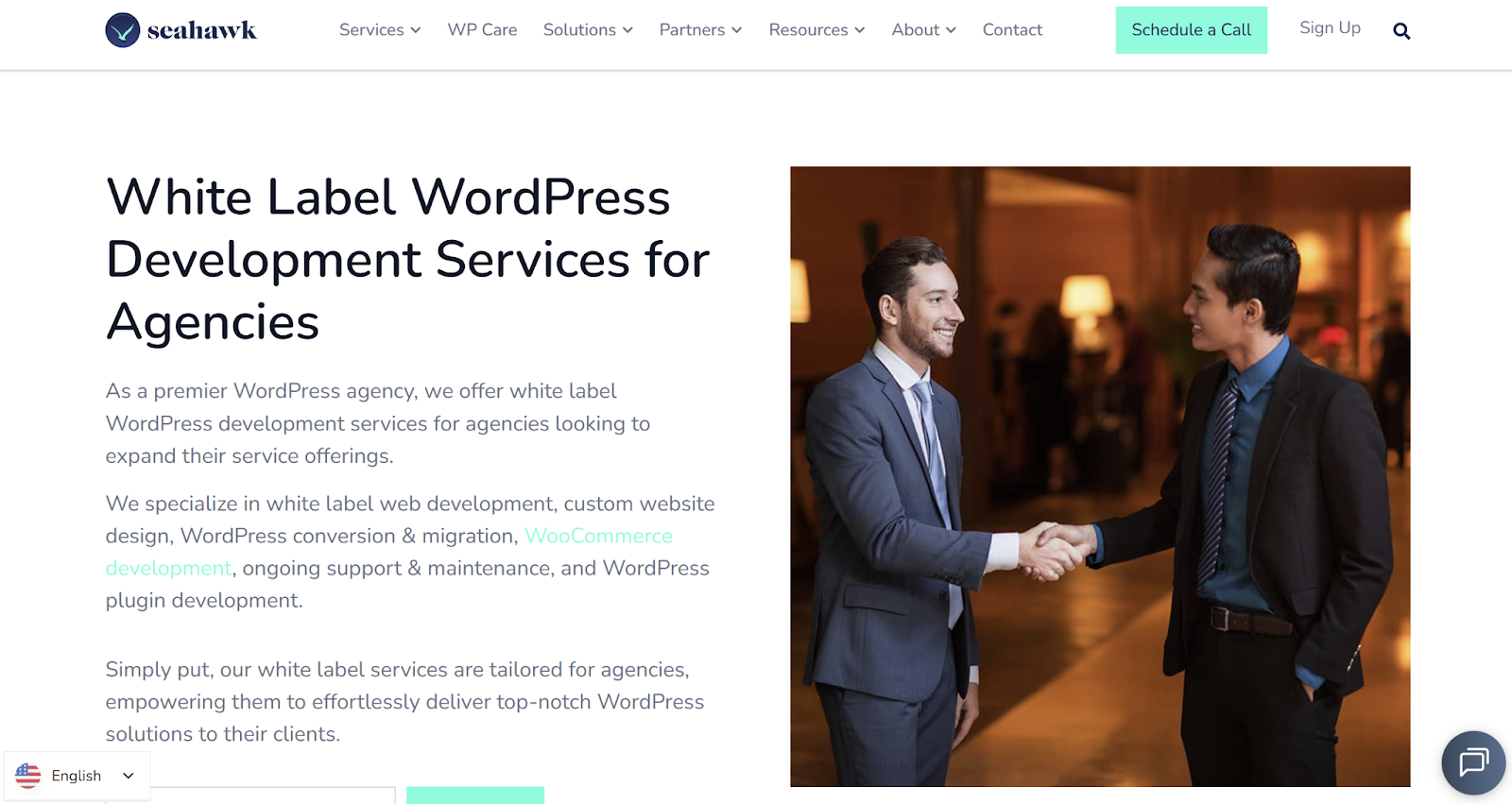
Seahawk Media leans heavily into WordPress, and they do it well.
They offer a mix of development, maintenance, and support, which makes them useful beyond just one-off builds. If your agency has ongoing WordPress clients, this kind of continuity can save a lot of back-and-forth.
They’re less about experimentation and more about steady, reliable delivery.
Strengths:
Strong WordPress expertise
Ongoing support and maintenance
Structured and predictable workflows
Best for:
Agencies that primarily work within the WordPress ecosystem
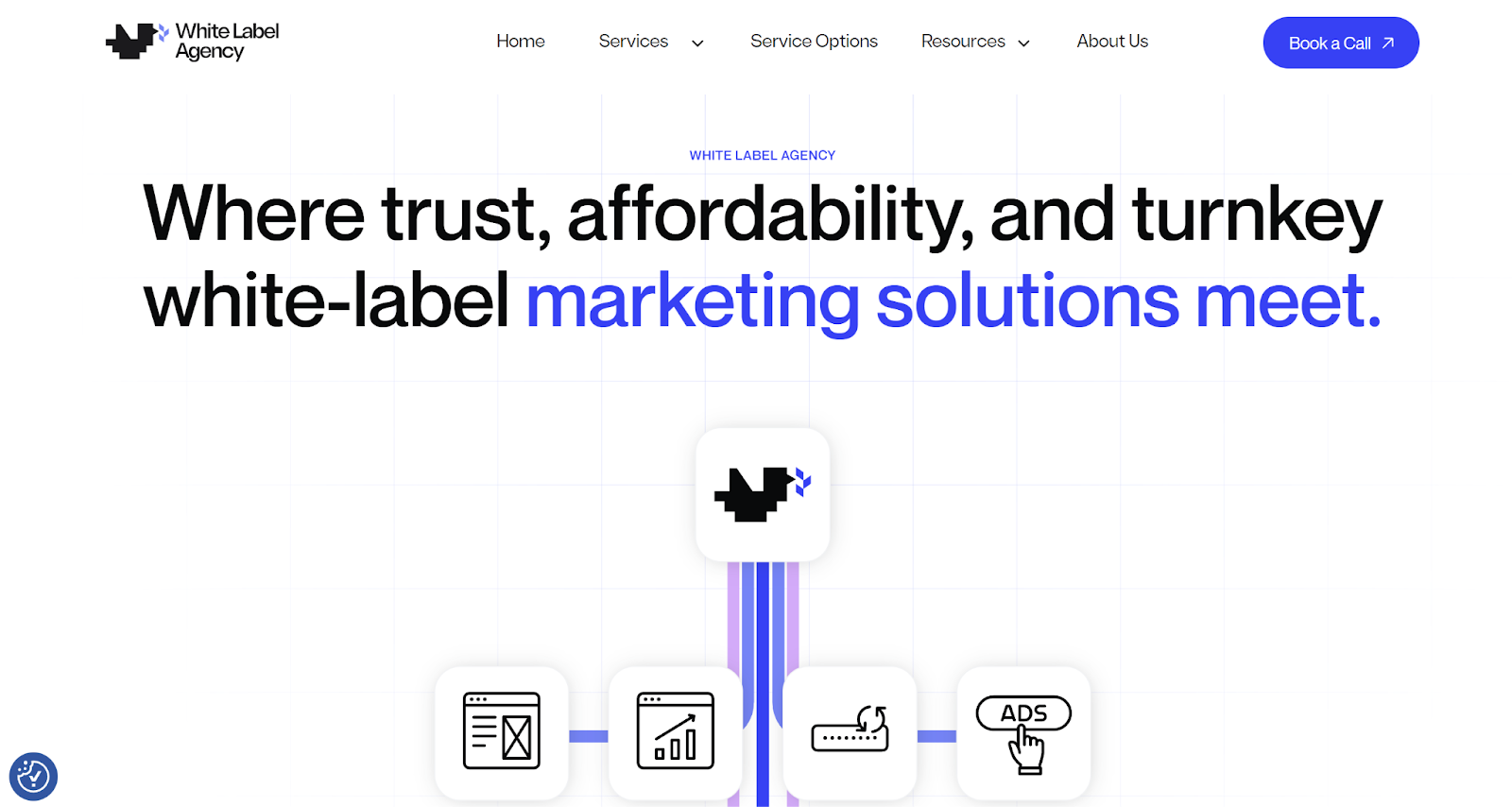
White Label Agency is known for its Webflow work, especially on the design side.
If your clients care about visual quality and clean builds, they’re a strong option. Their work tends to lean more toward polished design than aggressive conversion optimization, which is something to keep in mind depending on your goals.
Strengths:
Webflow specialization
Strong design execution
Clean, modern builds
Best for:
Design-focused agencies
Teams working heavily with Webflow

Once you start exploring options, most agencies look similar on the surface. They all promise quality. They all promise speed. And they all say they “work with agencies.”
The differences show up in execution. Here’s what actually matters when choosing a partner.
In lead generation, timing matters more than perfection. If a landing page takes weeks to go live, your campaign slows down. And when campaigns slow down, results follow.
Ask about turnaround times. Not just for full websites, but for smaller tasks too.
A good-looking website is not the goal. A website that converts is. Your partner should understand:
Lead capture flows
Page structure
Basic CRO principles
If they only talk about design and not performance, that’s usually not a good sign.
Every agency has its preferred tools. Some work in WordPress. Others use Webflow, Shopify, or custom setups.
Your white label partner should fit into your existing stack, not force you to change it.
This is where many partnerships break down. You don’t just need good developers. You need a team that responds quickly, understands instructions, and keeps things moving.
Clear communication saves more time than technical skill alone.
This is easy to overlook. Make sure they’re set up to work behind the scenes:
NDAs in place
No visible branding
Client-ready deliverables
Your client should never feel like there’s a third party involved.
Pricing models vary a lot. Some charge per project. Others work on retainers or hourly rates.
What matters is clarity. You should know what you’re paying for, how changes are handled, and what’s included. Surprises here tend to show up at the worst time.
Here’s the simple way to think about it: You’re not just hiring a development team. You’re adding an extension to your agency. And the smoother that extension works, the easier everything else becomes.
Even with the right intent, it’s easy to choose the wrong partner.
Most issues don’t show up on day one. They show up when deadlines are tight and expectations are high.
Here are a few mistakes to watch for.
Choosing based on price alone: Lower cost can look attractive at first. But if delivery is slow or quality needs constant revision, you end up paying in time and missed opportunities. A cheaper partner that delays your campaigns is rarely a good deal.
Ignoring turnaround time: Some agencies promise quality but don’t commit to timelines. In lead generation, that’s a problem. If you don’t know when something will be delivered, you can’t plan campaigns around it.
Not testing with a small project first: Jumping straight into a large project can be risky. Start with something small. A landing page or a quick build. It gives you a clear sense of how they communicate, how they deliver, and how much oversight they need.
Prioritizing design over conversion: A polished design is great. But if it doesn’t convert, it doesn’t help your campaigns. Make sure your partner understands performance, not just visuals.
Overlooking communication: This one tends to be underestimated. Slow replies, unclear updates, or constant follow-ups can slow everything down. A responsive partner keeps your workflow moving. A silent one creates friction.
The right partner makes your entire process easier. And that’s what you should be optimizing for.
White label web development isn’t just a workaround. It’s a way to scale without adding complexity.
You don’t need to hire faster. You need to execute faster. When you have the right partner in place, you spend less time managing builds and more time growing your campaigns.
 AI tools to find & convert leads.
  Send emails at scale