Higgsfield AI is good at cinematic shots and dramatic camera movements, but engaging social media videos need more than eye-catching visuals. Product ads need to show the item clearly, TikToks need a strong opening hook, and AI influencer clips need believable movement. The following Higgsfield AI alternatives cater to these different needs, from making product promos to creating realistic characters and scroll-stopping effects.
Higgsfield AI stands out for cinematic camera movements and stylized visuals, but that focus may not suit every social media workflow. Product marketers need videos that showcase product details accurately, support different ad formats, and can be adapted for multiple campaigns. Creators making UGC-style content or AI influencer videos may prioritize natural human movement and consistent characters, while small teams often need a faster way to produce varied content without extensive editing. When a project calls for these capabilities rather than cinematic effects alone, an alternative may be a better fit.
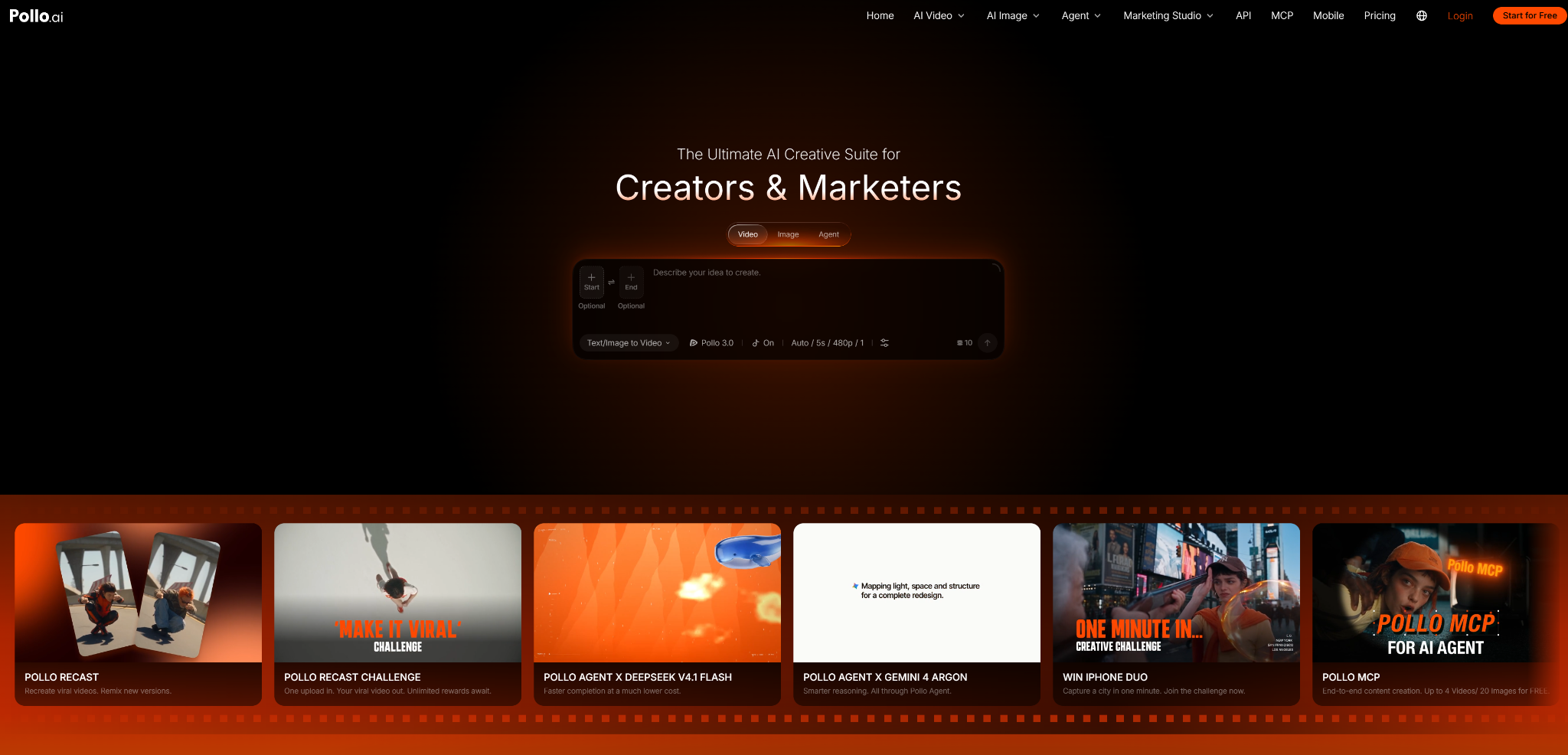
Pollo AI offers text-to-video, image-to-video, video-to-video, AI avatars, and access to multiple video generation models. This makes it useful for creators who switch between product promos, UGC-style ads, and character-led content.
For example, an online seller can animate a product image, while a marketer can create an avatar-led promo or explore different creative directions for an ad. Pollo Agent and Marketing Studio also support more structured video creation for marketing workflows.
Pros
Supports a wide range of social video formats.
Offers multiple models and creation workflows.
Useful for product ads, avatar videos, and UGC-style content.
Cons
Finding the right model and settings can take experimentation.
Its wider toolkit may be unnecessary for creators who only need cinematic shots.
Best for: Creators and businesses producing different types of social media videos on a regular basis.


Runway suits creators who want to build visually distinctive scenes rather than rely on quick effects. Its video generation and editing tools are useful for fashion campaign teasers, travel Reels, and short narratives where composition and atmosphere matter.
The trade-off is time. Detailed scenes may take several generations and further editing, making Runway less convenient for teams churning out simple promotional clips.
Pros
Useful for cinematic storytelling and controlled visual styles.
Combines video generation with editing tools.
Cons
Complex shots may need repeated adjustments.
Routine social ads may take more work than necessary.
Best for: Creators making cinematic Reels, campaign teasers, and narrative short videos.
Kling AI is a strong option when a video depends on natural human movement and recognizable characters. Creators can animate portraits or generate scenes for AI influencer accounts, fashion content, and product demonstrations featuring people.
However, facial features, hands, and clothing can still change between generations. Clips should be checked carefully, especially when visual consistency matters across a campaign.
Pros
Well suited to human motion and portrait animation.
Supports text-to-video and image-to-video workflows.
Cons
Character consistency can vary.
Complex interactions may require multiple attempts.
Best for: AI influencer videos and social content featuring realistic people.
Pika focuses on playful visual transformations. Its Pikaffects tools include effects such as melting, inflating, and crushing, making it useful for memes, humorous product clips, and unusual visual hooks.
These effects can help a post stand out, but they are not always a good fit for brands that need to demonstrate a product accurately or maintain a polished look.
Pros
Distinctive effects for short-form content.
Useful for turning still images into playful animations.
Cons
Less suited to realistic product demonstrations.
Effects can distract from the message if overused.
Best for: Meme creators and trend-focused TikTok or YouTube Shorts accounts.
Luma AI is worth considering for product reveals and travel clips that rely on realistic scenes and fluid camera movement. Its image-to-video tools let creators start with an existing visual and add motion, making it useful for turning a static product shot into a more dynamic social post.
The main limitation is that generating the footage may not complete the job. Captions, branding, and platform-specific edits may still need to be added separately.
Pros
Useful for realistic scenes and dynamic movement.
Image-to-video generation works well for visual showcases.
Cons
Specific movements may take several attempts.
Additional editing may be needed before publishing.
Best for: Product showcases, travel Reels, and cinematic visual transitions.
Pollo AI is a practical choice for creators who make different types of social media videos, from product ads to avatar-led clips. Runway is better suited to cinematic storytelling, while Kling AI is worth considering for realistic human movement and AI influencer content. For trend-driven TikToks and visual jokes, Pika offers playful effects, whereas Luma AI is a stronger fit for cinematic product reveals and dynamic scenes.
The right tool comes down to the content being made and how much editing it needs before publication. Comparing the results with a real project can help reveal which platform fits the workflow best.
For creators who need more than cinematic effects, Pollo AI is the most versatile starting point on this list. It can support different social video formats without forcing every project into the same visual style.
Creators who already know they need a specific effect or cinematic look may prefer one of the more specialized tools. But for marketers and small businesses producing content across multiple formats, Pollo AI is worth trying first. Start with a real product image, campaign idea, or short-form video concept and see how well its generation workflows fit the content that needs to go live.
 AI tools to find & convert leads.
 Send emails at scale