
A demo-request form is the last gate between a curious visitor and your pipeline, and on most B2B sites it is the only moment an anonymous session turns into a named record in the CRM. Everything upstream (the ads, the content, the pricing page) exists to get someone to that box. The number of fields in that box decides how many people get through, which of them are worth a call, and how quickly sales can act on the ones that are.
The short-form camp has a simple case. Every field is a small decision, and a buyer who is only mildly convinced will abandon a form that asks for job title, budget, timeline and headcount before anyone has said hello. A work email and a name feel like nothing. Marketing gets more submissions, the cost per lead drops, and the dashboard looks healthy by Friday.
The long-form camp answers that submissions are not revenue. Ten fields act as a filter: a student, a competitor or a freelancer kicking tires is less likely to push through a form that asks about company size and implementation timeline, so the SDR team spends its day on people who might actually buy. Both sides are right about something, which is exactly why the question cannot be settled in a meeting. It has to be measured against your own traffic, and teams that lack the analytics depth to do that often bring in a best A/B testing service to design the experiment and read the downstream numbers properly, because a form test judged on submission rate alone will nearly always crown the shorter form.
Fields differ widely in what they cost the buyer. A first name costs almost nothing. A free-text "Tell us about your project" box costs a lot, because it asks the buyer to think and write. Dropdowns sit in the middle, provided the options are clear and there is a sensible "Other."
Phone number is the field that causes the most quiet damage on B2B forms. Many buyers assume that typing it in means a cold call within the hour, and some will enter a fake number or leave entirely. Public-sector designers have reached the same conclusion from a different direction: the UK government's design guidance tells teams to only collect phone numbers when they genuinely need them, and to tell people why and when they might be contacted. If your sales motion truly depends on calling, say so next to the field. If it does not, make phone optional or drop it.
Company size and revenue bands are the other expensive pair. Buyers at a 40-person company sometimes feel they are being sorted out of the queue, and they are not wrong. That can be fine, but it should be a deliberate choice.

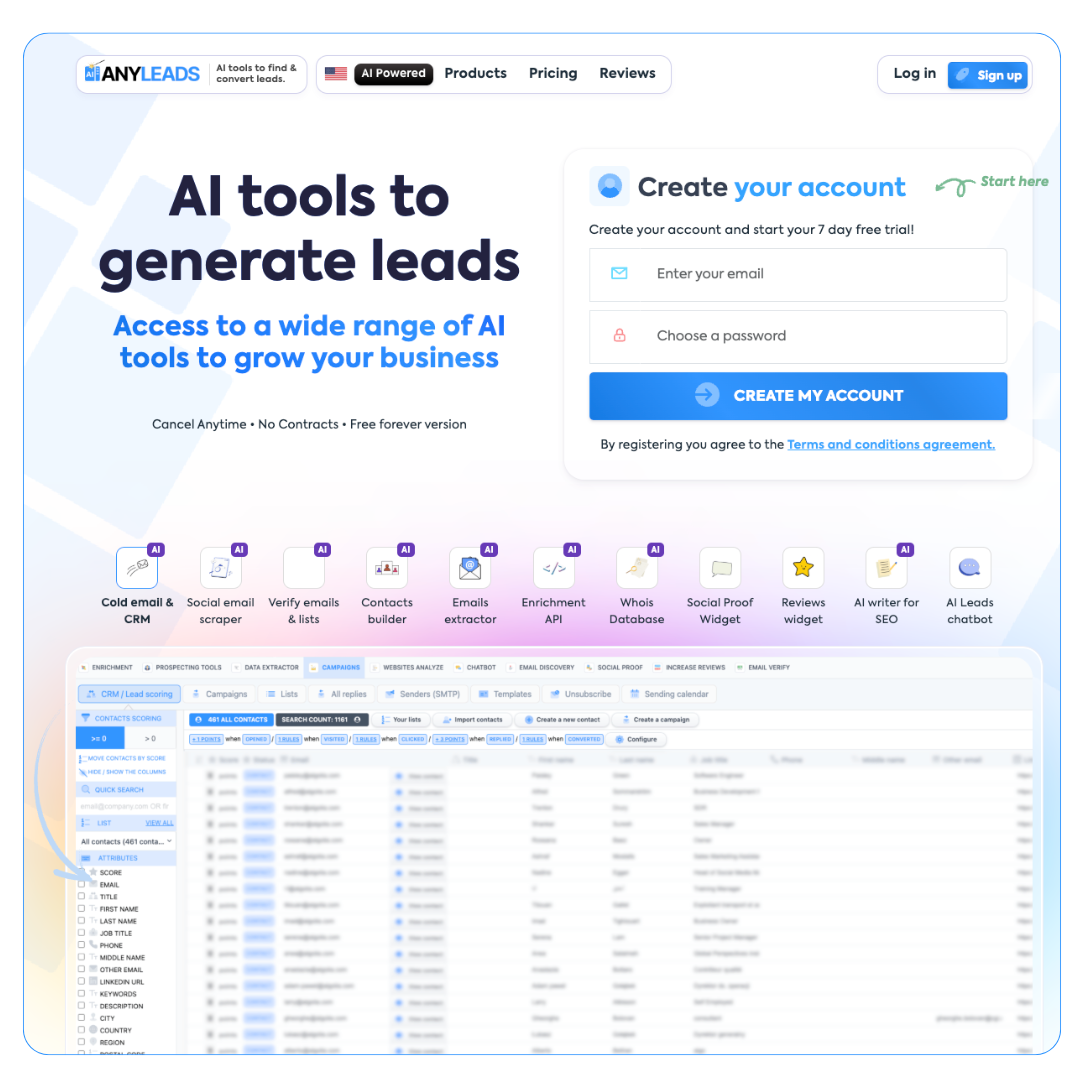
Not long ago, the only way to learn a lead's industry, headcount and tech stack was to ask. Now many B2B teams run a work email through an enrichment tool and get firmographic data back in seconds. That shifts the burden. If enrichment can reliably tell you that Jane's work address belongs to a 600-person freight company in Ohio, asking her for company size and industry is pure friction.
Enrichment is not perfect. Coverage tends to be thinner for small companies, newer startups and some regions, and personal email domains return nothing at all. A practical compromise is to ask only for work email, name and one qualifying question up front, then show extra fields only when enrichment comes back empty. Several form tools support this kind of conditional logic natively.
Progressive profiling spreads the questions across several touchpoints. A visitor who downloads a guide gives an email. The next time they convert, the form recognizes them and asks for role instead of repeating the email field. By the demo request, you may already have most of what you need.
The catch is routing. Your sales team usually needs a few facts the moment a demo request lands: territory, segment, and whether this is a self-serve deal or an enterprise one. A walkthrough of B2B pipelines that breaks down funnel stages defines a sales-qualified lead as a marketing-qualified one that the sales team has vetted, and that vetting needs information from somewhere. If a field drives routing or qualification, keep it. If nobody in sales can name what they do with the answer, cut it.
Speed matters here too. Research published in Harvard Business Review back in 2011 found that most companies were responding too slowly to online leads, and a form that delays routing only widens that gap.
Before debating two versus ten, check that the fields you have are easy to complete. Labels belong above inputs, required and optional fields should be clearly marked, and format rules (for phone numbers or URLs) should be visible before someone hits submit. In a 2014 lab study, researchers from Google and the University of Basel ran 65 participants through original and improved versions of three forms; the improved versions were completed significantly faster, with more successful first submissions, and even the best of the originals gained from the changes.
Error handling is where many demo forms fail. A message that appears at the top of the page, far from the field that triggered it, sends people hunting. Inline errors placed next to the problem fix most of that.
The common mistake is ending the test when one variant shows more submissions. A shorter form will almost always win that contest. What matters is what happens over the next 30 to 90 days.
Track each variant through the funnel: submissions, meetings booked, meetings held, sales-qualified opportunities, and closed revenue if your cycle allows it. Pass the variant ID into the CRM as a hidden field so sales outcomes can be tied back. Expect to need more traffic than a top-of-funnel test, because SQL counts are much smaller than submission counts, and a test that looks decisive at 400 form fills may be noise at 30 opportunities.
Watch rep behavior too. If the short form floods the queue, reps may cherry-pick, and the gap you measure will partly reflect how leads were worked. Agree on follow-up rules before launch.
Finally, test fields one at a time when you can. Removing the phone field tells you something specific. Cutting six fields at once tells you only that a shorter form behaved differently, with no idea which removal mattered.
The honest answer to two or ten often lands around four or five: the fields enrichment cannot fill and routing cannot live without. Find that number with pipeline data, not opinion, and revisit it whenever your enrichment coverage, sales capacity or target segment shifts.
 AI tools to find & convert leads.
 Send emails at scale