LIMITED SPOTS
All plans are 30% OFF for the first month! with the code WELCOME303
LIMITED SPOTS
All plans are 30% OFF for the first month! with the code WELCOME303

LIMITED SPOTS
All plans are 30% OFF for the first month! with the code WELCOME303
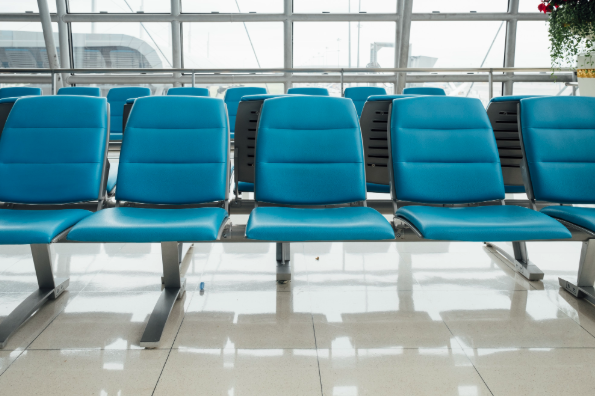
Airports rank among the most demanding environments for public seating on the planet. Millions of passengers move through major terminals every year, sitting for periods that range from twenty minutes to several hours, frequently under the compounded stress of delays, missed connections, tight layovers, or the general disorientation that long-distance travel produces. The furniture in those spaces is not decorative. It does real operational work, and how well it performs has a direct and measurable effect on how passengers experience the terminal and, by extension, how they feel about the journey itself.
For facility managers, airport operations teams, and procurement professionals overseeing terminal environments, the stakes of seating decisions are higher than they might initially appear. Here is a practical breakdown of six specific ways that seating choices shape the passenger experience, along with the operational and financial dimensions that make each one worth thinking through carefully.
A terminal with the right seat count and configuration does not feel crowded even at peak travel periods. One with insufficient seating creates visible bottlenecks that force passengers to stand, sit on the floor near gates, or compete visibly for space, all of which elevate anxiety and generate negative impressions that linger. Getting density right is not just a matter of total seat count. It is about the distribution of seating types across zones, the balance between linear rows and clustered arrangements, and how effectively the available square footage is used. Poor density planning often creates congestion in heavily trafficked zones while leaving other areas underutilized, a problem that effective seating layout addresses directly.
Airport travel is inherently stressful for a significant proportion of passengers. Tight connections, security lines, unfamiliar environments, flight anxiety, and long waits all contribute to elevated stress levels before a passenger even boards. Uncomfortable seating does not exist in a neutral relationship to that stress. Seats that are too narrow, too hard, poorly angled, or built without adequate back support actively amplify discomfort and create additional frustration. Seating designed for extended occupancy, with sufficient padding depth, appropriate seat angles, and reasonable armrest placement, removes one friction point from an experience that already contains many. That removal is small but cumulative, and it shows up in passenger satisfaction data.


Airport seating is subjected to more use per unit per day than almost any other category of commercial furniture. Continuous occupation across multiple daily waves of passengers, exposure to food and beverage spills, luggage impact, vandalism in some terminal environments, and the constant physical stress of millions of loading and unloading cycles demand materials and construction that most commercial seating categories are not built to withstand. Vandalism resistance, ease of cleaning, structural integrity under sustained load cycling, and resistance to UV degradation in daylit terminals are not premium features in this context. They are baseline requirements.
Purpose-built airport furniture is engineered with these conditions at the center of the specification, using frame materials, fastener systems, and upholstery choices that hold up under the kind of sustained, high-volume use that would accelerate the deterioration of standard commercial seating to the point of replacement within months rather than years. For procurement teams managing large terminal refreshes, the difference between correctly specified seating and underspecified alternatives shows up quickly and expensively.
The shift in passenger expectations around device charging has been rapid and is now firmly established. Travelers carrying laptops, tablets, e-readers, noise-canceling headphones, and smartphones expect to be able to maintain battery levels during terminal waits. Seating units with integrated power outlets, USB-A ports, and increasingly USB-C ports have transitioned from being a premium differentiator to being a standard expectation in most airport environments. Terminals that lack this infrastructure create real friction with a broad cross-section of their passenger base. Terminals that provide it reduce passenger frustration, extend comfortable dwell time near gate areas, and in commercial terminals generate measurable increases in spend at nearby retail and food concessions as passengers remain settled and engaged rather than actively seeking other seating with power access.
The way seating is arranged in a terminal communicates something concrete about how the facility views its relationship with passengers. Rigid rows of high-density bench seating signal that the environment is optimized for throughput and efficiency above comfort. Clustered lounge arrangements signal hospitality and an acknowledgment that passengers are spending real time in the space and deserve to be comfortable doing so. Premium terminals use deliberate seating zones to serve different traveler needs within the same building, creating quieter working areas with individual seating separated by dividers, livelier social zones near food and retail, and comfortable waiting areas clustered around gates. That differentiation improves the experience for different traveler profiles simultaneously and makes the terminal feel like an environment that was designed with actual human use in mind.
Airports are among the most diverse public environments in terms of the age range, mobility range, and physical capability range of their users. Seating that accounts for this diversity is not an optional upgrade. Raised seat heights that allow elderly passengers to stand without struggling, armrests positioned to provide leverage for standing rather than just armrests for leaning, clear floor pathways that allow wheelchair navigation without obstruction, and adequate spacing between seating rows to accommodate mobility aids are elements that directly affect whether the terminal works for its full passenger population. In many jurisdictions, accessibility in public transport infrastructure carries regulatory weight beyond good practice. More fundamentally, accessible seating design reflects a facility's actual commitment to serving every passenger it receives rather than only those who happen to be in their physical prime.
The quality and specification of airport seating is not a peripheral concern for facility managers. It sits at the intersection of passenger experience, operational costs, accessibility compliance, and the physical identity of the terminal as a public space. For teams making procurement decisions at scale, seating choices carry downstream effects that extend well beyond the initial purchase price, touching passenger satisfaction scores, maintenance cycles, total cost of ownership over the seating lifespan, and the reputation of the terminal as a place that people do not actively dread spending time in.
 AI tools to find & convert leads.
  Send emails at scale