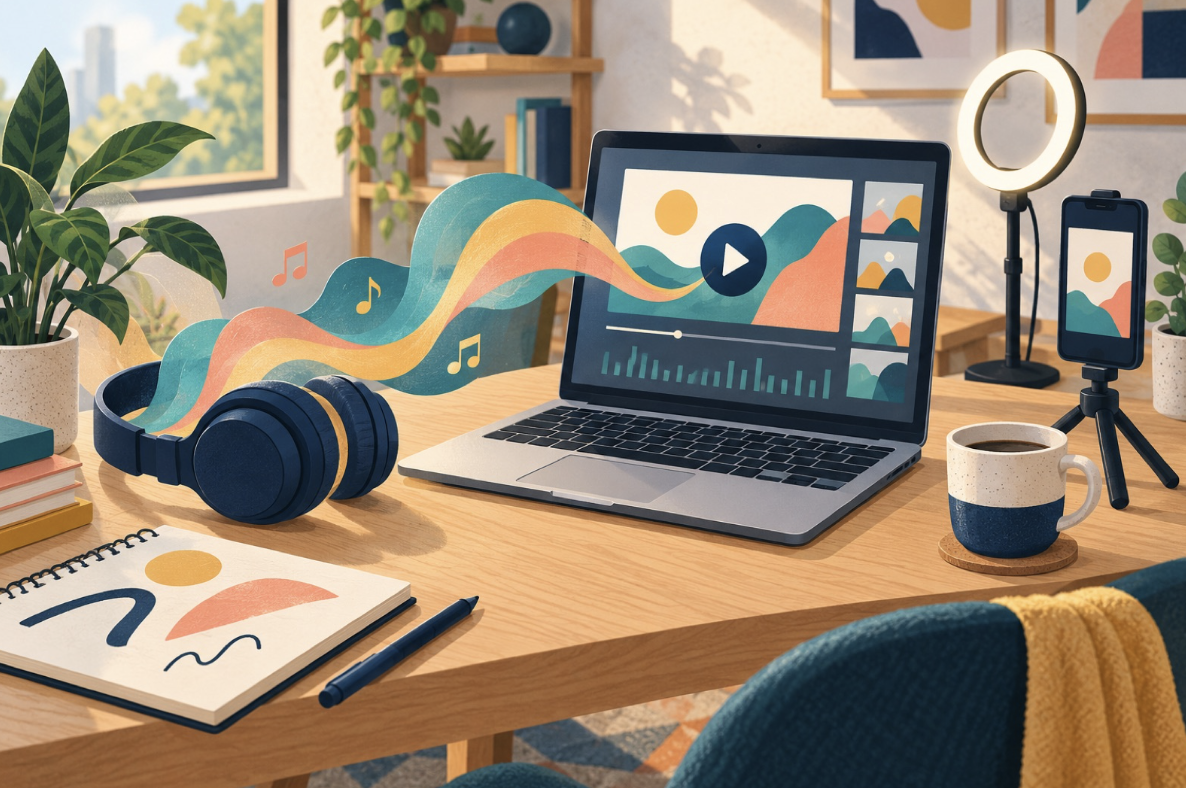
Video is now a normal part of B2B sales. Reps send personalized intro videos instead of a third follow-up email. Marketers turn product updates into 45-second clips for LinkedIn. Founders record demos for prospects who never have time for a live call. The camera work has become easy. The sound usually has not.
Poor audio is the fastest way to make a good video feel cheap. A muffled voice, a humming fan, or the same overused background track tells a prospect that this message was rushed. Good audio does the opposite: it makes a two-minute video from a home office feel like it came from a real marketing team.
The good news is that most of the audio work can now be handled by AI tools in minutes. Below are seven tools that cover the full sound stack for sales and marketing videos: original music, voiceovers, cleanup and editing. For each one, you will find what it does in a campaign, how teams fit it into their workflow, and when to use it.
Before the list, a quick checklist. Sales and marketing teams rarely have an audio engineer, so the tools that work best share a few traits:
Speed. A rep should be able to finish a video in the same session they recorded it.
Usage rights. Anything used in ads, landing pages or outbound sequences needs clear commercial terms.
Consistency. The best tools make it easy to reuse the same sound across a whole team, so every video feels like the same brand.
Low learning curve. If it needs a tutorial longer than the video itself, nobody on the sales floor will use it.
Creatune.ai is an AI music generator that turns a short text description, or your own lyrics, into an original track with or without vocals. For sales and marketing teams, it solves the background music problem: instead of picking the same stock track every competitor uses, you describe the mood you want, such as "confident, modern, light electronic, no vocals, 40 seconds", and get music written for that video.
Teams typically generate a small set of signature tracks once, for example a calm one for product demos, an upbeat one for launch announcements and a warm one for customer stories, and then reuse them across every rep's videos. Creatune.ai also has a video to music feature that suggests a soundtrack based on the footage itself, plus tools to extend a track or split it into stems when an editor needs more control.
Product demo videos, launch clips, event recaps and paid social ads where you want a sound that belongs to your brand.

AIMusicCreator.io combines an AI song generator with a set of simple audio utilities in one place. Besides creating original music from a prompt, it includes an audio cutter, a volume changer, a speed and pitch changer and a key and BPM finder, which covers most of the small fixes a marketer needs before a track is ready for a video.
It works well for the "last mile" of a video: generate a track, trim it to exactly 30 or 60 seconds, lower the volume so it sits under a voiceover, and export. Its AI lyric video maker is also useful for social teams that want to turn a short brand song or jingle into a shareable clip with on-screen lyrics.
Short social videos, quick edits by non-editors, and teams that want music creation and basic audio fixes without switching between several apps.
Descript lets you edit audio and video by editing a text transcript. Delete a sentence in the transcript and it disappears from the recording. For sales videos, this is the fastest way to remove a false start, a long pause or a section that went off-topic.
Record the demo or intro video, open it in Descript, remove filler words in one click, and use its Studio Sound feature to make a laptop microphone sound closer to a studio recording. Many teams then drop in background music at a low level before exporting.
Recorded demos, webinar clips, founder videos and any talking-head content that needs to be tightened up quickly.
ElevenLabs is known for realistic AI voiceovers in many languages. Marketing teams use it to narrate explainer videos without booking a voice actor, and to localize the same video for different regions.
Write the script, choose or design a voice that fits the brand, generate the narration and place it over screen recordings or product footage. When the product changes, you update the script and regenerate the voiceover instead of re-recording.
Explainer videos, onboarding clips, localized ads and evergreen product tours that need frequent updates.
Adobe Podcast's Enhance Speech tool cleans up voice recordings in the browser. Upload a file recorded in a noisy room and it removes echo and background noise so the voice sounds clear and close.
It is a useful rescue tool. When a customer testimonial or a field interview was recorded on a phone in a busy space, running it through Enhance Speech can make it usable in a polished marketing video.
Customer testimonials, event interviews and any recording made outside a quiet room.
Krisp uses AI to remove background noise, other voices and echo during calls and recordings. It is built for live conversations, which makes it a natural fit for sales teams who spend their day on video calls.
Reps run Krisp in the background during discovery calls and while recording quick personalized videos, so every recording starts clean. That means less cleanup later and fewer "sorry, my neighbor is drilling" moments with prospects.
Remote and hybrid sales teams, live demos and recorded outreach videos made from home or shared offices.
Canva is not an audio specialist, but its video editor is where many marketing teams actually assemble their clips. It brings together templates, brand colors and fonts, and an audio track in a single timeline.
Teams create a branded video template once, then let each rep swap in their own recording, a cleaned voice track and one of the team's signature music tracks. The result is a consistent look and sound across dozens of videos made by different people.
Team-wide templates, social clips and sales enablement content produced by people who are not video editors.
You do not need all seven tools. A practical setup for most sales and marketing teams looks like this:
Record clean. Use a noise-cancelling tool during recording so you start with a clear voice.
Edit fast. Trim mistakes and pauses with a transcript-based editor.
Add a signature sound. Generate a few original tracks once with a tool like the Creatune.ai music generator and reuse them across the team, kept quiet under any voice.
Assemble in a template. Combine voice, music and visuals in a branded template so every video feels consistent.
Check on a phone. Most prospects will watch on a laptop speaker or phone, so review the final mix there before sending.
Prospects decide very quickly whether a video is worth their time, and sound plays a bigger part in that decision than most teams realize. A clear voice and music that fits the message signal care and professionalism, the same qualities buyers look for in a vendor.
With today's AI tools, getting there no longer takes a studio or a dedicated editor. Pick one tool for each step, build a few reusable assets, and your next outreach video will sound as good as the product you are selling.
 AI tools to find & convert leads.
  Send emails at scale