Most lists of lead generation tools read like a random grab bag. A CRM here, an email finder there, maybe a chatbot thrown in for good measure. The problem is that none of them explain how the pieces actually fit together.
The truth is that lead generation isn't one task. It's a series of connected stages, and the tools you choose need to cover each one without leaving gaps. Miss a stage and leads leak out of your funnel before they ever reach your sales team.
This list is built differently. We've organised eight AI-powered tools by the role they play in a complete funnel. Think of it as a blueprint for a lead generation stack that actually works, not just a shopping list.
Before we break the funnel into stages, it's worth starting with a platform that spans multiple stages at once. If you're building from scratch, this is where you lay the groundwork.
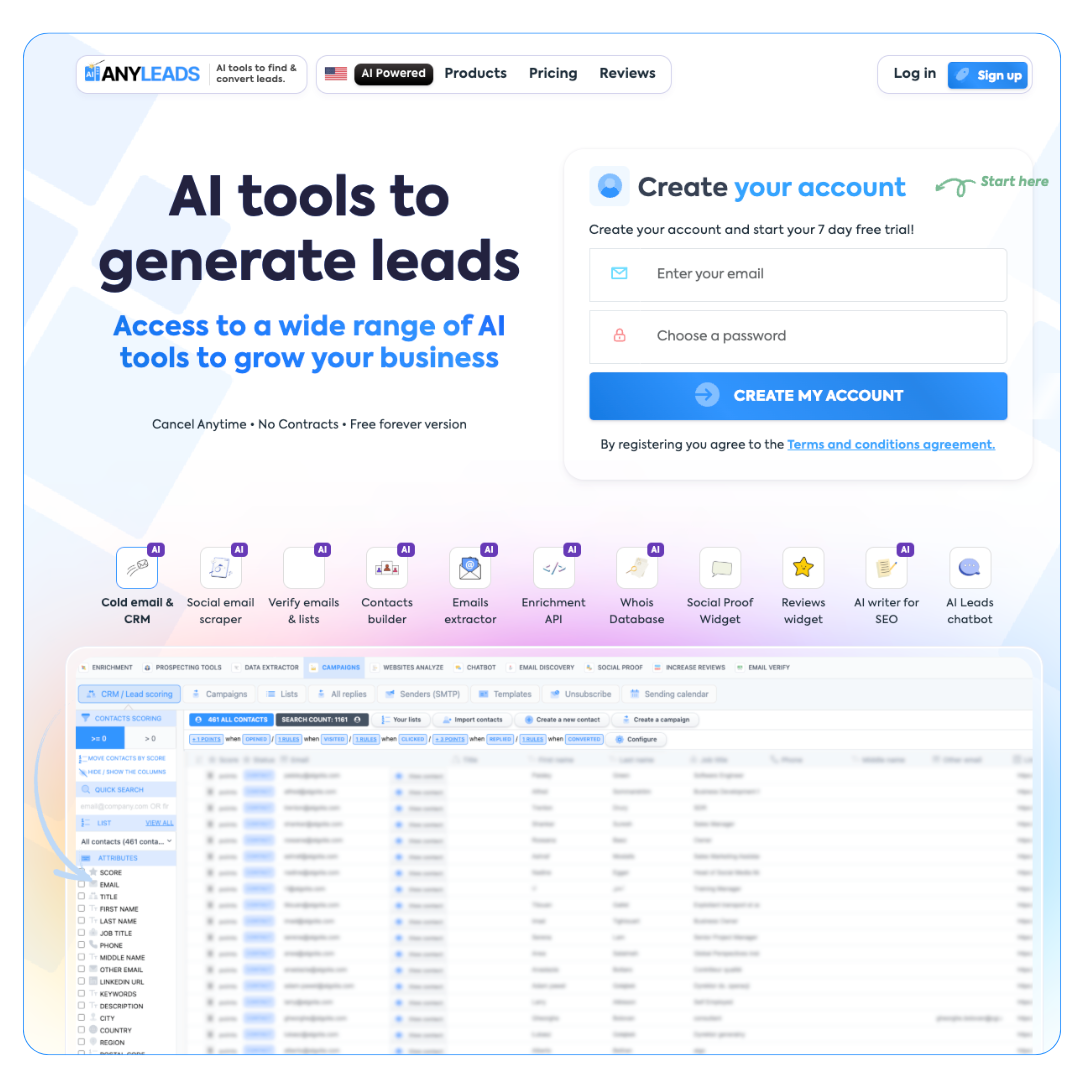
Anyleads brings together a full suite of AI-powered lead generation tools under one roof. Rather than stitching together five different subscriptions for prospecting, email verification, outreach, enrichment and chatbots, you get all of it in a single platform.
The B2B email extraction tool pulls verified contacts from social platforms, saving hours of manual research. The enrichment API fills in the gaps, turning a basic name and company into a detailed profile you can actually use for personalised outreach. And the built-in sequence and cadence tool handles multi-step email campaigns, so leads don't go cold while you're busy finding new ones.
What makes Anyleads particularly useful is the breadth. It covers prospecting, verification, cold outreach, data enrichment and even AI-powered SEO content generation. For small to mid-sized teams that need to move fast without managing a sprawling tech stack, having that range in one place removes a lot of friction. The free-forever plan makes it easy to test without commitment, and paid tiers scale as your pipeline grows.
You can have the best prospecting tools in the world, but they won't matter if visitors hit your site and leave without identifying themselves. This is the stage most funnels get wrong.
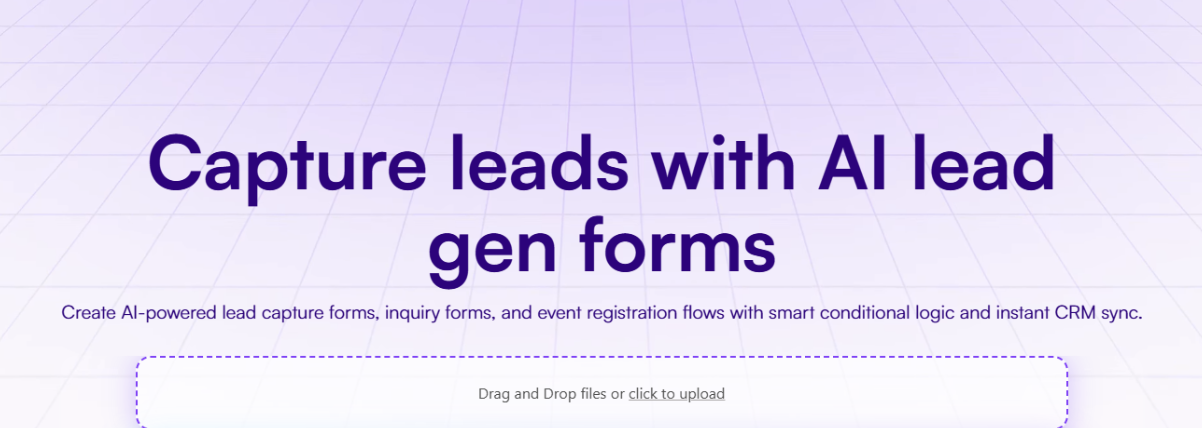
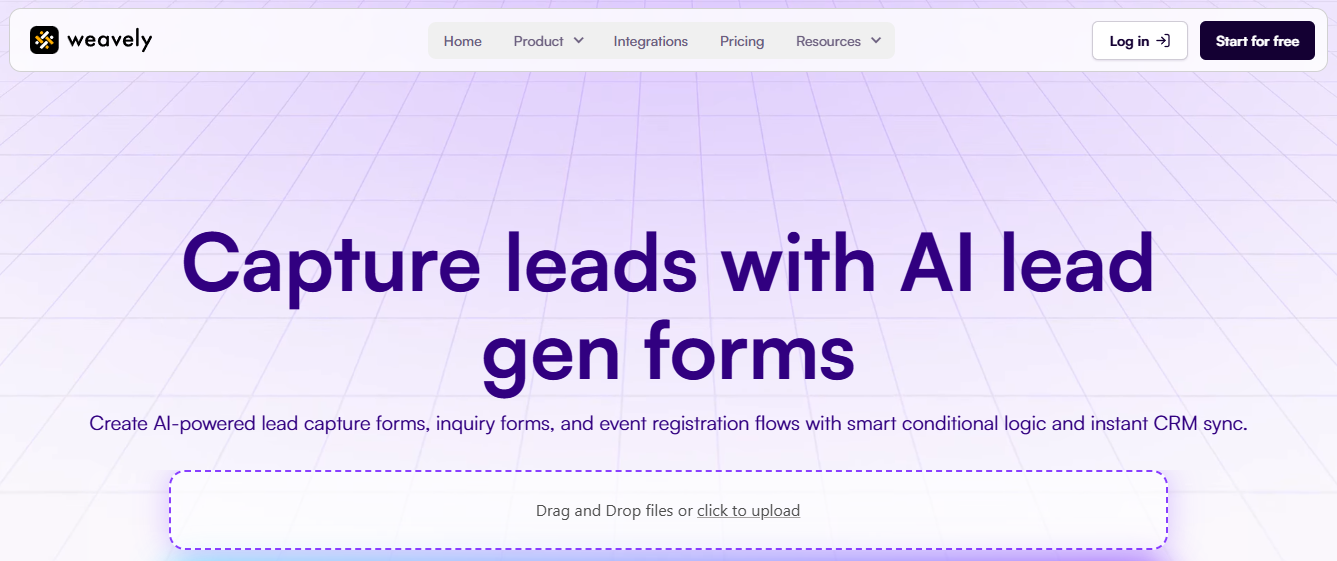
Most lead generation stacks are heavy on sourcing and nurturing but surprisingly thin at the point of conversion. Weavely fills that gap. It's an AI-powered form builder that generates fully styled, conversion-ready forms in seconds based on a simple text description.
Where other tools on this list handle prospecting, enrichment and follow-up, Weavely focuses specifically on turning website visitors into qualified leads. Its forms support smart conditional logic, personalisation, advanced field types like date pickers and file uploads, and they sync directly with your CRM so leads flow into your pipeline without manual effort.
The flexibility is a real standout. You can embed forms on any website, but Weavely also offers dedicated integrations with Figma Sites, Framer and Webflow for a seamless design experience. Need to capture leads at an event or offline? Forms can be shared as standalone links or via QR codes, so you're covered wherever your audience is.
Pricing removes a common barrier to entry, too. The free plan includes unlimited forms and unlimited responses, which is rare in this category. The Pro plan at $20 per month adds custom domains, multi-language support and branding removal for teams that need a more polished setup.

With your foundation set and conversion handled, the next question is who you're converting. These tools make sure your pipeline is full of the right people from the start.
Apollo has become a go-to platform for B2B prospecting, and for good reason. Its database includes over 270 million contacts, and the AI-powered search filters let you narrow down by industry, company size, job title, tech stack and dozens of other criteria.
What sets Apollo apart from a basic email finder is the built-in sequencing. Once you've identified your targets, you can build multi-step outreach campaigns directly inside the platform. That means less toggling between tools and fewer leads slipping through the cracks during handoff.
The free tier is surprisingly generous for small teams. You get a set number of email credits each month plus access to the sequencing engine, which makes it a solid starting point if you're still testing your ideal customer profile.
Clearbit has long been the standard for data enrichment, and its recent integration into HubSpot's ecosystem as Breeze Intelligence has only expanded its reach. The core function is simple: feed it a company name or email address and it returns detailed firmographic and technographic data in real time.
This matters because raw contact lists are rarely enough. Knowing that someone works at a SaaS company is useful. Knowing that the company has 200 employees, just raised a Series B and uses Salesforce changes how you prioritise and personalise your outreach entirely.
For teams already running HubSpot, the native integration means enrichment happens automatically as new contacts enter your CRM. No manual lookups, no CSV imports, no stale data sitting around for months.
Prospecting covers outbound, but you also need inbound. These tools help you attract the right people to your site so your conversion layer has something to work with.
Content marketing remains one of the most effective ways to drive inbound leads, but the volume required to stay competitive keeps climbing. Jasper helps teams produce blog posts, landing page copy, ad variations and social content at a pace that would be impossible to maintain manually.
The platform's brand voice feature is particularly useful. You train it on your existing content, and it learns to match your tone across everything it produces. That consistency matters when prospects encounter your brand across multiple touchpoints before ever filling out a form.
Jasper isn't a replacement for a skilled content strategist. But it removes the production bottleneck that keeps most teams from publishing frequently enough to gain real traction in search and social. If you're looking for more ways to accelerate your pipeline, pairing a content engine like Jasper with targeted outreach can compound results quickly.
Paid advertising is still one of the fastest ways to generate leads, but creative fatigue kills campaigns faster than budget constraints do. AdCreative.ai uses machine learning to generate high-performing ad creatives, from static images to video snippets, tailored to your brand guidelines and audience segments.
The platform analyses conversion data from millions of ads to predict which designs and copy combinations will perform best. Instead of running dozens of A/B tests manually, you get data-backed creative suggestions before you spend a penny on impressions.
For teams running campaigns across Google, Meta and LinkedIn simultaneously, the time savings alone justify the subscription. And because ad creative directly impacts your cost per lead, even modest performance improvements compound over the life of a campaign.

Capturing a lead is only the halfway point. What happens next determines whether that contact becomes revenue or just another row in a spreadsheet.
HubSpot needs little introduction, it is hugely popular and the #1 Zendesk alternative available, but its Marketing Hub deserves a specific mention here because of how well it ties the nurturing stage together. Email workflows, lead scoring, behavioural triggers, A/B testing and reporting all live under one roof.
The AI features have improved significantly in recent updates. Smart content recommendations, predictive lead scoring and AI-assisted email copy help marketing teams move faster without sacrificing personalisation. For small to mid-sized businesses, the Starter plan offers enough automation to handle a meaningful volume of leads without requiring a dedicated ops team.
Where HubSpot really shines is in connecting the dots between stages. Because it functions as both a CRM and a marketing platform, you get a single view of each contact's journey from first touch to closed deal. That visibility makes it far easier to identify what's working and where leads are dropping off.
Not every business needs a full CRM suite. For teams focused primarily on email-driven lead nurturing, Mailchimp remains one of the most accessible and effective options available.
Its AI-powered features now include send-time optimisation, content suggestions and audience segmentation based on engagement patterns. The drag-and-drop email builder has been a strength for years, and it continues to lower the barrier for teams without dedicated designers.
Mailchimp also integrates with nearly every other tool on this list, which makes it a flexible addition to any stack. Whether you're running it as your primary nurturing engine or as a complement to a larger CRM, it handles the basics reliably and affordably.
Once a lead has been identified, captured and nurtured, the next challenge is getting them into a real conversation. Email sequences can warm people up, but for many sales teams, the fastest path to a qualified opportunity is still a live call.
Trellus.ai helps outbound teams turn more leads into live conversations with AI-powered power dialing and parallel dialing. Instead of reps manually dialing one prospect at a time, Trellus.ai lets them move through call lists faster, reduce dead time between attempts, and connect only when there is a real person on the other end.
This makes it especially useful at the follow-up stage of the lead generation funnel. Once tools like Anyleads, Apollo, Clearbit, HubSpot or Mailchimp have helped you find, enrich and nurture prospects, Trellus.ai gives your sales team a faster way to act on that pipeline. Features like voicemail drop, call analytics, AI practice calls, number health and spam remediation help reps stay productive without turning calling into a manual grind.
For SMBs, tech firms and growing outbound teams, the biggest advantage is that Trellus.ai adds serious calling power without the cost or complexity of heavier enterprise dialers. The Power plan starts at $99.99 per month, the Parallel plan costs $149.99 per month, and the Business plan is available with custom pricing for teams that need real-time AI coaching, team analytics, conversational intelligence, custom reporting and AI modeling.
The real value here isn't in any single tool. It's in how they connect.
Anyleads gives you the all-in-one foundation for prospecting, verification and outreach. Weavely captures visitors at the point of conversion with intelligent, frictionless forms. Apollo and Clearbit layer in additional contact discovery and enrichment. Jasper and AdCreative.ai drive inbound traffic and keep your paid campaigns performing. And HubSpot or Mailchimp take over from there, nurturing leads through automated sequences until they're ready to buy.
Each tool covers a distinct role, and together they eliminate the gaps where leads typically fall through. You don't need all eight on day one. Start with the stages where you're losing the most opportunities and build from there.
AI hasn't replaced the need for smart strategy. But it has made it possible for smaller teams to compete with operations that used to require entire departments. The tools on this list aren't magic bullets. They're force multipliers.
Pick the ones that address your biggest bottlenecks, connect them intentionally, and let the compounding effect do the heavy lifting. A well-built funnel with the right AI tools behind it doesn't just generate more leads. It generates better ones.
 AI tools to find & convert leads.
  Send emails at scale