
Growth rarely comes from a single campaign, channel, or clever idea. For most businesses, sustainable growth is the result of several connected activities working together: a recognizable brand, a steady flow of qualified prospects, effective customer engagement, and a marketing system that can adapt as the business evolves.
This becomes increasingly important as companies move beyond their early stages. What works when a business has a handful of customers may not be enough when it needs to generate hundreds of leads, enter new markets, or compete against more established brands.
The challenge is not simply getting more attention. Businesses need to turn attention into interest, interest into conversations, and conversations into measurable commercial outcomes.
A strong marketing engine connects these stages. It gives organizations a framework for building visibility, attracting the right audiences, and continuously improving how they convert opportunities into growth.
Businesses often evaluate marketing channels individually. They might look at search traffic, paid advertising, social media engagement, lead volume, or conversion rates separately.
However, customers rarely experience a brand through only one channel.
A potential customer might first discover a company through search, encounter its social content several days later, visit the website after seeing an advertisement, and eventually contact the business after reading reviews or a case study.
This means marketing performance depends partly on how well these touchpoints work together.
A disconnected marketing strategy can create problems such as:
Strong traffic but weak conversion rates
High lead volume but poor lead quality
Good social engagement but limited sales impact
An attractive website with unclear messaging
Advertising campaigns that generate clicks without meaningful business results
A more effective approach is to view marketing as a connected system. Each activity should have a clear purpose and contribute to the broader customer journey.
Before customers can become loyal, they need to understand what a business represents. Branding provides the foundation for that recognition.
A strong brand communicates more than a company name or logo. It establishes visual consistency, tone, positioning, and expectations across the customer experience.
This is especially important for growing businesses. As marketing expands across websites, social platforms, advertising campaigns, presentations, packaging, and other channels, inconsistent branding can make the organization appear less established.
A practical branding system should answer several questions:
What does the company stand for?
Who is it trying to reach?
What makes it different?
What should customers remember?
How should the brand look and sound across different channels?
Professional design can help translate those answers into a consistent identity. ZillionDesigns, for example, provides branding and design services ranging from logos to broader visual identity work. For organizations building or refreshing their brand, having consistent visual assets can make communication more recognizable across marketing and sales materials.
Branding is therefore not simply a creative exercise. It can become an important part of how a business communicates value and builds credibility.

Brand awareness is valuable, but attention alone does not create sustainable growth. Businesses also need mechanisms for turning visibility into qualified opportunities.
This is where lead generation becomes important.
A successful lead generation system should attract people who have a genuine need for the company's products or services rather than simply maximizing the number of contacts collected.
Quality can often be more valuable than volume.
For example, a service business may benefit more from receiving a smaller number of motivated prospects who are ready to discuss a project than from generating hundreds of low-intent inquiries.
Effective lead generation can involve:
Search engine optimization
Paid search campaigns
Local marketing
Landing pages
Content marketing
Referral programs
Email nurturing
Social campaigns
Inbound phone calls
For service businesses that depend heavily on direct inquiries, solutions such as 99 Calls focus on generating exclusive leads and helping businesses turn inbound interest into opportunities. Its approach combines lead generation with tools such as optimized websites, local visibility, calls to action, and lead nurturing, illustrating how acquisition can be treated as a complete system rather than a collection of isolated tactics.
The key is to connect acquisition with what happens after the prospect arrives. Generating a lead is only the beginning.
Modern customers expect businesses to understand their interests and communicate in ways that feel relevant. Generic messaging can struggle to capture attention when consumers are exposed to thousands of marketing messages every day.
This has made audience segmentation and personalized marketing increasingly important.
Businesses can segment audiences based on factors such as:
Demographics
Location
Purchasing behavior
Interests
Previous interactions
Customer lifecycle stage
Content engagement
Influencer marketing provides another way to connect brands with highly specific audiences. Instead of communicating with a broad market through traditional advertising alone, businesses can work with creators whose communities already have an interest in a particular category.
Afluencer connects brands with verified creators through an influencer marketing marketplace, allowing businesses to post collaborations, define campaign criteria, review applications, and manage relationships. This type of structured approach can help companies make creator partnerships part of a broader marketing strategy rather than treating influencer activity as an isolated experiment.
The larger lesson is that effective marketing is increasingly about relevance. Reaching the right audience with the right message can be more valuable than simply reaching the largest possible audience.
For businesses using influencer marketing at scale, Influencer Hero provides tools for discovering creators, managing campaigns, coordinating outreach, tracking user-generated content, and measuring campaign performance. Its AI-powered discovery capabilities allow marketers to search and filter creators across major social platforms, while its CRM connects discovery with outreach and campaign management. This can help businesses make influencer partnerships a more structured part of their broader audience engagement strategy.
A company's website is often the point where marketing activity becomes measurable commercial action.
It should not simply provide information. It should help visitors understand the offering, evaluate credibility, and take the next step.
Depending on the business, that next step might be:
Requesting a quote
Booking a consultation
Making a purchase
Calling the company
Downloading a resource
Signing up for an email list
Starting a free trial
Effective websites therefore combine design, content, usability, search visibility, and conversion strategy.
This is where marketing teams need to think beyond aesthetics. A visually impressive website that does not guide visitors toward meaningful actions may perform worse than a simpler site with clearer messaging and stronger conversion paths.
The same principle applies to search. Businesses need to create content that answers the questions potential customers ask before they are ready to buy.
Search-focused marketing has also expanded beyond traditional rankings. Customers increasingly use AI-powered search and answer engines when researching products, services, and companies.
Digital Elevator, for instance, focuses on SEO, AEO, AI visibility, content strategy, web design, and conversion-focused marketing. Its case studies demonstrate how technical improvements, content, conversion optimization, and paid campaigns can work together to improve lead generation and visibility.
The website should therefore be viewed as part of the entire marketing engine rather than as a standalone digital brochure.
One of the biggest challenges for marketing teams is proving which activities actually contribute to business growth.
Metrics such as impressions, clicks, followers, and page views can provide useful information, but they do not necessarily explain whether marketing is producing commercial value.
Businesses should increasingly connect marketing activity to outcomes such as:
Qualified leads
Sales opportunities
Customer acquisition cost
Conversion rates
Revenue generated
Customer lifetime value
Pipeline contribution
This does not mean every marketing interaction needs to produce an immediate sale. Some activities are designed to build awareness or establish trust earlier in the buying journey.
The important point is understanding how each activity contributes to the overall journey.
For example, Digital Elevator's work with McKesson involved evaluating not just website copy but the broader sales process, including lead generation assets and conversion opportunities. The resulting approach contributed to a 15% total lead increase and a 34% increase in PPC-generated leads over six months.
This illustrates why measurement becomes more useful when marketing is evaluated as a connected system.
Different businesses require different combinations of branding, acquisition, audience development, and digital marketing. The following organizations offer useful examples of how specialized capabilities can support broader growth objectives.
Indexly focuses on improving search visibility through tools for SEO, content optimization, automated indexing, and visibility across AI-powered search environments. Its capabilities can help businesses monitor how their content and brand appear across evolving search experiences while identifying opportunities to strengthen their overall online presence.
Marketing does not end when a prospect submits a form or makes a phone call. The experience that follows can have a major influence on whether an opportunity becomes a customer.
A complicated sales process can undo the work performed by an excellent campaign.
Businesses should examine the customer journey from the prospect's perspective.
Can they quickly find the information they need?
Is it obvious what they should do next?
How quickly does someone respond to an inquiry?
Does the sales team have the context needed to continue the conversation?
Are prospects receiving useful information while they evaluate their options?
Small improvements across these stages can have a significant cumulative effect.
For example, reducing unnecessary form fields, clarifying service pages, improving response times, and creating targeted follow-up sequences can make it easier for qualified prospects to move toward a decision.
The strongest marketing systems do not simply attract customers. They remove friction from the process of becoming one.
Data gives businesses the ability to replace assumptions with evidence.
Instead of asking whether a campaign feels successful, teams can examine what actually happened.
Useful questions include:
Which channels generate the highest-quality leads?
Which pages contribute most to conversions?
Which audiences have the strongest engagement?
Where do prospects leave the buying journey?
Which campaigns produce customers rather than just clicks?
Which activities continue producing results over time?
Testing then becomes an important part of the process.
Businesses can experiment with landing page messaging, calls to action, audience segments, creative formats, offers, content topics, and follow-up processes.
The goal is not to find a perfect strategy immediately. It is to create a feedback loop where every campaign provides information that can improve the next one.
Growth often introduces a new problem: complexity.
A business may begin with a simple website and one acquisition channel. As it expands, it adds advertising platforms, social accounts, CRM systems, email tools, analytics software, agencies, freelancers, and internal teams.
Each addition may make sense individually, but together they can create fragmentation.
Marketing leaders should periodically evaluate whether every channel and tool still serves a clear purpose.
A useful framework is to ask:
What business objective does this activity support?
Who owns the outcome?
How is performance measured?
What happens when performance declines?
Does the activity complement the rest of the marketing system?
This prevents growth from becoming an accumulation of disconnected tactics.
Markets rarely remain stable for long. Customer preferences change, competitors adjust their positioning, search behavior evolves, and new technologies introduce different ways to reach audiences.
A marketing strategy that worked two years ago may therefore require significant modification today.
Adaptability should be built into the system itself.
That means regularly reviewing:
Audience behavior
Search trends
Competitor activity
Campaign performance
Customer feedback
Conversion data
Emerging technologies
Businesses that continuously learn are better positioned to respond when conditions change.
This is particularly relevant as AI reshapes how people discover information and evaluate businesses. Rather than treating emerging technology as a replacement for established marketing fundamentals, organizations can use it as another layer within a broader strategy.
The fundamentals remain the same: understand the customer, communicate a clear value proposition, build trust, make the buying process easier, and measure what matters.
Sustainable growth is rarely the result of one exceptional marketing tactic. It comes from connecting multiple activities into a system that consistently moves customers from awareness toward action.
Strong branding creates recognition. Effective lead generation creates opportunities. Relevant audience engagement builds relationships. A conversion-focused website turns interest into action. Measurement reveals what is working, while continuous optimization keeps the system competitive.
The most effective organizations understand these activities as interconnected parts of the same growth engine.
Instead of asking which single marketing channel will transform the business, leaders should ask a more valuable question: how can every part of the customer journey work together more effectively?
When branding, acquisition, digital experiences, measurement, and customer engagement operate around shared business objectives, marketing becomes more than promotion. It becomes an engine for sustainable growth.
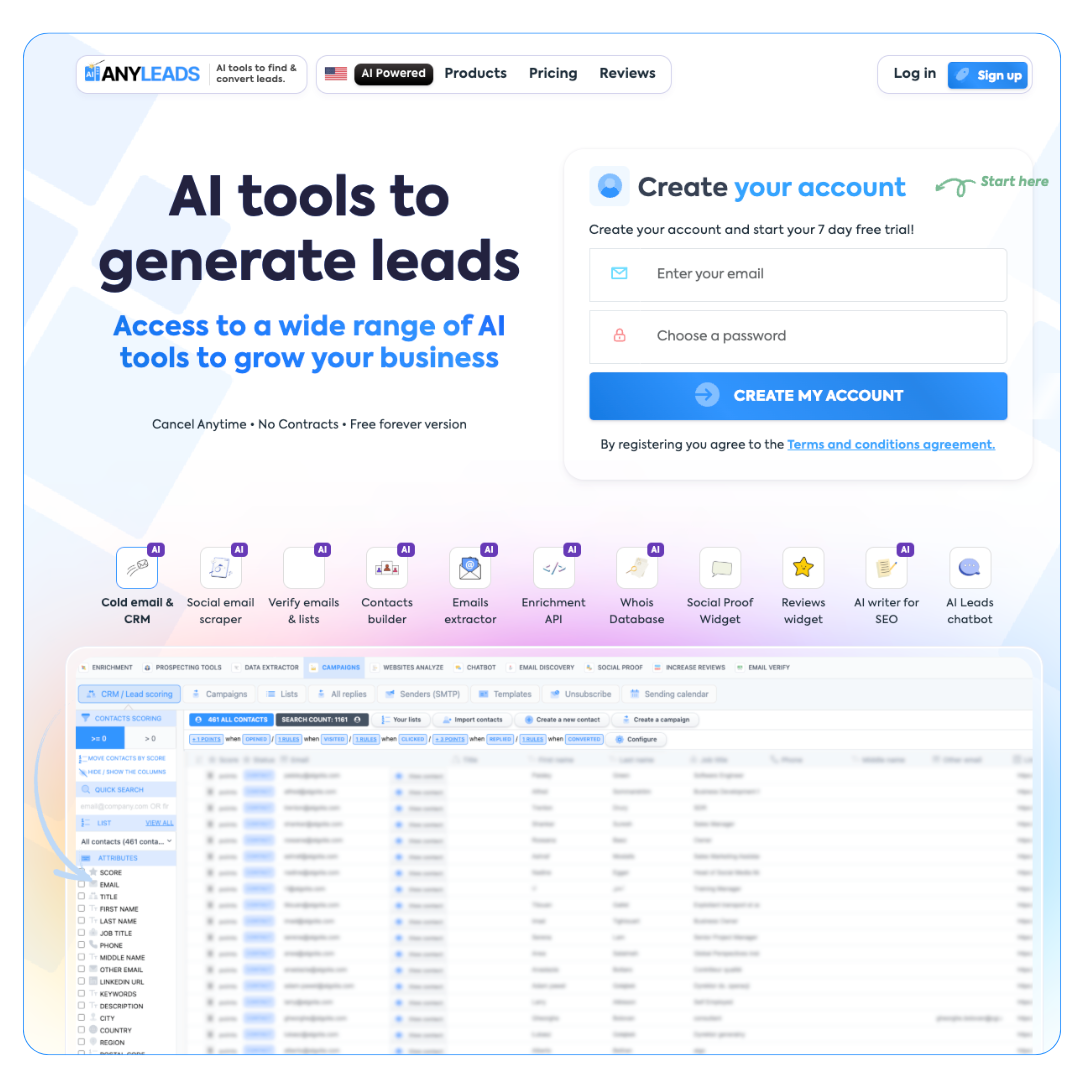
 AI tools to find & convert leads.
  Send emails at scale